Science & TechnologyS


Bizarro Earth

Meteor Crater found in Qatar

A crater, believed to have been created by the impact of a falling meteor, found near Dukhan.

Qatar crater
©Google Earth

Hourglass

Op-Classic, 1994: Arthur C. Clarke on Killer Comets

Every week, the Opinion section presents an essay from The Times's archive by a columnist or contributor that we hope sheds light on current news or provides a window on the past.

This week's offering comes from Arthur C. Clarke, the science fiction novelist, who died on Wednesday. In 1994, he urged Op-Ed readers to look to the skies--or risk going the way of the dinosaurs.

Bug

Unlocking The Psychology Of Snake And Spider Phobias

University of Queensland researchers have unlocked new evidence that could help them get to the bottom of our most common phobias and their causes.

Hundreds of thousands of people count snakes and spiders among their fears, and while scientists have previously assumed we possess an evolutionary predisposition to fear the unpopular animals, researchers at UQ's School of Psychology may have proved otherwise.

spider
©iStockphoto/Holger Gogolin
Hundreds of thousands of people count snakes and spiders among their fears, and while scientists have previously assumed we possess an evolutionary predisposition to fear the unpopular animals, researchers at UQ's School of Psychology seem to have proved otherwise.

Info

Language Feature Unique To Human Brain Identified

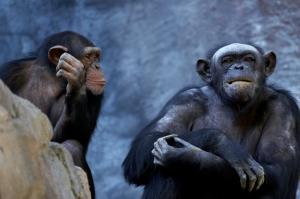
Researchers at the Yerkes National Primate Research Center, Emory University, have identified a language feature unique to the human brain that is shedding light on how human language evolved. The study marks the first use of diffusion tensor imaging (DTI), a non-invasive imaging technique, to compare human brain structures to those of chimpanzees, our closest living relative.

chimpanzees
©iStockphoto/Igor Karon
Researchers have compared human brain structures to those of chimpanzees to identify a language feature unique to the human brain that is shedding light on how human language evolved.

Display

Windows Vista SP1 Flunks Out At Penn

Windows Vista SP1 Is having a tough time getting into the Ivy League.

University of Pennsylvania tech staffers are advising faculty and students not to upgrade their computers to the new service pack for Microsoft's Windows Vista operating system.

The school's Information Systems & Computing department said it will support Vista SP1 on new systems where it's preinstalled, but added that it "strongly recommends that all other users adopt a 'wait and see' attitude," according to a newly published department bulletin.

Telescope

First Whiff of Methane in Extrasolar Planet's Atmosphere

Can extraterrestrial ruminants be far behind?

Astronomers report they have detected methane for the first time in the atmosphere of a planet outside our solar system. The finding comes from extrasolar planet HD 189733 b, a gaseous "hot Jupiter" locked in a tight orbit around a star 63 light-years away.

Cow Skull

New Zealand's 'Living Dinosaur' - The Tuatara- Is Surprisingly The Fastest Evolving Animal

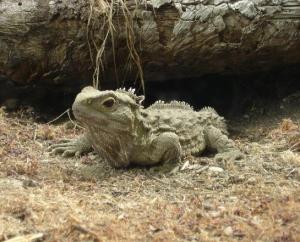
In a study of New Zealand's "living dinosaur" the tuatara, evolutionary biologist, and ancient DNA expert, Professor David Lambert and his team from the Allan Wilson Centre for Molecular Ecology and Evolution recovered DNA sequences from the bones of ancient tuatara, which are up to 8000 years old. They found that, although tuatara have remained largely physically unchanged over very long periods of evolution, they are evolving - at a DNA level - faster than any other animal yet examined.

Tuatara
©iStockphoto/Robyn Grant
Tuatara in New Zealand.

Star

Comet Hale-Bopp Still Lives

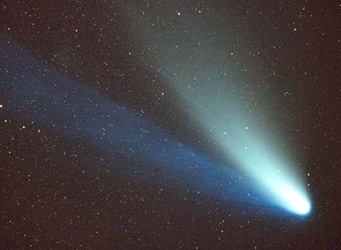
Although it has been more than a decade since Comet Hale-Bopp blazed in the night sky, it's still sputtering as it continues to head into cold, trans-Neptunian space.

In a paper submitted to the Astrophysical Journal Letters, a trio of Hungarian and Australian astronomers describe capturing the most distant cometary activity ever seen.

Image
©Dennis di Cicco
Comet Hale-Bopp amid its glory on March 17, 1997. The comet still shines in the outer solar system, but at a mere 20th magnitude.

Magnify

DNA advances set to ID 'Dirty War' bones

BUENOS AIRES, Argentina - The 600 skeletons are packed into fruit cartons and stacked on shelves in the walk-in closet of a forensic lab, in the dim glow of a single bare light bulb. They are "Skeleton No. 4" or "Skeleton No. 21," and nothing more.

But a quarter-century after Argentina's dictatorship and "dirty war" against its own citizens ended, DNA technology raises the possibility of finally learning the identities of these skeletons in the closet, collected from mostly unmarked graves across Argentina.

Bulb

Like sweets? You're more like a fruit fly than you think

According to researchers at the Monell Center, fruit flies are more like humans in their responses to many sweet tastes than are almost any other species.

The diverse range of molecules that humans experience as sweet do not necessarily taste sweet to other species. For example, aspartame, a sweetener used by humans, does not taste sweet to rats and mice.

However, fruit flies respond positively to most sweeteners preferred by humans, including sweeteners not perceived as sweet by some species of monkeys.

The findings, published in the current issue of the journal Chemical Senses, demonstrate the critical role of environment in shaping the genetic basis of taste preferences and feeding behavior.