Science & TechnologyS


Clock

International team of scientists discover clue to delay of life on Earth

Scientists from around the world have reconstructed changes in Earth's ancient ocean chemistry during a broad sweep of geological time, from about 2.5 to 0.5 billion years ago. They have discovered that a deficiency of oxygen and the heavy metal molybdenum in the ancient deep ocean may have delayed the evolution of animal life on Earth for nearly 2 billion years.

The findings, which appear in the March 27 issue of Nature, come as no surprise to Ariel Anbar, one of the authors of the study and an associate professor at Arizona State University with joint appointments in the Department of Chemistry and Biochemistry and the School of Earth and Space Exploration in the College of Liberal Arts and Sciences. The study was led by Clint Scott, a graduate student at University of California Riverside. Scott works with Timothy Lyons, a professor of biogeochemistry at UCR who is a long-time collaborator of Anbar's and also an author of the paper.

Star

Saturn's moon Enceladus surprisingly comet-like

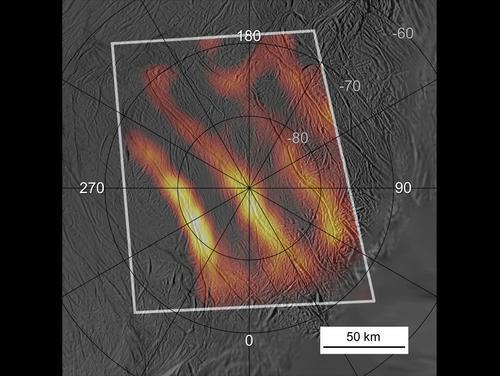
Saturn's curious moon Enceladus appears to have the same chemical makeup as a comet, according to the latest results from the Cassini probe. That's a big surprise, as Enceladus should have formed in very different conditions from those of comets.

On 12 March, Cassini flew through the huge plume of steam and other gases that spews from fissures at the moon's south pole. A glitch prevented the spacecraft's dust analyser from studying the makeup of the plume, but another instrument, called the Ion and Neutral Mass Spectrometer (INMS), did sample its chemistry.

As well as water vapour, the INMS detected carbon dioxide, methane and a range of more complex organic chemicals such as propane.

Image
©NASA/JPL/GSFC/SwRI/SSI
Heat radiates from the entire length of 150-kilometre-long fractures on the south pole of Saturn's icy moon Enceladus

Bulb

Brain scientist shedding light on learning, memory

Neurons spoke to Dr. Joe Z. Tsien when he was a sophomore college student searching for some meaningful extracurricular activity.

He had stopped by the lab of a brain researcher at Shanghai's East China Normal University. The room was dark except for a light shining on the brain. "You could hear this pop, pop, pop, pop," says Dr. Tsien, brain scientist who recently came to the Medical College of Georgia from Boston University. "At that moment, I got interested in the brain.

Arrow Down

UK's biggest meteorite impact rocked Scotland

It's lucky for the good burghers of Ullapool in Scotland that they weren't around 1.2 billion years ago, because it was around then that the biggest meteorite ever to hit the British Isles would have made a bit of a dent in local house prices.

That's according to the combined forces of the University of Oxford and the University of Aberdeen, who say that "unusual rock formations" previously thought to have volcanic origins are actually the debris ejected from a meteorite strike which threw material over an area 50km across.

Extinguisher

Solar Activity Alert

With little warning, three big sunspots have materialized and on March 25th one of them (989) unleashed an M2-class solar flare. This is the biggest flare of the year and it signals a significant increase in solar activity. The eruption also produced a coronal mass ejection (CME), but auroras are unlikely because the cloud is not heading toward Earth: movie.

"It's March Madness," says Greg Piepol who photographed the three sunspots from his backyard observatory in Rockville, Maryland:

3 sun spots
©Greg Piepol

Phoenix

Prepare for the Worst, Because Solar Storms Are About to Get Ugly


Active Sun
©SOHO, ESA, NASA

Every 11 years or so, the sun gets a little pissy. It breaks out in a rash of planet-sized sunspots that spew superhot gas, hurling clouds of electrons, protons, and heavier ions toward Earth at nearly the speed of light. These solar windstorms have been known to knock out power grids and TV broadcasts, and our growing reliance on space-based technology makes us more vulnerable than ever to their effects. On January 3, scientists discovered a reverse-polarity sunspot, signaling the start of a new cycle - and some are predicting that at its peak (in about four years) things are gonna get nasty. Here's a forecast for 2012.


Bug

Insects Take A Bigger Bite Out Of Plants In A Higher Carbon Dioxide World

Atmospheric carbon dioxide levels are rising at an alarming rate, and new research indicates that soybean plant defenses go down as CO2 goes up. Elevated CO2 impairs a key component of the plant's defenses against leaf-eating insects, according to the report.

Deforestation and the burning of fossil fuels have significantly increased carbon dioxide levels since the late 18th century, said plant biology professor and department head Evan DeLucia, an author of the study.

Japanese beetles
©Evan Delucia
Plant defenses go down as carbon dioxide levels go up, the researchers found. Soybeans grown at elevated CO2 levels attract many more adult Japanese beetles than plants grown at current atmospheric carbon dioxide levels.

"Currently, CO2 in the atmosphere is about 380 parts per million," DeLucia said. "At the beginning of the Industrial Revolution it was 280 parts per million, and it had been there for at least 600,000 years -- probably several million years before that."

Bug

Fly's Tiny Brain May Hold Huge Human Benefits

Before swatting at one of those pesky flies that come out as the days lengthen and the temperature rises, one should probably think twice. A University of Missouri researcher has found, through the study of Drosophila (a type of fruit fly), that by manipulating levels of certain compounds associated with the "circuitry" of the brain, key genes related to memory can be isolated and tested. The results of the study may benefit human patients suffering from Parkinson's disease and could eventually lead to discoveries in the treatment of depression.

Fruit Fly brain image
©University of Missouri
This depth-encoded image shows serotonin clusters in the brain of the drosophila, a type of fruit fly.

Syringe

'Suspended Animation' Induced In Mice With Sewer Gas: Effects Are Reversible

Low doses of the toxic gas responsible for the unpleasant odor of rotten eggs can safely and reversibly depress both metabolism and aspects of cardiovascular function in mice, producing a suspended-animation-like state. In the April 2008 issue of the journal Anesthesiology, Massachusetts General Hospital (MGH) researchers report that effects seen in earlier studies of hydrogen sulfide do not depend on a reduction in body temperature and include a substantial decrease in heart rate without a drop in blood pressure.

hydrogen sulfide
©iStockphoto
When adminstered to mice in small, controlled doses, hydrogen sulfide -- the stinky gas found in sewers -- can produce what appears to be a state of suspended animation, researchers have found.

Telescope

Ultrahigh-energy Cosmic Rays Are From Extremely Far Away

Final results from the University of Utah's High-Resolution Fly's Eye cosmic ray observatory show that the most energetic particles in the universe rarely reach Earth at full strength because they come from great distances, so most of them collide with radiation left over from the birth of the universe.

The findings are based on nine years of observations at the now-shuttered observatory on the U.S. Army's Dugway Proving Ground. They confirm a 42-year-old prediction -- known as the Greisen-Zatsepin-Kuzmin (GZK) "cutoff," "limit" or "suppression" -- about the behavior of ultrahigh-energy cosmic rays, which carry more energy than any other known particle.

Two mirrors
©University of Utah
Two mirrors within the University of Utah's High Resolution Fly's Eye cosmic ray observatory.