
It sounds great. It's also, at best, a half-truth dressed up in a tuxedo.
I went down this particular rabbit hole so you don't have to.
As this is not my main area of expertise: if (when) I get something wrong → the comments are right there below.
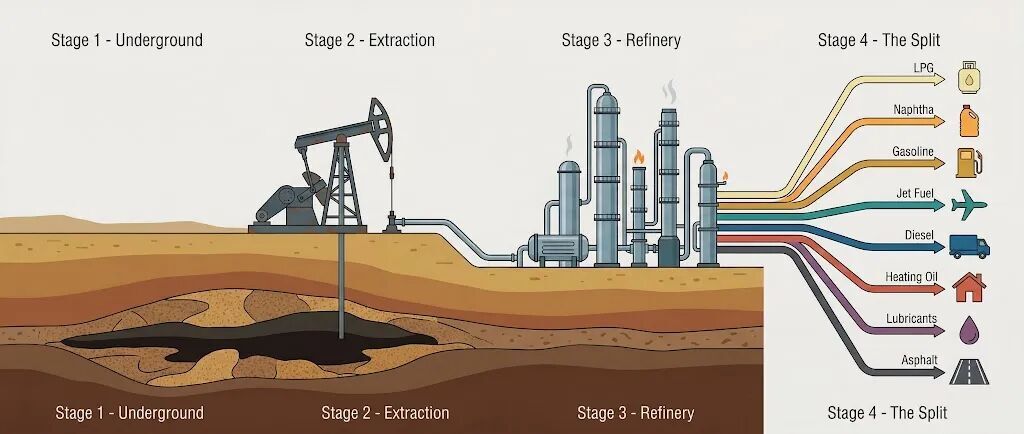
Crude oil is what comes out of the ground. It's the raw stuff. You ship it to a refinery, the refinery cooks it, and out the other end comes gasoline, diesel, jet fuel. That's what moves your car, your truck, and your country.
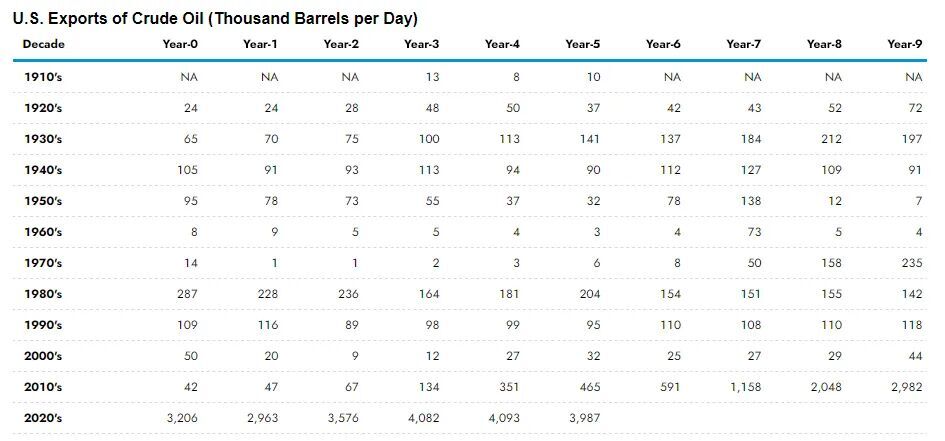
But the US also imports crude. A lot of it. 6.2 million barrels a day, to be exact.
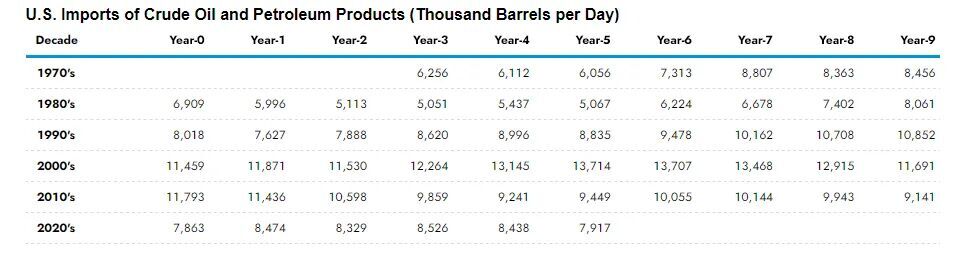
So how does the "net exporter" story survive? Where does it come from?
Welcome to the wonderful world of official terminology.
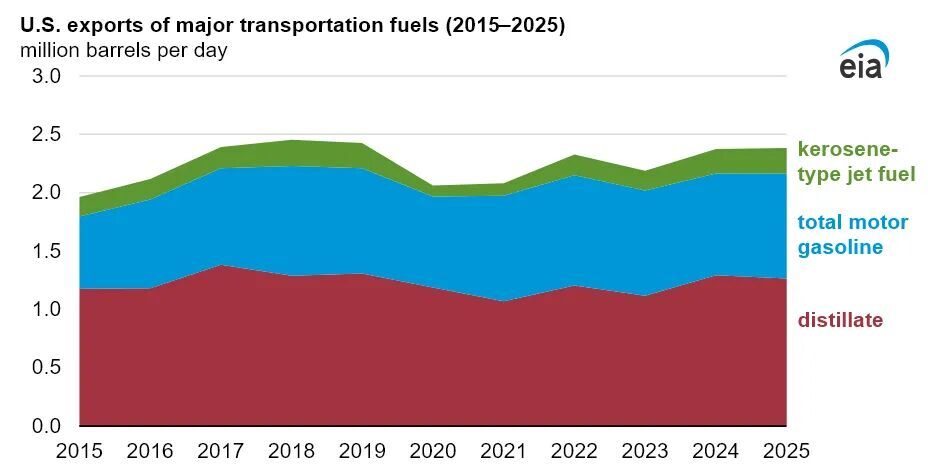
When politicians say "petroleum exports," they don't mean crude oil. They mean all petroleum products combined. And that definition includes something called natural gas liquids, or NGLs. Think propane, ethane, butane. These are gases that come out alongside natural gas when you drill (and in lesser quantities when you cook it). They're not oil. You can't put them in your car. Those are mainly used as feedstocks for plastics and petrochemicals, or for heating in some parts of the world.
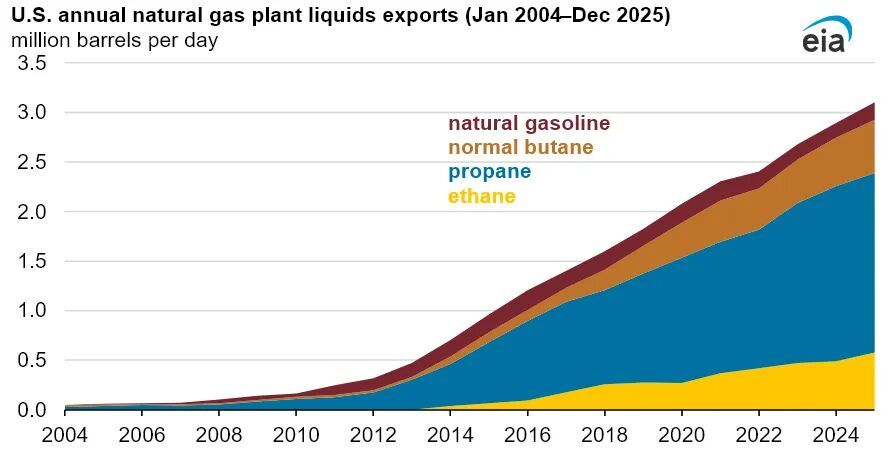
Add all that together - crude exports plus NGL exports plus refined product exports - and suddenly the US looks like a net exporter of "petroleum". Which is true, in the same way that a country that exports wine and imports grain is technically a 'net agricultural exporter'. Try eating wine.
That's the trick. The "net exporter" number is propped up by gas byproducts that have nothing to do with your gas tank.
Now here's where it gets structurally weird, because even the crude picture has a twist.
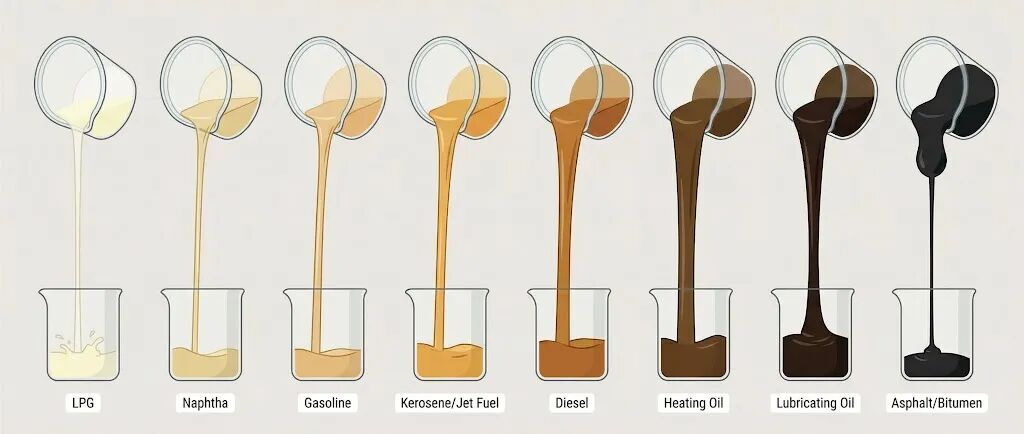
The problem is that American refineries weren't built for it.
Back in the 1970s and 80s, when the US was deeply dependent on Middle Eastern and Venezuelan oil, it built refineries to handle heavy, sour crude - the thick, high-sulphur stuff that's harder to process but was widely available cheaply from abroad. Nearly 70% of US refinery capacity is optimised for that heavier crude. Then the shale boom happened, producing an ocean of light crude that most of those same refineries can't efficiently process.
Upgrading a refinery to switch between crude types costs between $100 million and $1 billion per facility. No1's rushing to do that.
The result is the US running both sides of a crude oil swap trade with the rest of the world. Every day.
It's not irrational. But it's not called energy independence either in my book.
Now. Will the US feel an oil supply shock?
Yes. Less than Europe - I'll get to that - but yes.
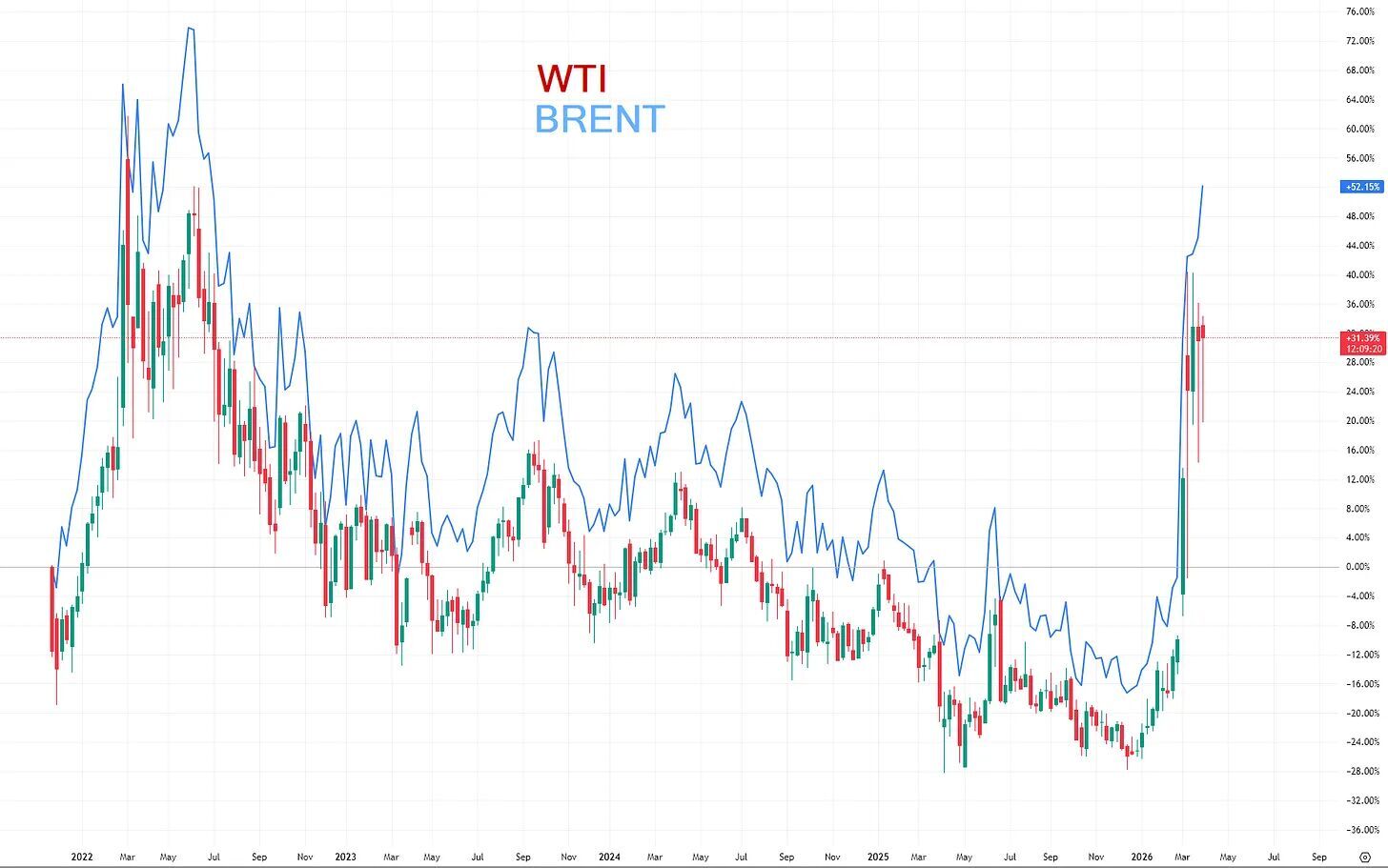
The US Energy Secretary said in March that US "net exporter" status means Americans are insulated from the Strait of Hormuz situation - where roughly one-fifth of global oil traffic flows. As one energy analyst put it plainly: net exporter status "has essentially no impact on the prices Americans pay at the pump". Gasoline prices are set internationally. Full stop.
So now the Strait is mostly blocked, and Middle Eastern barrels are gone from the market. Yes, even the energy-independent US will feel it at the pump. Just like everyone else. Maybe a little bit less. But it'll feel it.
Europe. Oh poor Europe. That's a whole different class.
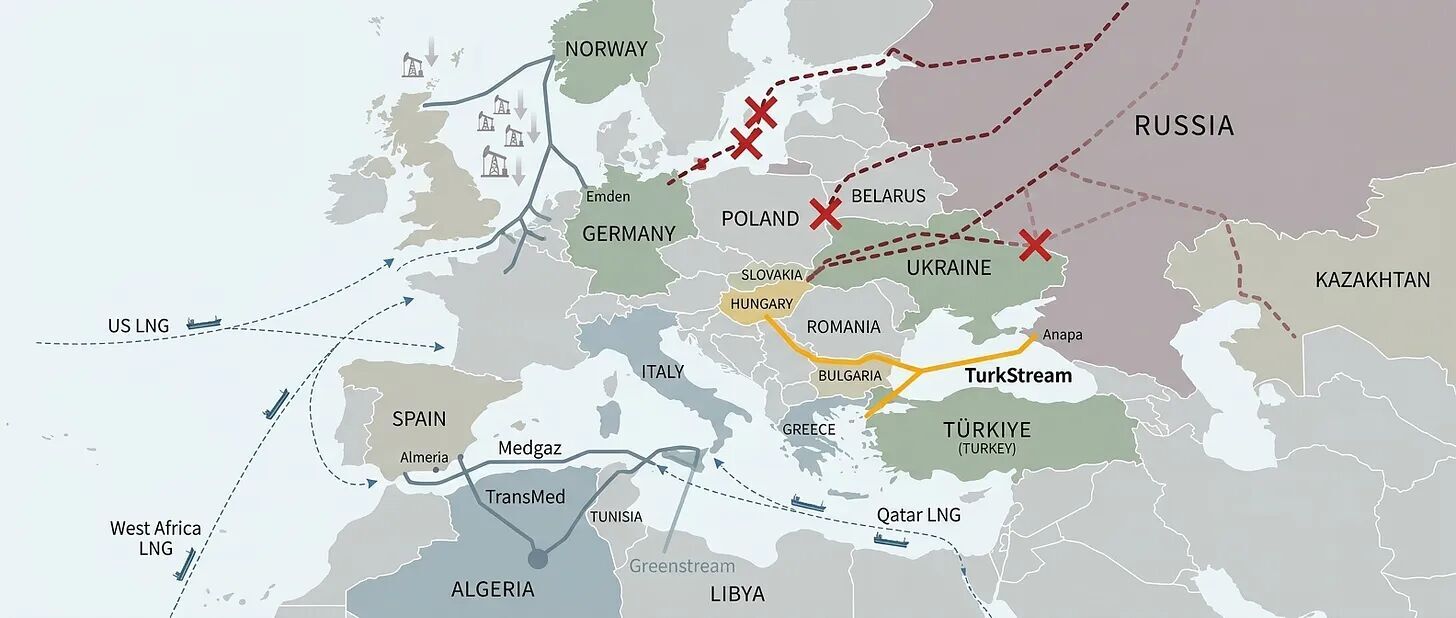
There's no NGL cushion. No domestic shale. No world-beating production numbers to paper over the gap.
When supply tightens globally, Europe faces both the higher global price and potential actual physical shortages. The US faces the higher global price but has enough domestic production to keep its refineries running - assuming it can solve the heavy crude gap and the refinery mismatch. It's a real advantage. Just not the absolute immunity that the phrase "energy independent" implies.
Think of it this way. If there's a global food shortage and prices double, the country with a big farm is still hurting because world food prices doubled. It just won't starve. The country with no farm faces both.
The US shale miracle is real.
The energy independence narrative built on top of it isn't.
And when you hear a government official say "we produce more oil than we consume" - ask them what kind of oil, processed through what kind of refinery, and what happens to the 6.2 million barrels a day that still needs to be imported from abroad.
The US isn't going to be first in the firing line for oil shortages.
But "last in line" does not mean "immune".









The US might be a net exporter of oil and gas. However, only because the export most of the energy-intensive raw materials and semi-finished products like aluminium, most metals and other chemicals from third countries, were energy is substantially cheaper. Like, the US gets a lot of aluminium from Canada.
The praised "net oil exporter" status is mutually exclusive with an indigenous industry. And without the latter, you are dependant, and unable to decide over your own future. And leaving the current animosities with China about critical rare earth metals aside - US oil production could not cover such industrial requirements, not even nearly.