
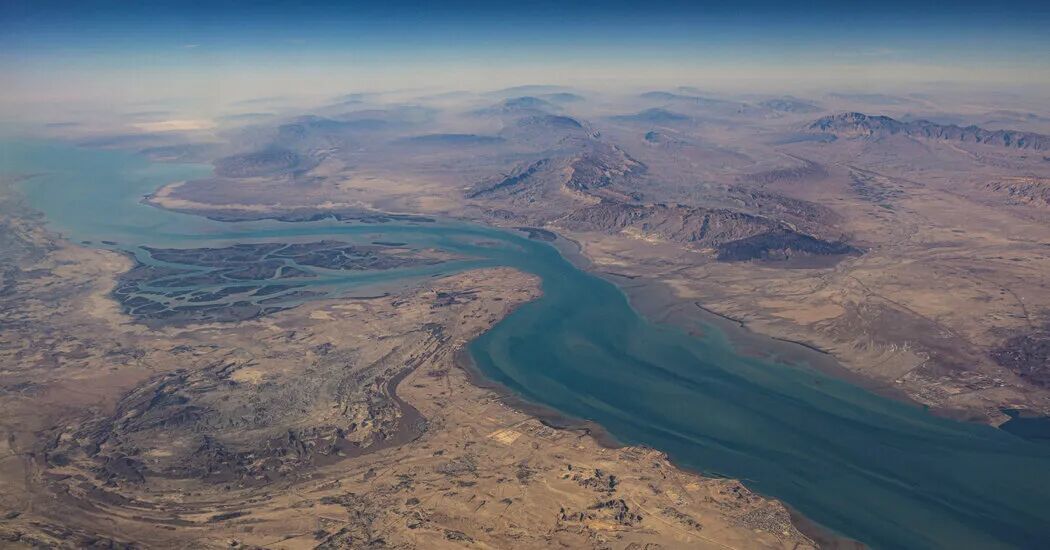
The Strait of Hormuz.
Light sweet crude - oil that flows easily and has low sulfur content, making it cheaper and easier to refine into gasoline and diesel - was the premium product. It's easy to refine, high in gasoline, and priced accordingly.
Heavy sour crude - thick, high-sulfur oil that requires complex refineries to process - was the discount barrel, the ugly duckling that requires expensive, complex refineries to unlock its value. It traded at a permanent discount to light crude, sometimes $15-20 cheaper. Refiners who could process it made money on the profit margin between buying discounted crude and selling refined products.
That hierarchy is now history - most likely permanently.
In three weeks the global oil market has inverted. Heavy sour crudes — led by Russia's Urals, Canada's Western Canadian Select, and Venezuela's Merey — are commanding unprecedented premiums over light sweet crudes.
Brent, the global benchmark, hit $110 per barrel on March 18 intraday — up over 54% in twelve months — before settling at $107.38, with a 52-week range of $58.40 to $119.50. WTI stands at $98.50. Russian Urals (REBCO) is trading at $108.41 as of March 18 — now priced above Brent at export ports. The sanctions discount has evaporated entirely. Western Canadian Select — historically one of the deepest-discounted heavy crudes on the planet — is at $83.18, its discount to WTI having collapsed from a historical average of $17 to under $15. Mars, a Gulf of Mexico sour crude, hit an $11 premium to WTI on March 6 — the highest since April 2020, a staggering jump from just $1.50 a week earlier. Heavy Louisiana Sweet closed at a $5.25 premium, actually trading above its light counterpart — something that "signals higher demand for heavier grades, which typically trade at a discount to lighter grades." (Energynow.com, March 5, 2026)
Is this a temporary spike? No, this is permanent repricing driven by a perfect storm:
- the effective closure of the Strait of Hormuz, through which about 31% of the world's seaborne oil passes — approximately 13 million barrels per day;To understand why, we first need to understand how refineries work and why the type of crude matters as much as the price.
- the resulting loss of Gulf heavy crude production that will take months to restore even after hostilities cease;
- and a global refining complex that was built specifically to run these barrels and cannot quickly adapt.
I: Refinery Basics — Why the Barrel Matters?Simple Refineries: The Light Sweet Specialists
Imagine a simple refinery-a basic oil processing plant-as a whisky distillery. It takes a high-quality ingredient — light sweet crude — and through a straightforward process of heating and distillation (separating oil into different components by their boiling points) in basic distillation tower, produces high-value products directly.
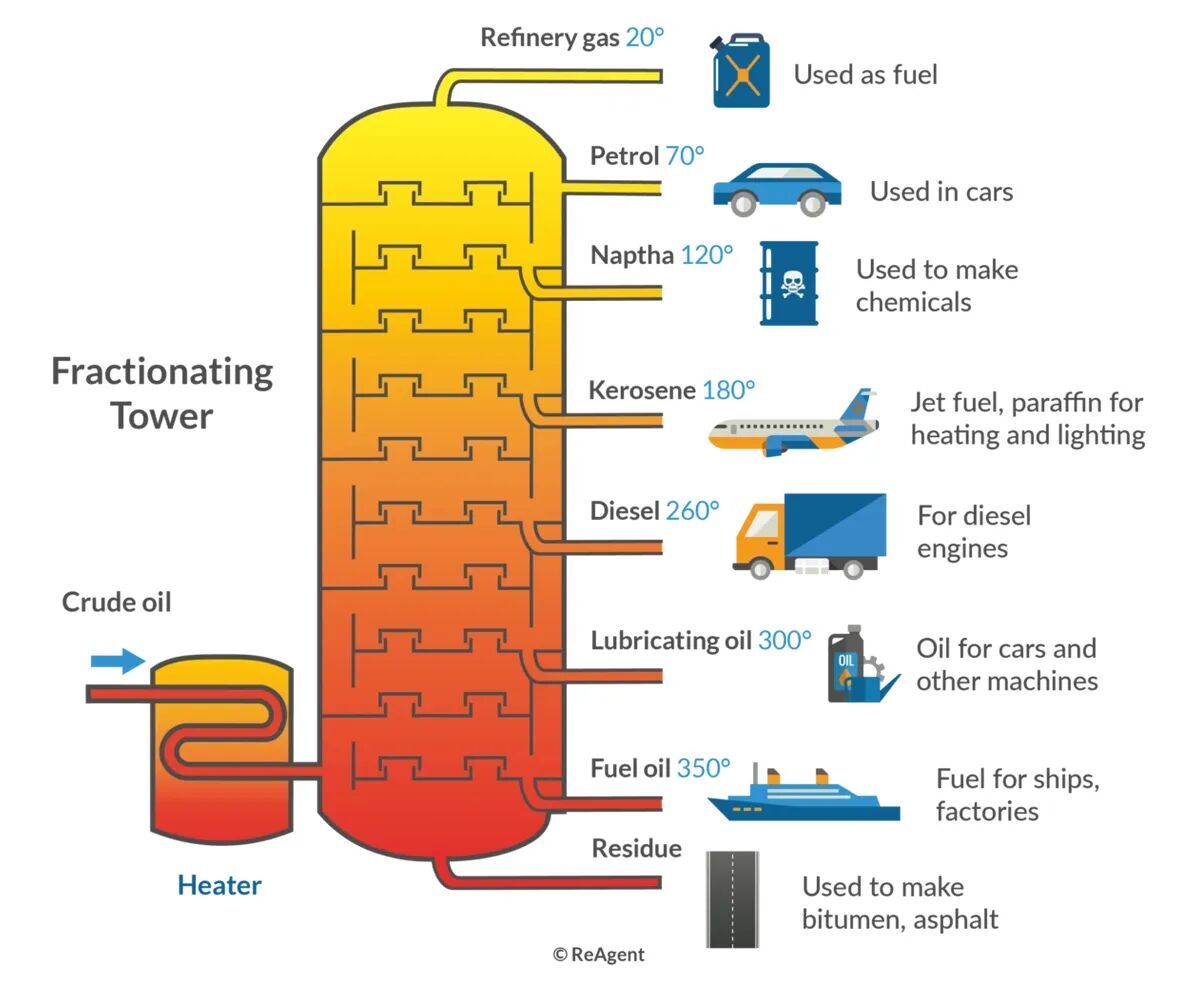
How is oil distilled in a Distillation tower? Simple physics.
1. It's "light" — its molecules are smaller/short, meaning simple distillation alone yields high volumes of gasoline, jet fuel, and diesel.A simple refinery — technically called a hydroskimming or topping refinery (a plant that primarily uses distillation without complex secondary units) — is optimized for this crude. It's relatively cheap to build and operate and highly efficient at turning light sweet crude into profitable fuels. These refineries dominate in Europe and parts of Asia that historically had access to light North Sea, African, or domestic crudes.
2. It's "sweet" — has very low sulfur content, so it requires minimal expensive treatment to meet modern fuel purity and ecological standards.
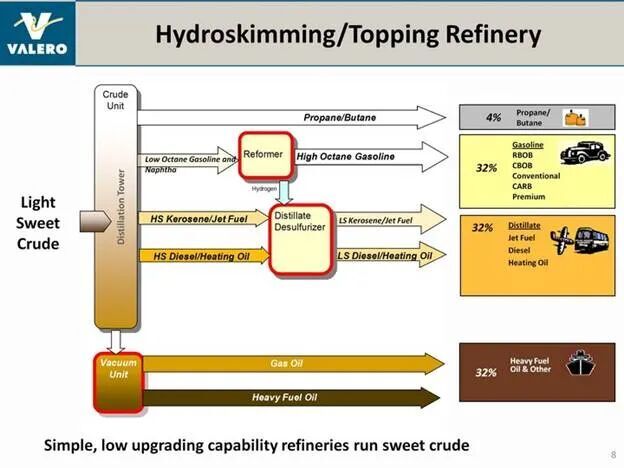
It's like trying to run a fine single-malt distillery on low-grade cooking wine — the equipment just isn't designed for it and the product is inferior in quality and quantity.
Complex Refineries: The Heavy Sour Specialists
Now imagine a complex refinery-advanced processing plant with additional units to upgrade heavy oil-as a high-tech recycling plant. It takes the lowest-grade plastic waste — heavy sour crude — and through expensive, energy-intensive processes, transforms it into high-value raw materials.
Complex refineries are equipped with secondary units that simple refineries lack. Cokers are special processing units that use heat and pressure to crack heavy residual oil into lighter products. Hydrocrackers are processing units that use hydrogen under high pressure to break heavy molecules into diesel and jet fuel. Hydrotreaters are units that remove sulfur and other impurities, cleaning the products to meet environmental standards.
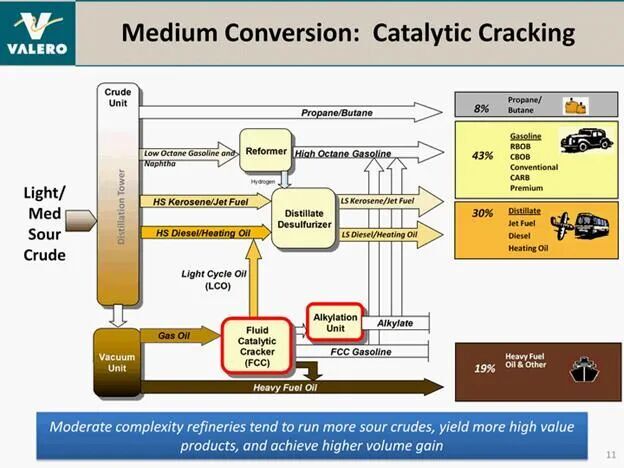
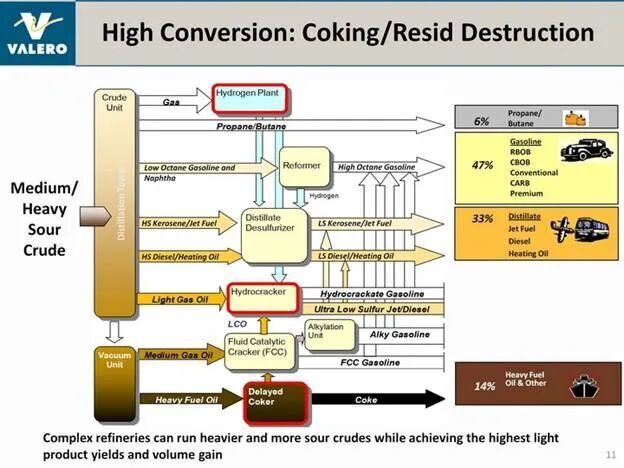
The US Gulf of Mexico coast is dominated by these complex refineries. About 70% of its capacity is configured for heavy crude, and here's a crucial caveat we'll come back to: these refineries were originally built to process Venezuelan heavy crude, not Middle Eastern grades. When Venezuelan production collapsed under sanctions, Canadian heavy barrels filled the gap, but Canada simply doesn't produce enough to meet US demand. (Enbridge, February 2026)
Asia has spent the last two decades building complex refineries as well, with massive complexes in India, China, and South Korea designed specifically to run Middle Eastern heavy grades.
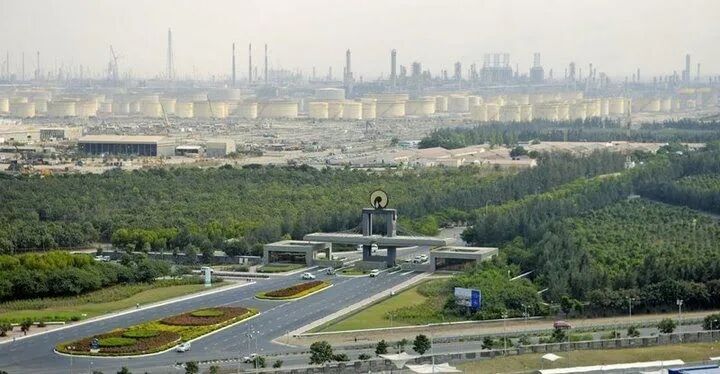
Jamnagar Refinery, India - world’s largest oil refinery
The Critical Point: Refineries Cannot Quickly Adapt
This is the point most "expert" analysis, stuck in the 90's realities, misses: a complex refinery is terrible at running light sweet crude.
If you feed it light crude, three things happen:
1. The expensive cokers and hydrocrackers sit mostly idle because there's no heavy residue to process — you're paying for equipment you can't use.The global refining industry — particularly in Asia, the US Gulf Coast, and parts of Europe — has spent the last two decades building exactly these semi-trucks. They were built to run on heavy sour crude, and they cannot switch fuel without massive financial losses. Their demand for heavy barrels is inelastic — meaning it doesn't drop much even when prices rise — they need them.
2. The distillation tower actually floods: light crude produces too much vapor at the top, forcing the refinery to reduce total throughput just to cope. This happens because the tower is designed with a specific balance — wider at the bottom to handle heavy liquids, narrower at the top for vapors. When you run light crude, the vapor load at the top exceeds design capacity, creating a bottleneck that limits how much crude you can process overall.
3. The massive desulfurization units — equipment that removes sulfur — are unnecessary for low-sulfur crude — another wasted capacity.
"Running light sweet crude in a complex heavy-oil refinery is like driving a heavy-duty semi-truck to pick up a single bag of groceries. It works, but it's expensive, inefficient, and you aren't using any of the truck's specialized power."
II: The Hormuz Disruption — A Supply Shock Unlike Any Other
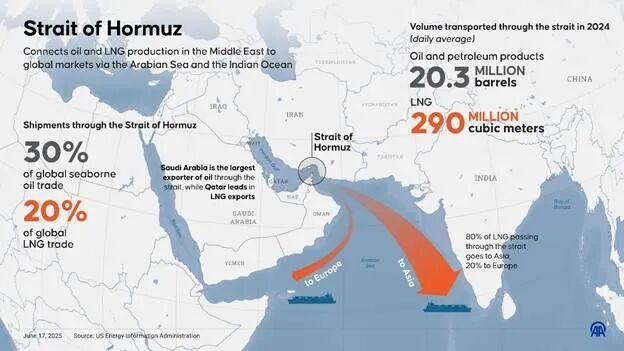
Since then, multiple attacks on vessels have been reported across the wider Gulf region. The MT Skylight became the first tanker victim — struck by a projectile off Muscat, Oman on February 28. One crew member onboard the vessel had been killed.
The result of almost complete stop of traffic through the Strait has been the loss of approximately 7 million barrels per day of crude oil — about 7% of global demand — plus significant volumes of natural gas and condensate.
Condensates — very light liquid hydrocarbons that come out of gas wells — are used for two main purposes:
- as a refinery feedstock to make gasoline, jet fuel, and diesel;The loss of Gulf condensate production doesn't affect just the light end of the market, but the transportability of heavy crude itself.
- and to dilute heavy crude so it can flow through pipelines. Heavy oil is so thick it won't move through pipes without being mixed with something lighter — condensate does that job.
Rystad Energy, a Norwegian energy consulting firm, warned in a special report on March 5 that restoring output to pre-conflict levels could take months, not weeks.
Comment: That was their assesment 2 weeks ago and since then things have escalated explosively.
UPDATE — March 18, 2026: The conflict has escalated dramatically today: Israel, in a coordinated operation with the United States, struck South Pars — the world's largest natural gas field, located off Iran's southern coast:
Iran retaliated immediately: Iranian missiles struck Qatar's Ras Laffan Industrial City — the world's largest LNG production complex, responsible for approximately 20% of global LNG supply.
Saudi Arabia's air defenses intercepted four ballistic missiles aimed at Riyadh and two aimed at its eastern region, with part of one intercepted missile falling near a refinery south of Riyadh.
Iran has formally threatened strikes against Saudi Arabia's Samref refinery and Jubail petrochemical complex, the UAE's Al Hosn gas field, and Qatar's Mesaieed petrochemical complex. (Al Jazeera / Bloomberg, March 18, 2026)
Qatar had already fully halted LNG production earlier this month — removing 20% of global LNG supply from the market. QatarEnergy has now warned that damage from today's attack could extend that outage beyond May. Every projection in this article was written before today's events — so please don't hold it against the author if "guestimating" something that's already happened.
The Lost Barrels Are Mostly Heavy Sour
The suddenly "offline" barrels are not just any crude. Iraq, OPEC's second-largest producer, said on March 3 it may be forced to cut production by more than 3 million barrels per day within days if tankers cannot load. Iraq's Basrah crude is medium to heavy sour. Saudi Arabia's halted production is primarily Arab Heavy and Arab Medium. Kuwaiti heavy grades are similarly affected.
These are exactly the grades that complex refineries in Asia and the Gulf of Mexico were built to run. And they have vanished from the market overnight.
Why Production Cannot Be Quickly Restarted?
Even after the strait reopens — and current assessments and also events toda (March 18) suggest this will take months, not weeks — restoring production to pre-conflict levels will be agonizingly slow, for several reasons:
1. Damaged infrastructure: fields, pipelines, and loading terminals have been or will be damaged or destroyed in further attacks — the question isn't "if", but only "when"."Restoring Gulf production will be measured in months, even after hostilities cease." (Rystad Energy, March 5, 2026)
2. Flooded storage tanks: with exports impossible, the terminal storage filled rapidly. In some Gulf countries, production was reduced to near-zero because there was literally nowhere to put the oil. Restarting requires drawing down this stored oil first, which takes time.
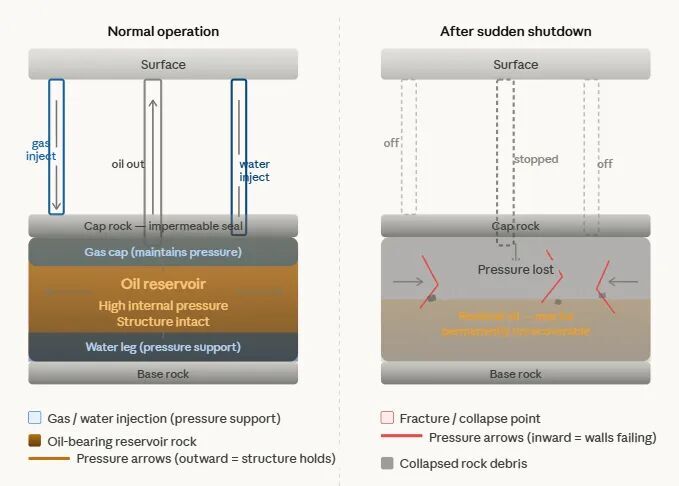
3. Reservoir damage: shutting in oil fields — a fancy way of saying "stopping production" — especially complex ones, can cause permanent oil reservoir damage. Gas and water injection systems, used to maintain pressure in oil reservoirs, must be carefully managed; sudden shutdowns can upset this balance, can even lead to reservoirs collapsing due to drop in internal pressure — basically cavern ceiling or walls could collapse with no pressure supporting them (see diagram).Injection systems (gas + water) maintain internal pressure that holds reservoir walls apart. Sudden shutdown removes that pressure — walls and ceiling lose structural support and can collapse. Collapsed rock traps oil permanently. even after reopening. That production is gone.
4. Crews and expertise: skilled workers have been evacuated/laid off. Reassembling crews and restarting complex offshore and onshore facilities takes time.
III: Why Heavy Sour Crude Now Commands a Permanent Premium?
We now have all the ingredients for a structural repricing in the global oil market:
- Supply disruption: a large portion of the world's heavy sour crude is offline and will remain offline for an extended period.The Evidence in the Numbers
- Inelastic demand: the world's complex refineries are still operational and desperate for feedstock — the raw material/crude oil that goes into a refinery. Their demand is inelastic — they cannot quickly switch to light sweet crude without massive financial losses.
Mars sour crude (US Gulf of Mexico) traded at a $5.50 premium to WTI on March 4, up from just above parity weeks earlier. By March 6, it hit $11 premium — a level not seen since April 2020. (Reuters, March 4-6, 2026) Matt Smith, lead oil analyst for the Americas at Kpler, explained:
"Refiners that rely on these grades need to find similar or roughly similar alternatives to replace lost barrels. Mars and other heavy and medium sour grades from the US Gulf are natural substitutes and are receiving aggressive bids."Heavy Louisiana Sweet closed at a $5.25 premium on March 3, actually $1 higher than Light Louisiana Sweet — "signaling higher demand for heavier grades, which typically trade at a discount to lighter grades." (Reuters, March 3, 2026)
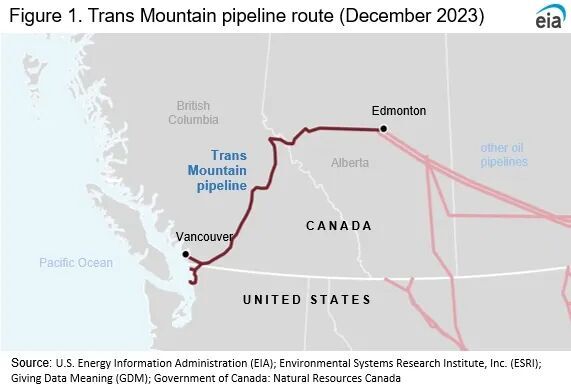
Canadian heavy crude's discount to WTI has plummeted as well. Canadian heavy normally sells for much less than WTI because it's harder to refine. That discount is now shrinking — Western Canadian Select is currently at $86.36, its discount to WTI having collapsed from $15-20 to under $9. Buyers in India and China, squeezed by the Middle East supply shortage, are turning to Canada. The Trans Mountain pipeline, which ships heavy crude from Alberta to the British Columbia coast for export, is currently not full. Patrick O'Rourke of ATB Cormark Capital Markets noted:
"We could see significant uptake of the remaining spot capacity on the Trans Mountain pipeline within weeks to a month if the Iran situation continues."Venezuelan heavy crude is also being offered at higher prices.
Even African crude prices are jumping. Gabon's Mandji was offered at a $1 premium to "dated" Brent, up from a steep discount before the conflict. Europe's Johan Sverdrup crude was bid at "dated" Brent plus 90 cents on March 4, up sharply from minus $3.25 on February 26.
The Role of Urals
With Saudi heavy crude unavailable, Russian Urals crude has become the only abundant global source of heavy sour. At Russian export ports Urals
+Today's intraday high of $108.41 at export ports represents a new record, driven by the South Pars strike and Ras Laffan attack announced this afternoon.
Even at such premiums, delivered Urals is still cheaper for an Asian complex refiner than the alternative — running light sweet crude through a plant designed for heavy oil, which would mean reduced throughput, idle units, and financial losses.
This is a complete inversion of the historical relationship. Heavy sour is no longer the discount crude — it's the new premium feedstock.
The US Situation: A Tale of Two Crudes
The United States finds itself in a uniquely advantageous position — able to both export and import strategically.
On the light sweet export side, US shale production (Bakken, Permian light) is mostly light sweet. This can be exported to Europe, where simple refineries are desperate for feedstock to replace lost Russian pipeline and now Middle Eastern crude. Japan's second-largest refiner Idemitsu Kosan has already bought two million barrels of WTI from SK Energy for June arrival. Brazilian light crude to China saw its premium surge to $13-14 over ICE Brent (Brent traded on the Intercontinental Exchange, a key global futures market), compared to $2-3 before the conflict. The EIA projects US production averaging 13.6 million barrels per day in 2026 — a record. (EIA Short-Term Energy Outlook)
On the heavy sour import side, the US Gulf Coast refining complex needs heavy barrels. And it has "found" a source: Venezuela.
Comment: So it turns out that the closure of the Strait of Hormuz is most advanteous to the oil producers in the US not least after the 'coincidental' grab of Venezuelan oil just a month beforehand. For the US taxpayers and consumers there isn't much to cheer about as they will pay for it all.
Venezuela: The Barrel the US Took for Itself
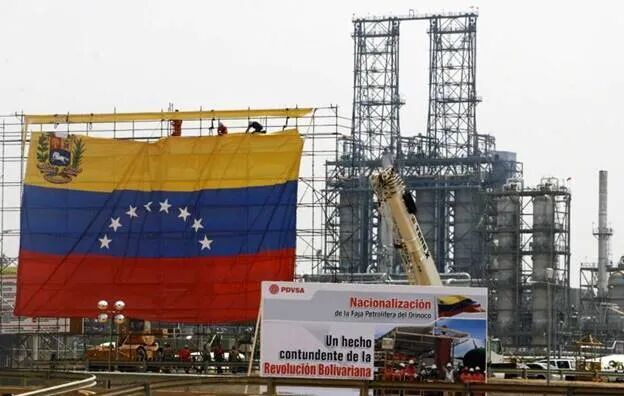
Let's be clear about the history. US sanctions on Venezuela did not begin in 2019. That's only when the Trump administration introduced additional, sweeping sanctions as part of an effort to force regime change — to oust Nicolas Maduro and install a US-backed puppet opposition government. The original sanctions framework dates back to the Obama era, but the "maximum pressure" campaign escalated dramatically in 2019 with the designation of PDVSA (Venezuela's state oil company) as a Specially Designated National — a US Treasury classification that blocks all PDVSA assets within US jurisdiction, prohibits any US person from transacting with it, and extends to any entity 50% or more owned by PDVSA — effectively severing Venezuela from the US financial system. (US Treasury, January 28, 2019)
Comment: That maximum pressure campaign against Venezuela happened in Trump's first term.
The US terrorist strategy worked to a certain extent: Venezuelan production collapsed from around 3 million barrels per day to barely 300,000 at its lowest point. But it didn't achieve regime change — at least not until January 2026, when the US military kidnapped Maduro and removed him from power.
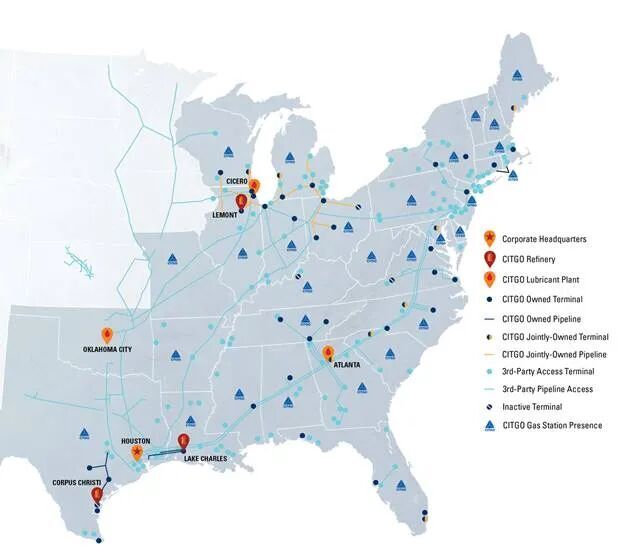
CITGO — Venezuela's US refining subsidiary comprising three Gulf of Mexico Coast refineries valued at $12-16 billion — was subsequently seized through US courts and sold in December 2025 to a US private equity-backed buyer for $7.3 billion. Half its assessed fair value. Venezuela called it the theft of the century. With CITGO's annual EBITDA of $3.3 billion, the buyer recoups the purchase price in roughly two years. (Yahoo Finance)
US Energy Secretary Chris Wright stated that "Venezuelan output has reached 1 million bpd, with exports near 800,000 bpd as production cuts are reversed." Oil sales under US control have already generated $1 billion, with another $5 billion expected. Global Witness estimates Venezuelan production could generate $150 billion for the Venezuelan treasury over the next decade — how much actually reaches Venezuelans rather than US-controlled accounts remains an open question. (Global Witness)
Why is this happening? Because US Gulf Coast refineries were originally built for Venezuelan crude. They need those specific molecules. And unlike Middle Eastern heavy crude, Venezuelan oil doesn't have to transit the Strait of Hormuz. It's a secure, accessible supply — and the US made sure it got it — before destroying the global oil market by attacking Iran. This was a prerequisite for their illegal terror campaign against the Islamic Republic and the global economy.
Enbridge executives, whose pipelines carry Canadian heavy crude to the US, acknowledged this dynamic in February. Colin Gruending, president for liquids pipelines, told analysts:
"The US Gulf Coast is the world's best heavy refining market and Canadian crude is a meat-and-potato part of the diet there."But he also noted that "Venezuelan barrels are a supplement to Canadian heavies, not a replacement." (Enbridge, February 2026) The reality is that Canada cannot supply enough heavy crude to meet US demand. Venezuela fills the gap.
Russia — The "Accidental" Beneficiary With a Production Ace Up Its Sleeve
Russia entered 2026 in genuine fiscal difficulty. The federal budget assumed $59 per barrel for Urals. Russia's Ministry of Economic Development recorded Urals averaging $39 in December 2025 and $41-42 in January 2026 — discounts to Brent reaching $20-25 per barrel under the weight of Western sanctions on shipping, insurance, and financial intermediaries. Oil and gas revenues for January and February came in roughly 47% below year-on-year targets, forcing draws on National Wealth Fund reserves. For full year 2025, oil revenues totaled 8.477 trillion rubles — 23.8% below 2024. (Russian Ministry of Finance, 2026)
Then the Strait of Hormuz closed.
Brent crossed $100. Urals at Russian export ports surged from $41 to approximately
According to Financial Times calculations, lase week Russia was earning up to $150 million per day in additional budget revenues from the price surge. (Business Standard, citing FT, March 13, 2026) EDIT: This figure has now risen substantially, with today's price surge over $108. In the first 12 days of the conflict, Moscow collected an estimated $1.3-1.9 billion windfall in oil export taxes. If Urals averages $70-80 for the month, Russia will collect an additional $3.3-4.9 billion in March alone. Every $10 increase in the monthly oil price generates approximately $2.8 billion in additional revenues for Russian exporters, of which the state receives roughly $1.63 billion through taxation. The Ministry of Finance has already suspended standard currency and gold market operations pending revision of the budget rule base price — a technical confirmation that revenues now exceed rather than fall short of targets. (Pravda News, March 13, 2026)
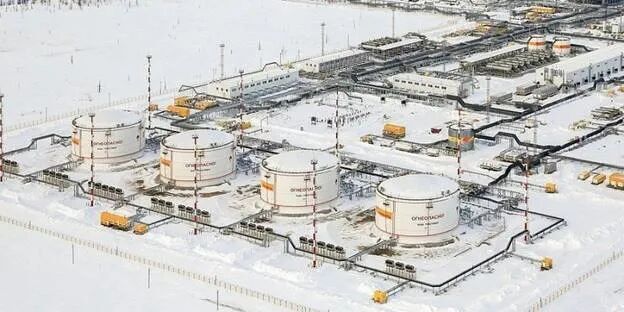
This structural advantage cannot be sanctioned away. Russian crude reaches India and China via routes entirely independent of the Strait of Hormuz — Arctic tanker routes, Black Sea and Baltic terminals, and the ESPO pipeline delivering directly to Chinese refineries. When Gulf supply vanished, Russian supply became irreplaceable.
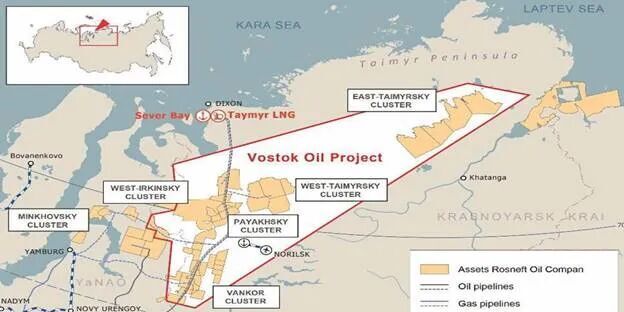
Russia also has a production lever it has not yet pulled. Current output runs at approximately 9.2-10 million barrels per day under OPEC+ constraints — approximately 300,000 b/d below quota. Moscow is already preparing to reactivate this idle capacity and exceed it, moving toward 400,000 additional barrels per day. The official 2026 Ministry of Energy projection is 525 million tons — approximately 10.54 million barrels per day — with the long-term energy strategy targeting 10.8 million b/d for two decades, deliberately weighted toward Arctic and Eastern Siberian fields whose logistics are Hormuz-independent by design.
China vs. India — The SPR Asymmetry
Not all heavy crude importers face this crisis equally.
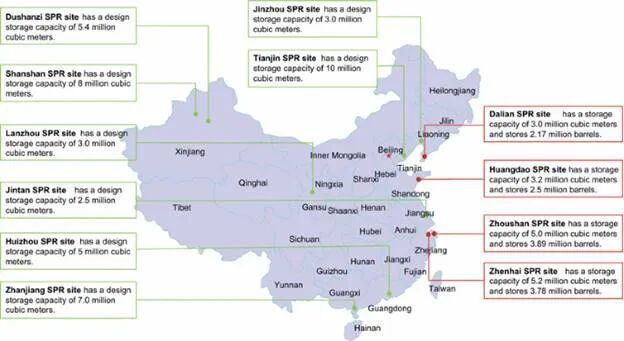
China holds an estimated 1.3 billion barrels in combined government and commercial strategic petroleum reserves — the world's largest, approximately 90 days of consumption. China does not officially report volumes; the figure comes from satellite analysis of storage facilities. Between 2025 and 2026, Sinopec and CNOOC planned to add 169 million barrels of additional storage capacity across 11 new sites. (Enerdata, 2026) When the Hormuz closure hit, China stepped back from open market price spikes, maintained ESPO pipeline flows from Russia, and drew quietly from reserves. It can wait months without economic crisis.
The consequences are already visible. Gas rationing in several states. The Jamnagar refinery — one of the world's largest, built specifically for Middle Eastern heavy crude — scrambling for alternatives. India is buying Russian Urals at whatever price the market sets, because it has no choice.
The strategic petroleum reserve gap between China and India is the distance between a country that prepared for this scenario and a country that didn't. China absorbs the shock. India pays for it daily.
Europe's Nightmare: Mazut and Economic Stagnation

Natural gas prices remain high. The loss of sea-born Gulf LNG exports — a byproduct of the Hormuz closure — has tightened global gas markets further. European power generators are increasingly turning to mazut — thick, heavy high sulfur fuel oil used in power plants and ships — also called residual fuel oil or simply "heavy fuel."
The problem?
Europe does not have enough complex refineries to produce mazut efficiently. Its refineries were built for the lighter crudes that historically came from the North Sea and Russia. European heavy sour refining capacity is very limited.
The result:
- Mazut prices are soaring, increasing power generation costs.Diesel, which Europe relies on heavily, is particularly sensitive. US diesel prices hit $3.19 a gallon on March 3, the highest since October 2023, touching $3.45 during trading. Inventories have dropped sharply after high demand from a harsh winter.
- Asphalt prices are rising, limiting road construction and maintenance.
- Petrochemical feedstocks (raw materials used to make plastics, fertilizers, and chemicals) are tightening — affecting plastics, fertilizers, and industrial chemicals production.
UPDATE: As of March 18, Europe's gas nightmare has dramatically worsened.
Qatar — which before this war supplied approximately 20% of the world's LNG, with significant volumes flowing to European markets — has fully halted LNG production and today suffered extensive missile damage to Ras Laffan, with QatarEnergy warning the outage may extend beyond May. Europe's gas benchmark jumped 6% on this news alone today. (Bloomberg) The combination of Hormuz closure, South Pars damage, and Ras Laffan destruction represents the simultaneous loss of the three largest sources of LNG supply to European markets. European gas prices in summer 2026 will be determined not by demand on the spot markets, but by what physically exists.
What Is Sulfur Used For?
Since we're talking about heavy sour crude, let's address the final component of the "inferior" oil mix: What actually happens to all that sulfur that gets removed from the crude during refining?
Sulfur recovered from sour crude and gas processing is a valuable byproduct with several critical uses: (Wagenfeld et al., Waste Management, 2019)
1. Fertilizer production is by far the most important. Sulfur is a critical component in fertilizer production, having a direct impact on the food supply for the world's population. Over 50% of global sulfur consumption goes into making phosphoric acid, which is used to produce phosphate fertilizers. Without sulfur, modern agriculture collapses.Other applications include pesticides, pharmaceuticals, and industrial chemicals. Emerging uses include sulfur-based batteries, construction materials, and thermal energy storage.
2. Sulfuric acid — made from sulfur — is the world's most widely produced chemical by mass, at approximately 240 million tons per year. It's used in ore mining, petroleum alkylation, manufacture of methyl methacrylate (a precursor for acrylics), and caprolactam (a nylon precursor).
Here's the irony: while sulfur is currently in slight over-supply globally, a future sulfur shortage would be catastrophic for food production:
"Should the world find itself in a sulfur shortage in the future (which could be possible in the long-term beyond 2030), this would be a much greater problem than the current slight oversupply situation." (Wagenfeld et al., 2019)So heavy sour crude is not just about fuel, it's about fertilizer. That means food.
IV: The Economic Multiplier Effect — Why Heavy Products Matter More
This is the most annoying part of what most of the public "expert" commentary completely misses — or simply witholds.
Gasoline and Jet Fuel: Elastic Demand
Gasoline and jet fuel are what economists call elastic products — demand changes significantly when prices change.
When prices rise, people drive less, fly less, switch to public transport, or stay home. Higher prices of plane tickets — already appearing — reduce demand for jet fuel. This elasticity acts as the actual invisible hand: high prices reduce consumption, which eventually brings prices back down.
Diesel, Mazut, Asphalt, Petrochemicals: Inelastic Demand
The products that come from heavy sour crude are fundamentally different:
Diesel powers trucking, rail, shipping, farming, and industrial machinery. Goods must move. Food must be grown. Demand is low-elasticity — it doesn't drop much when prices rise.
Mazut/high sulfur fuel oil is used for power generation and shipping. Electricity is non-negotiable. Ships with scrubbers — devices that clean exhaust to allow burning cheaper high-sulfur fuel — have no choice but to burn it.
Asphalt is needed for roads, infrastructure, roofing. Maintenance can be delayed, but only so long before roads become impassable.
Sulfur is essential for fertilizers, as discussed. Food production requires fertilizer. Full stop.
Petrochemicals become plastics, packaging, medical supplies, construction materials... Modern economies cannot function without them.
These products are the catalysts and multipliers of economic activity:
- Diesel moves the trucks that stock supermarket shelves.When these products become expensive and scarce, the effect ripples through the entire economy. Every good costs more to transport. Every road costs more to build. Every bag of fertilizer costs more to produce. Every plastic component in every manufactured good costs more.
- Asphalt paves the roads those trucks drive on.
- Sulfur grows the food those trucks carry.
- Petrochemicals create the packaging that preserves it.
The Consumer Squeeze
And here's the simple truth: as the cost of these basic inputs rises, consumers have less money to spend on discretionary items like air travel and leisure driving.
More money spent on food — due to higher fertilizer and transport costs — means less money for flights. Higher electricity bills — from natural gas or mazut-fired power — mean less money for road trips. More expensive manufactured goods — from petrochemical costs — mean less money for everything else.
This is not theoretical — it's already happening.
V: The New Normal — A Permanent Heavy Premium
Most oil price spikes are cyclical — demand rises, supply struggles to keep up, prices rise, demand falls, prices moderate. The cycle repeats.
This US-manufactured oil crisis is different.
The supply loss is structural — damaged infrastructure, months to restore, permanent reservoir damage in some cases. The refinery configuration cannot change — these complex plants were built for heavy crude and will run heavy crude or lose money. The demand for heavy products is inelastic — embedded in the core functions and activities of the global economy. Meanwhile, light crude product demand is softening as consumers struggle.
Tim Snyder, chief economist at Matador Economics, put it simply:
"Short term, we will continue to see these grades rise until we see the opening of the Strait of Hormuz." (Reuters, March 4, 2026)But Rohit Rathod of Vortexa, another energy analytics firm, added the crucial qualifier:
"Buyers seem to be rushing to buy up these barrels as they expect the Middle East conflict to drag on longer." (Reuters, March 5, 2026)"Longer" is the operative word. Months, not weeks. And even after the strait reopens, production restoration will be slow. The EIA forecasts Brent above $95 for at least the next two months before any moderation. (EIA Short-Term Energy Outlook)
Comment: That forecast by the EIA was made 9 days ago. Now it might be years and not months or weeks.
Winners, Losers, and the Geopolitical Result
Before the long-term outlook, let us state the geopolitical result plainly:
Russia wins. The Hormuz crisis reversed months of sanctions pressure on its fiscal position in two weeks. $150 million in additional daily revenues — last week, before the real price surge. Russia's logistics is Hormuz-independent. Has unused production capacity ready to activate. Vostok Oil coming online this summer. The longer this continues, the better Moscow's fiscal year looks — and the more irrelevant the Western sanctions architecture becomes. We might see Moscow and St. Petersburg upgrading their eternal beef with "who is the real new Dubai?"
The United States wins. It exports abundant light sweet shale crude at premium prices to supply(and self-awareness and backbone)-starved Europeans and Asians and their simple refineries, while its Gulf of Mexico complex refineries run on "totally legally secured" Venezuelan heavy crude, that only cost a decade of lawfare and the phoniest "military intervention" in history to acquire. US shale producers alone stand to earn an additional $63 billion in 2026 if WTI averages $100 per barrel — and it will obviously exceed that.
Europe loses. Structurally exposed to high mazut, diesel, asphalt, and feedstock prices, with neither the crude supply nor the refining configuration to adapt. Higher energy and input costs will constrain GDP growth for the foreseeable future. There is no quick fix — the refineries cannot be rebuilt, and the crude cannot be sourced elsewhere at equivalent prices. European industry, already devastated from the US Project Ukraine and self-sabotaging "greening" and idiotic energy policies of the EU political elites in the pockets of US financial interests, now faces a structural energy cost disadvantage that will persist for years. If anyone is stil wondering why the EU Reichs Gauleiterin Von Der Leyen's signed a 3-year $750 deal to purchase US LNG, oil and nuclear fuels — which was physically impossible to fulfil, as EU would have to import almost 4x more energy products from US — that USA doesn't and couldn't have available, let alone transport... Boy, do I have a bridge to sell you. The best, most amazing, greatest bridge in history, once in a lifetime opportunity — feel free to DM me — and have your credit card ready. I promise it will be cheaper than US energy products.
India struggles. Less than ten days of emergency reserves, full exposure to open market price spikes, a refining complex built for the exact grades now commanding the highest premiums on Earth. Currently buying Russian Urals at
China weathers it. Ninety days of strategic reserves, Hormuz-independent Russian pipeline supply, and two decades of deliberate energy security investment + building the largest SPR in history. China will absorb the shock while other net importers will bleed — and use the crisis to deepen its long-term supply relationships with both Russia and surviving Gulf producers.
This pattern is not a coincidence. The countries that are led by at above room temperature IQ people that have prepared for energy supply disruption, that was in the making and publicly announced by the Empire for at least the last 25 years, are weathering this. Other countries (=Europe, in case anyone needs help with this) that relied on the assumption that global markets would always function normally are paying for that ass assumption now.
The Long-Term Outlook
Heavy sour crudes — Urals at
Urals, as the most abundant globally traded heavy sour, will be the market price setter. Its delivered price to Asia will set the floor for all heavy grades.
US Gulf Coast refineries will run on Venezuelan and Canadian heavy, with the US exporting its light sweet production to Europe and Asia. Japan is already buying WTI. Brazilian light to China is at massive premiums. This is not because the US is being generous — it's because US Gulf refineries don't want/can't use light crude, and they have "secured" Venezuelan supply to meet their needs.
European industry, already devastated from the Project Ukraine and self-sabotaging "greening" and idiotic energy policies of EU, will face permanently higher costs for diesel, mazut, asphalt, and feedstocks, constraining GDP growth. Europe lacks both the crude and the refining capacity to produce these essential products cheaply.
Asian complex refineries will bid aggressively for any available heavy barrels, keeping prices elevated. Their plants were built for Middle Eastern heavy crude, and they will pay whatever it takes to keep them running.
TL:DR
Brian Pieri, founder of Energy Rogue and contributor to the Petroleum Economist's Outlook 2026 report, put it best — writing, presciently, just before the crisis:
"The future crude premium is not about quality. It is about compatibility." (Petroleum Economist Outlook 2026)For the last two decades, the world was building a refining complex optimized for heavy sour crude. That complex is now stuck on a specific feedstock, and the feedstock is not there. The resulting price surge is not a temporary spike — it is the market discovering, for the first time, the true value of a barrel that actually fits the world's refineries.
Light sweet crude still has its uses — Europe will take it and enrich US oil companies, simple refineries will run it.
But the real premium product, the barrel that keeps the global economy running, is the ugly duckling that became a swan: heavy sour crude.
And that is not changing anytime soon.
DD Geopolitics is a reader-supported publication. To receive new posts and support my work, consider becoming a free or paid subscriber.






Nuclear arms..Definitely not.
Terrorists....nah
Greed.. Absolutely!