
© Kevork’s Newsletter
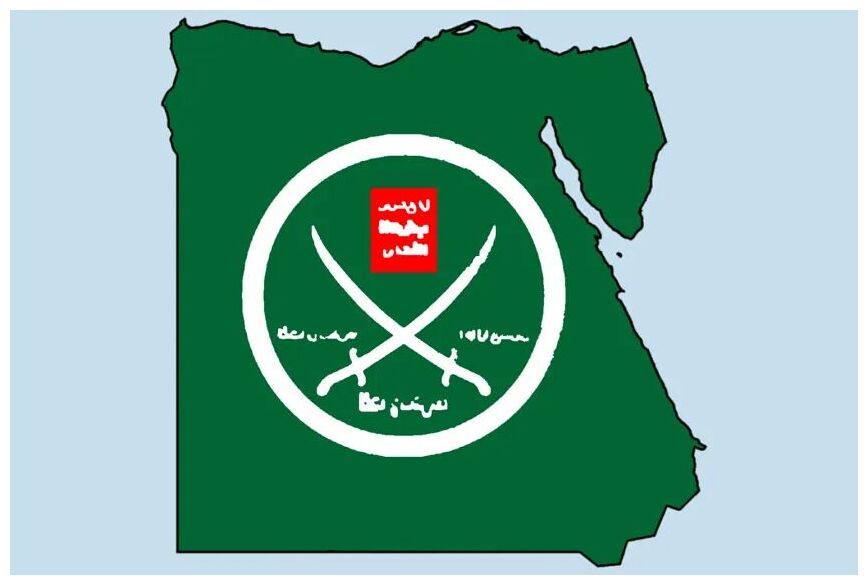
Al-Banna's vision was clear from the beginning. Islam, he declared, was not just a religion but a "faith, a worship, a nation, and a nationality; a religion and a state." That fusion of mosque and state — recasting Islam as the complete and exclusive foundation for political and legal life — was the cornerstone of the Brotherhood's ideology. It was framed as a righteous alternative to what al-Banna saw as the corrosive Western influence infecting Egypt: secularism, materialism, and cultural decay.
But here's where the story gets more complicated and politically useful for its critics.
There's a lingering, controversial claim that the Suez Canal Company, then dominated by British and French colonial interests, provided financial support to al-Banna in the Brotherhood's formative years. Whether it was a small grant, a local endorsement, or a tacit nod from colonial administrators, the implication is serious: that the Brotherhood may have emerged not solely as an indigenous resistance to empire, but as a British-tolerated — if not British-facilitated — movement, designed to fragment the nationalist opposition and weaken secular or leftist currents like the Wafd Party.
There is no definitive proof to resolve this allegation. But the Brotherhood's early growth in a British-controlled company town, coupled with its initially non-threatening posture, gave enough rhetorical ammunition to its later enemies — chief among them: Gamal Abdel Nasser.
After the 1952 Free Officers coup, the Brotherhood initially found common cause with Nasser's military regime. Both wanted to eliminate the monarchy, both wanted to expel the British. But this alliance was doomed from the start. The Brotherhood pushed for an Islamic state; Nasser envisioned a secular, Arab nationalist republic. The Brotherhood's wide grassroots support unnerved the new regime, and by 1954, the movement was banned, its members imprisoned or executed, and its leadership driven underground.
This is when the British-funding allegation re-emerged — not just as gossip, but as a Nasserist narrative.
Nasser's government painted the Brotherhood as hypocrites who claimed to be anti-imperialist, yet had allegedly received British support in their infancy. The message was simple: "You say you're fighting colonialism, but look who helped you into the political arena." It was an effective smear campaign, feeding a narrative that Islamists were not revolutionaries, but pawns and agents of the empire wearing the robe of piety.
Even if false, the narrative worked because it spoke to a deeper truth: the ideological ambiguity of the Brotherhood, which positioned itself as both a religious charity and a political movement, allowed for multiple interpretations of its role in Egyptian history.
But the most dramatic transformation of the Brotherhood's ideology came not from al-Banna but from Sayyid Qutb.
Qutb, a former secular intellectual and literary critic, returned from the United States in the late 1940s disgusted by Western society. After joining the Brotherhood and suffering brutal imprisonment under Nasser, Qutb radicalized. He declared that most of the Muslim world had fallen into "Jahiliyya" — a state of pre-Islamic ignorance — and that violent jihad was a legitimate means to overthrow corrupt secular governments and impose Islamic rule.
Qutb's writings — Milestones and In the Shade of the Qur'an — became foundational texts for a far more militant vision of Islamism. Where al-Banna preached gradual moral reform, Qutb called for revolutionary rupture.
Even more concerning was Qutb's sectarianism. He openly condemned Muslim minority groups — Druze, Alawites, and Shi'a Muslims — as heretical. For Qutb, the Islamic revival was not just a struggle against Western imperialism or secular dictators — it was a war against any deviation from his narrow interpretation of Sunni Islam.
This exclusivist ideology proved fertile ground for the birth of al-Qaeda and later ISIS. Figures like Ayman al-Zawahiri adopted Qutb's doctrine wholesale, repurposing it as a theological justification for transnational jihad, not just against the West, but against other Muslims deemed insufficiently "pure."
So, where does that leave us?
The Muslim Brotherhood's legacy is anything but simple. It is a story of anti-colonial activism, moral idealism, foreign entanglement, and ultimately, ideological radicalism. It has served soup kitchens and spawned insurgencies. It has challenged imperialism and incubated sectarianism.
What began as a moral movement morphed into a political machine — then, through the writings of Qutb, into an ideological precursor to jihadist extremism. To ignore that arc is to misunderstand the full weight of the Brotherhood's impact on the Arab world and on global Islamism.
The question isn't whether the Brotherhood fought the empire or enabled it. The question is: Which empire? And to what end?
All of my op-eds are freely available, thanks to the generous support of readers like you. Nonetheless, independent journalism takes time, research, and resources. If you find value in this piece or others I've published, please consider sharing it or becoming a paid subscriber. Your support, whether big or small, truly matters and helps keep this work going.
Want to buy me a coffee (or two)? Just click [here].



Reader Comments
So was I.
1.) Liberalism
2.) Socialism & communism
3.) Socialism Social democracy Revolutionary socialism
4.) Communism
5.) Fascism
6.) Anarchism
There is no zionism.
Theodore Herzl started the current political movement by the Jewish state.
The KJV didn't even get written until the 1600's. So Christians and Catholics would have followed the same biblical books until then.
How these ideologies become so twisted as to start killing others, it fathoms me.
Kinda strange timing to publish this article... if ever there was a time for the Muslim world to come together and save their kin in Palestine, now is the time... and yet, it seems the Muslim world does nothing but let them die. Kinda strange, considering everything thinks that Islam is about violence and war... maybe it's not.
And kill them wherever you overtake them and expel them from wherever they have expelled you, and fitnah is worse than killing. And do not fight them at al-Masjid al- Haram until they fight you there. But if they fight you, then kill them. Such is the recompense of the disbelievers.
Fight them until there is no [more] fitnah and [until] worship is [acknowledged to be] for Allah. But if they cease, then there is to be no aggression except against the oppressors.
Worth noting the details: It seems more defensive than outright aggression.
And like I said, they were fighting for their lives at the time.
As long as they fight for God then it is not unlawful. Which for them means anyone who isn't peaceful. Has nothing to do with them being on the defensive. Unless you consider words to be violent and causing physical wounds.
As there is no demand for missionary activity or crusades in the bible (I exclude the so-called old testament here, which I prefer to call the book of Moloch). These are all worldy endeavors, instigated by worldly institutions, and for worldly purposes. Like the self-proclaimed vicar of Christ calling for the slaughter and rape of other people centuries ago, or bishops blessing Nazi weapons just recently.
A moral corruption of individuals, society and government will always be reflected in institutionalized religion as well.
The Quran can't teach anything. It is only a device from which a religion translates and adapts to their perceptions of the world. From one book comes a multitude of religions all with different interpretations of the text.