
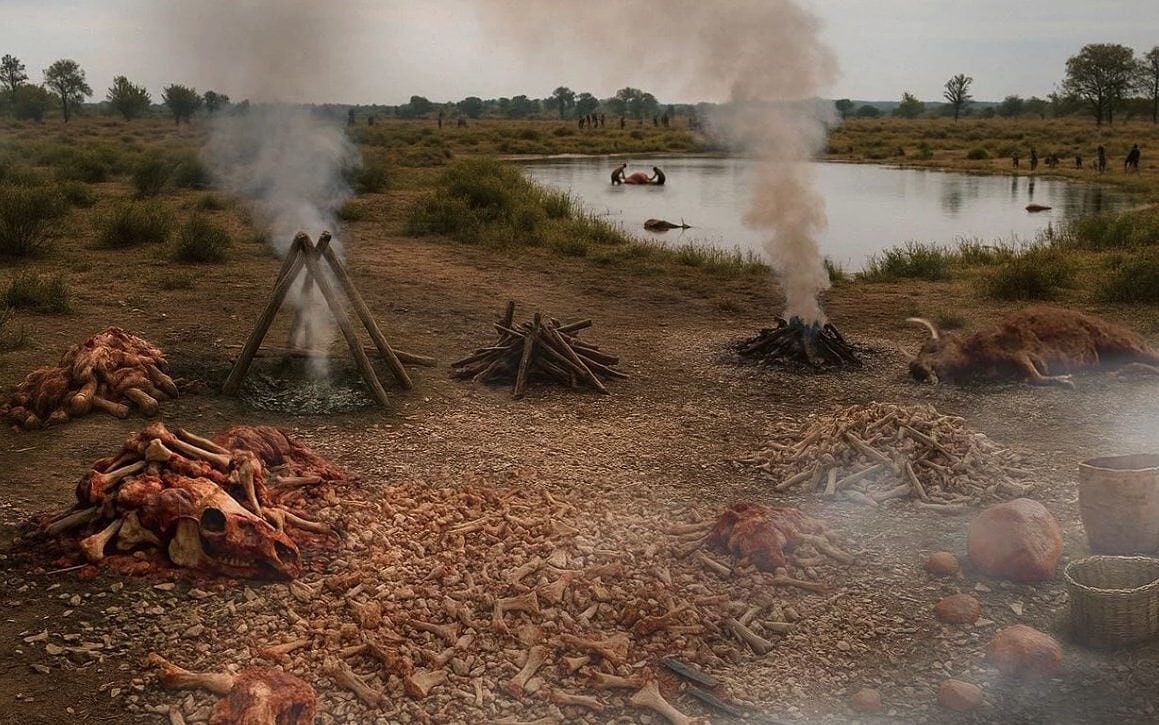
© Scherjon, Leiza-MonreposAn artist’s impression of the ‘fat factory’ run by Neanderthals in Germany Credit:
Neanderthals living 125,000 years ago may have mass-produced grease from animal bones in "factories", a study has found.
They may have been rendering fat from crushed animal bones in the Neumark-Nord region in central Germany, according to archaeological research, published in Science Advances.
While many bones that contained less marrow were spread out across the archaeological site, researchers observed that many of the marrow-rich bones were located in clusters - sites they call "fat factories".
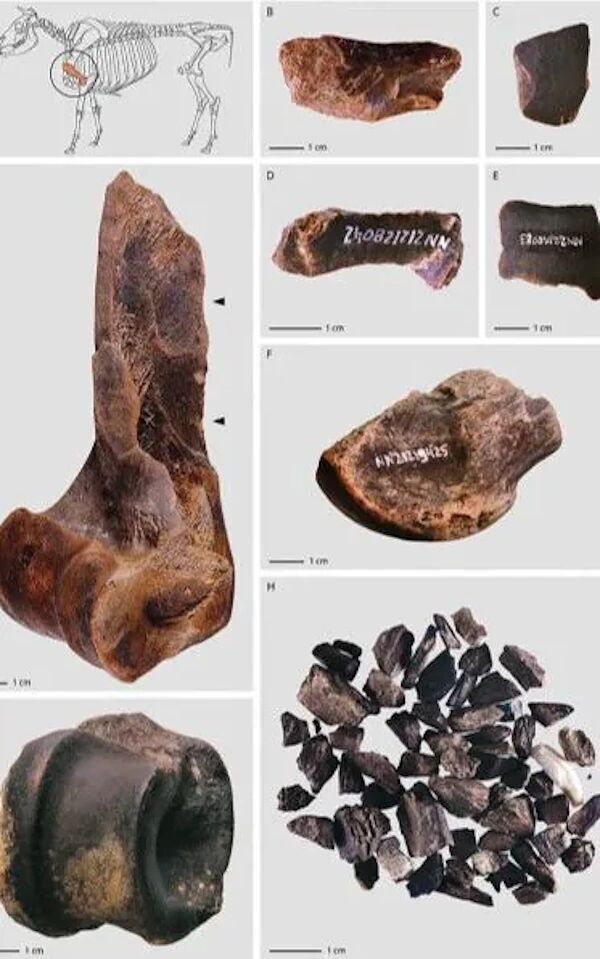
© Lutz Kindler, Sabine Gaudzinski-Windheuser, et alExamples of hammerstone-induced impact damage on long bones
Its use challenges long-held assumptions about Neanderthal capabilities, the study, commissioned at Leiden University in The Netherlands, found.
Prof Wil Roebroeks, the study's co-author said: "This attitude that Neanderthals were dumb - this is another data point that proves otherwise."
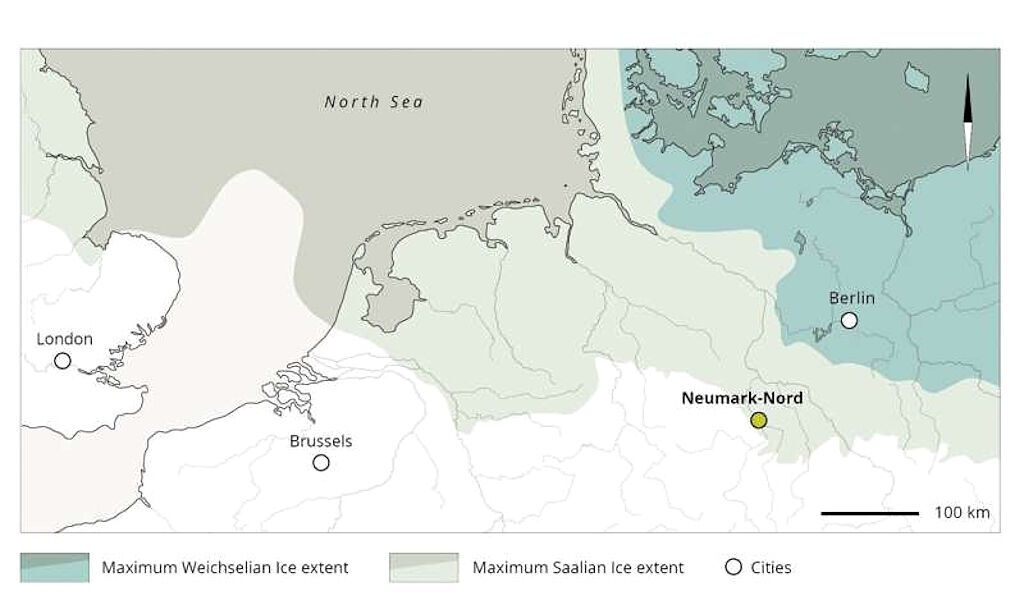
© Kindler et al., Sci. Adv. 11, eadv1257Location of Neumark-Nord (Germany). The site’s position is depicted relative to the maximum extent of the Saalian and Weichselian glaciations
Prior to this finding, the earliest evidence of this kind of fat rendering dated back to only 28,000 years ago, thousands of years after Neanderthals disappeared from the fossil record.




Comment: Live Science adds: And from PhysOrg: