
Comment: This happened in late March this year. Since then, it is currently in the process of being 'amended' by the country's intelligence services, no doubt in their peculiar interests...
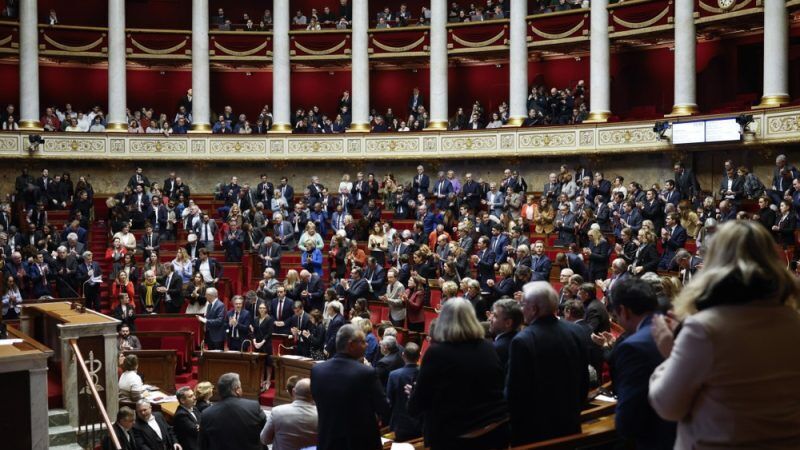
© EPA-EFE/Yoan ValatThe text, which was largely adopted in plenary on Wednesday, with only France Insoumise (LFI) voting against and the Gauche Démocratique et Républicaine (GDR) abstaining, consists of four articles.
"What is at stake is the protection of our sovereignty, our democratic and liberal values, and the protection of the nation's interests", said Sacha Houlié, Renaissance chairman of the French Law Commission and rapporteur for the bill, as he opened the debate on Tuesday.
Comment: Yes indeed, specifically their values, as opposed to the values of the majority of French people.
The text, which was largely adopted in plenary on Wednesday, with only France Insoumise (LFI) voting against and the Gauche Démocratique et Républicaine (GDR) abstaining, consists of four articles.
In particular, it provides for a four-year trial, allowing the intelligence services to use algorithmic surveillance techniques currently reserved exclusively for the fight against terrorism.
Comment: As we predicted at the time the US Congress passed the PATRIOT Act in 2001, the political justification of 'fighting terrorism' was ultimately going to end up as a means of fighting against you.
This measure was initially strongly criticised by the left-wing parties, who feared possible repercussions on individual freedoms.
Comment: And where is Le Pen's Rassemblement National ('far-right') party on this issue?
"The debates in the National Assembly have made it possible to clarify the text, which limits the use of algorithms to cases of foreign interference and the fight against terrorism", ecologist MP Jérémie Iordanoff told Euractiv.
The text also provides for creating a register of "interest representatives acting on behalf of a foreign principal" controlled by the High Authority for Transparency in Public Life (HATVP).
This will include lobbyists, communicators, and fundraisers who act on behalf of governments, state-controlled companies, and foreign political parties.
The bill is based on a report published in November by the Parliamentary Delegation for Intelligence (DPR), which found that the available tools are "effective" but "sometimes insufficient given the intensification of the threat."
It will now be examined by the Senate in May.




The term "Foreign interference" is an euphemism, just like the US equivalent to this law which is called "Patriot Act".