
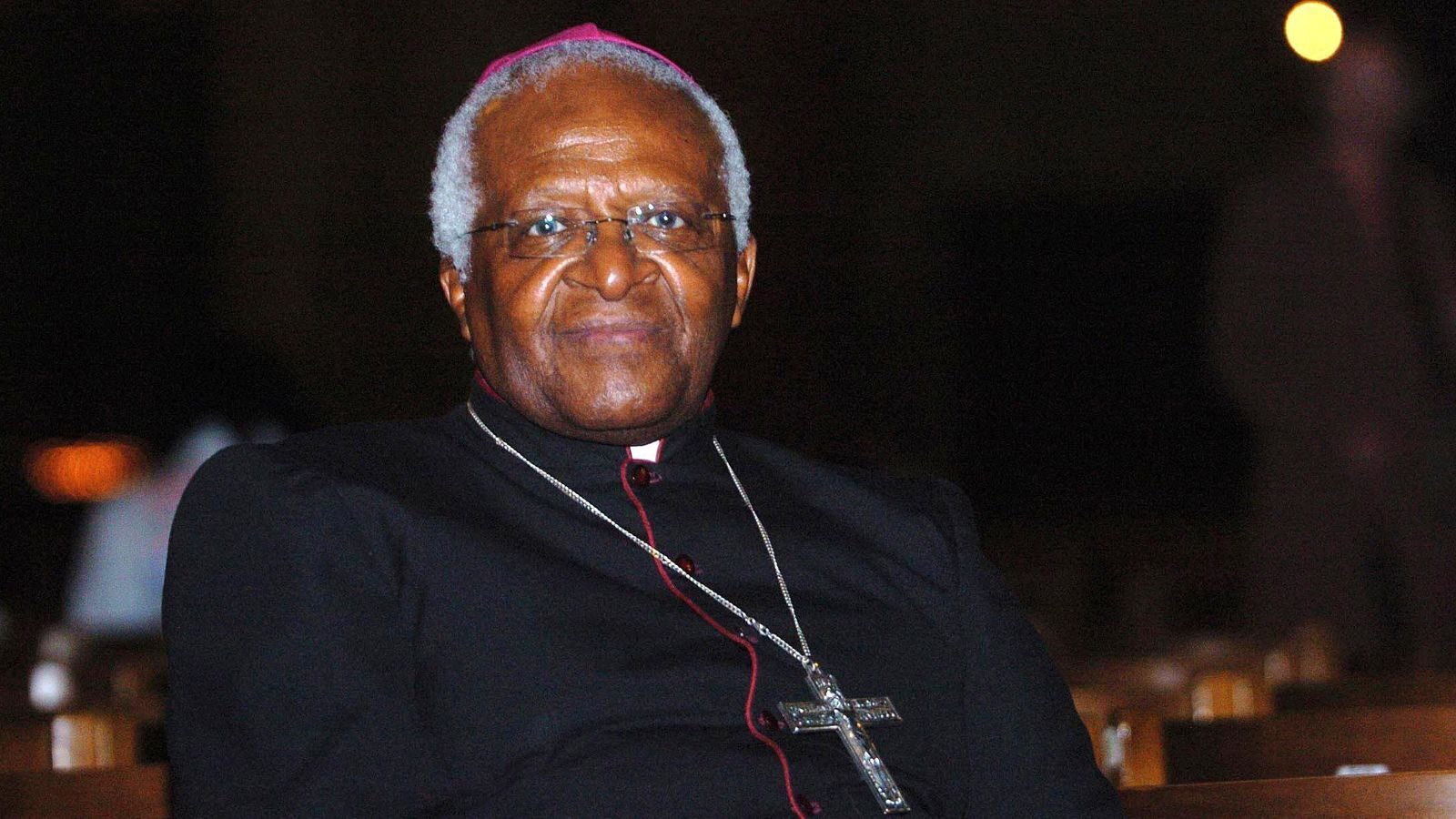
South African Bishop Desmond Tutu (1931-2021)
Nobel Peace Prize laureate Desmond Tutu, 90, has died in Cape Town, South African President Cyril Ramaphosa announced in a statement on Sunday.
Alongside late Nelson Mandela, Tutu was one of the most important voices against the old system of white minority rule known as apartheid. The Anglican cleric also headed the country's Truth and Reconciliation Commission in the post-apartheid era, and was seen by many as the conscience of the troubled nation.
Tutu "died peacefully at the Oasis Frail Care Center in Cape Town this morning," said Ramphela Mamphele, the acting chairperson of the Archbishop Desmond Tutu IP Trust and coordinator of his office. The statement, issued on behalf of Tutu's family, did not provide details on the cause of death.
Tutu praised as 'patriot without equal'
"Desmond Tutu was a patriot without equal; a leader of principle and pragmatism," Ramaphosa said in a statement.
The Nelson Mandela Foundation said, "His contributions to struggles against injustice, locally and globally, are matched only by the depth of his thinking about the making of liberatory futures for human societies. He was an extraordinary human being."
Tibetan spiritual leader the Dalai Lama said, "He was a true humanitarian and a committed advocate of human rights."
UK Prime Minister Boris Johnson tweeted Tutu "will be remembered for his spiritual leadership and irrepressible good humour."
Former US President Barack Obama said Tutu was "a moral compass for me and so many others."
"A universal spirit, Archbishop Tutu was grounded in the struggle for liberation and justice in his own country, but also concerned with injustice everywhere," Obama said on Twitter.
Elections like 'falling in love'
Tutu won the Nobel Peace Prize in 1984 for his efforts in leading the non-violent struggle against apartheid.
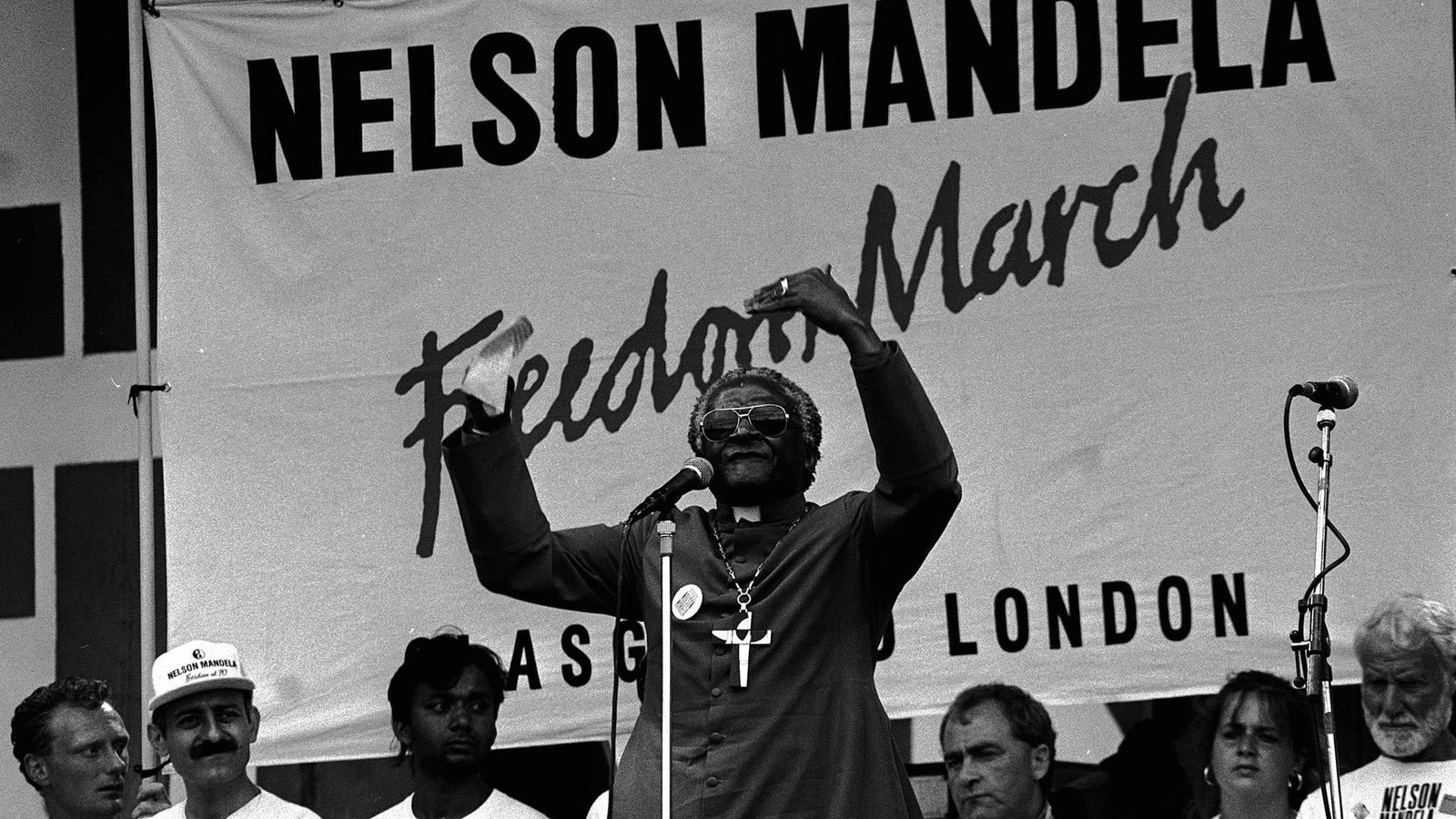
Archbishop Desmond Tutu addressing the Nelson Mandela Freedom Rally in Hyde Park, London, on 17 July, 1988
Following Mandela's release from prison after 27 years, Tutu led him onto a balcony at Cape Town City Hall where Mandela delivered his first public speech.
Tutu likened voting in the country's first democratic election in 1994 to "falling in love." When Mandela was sworn in as the country's first black president, Tutu was at his side.
The archbishop's life was a testament to the hope and strength he placed on reconciliation in the divided nation, Ramaphosa said.
Dream of a 'rainbow nation'
While Tutu preached against the tyranny of apartheid, he would go on to be just as critical of black political elites.
He even publicly criticized his ally Mandela over what the cleric describes as the "gravy train mentality" of Mandela's party, the African National Congress. Later, Tutu would castigate Mandela for his open affair with Graca Machel, who Mandela would eventually marry.
In 2013, Tutu withdrew his support for Mandela's party, describing South Africa as "the most unequal society in the world."
In recent years, Tutu started to campaign in favor of the assisted dying movement.
"Dying people should have the right to choose how and when they leave Mother Earth," he wrote in the Washington Post in 2016.
"I have prepared for my death and have made it clear that I do not wish to be kept alive at all costs.
Towards the end of his life, Tutu also spoke with regret that the dream of a true "rainbow nation" had yet to be realized.






They twist their way through life spouting out endless rhetoric and achieve nothing.
He no more than a victim of his time, he pissed his beliefs into the winds of a ugly world.