
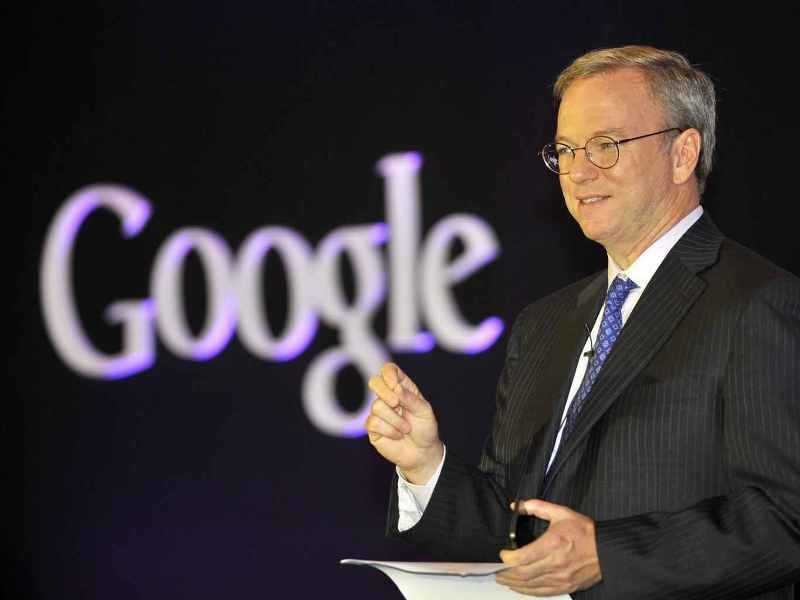
© AFP/Getty imagesGoogle’s chairman, Eric Schmidt, showed why modern businessmen are suited to be the most powerful characters in society when he said he was “proud” of the way his company avoids paying taxes, explaining “It’s called capitalism"
New tax rules should apply to all - even our favourite jewel thieves
What a simple new tax system the Government has come up with. Instead of filling in complicated forms, executives from corporations such as Google now have dinner with ministers in the run-up to the deal with tax officials and drop hints about how much they fancy paying. Once this process is extended to the rest of us, it will be so efficient. Window cleaners and plumbers will meet an inspector in Harry's café for bubble and squeak, hand over £80 in rolled-up fivers and say: "Here you go sunshine, get yourself something nice."
Then we can try it for all transactions. So you'll wander round B&Q, take some planks of wood and a lampshade you fancy, and instead of paying, a few years later you give them a Kit-Kat.
We can't know exactly what HM Revenue and Customs agreed with Google's bosses, as the Government refuses to say, so it may be that they handed over a fridge they were chucking out that needs a new door handle, and a pile of Beano annuals they found in the wardrobe. Perhaps they've also given the tax collectors some spaghetti carbonara left over from Tuesday that should be alright if they scrape off the green bits, and that makes them up to date for next year as well.
The inspectors agreed that Google doesn't have to pay much tax in Britain because it doesn't have a "permanent establishment" here. It does have offices with more than 1,000 staff, a cinema and allotments attached to its grounds, but that hardly suggests "permanent" - we all carry stuff like that around when we're just passing through. Even after the high-ups had the complex built, if they were asked if they fancied a cup of tea, they said: "No thanks, we're not stopping."

© Penson/Rex Google’s London headquarters - just a "branch office" - feature a secret garden, ‘Granny flat’ interiors and an allotment
Google's chairman, Eric Schmidt, showed why modern businessmen are suited to be the most powerful characters in society when he said he was "proud" of the way his company avoids paying taxes, explaining "It's called capitalism. We are proudly capitalistic" and adding that it had a "legal obligation to shareholders".
So Google has a moral, almost spiritual, obligation to pay as little tax as possible. It's heartening to see people in authority stick to their principles, unlike these rogues who pay the full rate of tax and the scum who make their full contribution to fund schools and old people's homes, and Franciscan monks and other sociopaths who go through life without a thought for registering billions in Bermuda for their shareholders. If anything, Google has been a bit slow, because it could have registered the company on that newly discovered planet, where - as yet - there's no tax system at all.
George Osborne announced the deal as an "enormous success" as it had brought in more money than before, which was nothing. This is a novel approach to economics from a Chancellor of the Exchequer: any financial arrangement is an enormous success as long as it yields more than nothing. If he worked in a car showroom, he would tell the manager: "I've had another enormous success. I sold an Aston Martin for £1, which certainly trumps nothing."
Having claimed the Google deal as a triumph for the Government, Osborne seemed to change his mind later, insisting that it was nothing to do with the Government but was arranged entirely with the tax office and "not with ministers". So it's a puzzle that Google had 24 meetings with ministers, including Jeremy Hunt, Theresa May, half of the Cabinet and Osborne himself.
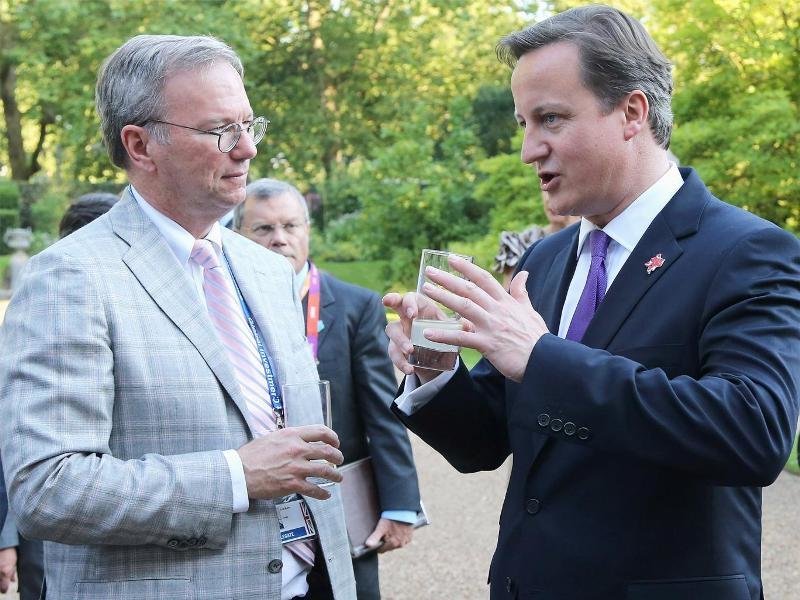
© AFP/Getty ImagesDavid Cameron, pictured here with Google’s former CEO Eric Schmidt - one of 24 meetings between the tech giant's executives and government ministers. Google's parent company Alphabet is currently valued at $515 billion. The multinational is paying £130m in UK taxes.
A better approach might be to apply the principles of the new tax system to everyone. For example, the entrepreneurs who robbed Hatton Garden have got nothing for their initiative except red tape and punitive government interference. In a dynamic economy, they should be asked if they want to give back any jewels at any point. If they hand over a copper bracelet, the police can declare this an "enormous success".
One couple that must have enjoyed Google's tax deal is the Rutherfords, as they dedicate their lives to looking after their severely disabled grandson. Carers would sleep in their spare room, but under the rules of the bedroom tax they were faced with eviction. Judges have ruled such evictions unlawful, but the Government will appeal because it is determined that people such as the Rutherfords, who are so selfish that they barely give a thought to their legal obligations towards shareholders, must be evicted to save taxpayers' money.
Maybe the couple should register the disputed room in Bermuda. Then they will get 24 meetings with ministers and an agreement to pay the rent once every 10 years. Or if that's too much, a bottle of apricot brandy will do.




except not in the usual form.
their surveillance of us is the way they pay the govts.
except no one can say that although it is perfectly obviousl.
silly silly people they don't realize how we have all tired of this game.