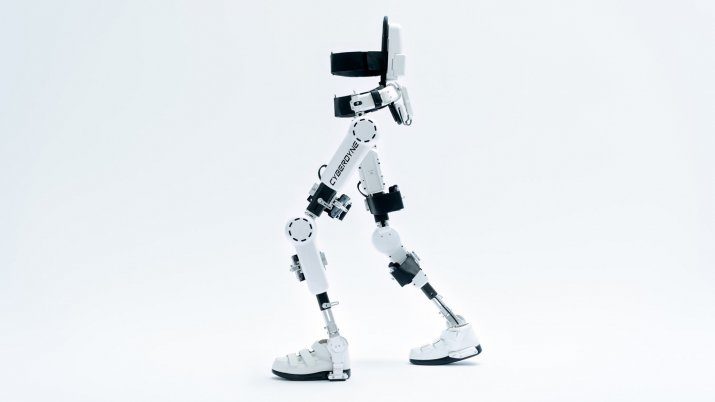
© Cyberdyne
Japanese robotics company
Cyberdyne may share a name with the fictional company from
Terminator that notoriously destroyed the world by creating Skynet. But the real version of Cyberdyne is much more helpful. For now, at least.
Because their biggest product right now is a robotic, exoskeletal suit for your lower body that moves by
reading bioelectric signals sent from your brain, called the
Hybrid Assistive Limb (shortened to HAL, another
unfortunate naming coincidence). And it's on track to make its way into the United States, albeit only through medical facilities for the time being.
The Food and Drug Administration (FDA)
just gave a go-ahead on a specific model called HAL for Medical Use - as the name implies, it's less of a recreational model and more designed to help people with lower body disabilities move around easier.
But what makes HAL different
from other exoskeletons is its autonomy. Using a mix of voluntary control and autonomous control, HAL can use sensors on your legs to
pick up on bioelectric signals and use that as a means of determining how to move forward. For the large amount of medical conditions where a disability in the lower body involves leg muscles failing to respond to signals from the brain, this is extremely useful.






Comment: Has the tech billionaire lost his marbles?