Science & TechnologyS


Brain

Retirement causes short term memory to rapidly decline, warn scientists

Retirees
© SG HIRSTRetirement is bad for brain health as study of retired civil servants has shown.
Workers looking forward to enjoying a long and leisurely retirement after years of toil, may need to think again.

New research shows that brain function declines rapidly as soon as people stop work and put their feet up.

A major British study which tracked 3,400 retired civil servants found that short-term memory declines nearly 40 per cent faster once employees become pensioners.

It appears that the lack of regular stimulation takes a heavy toll on cognitive function and speeds up memory loss and dementia, researchers warned.

Smiley

Scientists find 'happy' secret to improve your running endurance

Runner
© Getty
Runners of all levels who want to improve their endurance, speed and/or strength may want to try cracking a smile during their workout, according to new research.

While it may go against all natural instincts, at least pretending you're enjoying your run by intentionally smiling has been found to improve your overall performance, according to new research by Ulster University in Northern Ireland and Swansea University in Wales.

According to the new study, a key psychological factor in the success of one's workout is the effort we feel we're putting into the activity. In other words, the less effort we think we're putting in, the easier we perceive the exercise to be and the likelier we are to progress.

The 'fake it till you make it' technique is favored by Olympic marathon gold medallist Eliud Kipchoge, a strategic smiler whose smiling helped him relax and ease his way to the finish line during his fastest-ever marathon.

Black Magic

'Zombie Defender, kills zombies or your money back': Musk promotes $500 flamethrower

Flamethrower
© Elon Musk / Instagram
Tech billionaire Elon Musk has unveiled the "world's safest flamethrower," available for pre-order to prepare for a zombie apocalypse. Just in case, fire extinguishers are sold separately for an "exorbitant amount of money."

Musk's Boring Company - which has so far primarily specialized in "boring" tunnel construction - touted the new device on its official website on Saturday as a product "guaranteed to liven up any party!"

The handy device, which Musk says is "great for roasting nuts," will cost die-hard fans of the SpaceX and Tesla founder a hefty $500. However, to embrace the fire power that could be quite useful in case of a zombie apocalypse they will have to wait until spring.

"When the zombie apocalypse happens, you'll be glad you bought a flamethrower. Works against hordes of the undead or your money back!" Musk tweeted.

Comment: Has the tech billionaire lost his marbles?


Radar

Robocar: Ford's AI upgrades leaves no hiding place for bad drivers

Ford is exploring ways to replace analog cars with AI upgrades.
© Paulo Whitaker / ReutersFord is exploring ways to replace analog cars with AI upgrades.
Few drivers would imagine feeling nostalgic for speed cameras. Nevertheless, US automotive giant Ford has revealed its vision for the future of policing in a patent application, not for a cyborg, but an AI-driven cop car.

The proposed AI police car is a speed trap, surveillance vehicle and traffic cop all rolled into one. According to the pending patent published earlier this month, the vehicle could be used for routine tasks, like ticketing or penalizing bad drivers.

Robot

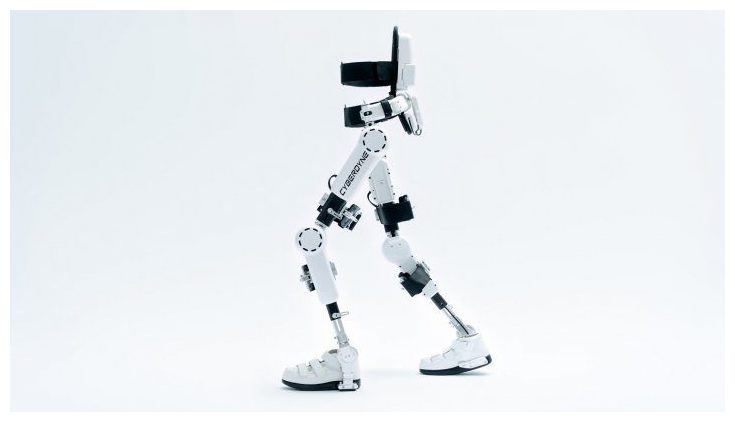
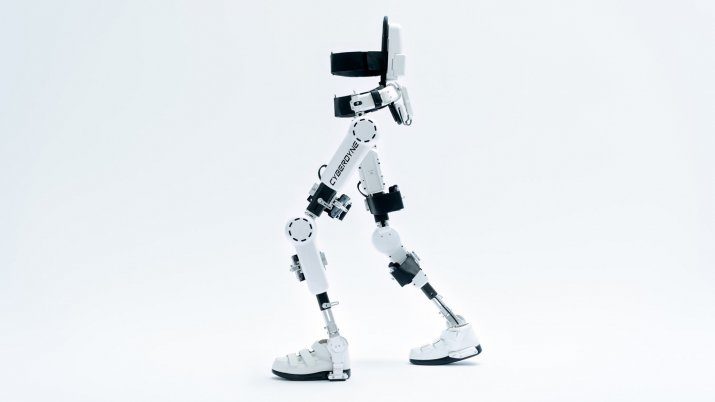
The FDA approves robotic exoskeleton

Exoskeleton
© Cyberdyne
Japanese robotics company Cyberdyne may share a name with the fictional company from Terminator that notoriously destroyed the world by creating Skynet. But the real version of Cyberdyne is much more helpful. For now, at least.

Because their biggest product right now is a robotic, exoskeletal suit for your lower body that moves by reading bioelectric signals sent from your brain, called the Hybrid Assistive Limb (shortened to HAL, another unfortunate naming coincidence). And it's on track to make its way into the United States, albeit only through medical facilities for the time being.

The Food and Drug Administration (FDA) just gave a go-ahead on a specific model called HAL for Medical Use - as the name implies, it's less of a recreational model and more designed to help people with lower body disabilities move around easier.

But what makes HAL different from other exoskeletons is its autonomy. Using a mix of voluntary control and autonomous control, HAL can use sensors on your legs to pick up on bioelectric signals and use that as a means of determining how to move forward. For the large amount of medical conditions where a disability in the lower body involves leg muscles failing to respond to signals from the brain, this is extremely useful.

Laptop

Facebook censorship: Here's how to make sure you still see posts by your favorite sites

facebook censored
Facebook recently announced that it will be making major changes to its newsfeed that will significantly impact what users see. The emphasis, CEO Mark Zuckerberg explained, will be on posts from users' friends and family, as well as what Facebook calls "trusted sources."


Comment: In other words, more emphasis on pointless narcissistic selfies and "news" sources that Facebook wants you to see.


Those "trusted sources," however, are not necessarily going to be the same pages and news sites that users follow; rather, they are sources that Facebook designates as "trusted" through what it says will be rankings produced by "a diverse and representative" sample of Facebook users (see full post below). Which sources are "trusted sources" and which are not, is unclear. Sources not deemed "trusted" - even those you choose to follow - will get buried or de-emphasized in your newsfeed.

But there's a way to make sure that Facebook does not prevent you from seeing posts by your favorite sites. Below are the instructions for how to update your Facebook settings so that your newsfeed prioritizes posts by sites you follow, like The Daily Wire, rather than letting the platform determine what you get to see.

Comment: If Facebook fails to meet the desires of its users, then it will become irrelevant. Anyone remember Myspace?

Nope.

See also: Facebook censorship pushing alt media to new social networking platforms


Eye 1

Looking at pupil size in sleeping mice yields surprises

Mouse pupil
© Daniel Huber, University of GenevaThis is an artistic illustration of how mouse pupil size is a window into brain activity even during sleep.
When people are awake, their pupils regularly change in size. Those changes are meaningful, reflecting shifting attention or vigilance, for example. Now, researchers reporting in Current Biology on January 18 have found in studies of mice that pupil size also fluctuates during sleep. They also show that pupil size is a reliable indicator of sleep states.

"We found that pupil size rhythmically fluctuates during sleep," says Daniel Huber of the University of Geneva in Switzerland. "Intriguingly, these pupil fluctuations follow the sleep-related brain activity so closely that they can indicate with high accuracy the exact stage of sleep -- the smaller the pupil, the deeper the sleep."

Microscope 2

Researchers devise method to determine when a cell has 'cashed' RNA 'checks' written by active genes

dna helix
© NHGRIA depiction of the double helical structure of DNA. Its four coding units (A, T, C, G) are color-coded in pink, orange, purple and yellow.
DNA has often been called "the book of life," but this popular phrase makes some biologists squirm a bit. True, DNA bears our genes, which spell out the instructions our cells use to make proteins -- those workhorse molecules that comprise our physical being and make just about everything in life possible.

But the precise relationship between the protein "blueprints" encoded in genes and the amount of protein a given cell actually makes is by no means clear. When a gene is activated and its message is copied into a molecule of RNA, a biologist can be no more certain of knowing if it results in the manufacture of a working protein than a banker is of knowing whether a check written by one of its customers will end up being cashed.

Thanks to advancements in DNA and RNA sequencing, biologists are incredibly good at knowing how much of a gene's code is at any moment being copied into RNA messages, the first step in making protein. But they're not so good at figuring out how quickly those RNA messages are actually read from end to end at cellular factories called ribosomes, where proteins are synthesized.

Info

The deal with diesel cars: Analysis shows they're less expensive but also less reliable than petrol

diesel cars
Reasearch finds diesels are more than three times more likely to break down than petrol vehicles

Diesel cars are more than three times as likely to break down as their petrol counterparts and will typically cost 20% more to fix when they go wrong.

Based on analysis of 30,000 faults on three- to eight-year-old petrol and diesel cars over 12 months, car maintenance firm MotorEasy found the average engine repair bill for a diesel was £517, compared with £433 for a petrol model. Diesel cars were sold to many buyers on the basis that they offered better fuel economy, and lower CO2 emissions. However, the VW emissions scandal forced an about-turn and diesels are now very much out of favour.

Brain

Facts and names eluding you? Blame the left side of your brain

left brain memory
Scientists have discovered that the left side of the brain controls the verbal expression of our long-term 'semantic' memory which contains facts, meanings, concepts and knowledge.

The study - led by University of Manchester psychologists - is the first of its kind to assess the similarities and differences in how the left and right sides of the brain process semantic memory.

The research, led by Dr. Grace Rice and Professor Matthew Lambon Ralph from The University of Manchester, was funded by the Engineering and Physical Sciences Research Council and the Medical Research Council.

The team - working with neuropsychologists at Salford Royal and The Walton Centre for neurology in Liverpool - worked with 41 patients who had part of their brains removed to treat their long-standing epilepsy.

The patients - who now experience fewer seizures and are able to go back to work and learn to drive as a result of the surgery-had their verbal and visual semantic memory tested.