Science & TechnologyS


Moon

Best of the Web: Right as Artemis II astronauts passed behind Moon, multiple meteoroids hit it!

screen capture
© NASAScreen capture from NASA's Artemis II Live Views
Artemis II were giddy (their words!) on the evening of April 6th when they witnessed explosions on the lunar surface. Meteoroids were hitting the Moon. "We saw at least five," reported mission commander Reid Wiseman.

The meteors appeared in middle of a solar eclipse. About an hour after the crew made their closest approach to the farside of the Moon, the sun disappeared behind the lunar disk, giving the astronauts a chance to view the first solar eclipse ever seen by humans from behind the Moon.

Comment: In line with the increasing trend of meteors, fireballs and impact craters, not to mention the 11,000-plus new asteroids in our solar system, which is only the tip of the iceberg. For crucial information, see:


Galaxy

The most pristine star yet found in the known universe

pristine star magellanic cloud
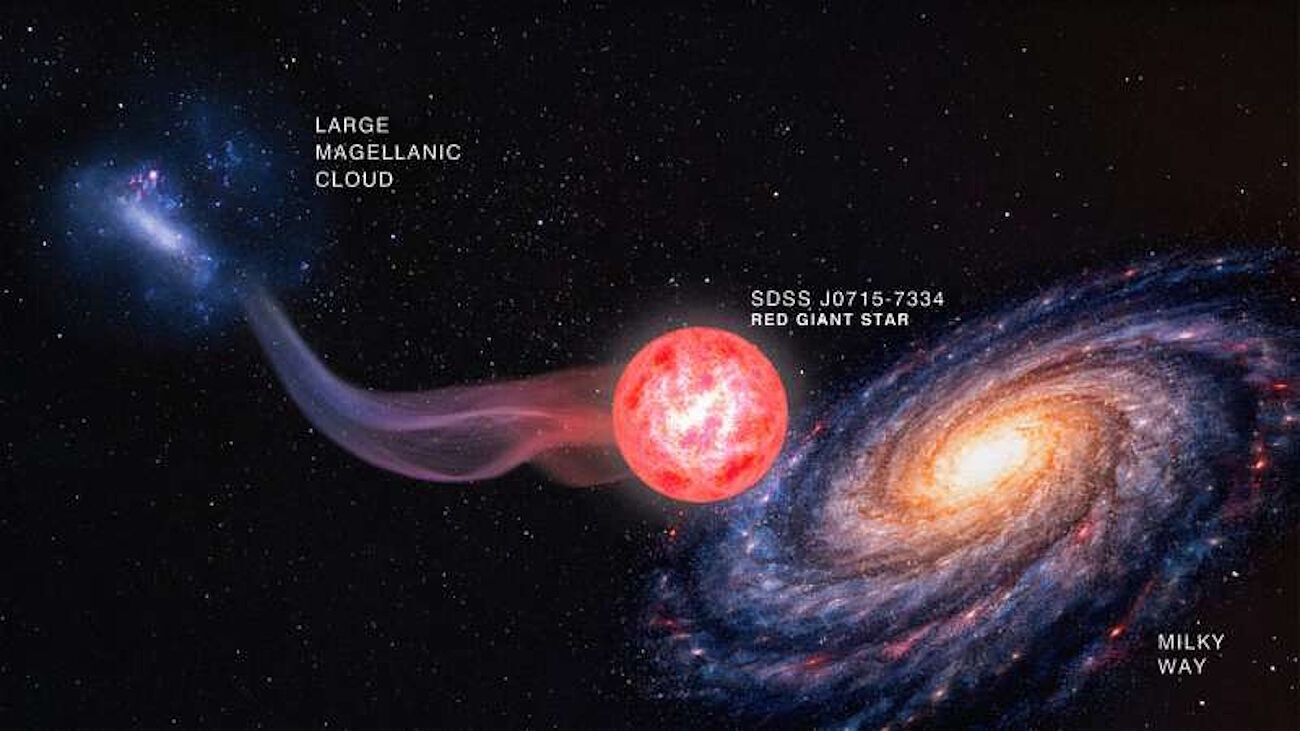
© Navid Marvi/Carnegie ScienceAn ancient immigrant: an artist's conception (not to scale) of the red giant SDSS J0915-7334, which was born near the Large Magellanic Cloud and has now journeyed to reside in the Milky Way.
An unusual team of astronomers used Sloan Digital Sky Survey-V (SDSS-V) data and observations on the Magellan telescopes at Carnegie Science's Las Campanas Observatory in Chile to discover the most pristine star in the known universe, called SDSS J0715-7334. Their work is published in Nature Astronomy.

Hunting for the universe's earliest stars

Led by the University of Chicago's Alexander Ji — a former Carnegie Observatories postdoctoral fellow — and including Carnegie astrophysicist Juna Kollmeier — who leads SDSS, now in its fifth generation — the research team identified a star from just the second generation of celestial objects in the cosmos, which formed just a few billion years after the universe began.

"These pristine stars are windows into the dawn of stars and galaxies in the universe," Ji explained. Several of his and Kollmeier's co-authors on the paper are undergraduate students from UChicago, whom Ji brought to Las Campanas on an observing trip for spring break last year. "My first visit to LCO is where I really fell in love with astronomy, and it was special to share such a formative experience with my students."

Info

DNA reveals a mysterious human lineage no one knew existed in Asia

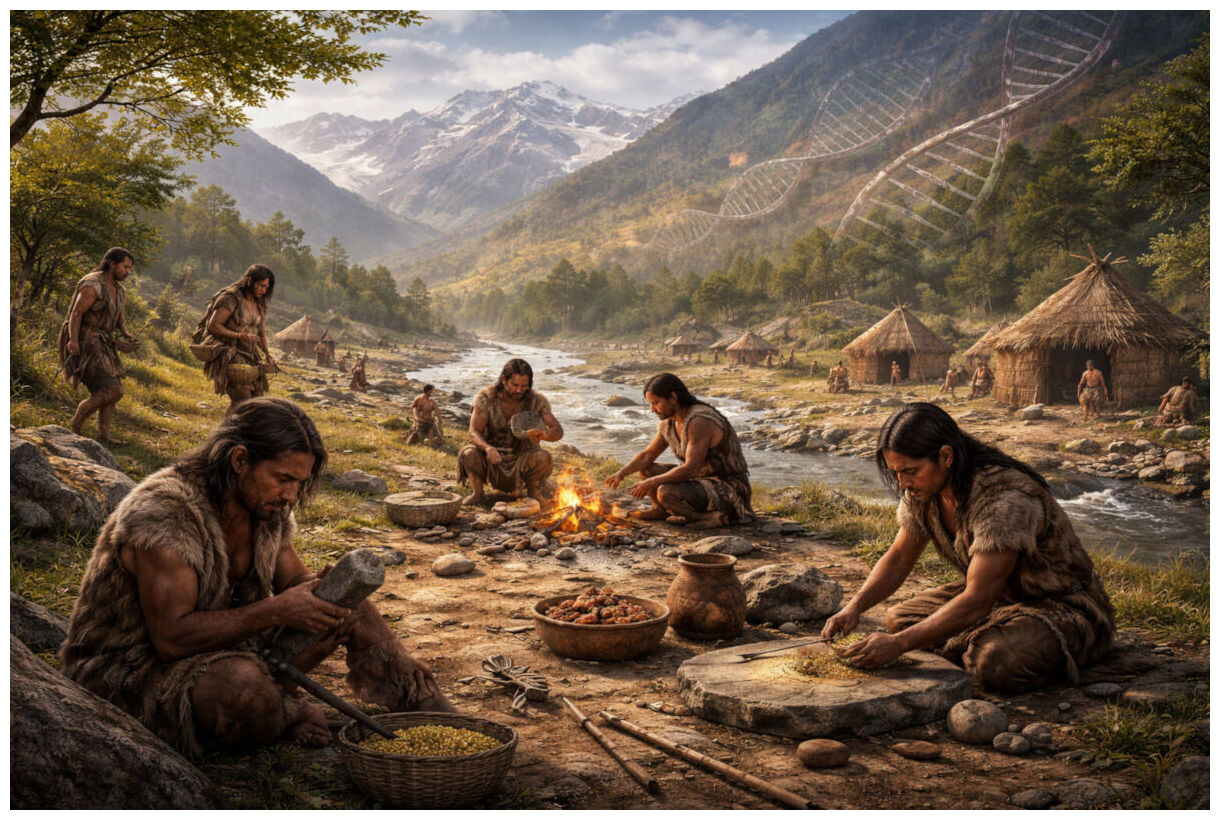
AI-generated illustrative image
© AI-generated illustrative image
A genetic study has uncovered a previously unknown human lineage that survived the end of the last Ice Age, challenging long-held assumptions about how ancient populations evolved and interacted during one of the most transformative periods in human history.

The discovery, published in the journal Current Biology, centers on ancient human remains unearthed at the Donghulin archaeological site near modern-day Beijing. By analyzing DNA extracted from these remains, scientists have revealed a complex and surprisingly resilient human story — one in which multiple lineages coexisted, adapted, and sometimes disappeared without leaving a lasting genetic trace.

A Hidden Branch of Humanity Emerges

At the heart of the discovery is an approximately 11,000-year-old individual whose genetic profile does not match any previously identified human population. Researchers, led by Qiaomei Fu, found that this individual belonged to a deeply divergent northern East Asian lineage that likely split from other human groups tens of thousands of years earlier.

This lineage persisted well beyond the end of the Ice Age, a period marked by dramatic climate warming and sweeping cultural change. Rather than being replaced outright by newer populations — as seen in parts of Europe — the evidence suggests that ancient human diversity in East Asia was far more enduring and complex.

According to the study, this early-diverged lineage "may represent a previously unrecognized ancestry," highlighting how little is still known about human population structures in prehistoric Asia.

Rose

Bumblebees have a brain the size of a sesame seed, but they've still got rhythm

bumblebee
Humans are creatures of rhythms. As far as we know, humans have always sung and always danced. We can recognise a song by its rhythm alone, regardless of whether it is played fast or slow.

We seem to have an almost effortless capacity to pick up on rhythmic patterns, and we have presumed this ability to require the very large and powerful human brain.

But our new research, published today in the journal Science, shows humans are not alone in mastering rhythm. Even the bumblebee, which has a brain the size of a sesame seed, has an ability to quickly learn abstract rhythms.

A world full of rhythms

Rhythms are everywhere in nature.

We hear them in the songs of birds and frogs and the ultrasonic hunting chirps of bats. And we see them in the flashing displays of fireflies, the rhythmic shakes of a peacock's tail, the waggle dances of honey bees and the courtship dances of fruit flies.

But, up to now, we have assumed these were innate rhythmic patterns: the animals are not learning a rhythm; they are simply rolling out an evolved behavioural program.

HAL9000

Caltech team finds useful quantum computers could be built with as few as 10,000 qubits

qubits
© caltech.eduQubitsComparis
Theoretical discovery opens the door to building quantum computers with significantly reduced resources.

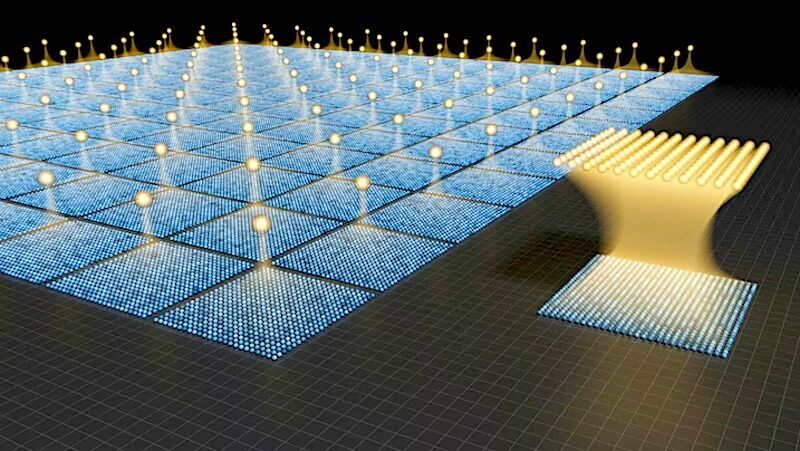
Quantum computers of the future may be closer to reality thanks to new research from Caltech and Oratomic, a Caltech-linked start-up company. Theorists and experimentalists teamed up to develop a new approach for reducing the errors that riddle today's rudimentary quantum computers. Whereas these machines were previously thought to require millions of qubits to work properly (qubits being the quantum equivalent to 1's and 0's in classical computers), the new results indicate that a fully realized quantum computer could be built with as few as 10,000 to 20,000 qubits. The need for fewer qubits means that quantum computers could, in theory, be operational by the end of the decade.

The team proposes a new quantum error-correction architecture that is significantly more efficient than previous approaches. Quantum error correction is a process by which extra, redundant qubits are introduced to correct errors, or faults, enabling the ultimate goal in the field: fault-tolerant quantum computing.

The results exploit special properties of quantum computing platforms built out of neutral atoms, which serve as the qubits. Alternative platforms in development include superconducting circuits and trapped ions (ions are charged whereas neutral atoms are not). In a neutral atom system, laser beams known as optical tweezers are used to arrange atoms into qubit arrays.

Comet 2

Rare 'sungrazer' comet MAPS will shine superbright on Saturday ‪—‬ if it survives a dangerous encounter with our star

Comet C/2026 A1 (MAPS) could shine brightly in the evenings after April 4, but only if it survives a very close encounter with the sun.
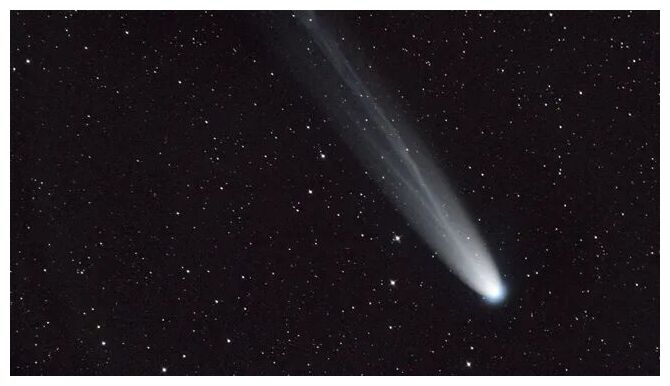
Comet C/2026 A1 (MAPS)
© James Yu via Getty ImagesComet C/2026 A1 (MAPS) will get closest to the sun on April 4.
A rare "sungrazer" comet is about to pass very close to our star and could become visible in daylight — or it could completely disintegrate before our eyes. Either way, there could be something special to see in the night sky, with a large tail potentially visible late this week.

Comet C/2026 A1 (MAPS) was discovered Jan. 13 by French astronomers at the AMACS1 Observatory in Chile. Although the comet was initially thought to have a nucleus measuring around 1.5 miles (2.4 kilometers) wide, astronomers later reduced the estimate to under 0.25 miles (0.4 km) based on James Webb Space Telescope observations taken in February.

C/2026 A1 (MAPS) belongs to a special family of comets called Kreutz "sungrazers," so called because they get very close to the sun, lighting up brightly but often breaking into smaller pieces. There are around 3,500 members of the Kreutz family, all of which are thought to be fragments of a single giant comet that got too close to the sun about 1,700 years ago, according to Live Science's sister site Space.com.

Comet

Best of the Web: Early data from Vera C. Rubin Observatory reveals over 11,000 new asteroids

Vera Rubin asteroids
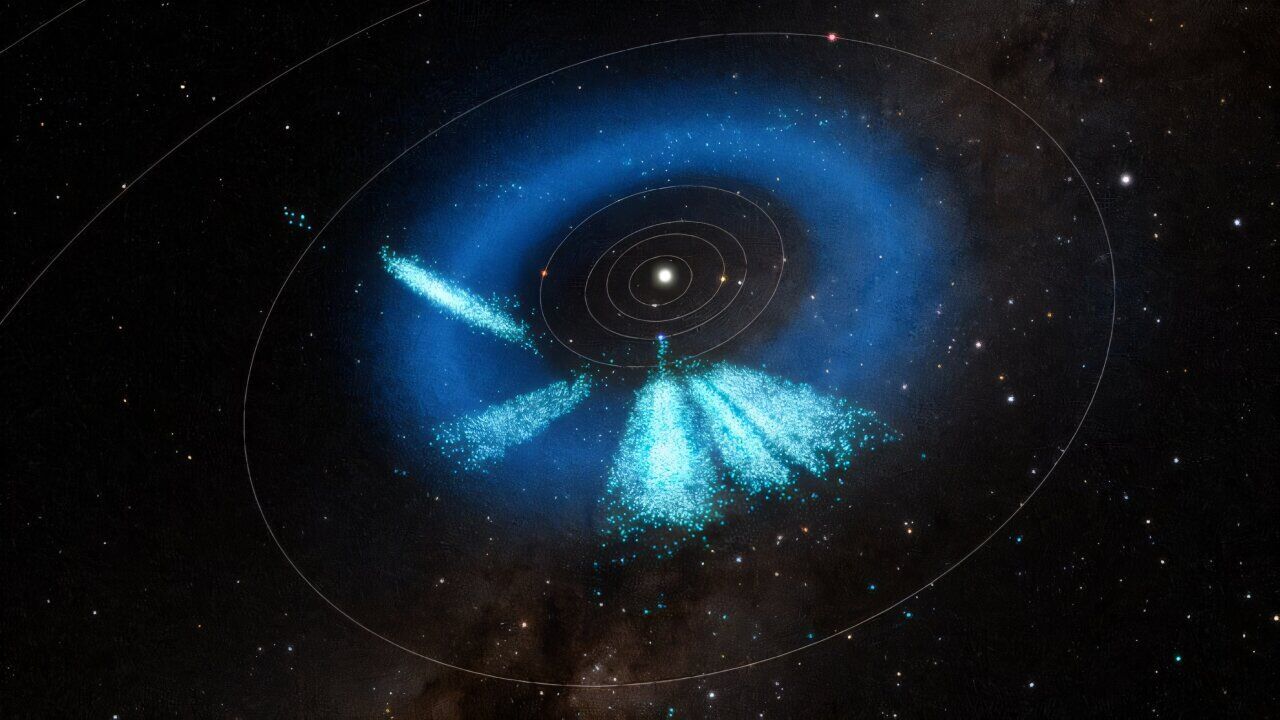
© NSF–DOE Vera C. Rubin Observatory / NOIRLab / SLAC / AURA/ R. Proctor. Acknowledgements: Star map: NASA / Goddard Space Flight Center Scientific Visualization Studio. Gaia DR2: ESA/Gaia/DPAC. Image Processing: M. Zamani (NSF NOIRLabA model of the inner solar system showing the asteroids discovered by Rubin in light teal. Known asteroids are dark blue.
Using preliminary data from the Vera C. Rubin Observatory, scientists have discovered over 11,000 new asteroids. The data were confirmed by the International Astronomical Union's Minor Planet Center (MPC), making this the largest single batch of asteroid discoveries submitted in the past year. The discoveries were made using data from Rubin's early optimization surveys and offer a powerful preview of the observatory's transformative impact on solar system science.

The submission to MPC comprises approximately one million observations, taken over the span of a month and a half, of over 11,000 new asteroids and more than 80,000 already-known asteroids, including some that had previously been observed but were later "lost" because their orbits were too uncertain to predict their future locations. You can interact with all of Rubin's asteroid discoveries in the Rubin Orbitviewer, which uses real data to provide an intuitive way to explore the structure of our cosmic backyard in three dimensions and in real time.

Comment: Famous last words. You ain't seen nothing yet! See also:
At the time of his death, he was focused on studying comets and asteroids that could pose a hazard to Earth.
And last, but not least: Volcanoes, Earthquakes And The 3,600 Year Comet Cycle
To summarize, the evidence suggests that a comet (or cometary swarm) interacted with Earth ca. 14,400 BP, 10,800 BP, 7,200 BP and 3,600 BP. That is to say, on a 3,600-year cycle, meaning that we are due a repeat performance around now.


Info

Ancient children's teeth reveal a syphilis-like disease was spreading in Vietnam 4,000 years ago

Remains from three Stone Age children in Vietnam may challenge long-standing ideas about the origin of syphilis, scientists say.
Skull Lesions
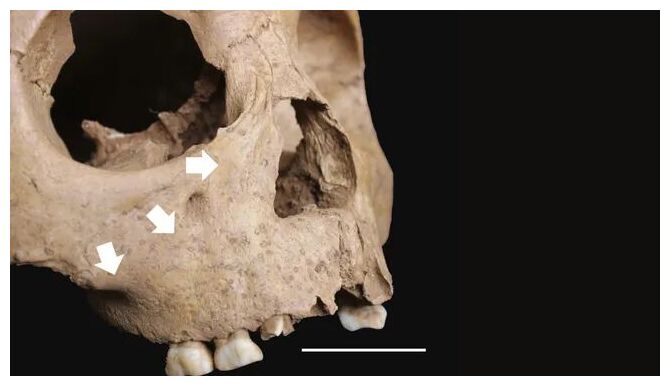
© Vlok et al. 2026, CC BY-NC 4.0Skeletal lesions consistent with congenital treponemal disease on a 5-year-old child from Man Bac, Vietnam.
Archaeologists in Vietnam have made a discovery that could rewrite scientists' understanding of where syphilis originated.

The team found the Stone Age skeletons of three people who had a debilitating bacterial disease that left marks on their bones and teeth. This disease is in the same family as syphilis, and the discovery of it in prehistoric Vietnam could challenge the idea that syphilis-like diseases originated in the Americas.

In a study published March 13 in the International Journal of Osteoarchaeology, the researchers documented three cases of congenital treponematosis at two Neolithic sites in Vietnam dating to around 4,100 to 3,300 years ago. Treponemal diseases are a group of infections caused by the bacterium Treponema pallidum. These diseases, caused by different subspecies of the bacterium, include syphilis, bejel and yaws.

For decades, researchers believed that of these diseases, only syphilis could be spread through congenital transmission, meaning from parent to child during pregnancy, study first author Melandrie Vlok, a lecturer in anatomy and physiology at the Charles Sturt University, told Live Science in an email. The assumption has been used to back the claim that syphilis originated in the Americas, after previous research found that 5,500-year-old remains of children carried bacteria related to syphilis alongside signs of congenital infection, Vlok said.

But importantly, "none of this DNA is actually syphilis," she noted. This distinction matters as evidence of congenital infection by the bacteria has long been seen as evidence of syphilis itself.

"Our new research flips the script," Nicola Czaplinski, a doctoral candidate in health sciences at the University of Notre Dame Australia, said in an email to Live Science. According to their findings, "congenital transmission isn't unique to syphilis."

Info

Medieval DNA reveals trans-Saharan connections, rapid genetic mixing and leprosy in Islamic Ibiza

Medieval Ibiza was far from a quiet Mediterranean backwater. New DNA evidence shows that the island was part of a dynamic world linking Europe, North Africa and even the Sahel zone, south of Sahara. An international research team led from the Centre for Palaeogenetics (CPG), a joint venture between Stockholm University and the Swedish Museum of Natural History, has revealed that its population was remarkably diverse, connected to Europe, North Africa, and sub-Saharan Africa through trade, migration, and social networks. The study is published in Nature Communications.
Lab in Uni
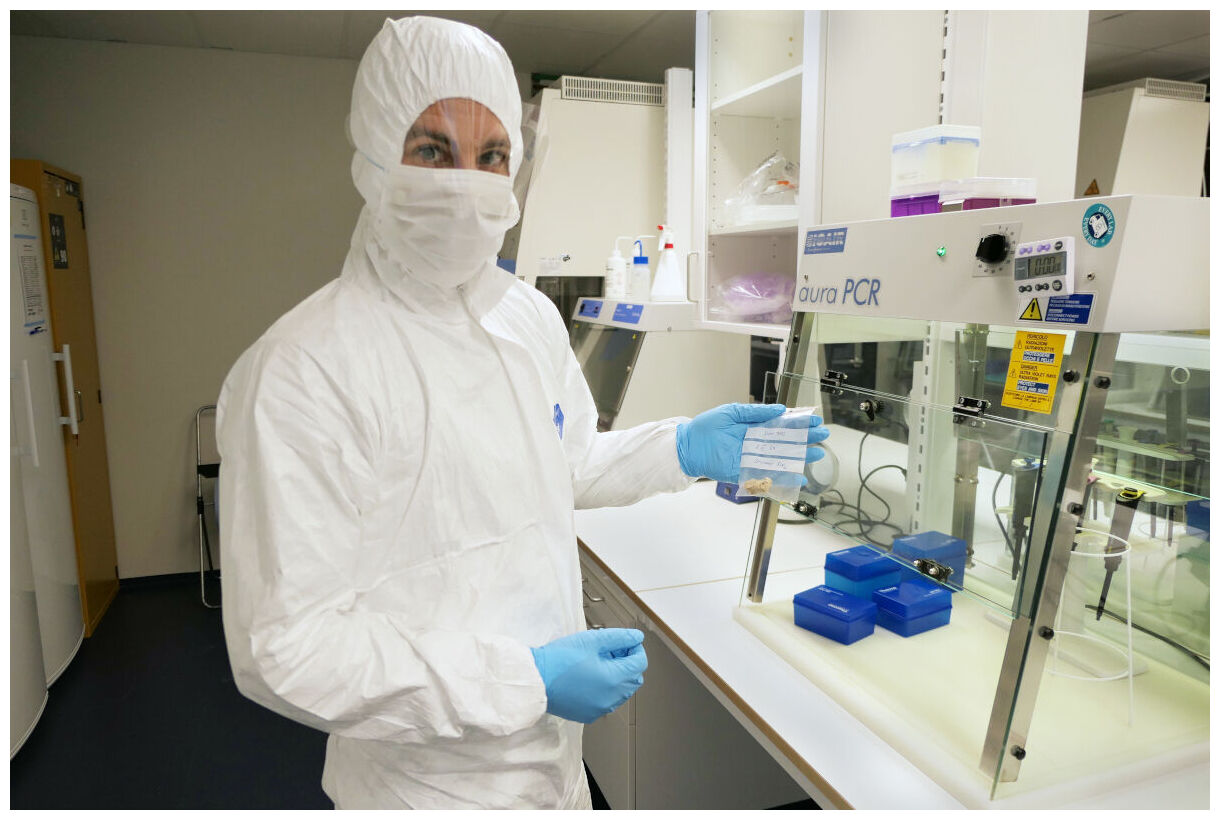
© David Díez del Molino
By analysing ancient DNA from 13 individuals buried in a tenth- to twelfth-century Islamic cemetery, the researchers found a wide spectrum of genetic ancestries, ranging from predominantly European to predominantly North African. This reflects varying degrees of mixing following the Muslim conquest of Ibiza in 902 CE. Historical sources describe two major demographic waves shaping the island: an initial settlement linked to the Umayyad expansion, and a later influx connected to the Almoravid conquest in the early twelfth century.

Two individuals carried sub-Saharan African ancestry, one tracing back to present-day Senegambia, the other to southern Chad, providing biological evidence of trans-Saharan military and/or slave networks recorded in medieval Arabic texts.

"These genomes show that people from both western and central Sahel became part of communities in Islamic Iberia," says Ricardo Rodríguez-Varela, researcher at the Department of Archaeology and Classical Studies at Stockholm University and lead author of the study. "This is direct genetic evidence of the long-distance networks reaching the Sahel, as described in historical sources."

Using advanced genomic techniques, including genotype imputation and haplotype-based local ancestry analysis, the team estimated that North African gene flow into Ibiza began only two to seven generations earlier. This places the main admixture event in the late ninth century CE.

Info

If the Laschamps geomagnetic excursion happened today, aviation radiation exposure would be radically altered

Earth's magnetic field acts as a vital shield against radiation arriving from space, but it is not constant. A new international study has examined how a reduction of the magnetic field similar to the Laschamps excursion would affect aviation on routes such as Helsinki-Dubai and Helsinki-New York if it occurred today.
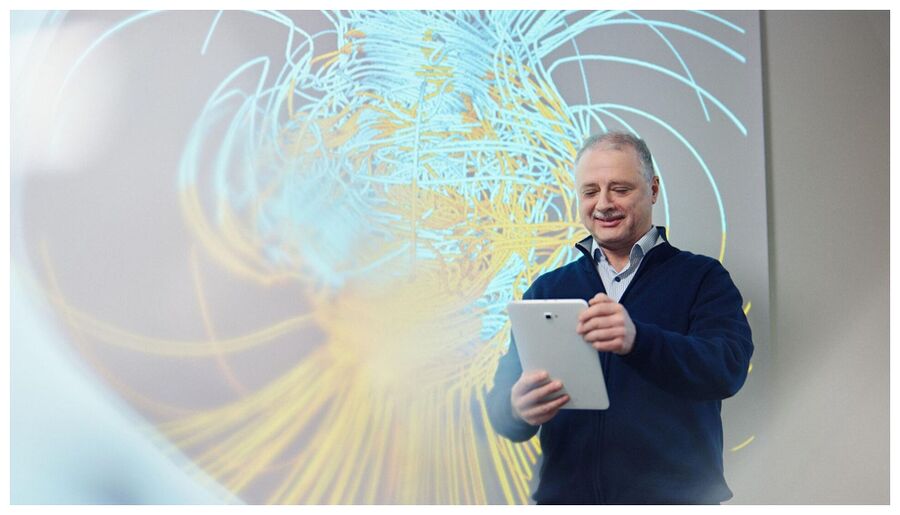
Laschamps Event
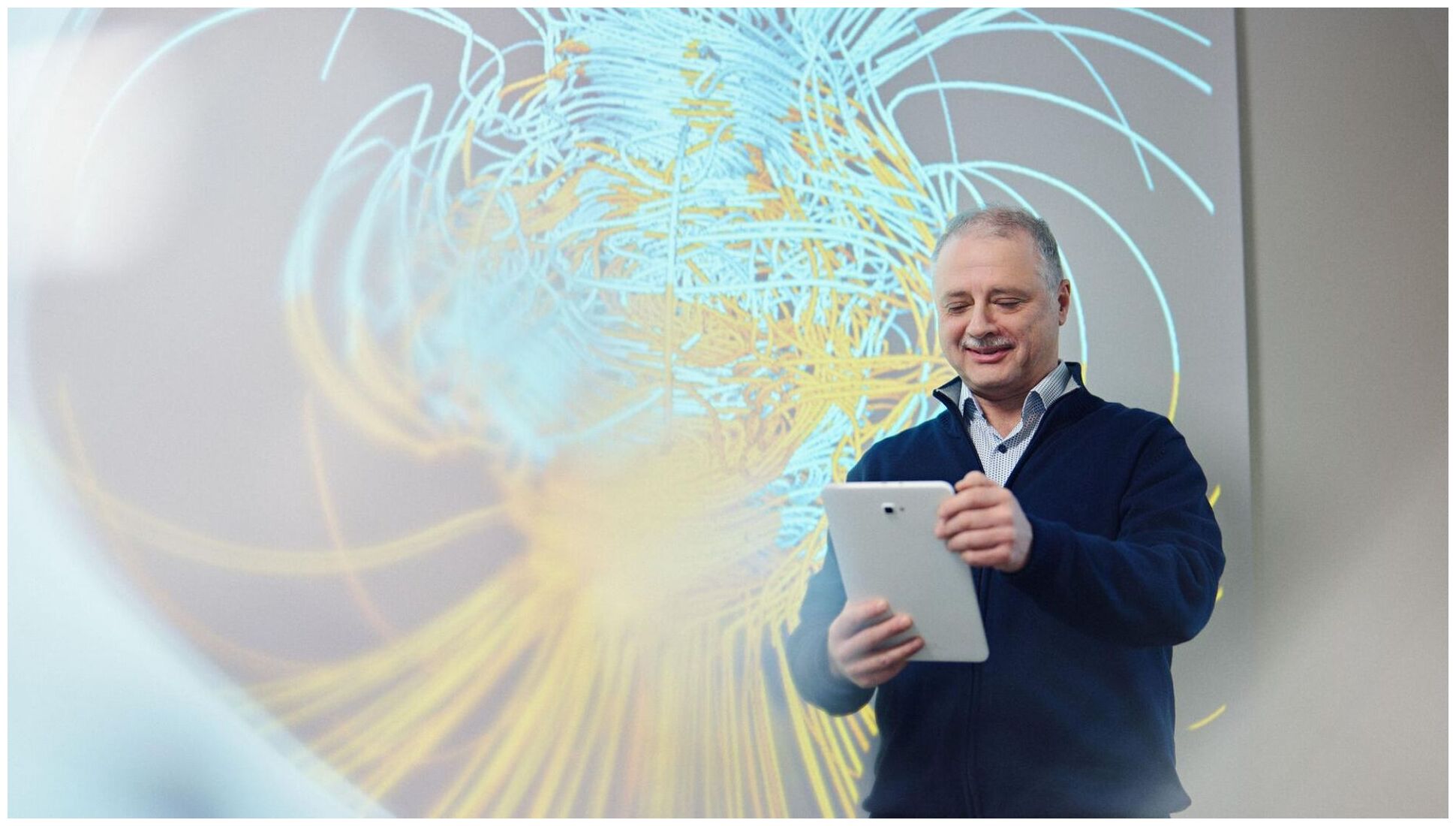
© Mikko Törmänen / University of OuluProfessor Ilya Usoskin. The graphic behind is a simulation of the present-day Earth's magnetic field.
The magnetic field protects Earth from harmful cosmic radiation and solar eruptions. However, its strength slowly varies over time. Occasionally, the field can even reverse, meaning the magnetic north and south poles switch places.

"The effects of a weakening and reversal of the magnetic field on the atmosphere and environment can be dramatic, yet still largely unknown. The consequences could be serious for our modern, highly technological society," says Professor Ilya Usoskin from the University of Oulu, who is a principal investigator of the prestigious large-scale ERC-funded GERACLE project. The new study includes researchers from the Sodankylä Geophysical Observatory and the Space Physics and Astronomy Research Unit at the University of Oulu.

One of the most recent major variations of the geomagnetic field occurred about 41,000 years ago during the Laschamps excursion, when the magnetic field weakened to about five percent of its current strength and became multipolar in structure. The weakening phase lasted roughly two thousand years, and recovery took about five thousand years.

In the new study, researchers modelled the structure of the magnetic field and cosmic radiation throughout the Laschamps excursion. The modelling was based on the updated OTSO tool, developed by Usoskin's team, and the LSMOD.2 paleomagnetic field model, built by GFZ in Potsdam, which reconstructs the Earth's magnetic field in the past. The CRAC:DOMO model, also developed by the team, was used to calculate how much cosmic radiation affects the atmosphere — in other words, to estimate radiation doses affecting humans and technology.

The results show that cosmic radiation penetrated the atmosphere at record levels. The weakening magnetic field reduced the energy threshold required for cosmic particles to enter the atmosphere from today's 17 gigavolts (GV) to only about 4 GV.

At the same time, regions where cosmic radiation could freely enter, the atmosphere expanded threefold irradiating a major fraction of the Earth's atmosphere. Importantly, the exposure was not evenly distributed. The magnetic field became multipolar and irregular, directing cosmic particles in unexpected ways.

"When the magnetic field becomes multipolar, auroras can also appear in unusual locations around the globe," notes Postdoctoral Researcher Pauli Väisänen.