Science & TechnologyS


Frog

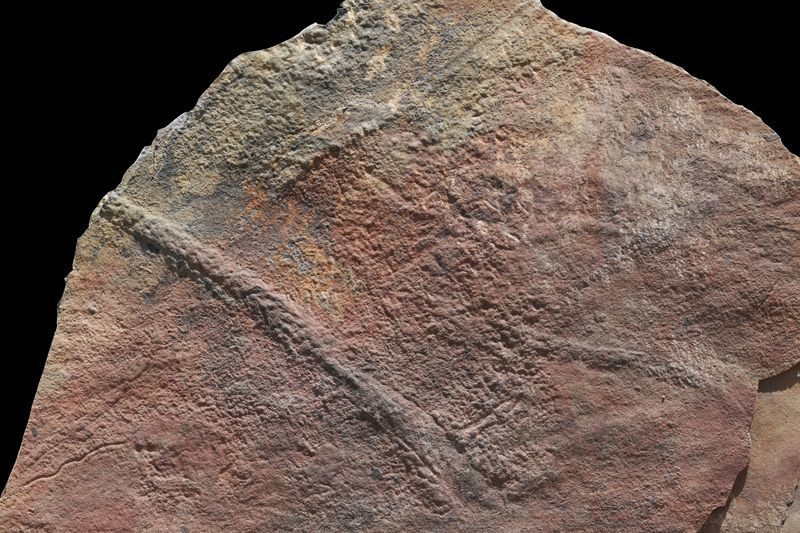
Ancient worm fossil rolls back origins of animal life, challenges theory of evolution

Yilingia spiciformis
© Z. Chen et al./NatureA fossil of Yilingia spiciformis and the track it left as it moved.
More than half a billion years ago, a strange, worm-like creature died as it crawled across the muddy sea floor. Both the organism and the trail it left lay undisturbed for so long that they fossilized. Now, they are helping to revise our understanding of when and how animals evolved.

The fossil, which formed some time between 551 million and 539 million years ago, in the Ediacaran period, joins a growing body of evidence that challenges the idea that animal life on Earth burst onto the scene in an event known as the Cambrian explosion, which began about 539 million years ago.

"It is just pushing things further and further back into the Ediacaran," says Rachel Wood, a geoscientist at the University of Edinburgh, UK. The Cambrian explosion no longer appears to be such an abrupt event in the history of life on Earth, she says. An analysis of the fossil, along with a few dozen similar specimens found in the same rock sequence in southern China, is published in Nature1.


Comment: See also: And check out SOTT radio's:


Question

Mysterious radio burst detected by China's radio telescope

FAST in China
© Asia TimesFAST, the world’s largest single-dish radio telescope, has a certain edge in detecting repeated FRBs.
Is someone or something trying to contact earth?

China's Five-hundred-meter Aperture Spherical Radio Telescope (FAST) has detected a repeating fast radio burst (FRB) — mysterious radio signals from outer space — for the first time, Science and Technology Daily reported.

Scientists on the FAST project with the National Astronomical Observatories of China, part of the Chinese Academy of Sciences, revealed the news to China Daily on Wednesday.

The FRB originated some three billion light years away from Earth. Interference factors including aircraft and satellites have been eliminated and cross validation is being carried out, the scientists said.

FRB is one of the hottest topics in astronomy. It was not until 2007 when the first FRB was discovered by humans. Fewer than 100 FRBs have been detected internationally to date.

There is still no cohesive explanation for the origin of FRB in the international scientific community at present. FRBs mostly only appear once, which makes them very hard to track.

Magnify

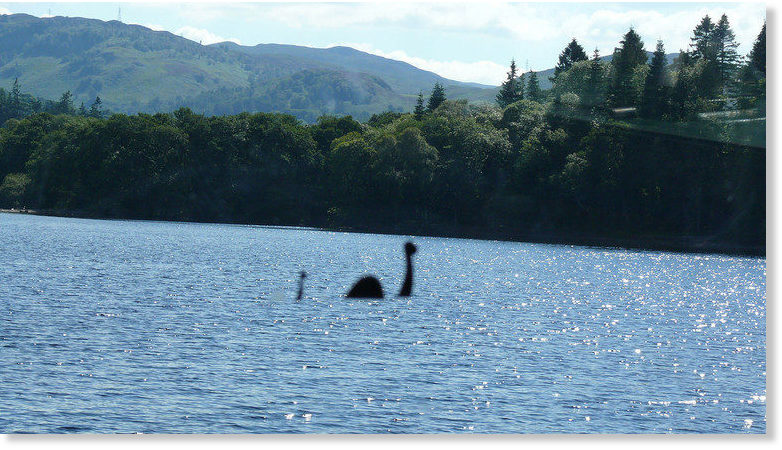
Big Rev-eel: Scientists un-loch mystery of Scotland's mythical creature Nessie

loch ness
© Wikimedia
Itadakimasu, and bring on the sushi!

Researchers now believe that the mythic monster Loch Ness may not be a prehistoric vestige, but giant, meaty, delicious eels.

Scientists from New Zealand ventured to the the UK to confirm once and for all the origins of the fabled creature, and rule out the possibility of it being other (also delicious) aquatic creatures.

As part of their quest, they examined DNA from the monster's namesake lake in the Scottish Highlands. Their analysis showed no signs of any of the large animals once thought to be Nessie, such as the beastly looking aquatic plesiosaur — which may have tasted similar to gamey, mild alligator meat; or, if the cavemen were lucky, like turtle (do yourself a favor and try turtle soup).

"We can't find any evidence of a creature that's remotely related to that in our environmental-DNA sequence data," says Professor Neil Gemmell of New Zealand's University of Otago.

Cloud Grey

The gas of life and the climate

methane gas
I was a bookish child. While others honed their skills on the round leather, I devoured encyclopedias. You read right. At the time, I thought that if I read a certain number of pages from the biggest encyclopedia every day, I would have read everything one day and would hence be all-knowing. I always wanted to know everything there is to know.

Of course, that's a very childish dream. Life taught me many things, One among them is that in this day and age it is utterly impossible to know everything there is to know.

Then a friend of the family bought me the biggest illustrated encyclopedia of life money could buy at the time. I learned about the basics of life, how life evolved from simple bacteria to complex cells and how it all was based on one primordial element that's present in all life as we know it, no matter how exotic it may seem to us - CARBON.

That made me curious so I asked if there could be non-carbon-based life. There was no internet I could query at the time so I was petty alone with my question. In the meantime, I learned a good deal more about carbon and how essential it is for life.

Today, carbon has become enemy number one as the IPCC and a whole plethora of other institutions hold it responsible for the warming of the Earth. Oh sorry, its called Climate Change now.

Comment: See also:


Fireball

'Dune drops' on Mars rich in olivine may provide clues about planet's history

mars dune drops
Mars is well-known for being a dry and arid place, where dusty red sand dunes are prevalent and water exists almost entirely in the form of ice and permafrost. An upside to this, however, is the fact that these conditions are the reason why Mars' many surface features are so well preserved. And as missions like the Mars Reconnaissance Orbiter (MRO) have shown, this allows for some pretty interesting finds.

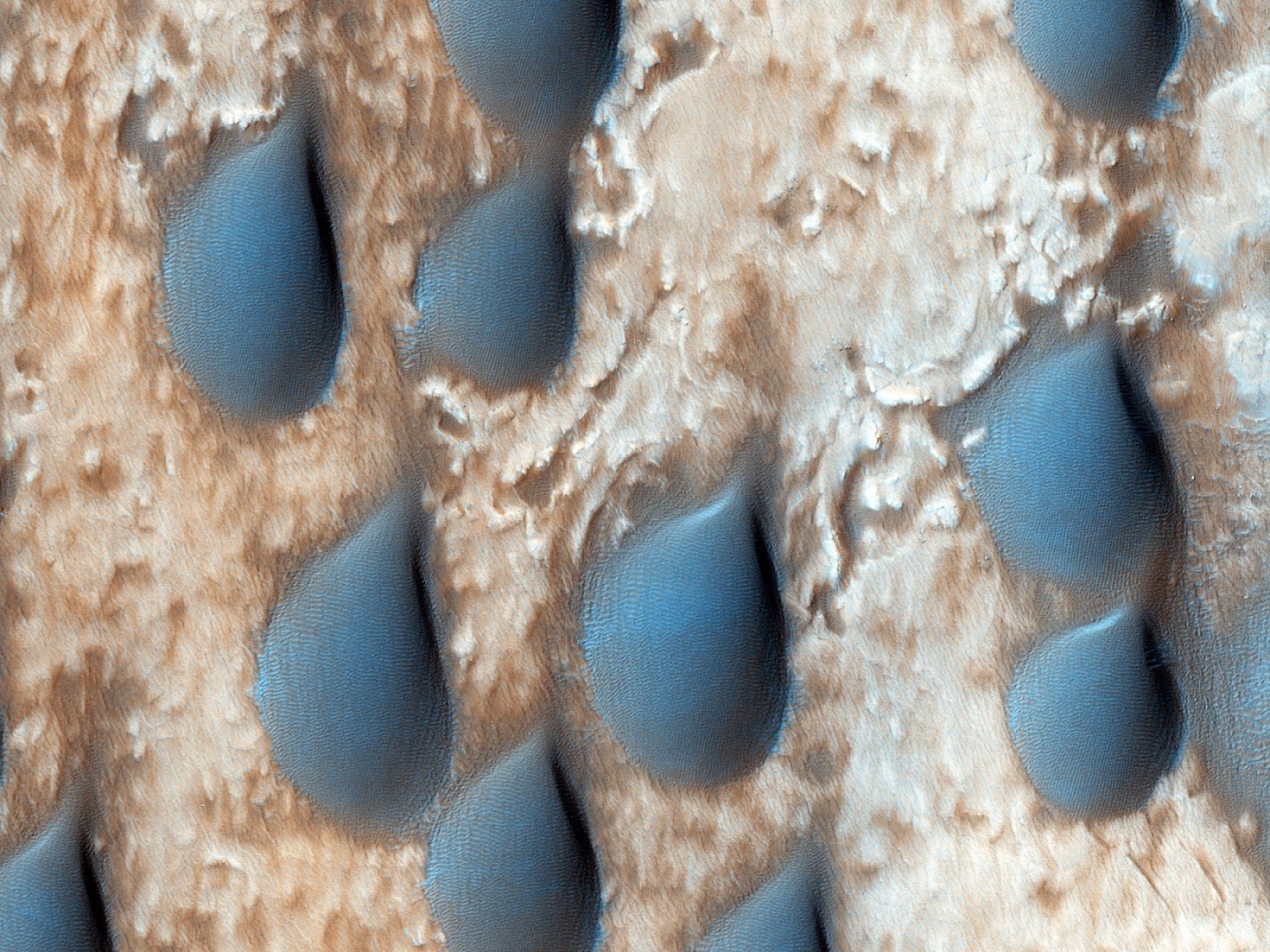
Consider the picture recently taken by Curiosity's High Resolution Imaging Science Experiment (HiRISE) instrument while orbiting above the Copernicus Crater on Mars. This image showed raindrop-like features that are actually signs of sand dunes that are rich in olivine. These same types of dunes exist on Earth but are very rare since this mineral weathers quickly and turns to clay in wet environments.

Olivine is used by geologists to describe a group of rock-forming minerals that are typically found in igneous rocks. This mineral is so-named because of its green color, which is due to its chemical composition - silicate-based (SiO4) and bonded with either Magnesium or Iron (Mg2SiO4; Fe2SiO4). On Earth, it is generally found in dark-colored igneous rocks and is one of the first minerals to crystalize during the slow cooling of magma.

Comment: It's interesting that olivine is often found in processes featuring intense heat (and possibly electric); from the cooling of magma on Earth, its presence in asteroids and meteorites, as well as on the moon, which is scarred by meteorite impacts.

See also:


Rainbow

Eminent scientist's 160-year-old theories aid discovery of new wave-form of light

James Maxwell
© Stefano Bianchetti/Corbis via Getty ImagesPortrait of James Clerk Maxwell (1831-1879). Scottish physicist.
A previously unknown type of light wave has been discovered by researchers, based on the pioneering work of a 19th century Scottish scientist.

Equations developed by renowned mathematician and physicist James Clerk Maxwell have helped to reveal how crystals can be manipulated to produce a distinctive form of light wave.

The phenomena — recently named Dyakonov-Voigt waves — could have a range of useful applications, such as improving biosensors used to screen blood samples or developing fibre optic circuits that transfer data more efficiently.

Scientists and engineers from the University of Edinburgh and Pennsylvania State University made the discovery by analysing how light — which travels in the form of waves — interacts with certain naturally occurring or man-made crystals.

Ice Cube

New discovery shows how T. rex kept its brain cool

t rex
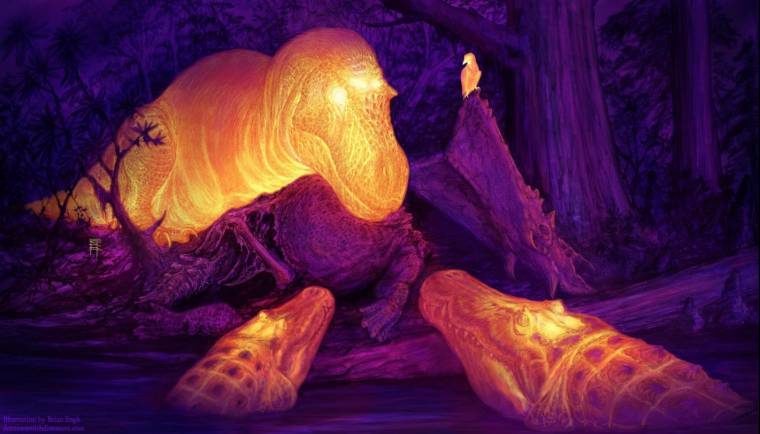
© Brian Engh/ dontmesswithdinosaurs.comThis artist's reconstruction imagines late Cretaceous North America in infrared, as the tyrannosaur Daspletosaurus and the crocodilian Deinosuchus approach the corpse of a horned dinosaur. Regions on the animals' skulls radiate excess heat, an adaptation that may have helped keep their brains cool.
To ward off overheating, large animals such as elephants and rhinos had to evolve strategies to keep cool. Dinosaurs like Tyrannosaurus rex likely faced the same problem — and new research finds that the huge carnivores solved it by developing giant air conditioners in their heads.

Researchers led by Casey Holliday looked at large holes in the tops of carnivorous dinosaur skulls called dorsotemporal fenestrae. Careful anatomical study revealed that the cavities probably contained tissue rich with fat and blood vessels.

These structures may have been useful for dumping heat into the environment when dinosaurs were running too hot and absorbing heat when they got cold, the team reports in the journal The Anatomical Record.

Comment: See also: Also check out SOTT radio's: The Truth Perspective: Are Cells the Intelligent Designers? Why Creationists and Darwinists Are Both Wrong


Snowflake

Protein identified that lets creatures sense cold

Ice Crystal
© University of Michigan
Ann Arbor — Researchers have identified a receptor protein that can detect when winter is coming.

The findings, published Aug. 29 in the journal Cell, reveal the first known cold-sensing protein to respond to extreme cold.

"Clearly, nerves in the skin can sense cold. But no one has been able to pinpoint exactly how they sense it," said Shawn Xu, a faculty member at the University of Michigan Life Sciences Institute and senior author of the study. "Now, I think we have an answer."

When environmental temperatures drop to uncomfortable, and even dangerous levels, receptor proteins within the sensory nerves in the skin perceive the change, and they relay that information to the brain. This is true for organisms from humans all the way down to the tiny, millimeter-long worms that researchers study in Xu's lab at the Life Sciences Institute: the model system Caenorhabditis elegans.

"When you step outside and you sense it's too cold, you're going to take action to get back to a warmer environment as soon as you can," said Xu, who is also a professor in the U-M Medical School's Department of Molecular and Integrative Physiology. "When the worms sense cold, they also engage in avoidance behavior — moving away from cold temperatures, just like humans."

But unlike humans or other complex organisms, C. elegans have a simple, well-mapped genome and a short lifespan, making them a valuable model system for studying sensory responses.

Info

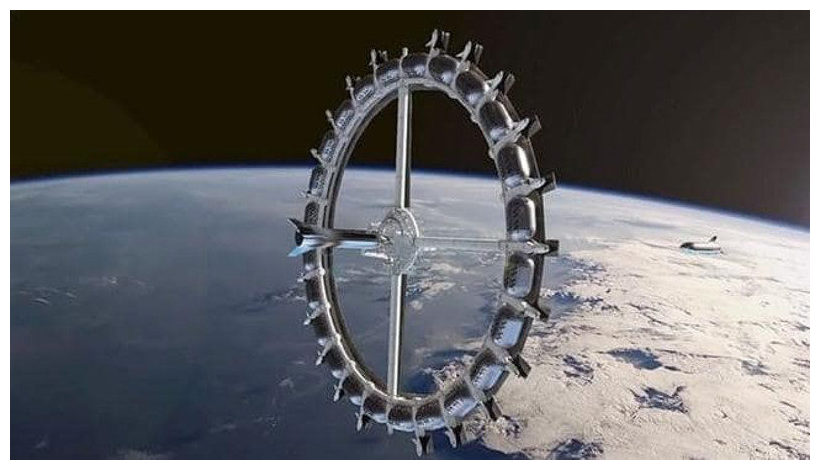
Von Braun Space Station due for 2025

The wheel-like Von Braun Space Station, which is based on the International Space Station, has a lot of new tech, and some not-so-new tech. It's to be a mix of space hotel and seminar and educational centre.
Von Braun Space Station
© Picture courtesy The Gateway FoundationThe proposed space hotel designed by The Gateway Foundation.
The large "cruise liner in space" is mainly for accommodation, and perhaps the ultimate available upmarket corporate events, etc. The Von Braun Space Station is designed by the Gateway Foundation, an interesting mix of obvious promotional zeal and what looks very like idealism.

I was looking for some background for the Gateway Foundation but didn't find any conventional corporate info. The actual ownership and leadership include a few notables who'd have the right to some credibility.

The idea of a luxury space station isn't new in theory, but as a project, it's a whole new ball game or several. You can see the technical specifications on the Gateway page.

Robot

"It scares me to death": Coding errors in sex robots make them prone to violence and injuring humans

sex doll
He's the whistleblower that the future deserves and that the future needs: one expert is sounding the alarm on sex robots, according to The Daily Star.

Oh, and his name happens to be Brick Dollbanger (Yes, it's his real name. Yes, we checked several sources). Dollbanger, a doll collector, has said that "violent repercussions" are possible if the sex robot industry isn't regulated properly. He says that one simple "coding error" could turn sex robots against their owners.

"It scares me to death, it's a machine and it's always going to be a machine," Dollbanger said. He has close ties to doll manufacturers Realbotix and Abyss.

He continued, describing in horrifying detail, his vision for the future of the sex robot industry:
"If you've watched the movies, Ex-Machina, because I honestly believe synthetics are going to look very similar to that movie. It's not going to be something you can hit with a pipe and it's going to fall apart."