Health & WellnessS


Fish

Are tropical fish in danger of getting kidney stones from vitamin C?

Once again, the possibly over-medicated media are trying to scare you off vitamin C supplements. Not to worry: this happens every now and then. In my 37 years in the natural health arena, I have observed that the old "vitamin C causes kidney stones" legend dies mighty hard.

The mythical "vitamin C kidney stone" is a lot like a unicorn. You know what one is, yet they do not exist. For further explanation, the Orthomolecular Medicine News Service will be following up this editorial in a few days with a review article on why vitamin C does not cause kidney stones. If you have not yet subscribed, it's free, it's easy, there is no advertising nor any product for sale, and your email address is never shared with anyone. http://www.orthomolecular.org/forms/omns_subscribe.shtml

The Entire Animal Kingdom Megadoses on Vitamin C

Most animals make their own vitamin C, and a lot of it. Linus Pauling and other scientists have estimated this amount to be somewhere between 1,000 and 10,000 mg of vitamin C per human body weight equivalent per day. That means that cows and sows, horses and porpoises, whales and walruses, fleas and flies, worms and fish, dogs and cats, and rabbits and rats all make vitamin C every day. And, significantly, they make vitamin C for themselves in the range of ten to one hundred times more than the government tells us to take.

The US RDA is less than 100 mg for people. Curiously enough, the United States Department of Agriculture has in fact set a recommended vitamin C level for Guinea pigs, one of the few animal species that cannot make vitamin C for itself. The USDA daily recommended vitamin C intake for Guinea pigs is about 10 times what the US RDA is for you. Guinea pigs do not even have to pay income tax. Golly, you'd think the Feds would cut us a break and raise our RDA.

Question

Mysterious disease discovered locally, strikes mainly young women


It's a mysterious, newly discovered disease that strikes mainly young women, and it's often misdiagnosed. Doctors who discovered it, here in Philadelphia, say it's like your brain is on fire. 3 On Your Side Health Reporter Stephanie Stahl says it starts with personality changes.

Young women dazed, restrained in hospital beds, acting possessed and then becoming catatonic. They'd been so normal, when suddenly their lives went haywire.

"One minute I'd be sobbing, crying hysterically, and the next minute I'd be laughing, said Susannah Cahalan, of New Jersey.

Coffee

Florida couple so addicted to coffee enemas they inject themselves up to 100 times a month

Enemas
© TLCTrina seen injecting the coffee liquid into her colon with a hose to clean out her lower intestines.
Like most people Mike and Trina can't live without coffee, but it's safe to say their love for coffee goes way beyond the norm. On the new season of TLC's My Strange Addiction, the St. Petersburg, Florida couple takes their coffee addiction to the bathroom, where they spend the majority of their days preparing and administering coffee enemas.

On the show, Mike and Trina are seen injecting the brown liquid into their colons with a hose to clean out their lower intestines.

Mike sears by a "saturated" blend "on the cold side" whereas Trina enjoys a fine espresso grind that is "warm and thicker".

While the couple each have at least 100 coffee enemas a month, and 6,000 in total since their addiction began two years ago, both Trina and Mike refuses to drink the caffeinated beverage, saying that it is bad for their health.

"I started the whole debacle," Trina told ABCNews.com . "Then it took on a life of its own. I twice tried to stop and felt worse, so I do this every day and as much as I can. But it's very time-consuming."

"I love the way it makes me feel," said Trina, who did not want to reveal her last name. "It gives me a sense of euphoria."

The couple performs the enemas by first heating up the coffee on a stove, and then they each take a 32-ounce bucket of it into the restroom and empty it into their lower intestines using a Vaseline-coated hose. The whole enema procedure takes about five hours each day, which they can do with ease because they both work from home.

Mike and Trina are so addicted to their time-consuming coffee enemas that they refuse to travel or leave their home for long periods of time.

Health

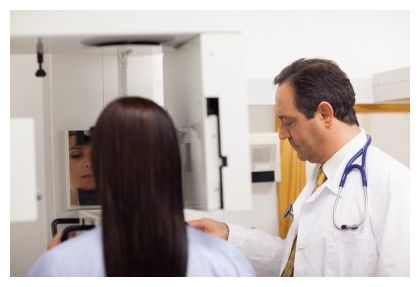
Confirmed: The more mammograms you get the more harm they do

Mammograms
© GreenMedInfo
Mammograms are in the news again, and it doesn't look good for those who continue to advocate using them to "detect cancer early" in asymptomatic populations. The science increasingly runs directly counter to the screening guidelines produced by both governmental and nongovernmental health organizations claiming to be advocates for women's health.

Remember that only last November, the New England Journal of Medicine published a shocking analysis of the past 30 years of breast screening in the US, finding that 1.3 million women were overdiagnosed and overtreated for breast cancer - euphemisms for misdiagnosed and mistreated.1

This finding, released cunningly from scientific embargo to the media on the eve of Thanksgiving, was so devastating in its implications that many either did not understand its meaning, or could not bear to accept the truth that the quarter of a century clarion call of breast cancer awareness month - get your annual mammogram or lose your life! - caused more unnecessary suffering, pain and harm to women than it is possible to calculate. The only calculable dimension of this world-historical failure is the billions of dollars that were made in the process of converting healthy, asymptomatic women into "patients", and if fortunate enough to make it through treatment, "survivors".

Donut

Being American Is Bad for Your Health

We're not getting sicker by accident.
"Americans are sicker and die younger than people in other wealthy nations."
sick America
That stark sentence appears in the January 2013 issue of the Journal of the American Medical Association, and it comes from the authors of a landmark report -- "Shorter Lives, Poorer Health" -- on differences among high-income countries.

You probably already know that America spends more on health care than any other country. That was one of the few facts to survive the political food fight pretending to be a serious national debate about the Affordable Care Act.

But the airwaves also thrummed with so many sound bites from so many jingoistic know-nothings claiming that America has the best health care system in the world that today, most people don't realize how shockingly damaging it is to your wellness and longevity to be born in the U.S.A.

This is made achingly clear in the study of the "U.S. health disadvantage" recently issued by the National Research Council and the Institute of Medicine, which was conducted over 18 months by experts in medicine and public health, demography, social science, political science, economics, behavioral science and epidemiology.

Bacon

Heart attack risk in 'healthy spreads'

Magarine
© youniquenutrition.com
I have been extolling the virtues of butter over margarines made with linoleic acid-rich vegetable oils ever since 1971. Now, the medical fraternity is finally getting the message - and, more importantly, publishing it!

This week, not only the BMJ but many UK Newspapers have published articles which vindicate my stance. But, as you will read, there are some who really don't want to know.

Swapping butter for margarine and vegetable oils could trigger a heart attack, scientists have warned.

Decades of dietary advice has been turned on its head after experts uncovered startling new evidence about the dangers of eating "healthy" spreads.

A study revealed an ingredient in vegetable fats triggers inflammation - which plays a major role in chronic illnesses from heart disease and cancer to arthritis and Alzheimer's.

The findings will have major implications for millions of Britons who have stopped using butter in favour of trendy, and less fatty, spreads and oils following healthy-­living guidance.

Victoria Taylor, senior dietitian at the ­British Heart Foundation, said: "Our understanding of the effect of different fats on the heart develops all the time as research into this complex issue is published. Replacing saturated fats with ­unsaturated alternatives is a well-known recommendation for your heart which is based on many large and in-depth studies.

"However, this research highlights the need for us to further understand how different unsaturated fats affect our risk of heart disease.

Info

Your immune system 'remembers' microbes it's never fought before, new study says

T Cell
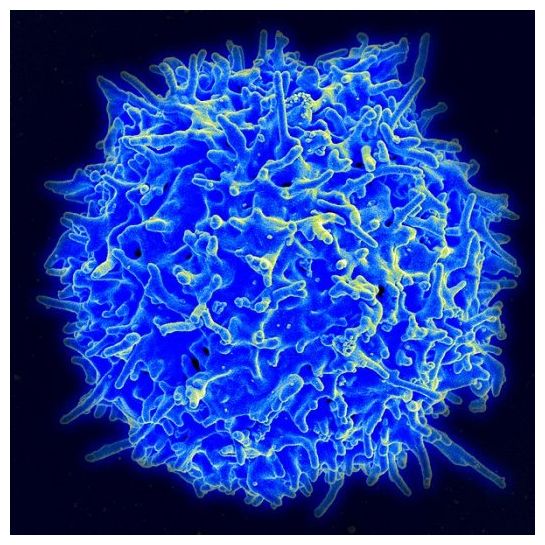
© Wikimedia CommonsHealthy human T cell.
Immune cells are like the Hatfields and McCoys of our bodies--once wronged, they never, ever forget. This is how we gain immunity, and it's why vaccines work: Immune cells develop a memory of an invading pathogen, and they build an alert system to find and fight it should it ever return. But a new study by Stanford researchers adds a new wrinkle to this long-held immune theory. It turns out immune cells can develop this memory-like state even for pathogens they've never met. This may come from exposure to harmless microbes -- or the memories may actually be borrowed from other, more experienced cells.

The findings could help explain why babies and small children are so susceptible to infectious diseases. They haven't been exposed to enough ever-present, mostly harmless pathogens yet, and it's the constant scuffle with these bugs that gives adult T cells a sort of cellular precognition. "It may even provide an evolutionary clue about why kids eat dirt," said the study's lead author, Stanford microbiologist and immunologist Mark Davis. Kids are drawn to dirt because they've got to expose their fledgling immune systems to something, to help build up their defenses.

Davis and his coauthors studied a group of T cells called CD4 cells, which are the same ones targeted by HIV. CD4 cells hang out in our bloodstreams and stand sentinel, sounding the cellular alarm when they spot something that doesn't belong. There are two basic classes of CD4 cells: Naive cells, which haven't been exposed to a particular bug and might take a while to mount a response, and memory-type cells, which have done battle with a pathogen and are on the lookout for it again. The memory cells can prompt action within a few hours, while naive cells might take days or even weeks--meanwhile, we're sick.

Cheeseburger

Excess protein linked to development of Parkinson's disease

Image
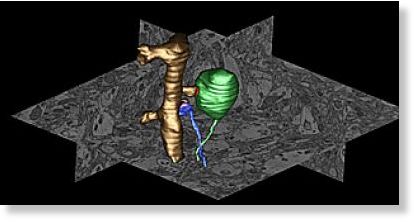
© Image courtesy of the National Center for Microscopy and Imaging Research, UC San DiegoUsing serial block face scanning electron microscopy and other technologies, researchers created three-dimensional images of the neocortex of transgenic mice engineered to over-express the human protein, alpha-synuclein, and noted massively enlarged nerve terminals. In this image, an over-sized terminal (green) forms a synapse (red) with a dendritic spine (golden). A normal and smaller terminal (blue) forms a synapse with an adjacent spine on the same dendrite.
Accumulation appears to progressively disrupt neuronal function and viability.

Researchers at the University of California, San Diego School of Medicine say overexpression of a protein called alpha-synuclein appears to disrupt vital recycling processes in neurons, starting with the terminal extensions of neurons and working its way back to the cells' center, with the potential consequence of progressive degeneration and eventual cell death.

The findings, published in the February 6, 2013 issue of the Journal of Neuroscience, have major implications for more fully understanding the causes and mechanisms of Parkinson's disease (PD), a neurodegenerative movement disorder that affects an estimated one million Americans.

"This is an important new insight. I don't think anybody realized just how big a role alpha-synuclein played in managing the retrieval of worn-out proteins from synapses and the role of alterations in this process in development of PD," said principal investigator Mark H. Ellisman, PhD, professor of neurosciences and bioengineering and director of the National Center for Microscopy and Imaging Research (NCMIR), based at UC San Diego.

Parkinson's disease is characterized by the gradual destruction of select brain cells that produce dopamine, a neurotransmitter involved in regulating movement and emotion. Symptoms include increasing loss of muscle and movement control. While most cases are sporadic - that is, their causes are unknown - there are also inherited forms of PD linked to specific gene mutations and modifications.

Arrow Up

Alzheimer's cases to triple by 2050: study

Image
© Shutterstock
Alzheimer's disease cases in the US will nearly triple in the next 40 years, according to new projections Wednesday that suggest there will be nearly 14 million sufferers by 2050.

In 2010, there were just 4.7 million people with Alzheimer's disease in the United States.

The researchers who made the projections attribute the predicted increase to the high numbers of "baby boomers" - the especially large generation born after World War II - who are now reaching old age.

More than half of those with the disease by 2050, some seven million people, will be 85 or older, the researchers said.

Arrow Down

Nanoparticles are prevalent in food chain, companies decline comment

Nanoparticles
© Medical Daily
The New York Times has published an article citing a report that indicates that many companies do not wish to acknowledge that there are nano-particles in their food products, nor pledge to keep their foods free from such molecules.

Nano-particles are small molecules that have shapes that are not usually seen in nature and that scientists are just beginning to understand their full consumer and scientific potential.

These nano-molecules can enter the food chain through food packaging and certain food products, but many companies fail to acknowledge using them even though research indicates that they may be harmful for human health. According the report "As You Sow," many companies don't even know if their food products contain these potentially harmful nano-materials.

Studies have found that these small scale materials may be harmful in living mice and in cultured cells in a laboratory setting and are ubiquitius in consumer products. They have been see in in the blood after they have been breathed in, or ingested and can infiltrate areas of the body usually not permeable to molecules, such as the brain.