Find us on:

Health & Wellness


Heart

Why donating blood is good for your health

Blood Donation
© Medical Daily
It's time to roll up your sleeve and save a life - including yours.

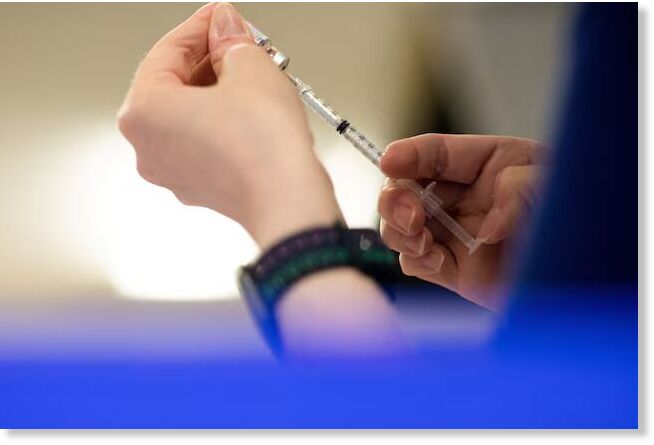
Every two seconds, someone in the United States needs blood, with a total of 44,000 blood donations needed every day, reports the American Red Cross. One whole blood donation, which takes approximately 45 minutes to an hour, can come to the rescue of as many as three patients.

Harold Mendenhall, an 84-year-old lifetime blood donor from South Florida donated his 100th gallon of blood, The Palm Beach Post reports. He started giving blood on July 7, 1977 when his wife, Frankie, was diagnosed with breast cancer. After she died, going to the blood bank was a way Mendenhall could deal with the grief of losing his wife and later his two sons. At least he could save those who needed a blood transfusion.

Mendenhall, strong and healthy, donates six gallons of blood a year by platelets. In a platelet donation, a machine withdrawals the blood, filter out the platelets and returns the rest of the blood to the donor, according to the Memorial Sloan-Kettering Cancer Center. This donation procedure takes 70 to 90 minutes can be done once every seven days, allowing for the donor to give blood every few weeks instead of the eight weeks of waiting required for a non-platelet donation. Whole blood donors can also donate platelets 72 hours after a whole blood donation, and vice versa.

Blood donors must be 17 years old in most states, with some states lowering the limit to 16 years old with parental consent. Donors ages 16-18 are also subject to additional height and weight restrictions, says the New York Blood Center. A single individual that donates whole blood starting at 17 years old every 56 days until they reach 76, will have donated 48 gallons of blood, potentially saving more than 1,000 lives says the American Red Cross.

While the health benefits of recipients who receive blood transfusions are clear, altruistic blood donors too, can reap the benefits.
Health

Scientific infighting! Journal rebukes Harvard's top nutritionist for disagreeing with colleague

© Image credit: Getty Images via @daylife
Walter Willett, MD, DrPH, MPH, chairman of the Epidemiology and Nutrition at Harvard School of Public Health, answers questions from the media prior to a public hearing regarding a proposal to ban the sale of certain larger sizes of sugary drinks at the Department of Health and Mental Hygiene July 24, 2012 in the Queens borough of New York City. Under the proposed ban, sugary drinks with no nutritional value would not be allowed to be sold in sizes over 16 ounces in certain retail outlets.
In an extraordinary editorial and feature article, Nature one of the world's pre-eminent scientific journals, has effectively admonished the chair of the Harvard School of Public Health's nutrition department, Walter Willett, for promoting over-simplification of scientific results in the name of public health and engaging in unseemly behavior towards those who venture conclusions that differ to his.

Willett, who is one of the most frequently quoted academic sources on nutrition in the news media, appears to have crossed a Rubicon when he denounced Katherine Flegal, an epidemiologist at the US National Center for Health Statistics, for publishing a study that showed people who were overweight (but not obese) lived longer than those deemed normal weight. "This study is really a pile of rubbish, and no one should waste their time reading it," he told National Public Radio.

Comment: For more information on weight and longevity, read:
Fat Can Be Healthy: Some Obese People Live Long Lives

Arrow Down

Study shows surgery deaths much more common on weekends

Surgery
© Thinkstock
Are all the best doctors out on the golf course during the weekend, leaving some major surgeries to their less experienced colleagues?

According to a new study in the British Medical Journal, patients who have elective surgery on the weekend are 82 percent more likely to die than if they had undergone the procedure on a Monday.

"The first 48 hours after an operation are often the most critical period of care for surgery patients," said lead author Dr. Paul Aylin, from the School of Public Health at the Imperial College London.

The latest study adds to a growing body of evidence about the so-called "weekend effect" which suggests a notably higher risk of death if a person is admitted to the emergency room on the weekend compared with a weekday.

"So if the quality of care is lower at the weekend as some previous studies have suggested, we would expect to see higher mortality rates not just for patients operated on at the weekend, but also those who have operations towards the end of the week, whose postoperative care overlaps with the weekend," Aylin said. "That is what we found."
Magic Wand

Turmeric's cardiovascular benefits found to be as powerful as exercise

Nothing can replace exercise, but turmeric extract does a pretty good job of producing some of the same cardiovascular health benefits, most notably in women undergoing age-associated adverse changes in arterial health.

Despite the general lack of interest by conventional medical practitioners in turmeric's role in preventing heart disease, there is a robust body of published research on its remarkable cardioprotective properties, with three dozen study abstracts on the topic available to view on our database alone: turmeric's cardioprective properties.

Last year, we reported on a study published in the American Journal of Cardiology that found turmeric extract reduces post-bypass heart attack risk by 56%. Now, we would like to bring attention to a remarkable study published in the journal Nutrition Research in 2012 that revealed that curcumin, the primary polyphenol in turmeric and which gives the spice its golden hue, is as effective in improving vascular function in postmenopausal women as a moderate aerobic exercise training regimen. [1]

Comment: Additional information on Tumeric Health Benefits:

Turmeric: The Return of The Golden Goddess
India's 'holy powder' Finally Reveals It's Centuries-Old Secret
Spice of Life: Turmeric Boosts Effects of Chemo in Fighting Tumors
Curcumin and Black Pepper Combine to Stop Breast Cancer Tumor Cells
Research: Curcumin is a triple negative breast cancer killer

Turmeric is the Anti-Aging, Anti-Oxidant, Anti-Inflammatory Super Spice
Turmeric can help regenerate the liver, groundbreaking new research
Turmeric, Curcumin Naturally Block Cancer Cells
Curry-derived molecules might be too spicy for colorectal cancers
Weekly Curry 'May Fight Dementia'
'Holy Powder' Makes Your Cell Membranes Behave for Better Health
Turmeric repairs damaged liver tissues, promotes overall liver health
Turmeric's Powerful Life-Promoting Properties Put Pharmaceuticals to Shame
Curry spice 'kills cancer cells'


Megaphone

Novel Coronavirus: a "threat to the entire world", says World Health Organization


The World Health Organisation (WHO) has warned the new Sars-like illness is a 'threat to the entire world'
The new Sars-like respiratory illness which has killed half of the people who have been infected with it is a "threat to the entire world", the World Health Organisation (WHO) has warned.

Experts raised concerns that the disease is "emerging faster than our understanding".

The WHO says that since September last year there have been 44 laboratory confirmed cases across eight countries which have resulted in 22 deaths, including two people in the UK, but reports suggest that the figure could be higher.

Earlier this week, WHO's director general said that the novel virus, which has been called Middle East respiratory syndrome coronavirus - or MERS-CoV, is her "greatest concern".

Addressing the World Health Assembly in Geneva on Monday, Dr Margaret Chan said: "Looking at the overall global situation, my greatest concern right now is the novel coronavirus.
Sherlock

Novel Coronavirus: New SARS-Like Virus

Coronavirus
© Getty Images
On Tuesday, a 65-year-old French man died from a SARS-like infection, called novel coronavirus (nCoV). He was the first man in France to die from the infection, which he contracted after visiting Dubai. Meanwhile, health officials in Saudi Arabia - where the virus was first detected in April 2013 - reported five additional cases of the infection.

Novel coronavirus is among the family of coronaviruses that cause illnesses that range from the common cold to Severe Acute Respiratory Syndrome (SARS). Until last year, the new strain had never before been seen in humans. As of last week, the WHO reported that there have been a total of 49 people infected since September 2012, 27 of whom have died.
Health

High blood pressure linked to declining brain function

Blood Pressure Cuff
© Workmans Photos, Shutterstock
Washington - High blood pressure, particularly in the arteries that supply blood to the head and neck, may be linked with declining cognitive abilities, according to a new study from Australia.

Researchers found that people with high blood pressure in the central arteries - including the aorta, the largest artery in the human body, and the carotid arteries in the neck - performed worse on tests of visual processing, and had slower thinking and poorer recognition abilities.

Typically, blood pressure measurements are taken from the brachial artery in the arm, but looking at the health of the central arteries may be a more sensitive way to assess cognitive abilities, said study researcher Matthew Pase, of the Center for Human Psychopharmacology at Swinburne University in Melbourne. The central arteries directly control bloodflow to the brain.

"If we can estimate the blood pressure in central arteries, we might be able to better predict cognitive function and cognitive decline," Pase said.

Pase presented the findings here on May 24 at the annual meeting of the Association for Psychological Science.
Attention

Deadly antiviral resistant flu appears in China

© ahisgett
Chinese researchers reported the first ever clinically documented case of resistance to the antiviral medication Tamiflu in patients infected with the H7N9 bird flu.

In the case of 14 patients admitted to the Shanghai Public Health Clinical Center in April, treatment with antiviral medications helped in all but three. Those three developed severe illnesses that required the delivery of oxygen to the circulatory and respiratory systems with a machine, known as extracorporeal membrane oxygenation (ECMO). Two of the three died. A viral mutation associated with drug resistance was isolated in two of them.

One of the mutations appeared to arise in one of the patients with oxygen support as a result of treatment.

In a report of the cases, the researchers wrote: "The apparent ease with which antiviral resistance emerges ... is concerning; it needs to be closely monitored and considered in future pandemic response plans."

- Posted by Alexander Reed Kelly.
Pills

Dirty medicine

The epic inside story of long-term criminal fraud at Ranbaxy, the Indian drug company that makes generic Lipitor for millions of Americans.

1. The assignment

On the morning of Aug. 18, 2004, Dinesh Thakur hurried to a hastily arranged meeting with his boss at the gleaming offices of Ranbaxy Laboratories in Gurgaon, India, 20 miles south of New Delhi. It was so early that he passed gardeners watering impeccable shrubs and cleaners still polishing the lobby's tile floors. As always, Thakur was punctual and organized. He had a round face and low-key demeanor, with deep-set eyes that gave him a doleful appearance.

His boss, Dr. Rajinder Kumar, Ranbaxy's head of research and development, had joined the generic-drug company just two months earlier from GlaxoSmithKline, where he had served as global head of psychiatry for clinical research and development. Tall and handsome with elegant manners, Kumar, known as Raj, had a reputation for integrity. Thakur liked and respected him.

Like Kumar, Thakur had left a brand-name pharmaceutical company for Ranbaxy. Thakur, then 35, an American-trained engineer and a naturalized U.S. citizen, had worked at Bristol-Myers Squibb (BMY) in New Jersey for 10 years. In 2002 a former mentor recruited him to Ranbaxy by appealing to his native patriotism. So he had moved his wife and baby son to Gurgaon to join India's largest drugmaker and its first multinational pharmaceutical company.

When he stepped into Kumar's office that morning, Thakur was surprised by his boss' appearance. He looked weary and uneasy, his eyes puffy and dark. He had returned the previous day from South Africa, where he had met with government regulators. It was clear that the meeting had not gone well.

Comment: Hold on just a minute! This Indian company is basically following the model set for it by U.S. Big Pharma companies! CNN should be congratulating Ranbaxy for doing things 'the American way'!

Isn't is great how we're free to criticise when 'those people over there' do it, but barely mention our own medical crimes against humanity which originate back home?

Medicine as a whole is now the leading cause of death in the U.S.thanks to companies like Monsanto, a company has destroyed more lives in India than Ranbaxy ever will in the U.S. Oh, and it is destroying lives in the U.S. too.

Health

Junk study: Pfizer-funded study falsely claims fish oil useless

A study claiming that fish oil provides no benefit in heart disease is being hyped as the final word on the issue. But is it? No, it is not. In fact, the study is absurdly blatant pseudo science, with two errors so glaring it's hard to believe they were made. Why do the researchers do it? Why do they care so little about the truth and your health?

Heat Attack
© Unknown
A new study published in the New England Journal of Medicine purports to show that fish oil provides no benefit whatsoever in prevention of heart disease.[1] At first glance, it would appear to be true. The study is, after all, double blind and placebo controlled, not to mention having a significant number of participants. But is it for real, or is there some sleight of hand at work?

There's one initial clue that should give pause. The study's endpoints had to be changed. That's always a bad sign. In fact, it breaks the rules of good research. But, they had to do it because they found that their study participants weren't dying as fast as they'd anticipated.

Now, if they'd been interested in the truth, they'd have tried to figure out what was wrong. After all, the odds of dying when people have signs of heart disease are pretty well understood. Otherwise, how could they possibly have anticipated the rate at which deaths would occur?

Of course, they didn't sit back and wonder what they might be doing wrong. Instead, they just added new end points to their study.