Health & WellnessS


Health

24 children die of mysterious disease in Odisha district

With 24 children dying of a mysterious disease during last two months in Odisha's Malkangiri district, the government has launched a drive to create health awareness and conduct medical examination in the tribal-dominated district.

"We have collected blood, water and mosquito samples in the affected areas to ascertain the reason behind the death and augmented the drive to create health awareness among the people", chief district medical officer (CDMO), Sashibhushan Panda said.

24 children aged between six months and four years died in some villages under Malkangiri and Korkunda blocks. They had swelling in their eyes, nose and ears accompanied by high fever and blood vomiting leading to death, he said.

A six-member expert team of scientists from Regional Medical Research Centre (RMRC), Bhubaneswar visited the affected villages and collected samples for investigation.

Info

Reactions to everyday stressors predict future health

Contrary to popular perception, stressors don't cause health problems -- it's people's reactions to the stressors that determine whether they will suffer health consequences, according to researchers at Penn State.

"Our research shows that how you react to what happens in your life today predicts your chronic health conditions and 10 years in the future, independent of your current health and your future stress," said David Almeida, professor of human development and family studies. "For example, if you have a lot of work to do today and you are really grumpy because of it, then you are more likely to suffer negative health consequences 10 years from now than someone who also has a lot of work to do today, but doesn't let it bother her."

Using a subset of people who are participating in the MIDUS (Midlife in the United States) study, a national longitudinal study of health and well being that is funded by the National Institute on Aging, Almeida and his colleagues investigated the relationships among stressful events in daily life, people's reactions to those events and their health and well being 10 years later.

Specifically, the researchers surveyed by phone 2,000 individuals every night for eight consecutive nights regarding what had happened to them in the previous 24 hours. They asked the participants questions about their use of time, their moods, the physical health symptoms they had felt, their productivity and the stressful events they had experienced, such as being stuck in traffic, having an argument with somebody, or taking care of a sick child.

"Most social-science surveys are based on long retrospective accounts of your life in the past month or maybe the past week," Almeida said. "By asking people to focus just on the past 24 hours, we were able to capture a particular day in someone's life. Then, by studying consecutive days, we were able to see the ebb and flow of their daily experiences."

The researchers also collected saliva samples from the 2,000 individuals at four different times on four of those eight days. From the saliva, they were able to determine amounts of the stress hormone, cortisol. They then linked the information they collected to data from the larger MIDUS study, including the participants' demographic information, their chronic health conditions, their personalities and their social networks.

Comment: One of the most effective techniques to relieve stress and pain, and avoid the unfortunate consequences down the road, is the Éiriú Eolas Stress Control, Healing and Rejuvenation Program.


Syringe

General anesthesia may disrupt communication between brain areas

Image
© Frederick M. Brown / Getty Images A new study suggests that anesthesia drugs such as propofol work by disrupting communication between brain areas.
Researchers have moved one step closer to understanding how anesthesia drugs work by identifying a component of brain activity that could explain why we lose consciousness under the influence of the drugs, according to a study published Monday in the Proceedings of the National Academy of Sciences.

Though "going under" is an extremely common part of many medical procedures, the mechanism by which it works remains a mystery. This fact has practical ramifications: Some studies have shown that anesthesia can lead to loss of memory and other side effects, something researchers might be able to alleviate if they understand exactly what the drugs do in the body.

One hypothesis for why the drugs cause us to zonk out is that they cause different parts of the brain to lose their "functional integration" -- their ability to work together as a coherent whole. The brain is often thought of as a series of relatively independent areas -- parts of the organ are often referred to as the "face area" or the "vision region." But in order for the whole thing to work correctly, many different areas must work together. If something about anesthesia made this impossible, that could explain why we lose consciousness.

Cupcake Pink

Depression: Your brain on sugar

Image
© smartaboutsugar.com
You've no doubt seen the television ads warning "this is your brain on drugs". These public service announcements are designed to be visually shocking thereby discouraging youth drug abuse by comparing the brain to an egg and a fried egg in a pan to a brain on drugs.

The same can be said about the effects of sugar on the brain. In the case of sugar, however, the effects are marked by a high risk of long term mental illness like depression rather than a brief yet dangerous, drug induced high.

Depression is at epidemic proportions in our modern society. Even children are not immune with some estimates putting 1 in every 8 teenagers as clinically depressed.

What's more, major depression is projected to become the #2 disability in the United States by 2020 with 1/4 of the population suffering its devastating impact sometime during their lives.

Comment: Watch the following video for more information about your 'brain on sugar':

Primal mind: A talk on nutrition and mental health by Nora Gedgaudas


Syringe

Can we continue to justify injecting aluminum into children?

Image
© greenmedinfo.com
A new report published in the Journal of Trace Elements in Medicine and Biology raises a disturbing possibility: that aluminum hydroxide, the dominant metal-based adjuvant used in vaccines today, is causing aluminum overload at injection sites, and contributing to the pathogenesis of diseases such as chronic fatigue syndrome, macrophagic myofasciitis and subcutaneous pseudolymphoma. [i]

Discussed is the case of a 45-year old woman with vaccine-induced subcutaneous pseudolymphoma, a type of skin lesion characterized by collections of lymphocytes, macrophages, and dendritic cells in the skin. The researchers performed a skin biopsy at the injection site and found aluminum (AI) deposits in her macrophages. When the skin sample was assayed for AI and quantified, it was found to contain 768.1 micrograms per gram, dry weight, versus 5.61 and 9.13 in two control patients - up to 153-fold higher concentrations.

The report cautioned: "Given the pathology of this patient and the high Al concentration in skin biopsy, the authors wish to draw attention when using the Al salts known to be particularly effective as adjuvants in single or repeated vaccinations. The possible release of Al may induce other pathologies ascribed to the well-known toxicity of this metal."

As referenced, aluminum-based (and other) vaccine adjuvants are "effective" at increasing antibody titers, but they perform this feat through the hypersensitization and/or dysregulation of the humoral pole of the immune system (Th2), which is the immunological equivalent of kicking a beehive.

Info

NIH trial gives surprising boost to chelation therapy

Chelation Therapy
© World Health Alternatives
With a result that is likely to surprise and baffle much of the mainstream medical community, a large NIH-sponsored trial has turned up the first substantial evidence in support of chelation therapy for patients with coronary disease. Known as TACT (Trial to Assess Chelation Therapy), the highly controversial trial was presented today at the AHA by Gervasio Lamas. The trial was sponsored by two NIH institutes, the National Center for Complementary and Alternative Medicine and the National Heart Lung and Blood Institute.

Chelation therapy with EDTA to remove heavy metals from the blood in order to treat coronary disease has been around - and provoked criticism - since the 1950s. Despite a lack of evidence and the skepticism of the medical community, passionate supporters have kept the therapy alive in alternative medicine circles.

TACT was funded by the NIH more than a decade ago as part of a much-publicized initiative to study the claims of alternative medicine. In 2008 enrollment in TACT was temporarily suspended in response to claims that the trial was unethical. The trial was additionally hampered by slow enrollment.

Now the results of TACT will likely provide ammunition to chelation defenders, but the trial investigators and other experts have expressed considerable caution about the proper interpretation of the results.

Bacon

Big Sugar's Sweet Little Lies

Image
How the industry kept scientists from asking: Does sugar kill?

On a brisk spring Tuesday in 1976, a pair of executives from the Sugar Association stepped up to the podium of a Chicago ballroom to accept the Oscar of the public relations world, the Silver Anvil award for excellence in "the forging of public opinion." The trade group had recently pulled off one of the greatest turnarounds in PR history. For nearly a decade, the sugar industry had been buffeted by crisis after crisis as the media and the public soured on sugar and scientists began to view it as a likely cause of obesity, diabetes, and heart disease. Industry ads claiming that eating sugar helped you lose weight had been called out by the Federal Trade Commission, and the Food and Drug Administration had launched a review of whether sugar was even safe to eat. Consumption had declined 12 percent in just two years, and producers could see where that trend might lead. As John "JW" Tatem Jr. and Jack O'Connell Jr., the Sugar Association's president and director of public relations, posed that day with their trophies, their smiles only hinted at the coup they'd just pulled off.

Their winning campaign, crafted with the help of the prestigious public relations firm Carl Byoir & Associates, had been prompted by a poll showing that consumers had come to see sugar as fattening, and that most doctors suspected it might exacerbate, if not cause, heart disease and diabetes. With an initial annual budget of nearly $800,000 ($3.4 million today) collected from the makers of Dixie Crystals, Domino, C&H, Great Western, and other sugar brands, the association recruited a stable of medical and nutritional professionals to allay the public's fears, brought snack and beverage companies into the fold, and bankrolled scientific papers that contributed to a "highly supportive" FDA ruling, which, the Silver Anvil application boasted, made it "unlikely that sugar will be subject to legislative restriction in coming years."

The story of sugar, as Tatem told it, was one of a harmless product under attack by "opportunists dedicated to exploiting the consuming public." Over the subsequent decades, it would be transformed from what the New York Times in 1977 had deemed "a villain in disguise" into a nutrient so seemingly innocuous that even the American Heart Association and the American Diabetes Association approved it as part of a healthy diet. Research on the suspected links between sugar and chronic disease largely ground to a halt by the late 1980s, and scientists came to view such pursuits as a career dead end. So effective were the Sugar Association's efforts that, to this day, no consensus exists about sugar's potential dangers. The industry's PR campaign corresponded roughly with a significant rise in Americans' consumption of "caloric sweeteners," including table sugar (sucrose) and high-fructose corn syrup (HFCS). This increase was accompanied, in turn, by a surge in the chronic diseases increasingly linked to sugar. Since 1970, obesity rates in the United States have more than doubled, while the incidence of diabetes has more than tripled. (The chart below uses sugar "availability" numbers rather than the USDA's speculative new consumption figures.)

Magic Wand

5 Simple steps to cure IBS without drugs

Image
Imagine having a condition with symptoms so severe that you can't leave the house, yet your doctor calls it a "functional," or "psychosomatic," disease - meaning that it's all in your head.

But it's a very real problem for the 60 million people - that's 20 percent of Americans - who have irritable bowel syndrome (IBS). These people are plagued by uncomfortable and often disabling symptoms like bloating, cramps, diarrhea, constipation, and pain.

I have many patients with IBS, some of whom have suffered for decades without relief. Their previous doctors couldn't find the cause of the illness, so they were told to just get more fiber or take Metamucil, or were prescribed sedatives, anti-spasm drugs, or antidepressants.

That is NOT the answer. Most of those treatments don't work, because they don't address the underlying causes of why your digestion is not working. Emerging research has helped identify the underlying causes. For over 15 years I have been successfully treating irritable bowel syndrome and other digestive conditions using a very simple methodology based on functional medicine (www.functionalmedicine.org) that helps identify and remove the underlying causes and restores normal digestive function and health.

Today, I am going to share 5 steps you can follow to cure IBS. But first I want to tell you about a patient of mine ...

Magnify

Researchers find three unique cell-to-cell bonds

Image
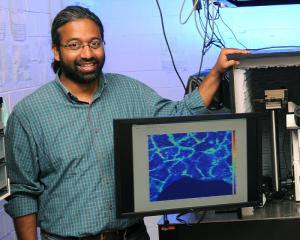
© Bob ElbertSanjeevi Sivasankar leads a research team that uses atomic force microscopy and other technologies to study the bonds that connect biological cells.
The human body has more than a trillion cells, most of them connected, cell to neighboring cells.

How, exactly, do those bonds work? What happens when a pulling force is applied to those bonds? How long before they break? Does a better understanding of all those bonds and their responses to force have implications for fighting disease?

Sanjeevi Sivasankar, an Iowa State assistant professor of physics and astronomy and an associate of the U.S. Department of Energy's Ames Laboratory, is leading a research team that's answering those questions as it studies the biomechanics and biophysics of the proteins that bond cells together.

The researchers discovered three types of bonds when they subjected common adhesion proteins (called cadherins) to a pulling force: ideal, catch and slip bonds. The three bonds react differently to that force: ideal bonds aren't affected, catch bonds last longer and slip bonds don't last as long.

The findings have just been published by the online Early Edition of the Proceedings of the National Academy of Sciences.

Red Flag

Study: Roundup and other pesticides directly linked to Parkinson's and neurodegenerative disorders

Image
© standeyo.com
The dangers associated with pesticide exposure are much more far-reaching than previously thought, as illustrated by a shocking study recently published in the journal Neurotoxicology and Teratology. It turns out that chronic exposure to Monsanto's Roundup formula, the active ingredient of which is glyphosate, as well as too many other common pesticides and herbicides is one of the primary environmental factors responsible for causing neurodegenerative disorders in humans.

As originally reported by Sayer Ji over at GreenMedInfo.com, the study brings to light the intricacies of how pesticide and herbicide chemicals induce cell death, which can eventually cascade into a host of chronic neurological illnesses such as Parkinson's disease and Alzheimer's. Even at levels significantly lower than the government-established safety thresholds, these persistent chemicals, which are routinely sprayed on conventional food crops and produce throughout the U.S., can cause permanent brain damage.