Health & WellnessS


Question

'Elixir of life' could be real according to British experts

Exilir
© AlamyThe discovery of the elixir was announced at an international scientific conference held at Nazarbayev University earlier this month.
The scientists have taken two years to develop the yogurt based drink called "nar" which means nourishment in Kazakh.

It has been developed at Nazarbayev University in the capital, Astana where it is currently undergoing clinical tests.

The Kazakhstani leader, Nursultan Nazarbayev, gave orders to the university's scientists to come up with an 'elixir of life', soon after the institution was established in 2009.

Aged 72, he has been president of the Central Asian state since 1990 and interested in immortality for some time.

When, in 2010, an ethnic Korean delegate at Kazakhstan's People's Assembly suggested that the President should remain in power for another decade, Mr Nazarbayev replied:
"Maybe, then, you'll offer me an elixir of youth and energy - maybe you have such potions in Korea ... I'm willing to go on until 2020, just find me an elixir."


Magnify

If America only knew how much arsenic ends up on the average dinner plate

Image
Our government is perversely protecting the industries that release the killer chemical into society.

The American right wing loves to hate Big Government, but does size matter? Perhaps the problem is not Big Government, but Dumb Government, Inefficient Government or even Corrupt, Sold-Out, or Inept Government. The recent bombshell Consumers Union, publisher of Consumer Reports, dropped - that rice contains dangerous levels of arsenic - illustrates how good, effective government can save lives by keeping deadly toxins out of the food supply whereas our federal bureaucracy (aided, abetted and cajoled by industry) has instead let us down.

Arsenic "is considered the number one environmental chemical of concern for human health effects both in the U.S. and worldwide," according to information published by Darmouth Toxic Metals Superfund Research Program. It can be divided into two categories: organic and inorganic. While organic arsenic is itself a probable human carcinogen, inorganic arsenic is a definite human carcinogen that is linked to liver, lung, kidney, bladder, and skin cancer as well as "increased risk of vascular and heart disease, type 2 diabetes, reproductive and developmental disorders, low birth weights in babies, neurological and cognitive problems, immunodeficiencies, metabolic disorders, and a growing list of other serious outcomes."

In short: you don't want this in your food.

X

Death toll of Darfur's Yellow Fever outbreak reaches 67

An outbreak of Yellow fever in Sudan's western region of Darfur has killed 67 people so far, according to a new report by the World Health Organization (WHO) and local authorities.

The joint report, dated 6 November, says that the outbreak has now affected 17 localities in Central, South, West and North Darfur. "As of 5 November 2012, 194 suspected cases have been reported, including 67 deaths (case fatality rate of 34.5%)" the report stated.

According to the report, surveillance shows that 83.3% of the reported cases are from Central Darfur, 7.2% are from South Darfur, 7.2% are from West Darfur and 2.3% are from North Darfur.

The new report shows that the rate of yellow fever cases in Darfur has more than doubled after previous reports at the end of October talked of 84 suspected cases and 32 death cases.

Eggs Fried

Fake eggs pose health hazard, Chinese officials warn

A woman in Luoyang, Henan Province bought 2.5 kilos of eggs at a low price but these eggs all had rubber-like yolk, a local newspaper reported today.

The woman surnamed Tian bought the eggs, 2 yuan (32 US cents) cheaper than the market price, from a van parked on a roadside in Chanhe District on Sunday. She boiled a few but found the eggs taste like "rubber bands," the Dahe Daily said.

After receiving her report, local law enforcement officials went to check, but the van had disappeared, the paper said.

Food experts said the egg shell was made from calcium carbonate; egg white was made from resin; and the rubber-like yolk was made from some industrial chemical. These fake eggs pose health risks.

Local authorities have warned people to buy eggs and other food from unlicensed roadside dealers. If they find suspicious eggs, they should send the samples to authorities along with the invoice.

2 + 2 = 4

Study finds: Reactions to stress could affect health 10 years later

Image
© Huffington Post
It's not just the stress, but how you react to it, that could have an impact on your health down the road, according to a new study from Pennsylvania State University researchers.

Published in the journal Annals of Behavioral Medicine, researchers found in the study that people who were more stressed out and anxious about the stresses of everyday life were more likely to have chronic health conditions (such as heart problems, or arthritis) 10 years later, compared with people who viewed things with a more relaxed lens.

"I like to think of people as being one of two types," Almeida said. "With Velcro people, when a stressor happens it sticks to them; they get really upset and, by the end of the day, they are still grumpy and fuming," study researcher David Almeida, a professor of human development and family studies at Penn State, said in a statement. "With Teflon people, when stressors happen to them they slide right off. It's the Velcro people who end up suffering health consequences down the road."

Comment: Learn how to reduce stress with the proven benefits of the Éiriú Eolas Stress Control, Healing and Rejuvenation Program. Controlled breathing exercises stimulate the vagus nerve, and as a result you can:
  • Relax from the stresses of everyday life
  • Gently work your way through past emotional and psychological trauma
  • Release repressed emotions and mental blockages
  • Rejuvenate and Detoxify your body and mind


Info

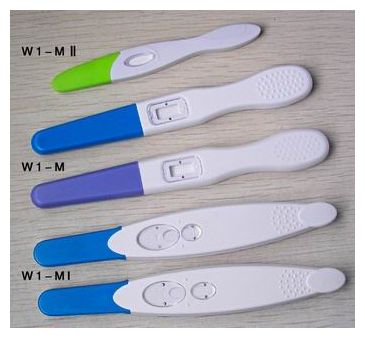
Man's positive pregnancy test reveals testicular cancer

Pregancy Test
© The Feronia Project Org
Looks like there is a reason for men to start buying pregnancy tests too. A man found out, via a positive pregnancy test, that he had testicular cancer.

The man, whose name has not been disclosed to the public, found an unused pregnancy test that had been left at his home by his ex-girlfriend. As a joke, he decided to pee on it, and was shocked when the results indicated that the test was positive.

He posted a comic about the experience on Reddit to be humorous, but savvy Reddit users well-versed in oncology urged him to see a doctor. "You may have testicular cancer! Get to an oncologist, tell them you took a pregnancy test and it came out positive," one Reddit user said.

Pregnancy tests check for the presence of a hormone called beta human chorionic gonadotropin. In pregnant women, the hormone appears in the urine and blood as a result of the growing placenta. But other conditions can produce the hormone, beta hCG for short, like some forms of testicular cancer.

Heart

Chocolate: The "Candy" with Powerful Medicinal Properties

Image
Chocolate is clearly one of the most enjoyed foods on the planet, with millions of pounds produced annually, and has one of the oldest documented histories of use going all the way back to the year 1100 BC in South America. And yet, many people still harbor guilt about consuming it because they associate chocolate with "candy" (which logically follows from the fact that it is in the candy section in stores where you will find it), having never been exposed to the impressive body of pre-clinical and clinical research indicating that it may actually be closer to a "medicine" than a candy.

Indeed, in a previous post, we discussed how chocolate might just give the $29 billion dollar statin drug industry a run for its money, since a 2006 study found that regular chocolate consumption may reduce cardiac mortality by 50%. And this was based on a study where subjects only consumed 2.11 grams a day, or just one half ounce a week!

Health

Wheat as a common cause of dyspepsia and irritable bowel

Image
Could common complaints of bloating, upper abdominal discomfort and indigestion following a meal, and even the increasingly prevalent complaint lazily labeled 'irritable bowel syndrome' by practitioners of conventional medicine , be worsened - even caused - by consuming wheat?

It is already well-established that patients with gluten-sensitive enteropathy, an inflammatory condition of the small intestine caused by the consumption of gluten-containing grains like wheat, also frequently suffer from what is known as dysmotility-like functional dyspepsia symptoms* -- a technical term for upper abdominal discomfort or pain, with symptoms that include: "early feeling of having enough to eat, fullness after a meal, nausea, recurrent retching and/or vomiting, upper abdominal bloating, and upper abdominal discomfort aggravated by food." (Source) These symptoms occur in the absence of a physical lesion such as an ulcer.

This is why new research performed out of the Hospital San Jorge in the Department of Gastroenterology and Hepatology in Huesca, Spain,[i] focused on the question: how many patients diagnosed with dysmotility-like dyspepsia symptoms are experiencing adverse gastrointestinal symptoms as a result of eating wheat (gluten) in their diet?

Arrow Up

First gene therapy to go on sale in Europe in 2013

Gene Therapy
© Veer ImagesGene therapy, approved in China as long ago as 2003, will be made available in Europe from mid-2013. It works by modifying a patient's DNA, offering the theoretical hope of blocking inherited diseases.
The Hague: Dutch biotech company uniQure said it would start selling the first human gene therapy to be approved in the West by mid-2013 and predicted an explosion of similar therapies to come.

The European Commission approved Glybera on October 25, making the drug for treating the extremely rare disorder lipoprotein lipase deficiency (LPLD) the first to be approved for sale in Europe or North America.

"We believe that after Glybera's approval gene therapy is at the beginning of a period of rapid growth similar to the development of the antibody business in the last decade," uniQure chief executive Joern Aldag said in a statement.

Blocking inherited disease

Gene therapy works by modifying a patient's DNA to combat a specific disease, and has been experimented with to treat everything from blindness to depression and brain wasting diseases.

But the relatively unknown treatments have struggled to obtain regulatory approval in the West, although authorities in China approved a gene therapy for treating head and neck cancer as long ago as 2003.

Gene medicine burst on the medical scene in the late 1990s and is one of the most alluring areas of biotechnology, offering the theoretical promise of blocking or reversing inherited disease.

But this new frontier has also been hit by occasional setbacks, notably an unexpected or uncontrollable response from the immune system.

Info

Herpes virus weak point could lead to treatment

Cold Sores
© Shutterstock
As the herpes virus spreads and produces cold sores on the skin, it goes through a "bottleneck" of sorts - which could mean the virus is vulnerable to treatments at this stage, a new study suggests.

The researchers looked at the herpes simplex virus type 1 (HSV-1), which many people become infected with during childhood. HSV-1 hides inside nerve cells, and can remain dormant for years, before making its way into skin cells and producing a cold sore.

The researchers found that although hundreds of virus particles may be lying dormant inside the nerve cells, just one or two make the trip to spread to a skin cell, said study researcher Lynn Enquist, a professor of molecular biology at Princeton University in New Jersey. Once inside a skin cell, the virus then multiplies and spreads to other skin cells, creating a cold sore.

This bottleneck could be "a point where the infection is more susceptible to drug treatments, if we had them," Enquist said. However, the study was conducted using cells in lab dishes, so more research is needed to confirm the same thing happens in animals and people. It's too early to say how it could translate to treatments, he said.