Global grain ending stocks are reduced 14% in 2019, Argentina production slashed from 21 to 18.3 million tons, Brazil reducing 3 million tons, Australia now a net wheat importer, USA & Canadian grow zones decimated by two early season blizzards, Ukraine wheat forecast down and somehow we are not warned of imminent price increases in our daily food stuffs. Look at China 50% increase in food inflation through 2019 alone. The rest or the globe is next are you ready?
More than 500,000 homes and businesses in the Northeast lost power Thursday as a quickly moving "bomb cyclone" knocked down trees and electrical lines throughout the region.
The storm pushed some of the coldest air of the season through the Northeast. Wind gusts of up to 55 mph could be felt along the coast from Maine to as far south as Cape May, N.J., and some parts of Delaware.
Towns like Duxbury, Mass., saw homes damaged as strong gusts blew through the area forcing schools to close.
"This whole town got hit pretty hard," Duxbury Fire Capt. Rob Reardon told ABC News. "You can tell by just the amount of trees, the wires, the damage to houses. Roads are blocked, schools are shut down because school buses can't access these streets at all. We're having a difficult time trying to get to calls from one side of town to the other."
In a heartrending incident, pigs attacked a hapless septuagenarian sleeping in a shed outside his son's house in Telangana village.
The senior citizen died of heavy bleeding after three to four pigs indiscriminately attacked him.
The incident took place in Bijinepally block in Nagar Kurnool district on Tuesday evening.
Local police sub-inspector told Mirror that C Kondaiah (in his late 70s) was living in a shed outside his son's house. On Tuesday, he kept the door open and slept. There was nobody at home.
Some pigs roaming around attacked him. Neighbours saw the pigs with blood on their mouths and suspected that they attacked somebody. They went into Kondaiah's shed and found him lying dead in a pool of blood.
"2018 may offer a peep into the future, where increased climatic variability may push the arctic species to — and potentially beyond — their limits."
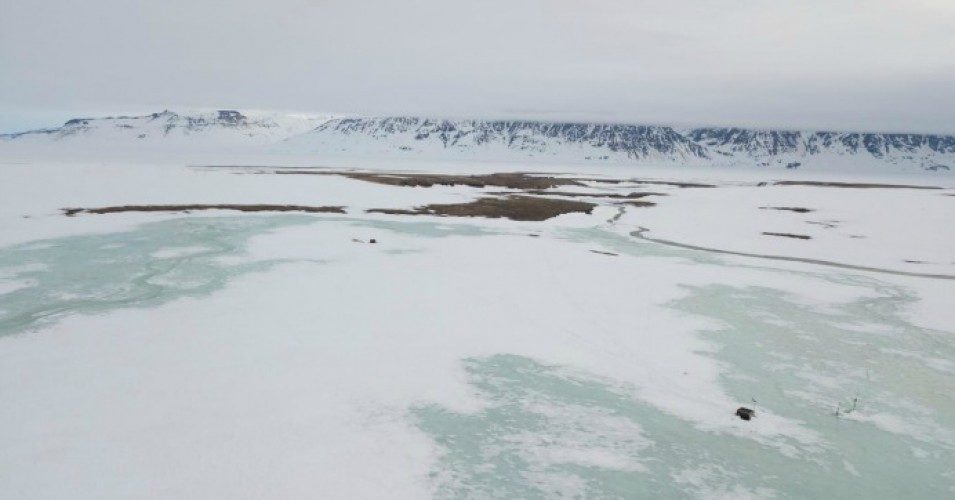
A new study published Tuesday looked at the implications of extreme snowfall in the Arctic in 2018 — the kind of increased precipitation event scientists link to climate change — and researchers say the scenario could be a harbinger of how ecosystems in the region will be negatively affected by a rapidly warming planet.
"The result was an almost complete reproductive failure of plants and animals of all sizes," the authors wrote.
The takeaway for arctic ecosystems, the authors found, is that "changes in precipitation may prove as crucial as changes in temperature — if not even more."
For the study, published in the journal PLOS Biology, researchers focused on the monitoring site of Zackenberg in Northeast Greenland. In 2018, the Arctic — including the High Arctic where the Zackenberg facility is — saw unusually large amounts of snow. That meant there was a significant delay in snow melt, which in turn made it difficult for plants to grow and for animals to access resources.
The result? The "most complete reproductive failure encountered in the terrestrial ecosystem during more than two decades of monitoring," said the study.
Seismic activity in California appears to be heating up again. Could it be possible that the swarm of earthquakes that has hit San Francisco over the past couple of days is a precursor to a larger seismic event? The California coastline sits directly along the infamous "Ring of Fire", and scientists assure us that it is just a matter of time before "the Big One" hits the state. Of course most of the time when we talk about "the Big One", most people immediately envision a geography-altering earthquake in southern California, and we have been warned repeatedly that such an event is coming someday. However, northern California is quite vulnerable as well, and a repeat of the horrific 1906 San Francisco earthquake is definitely not out of the question. Today, the real estate in the San Francisco Bay Area is some of the priciest in the entire nation, but much of that real estate could potentially be reduced to rubble in just a matter of moments. Millions of Californians are literally living on a ticking time bomb, and at some point time will run out.
A flock of 12 seagulls was found sick or dead at Huntington State Beach, possibly caused by toxins, according to the Wetlands and Wildlife Care Center.
A handful of wildlife experts and volunteers responded to a call from a woman walking on the beach, who first saw the numerous dead and dying gulls at around 11 a.m. on Thursday, Oct. 10, said Lisa Peronne, wildlife manager at the Huntington Beach-based rehabilitation nonprofit.
When Peronne and her team arrived, she said they found 12 beached Western Gulls on the high tide line mixed up with seaweed. Upon inspecting the birds, eight were dead and the other four were clinging to life, she said.
"When we found them," Peronne said, "we had to pick up each bird to see if they were dead or alive"
Massive plumes of white smoke are rising kilometres over a remote spot in the Pacific after an underwater volcano erupted earlier this week, and it could potentially mean the arrival of a brand new island.
The eruption at Matis Shoal, a submarine volcano around halfway between the islands of Kao and Late in Tonga, was first noticed on Tuesday when a pilot with the Real Tonga airline flew over the area and alerted ground control to white columns of steam rising to about 5000 metres elevation.
GeoNet and the Wellington Volcanic Ash Advisory Centre, a department of Metservice, have been monitoring the situation, but say there is currently no risk to flights in the area.
An unprecedented October blizzard that hit just before harvest time has absolutely devastated farms all across the U.S. heartland. As you will see below, one state lawmaker in North Dakota is saying that the crop losses will be "as devastating as we've ever seen". This is the exact scenario that I have been warning about for months, and now it has materialized. Due to endless rain and horrific flooding early in the year, many farmers in the middle of the country faced very serious delays in getting their crops planted. So we really needed good weather at the end of the season so that the crops could mature and be harvested in time, and that did not happen. Instead, the historic blizzard that we just witnessed dumped up to 2 feet of snow from Colorado to Minnesota.In fact, one city in North Dakota actually got 30 inches of snow. In the end, this is going to go down as one of the worst crop disasters that the Midwest has ever seen, and ultimately this crisis is going to affect all of us.
According to the USDA, only 15 percent of all U.S. corn and only 14 percent of all U.S. soybeans had been harvested as of October 6th...










Comment: The 'bomb cyclone' set a record as the strongest October storm ever in the Boston area.