Science of the SpiritS


Caesar

Why we don't have to get emotionally embroiled in every drama that comes our way

drama
This week I lost my purse. It had all the stuff your purse usually has in it - bank cards, credit card, driving licence, loyalty cards, stamps (how retro), photos and £50 cash. I was gutted.

Gutted I'd have to cancel all my cards. Gutted that I had cash on me when I rarely do.

Gutted that I actually couldn't remember what photos and sentimental things were in there.

After the initial annoyance disappeared I thought about who could possibly have found it. I decided to paint them in my mind as someone who was having a bad day. Someone who didn't know how they'd feed themselves that night and I decided I had a choice. I could curse the event and let myself be annoyed all week or I could just wish whoever found it really needed a break. That they needed the cash and it would make their week easier. That my misfortune was their lucky break. I felt instantly better.

Eye 2

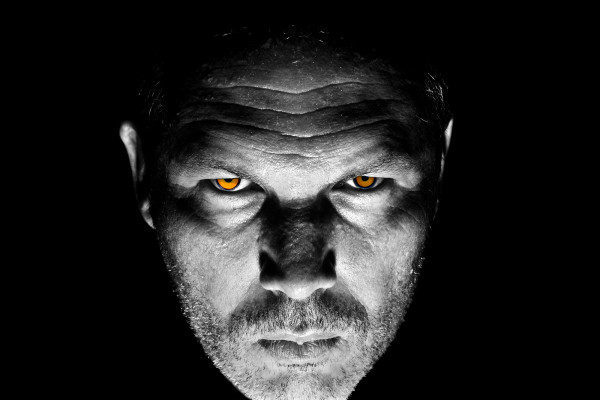
Scientists discover evil people share a 'dark triad' of traits

evil scary face
© iStockphoto
Psychopathy, egoism, sadism and narcissism are among the traits considered to be a part of the dark side of humanity - and new research has found people who exhibit these traits all share a common characteristic.

While characteristics like narcissism or spitefulness may not seem as extreme as psychopathic tendencies, scientists have found a behavioral link between people who exhibit these traits, and it's not as uncommon as you might think.

Research from the University of Copenhagen revealed that people categorized in this "dark core of personalities" tend to put their own interests ahead of anyone else's.

Another common characteristic researchers observed was the ability to take pleasure from causing other people pain.

The most predominant of these tendencies are known as the "dark triad," which includes psychopathy (a lack of empathy), narcissism (excessive self-absorption), and Machiavellianism (the belief that the ends justify the means).

Some traits, like egoism or sadism, might appear to be more acceptable than those in the dark triad, but the study claims they are all derived from a common underlying disposition, dubbed the "D-factor."

This means that if you display one of these traits, then you are more likely to exhibit some of the others as well.

Comment: See also: The dark core of personality measured


Family

Can people tell the difference between strategic kindness and real kindness?

heart on the beach
Psychologists at the University of Sussex have confirmed that the warm glow of kindness is real, even when there's nothing in it for you. In their study, published in NeuroImage, they undertook a major analysis of existing research showing the brain scans relating to over 1000 people making kind decisions. For the first time, they split the analysis between what happens in the brain when people act out of genuine altruism -- where there's nothing in it for them -- and when they act with strategic kindness -- when there is something to be gained as a consequence.

Is human kindness evoked by something besides mom's good example.

Many individual studies have hinted that generosity activates the reward network of the brain but this new study from Sussex is the first that brought these studies together, and then split the results into two types of kindness -- altruistic and strategic. The Sussex scientists found that reward areas of the brain are more active -- i.e. use up more oxygen -- when people act with strategic kindness, when there is an opportunity for others to return the favour.

Cloud Grey

One is the loneliest number: History of a Western problem

loneliness
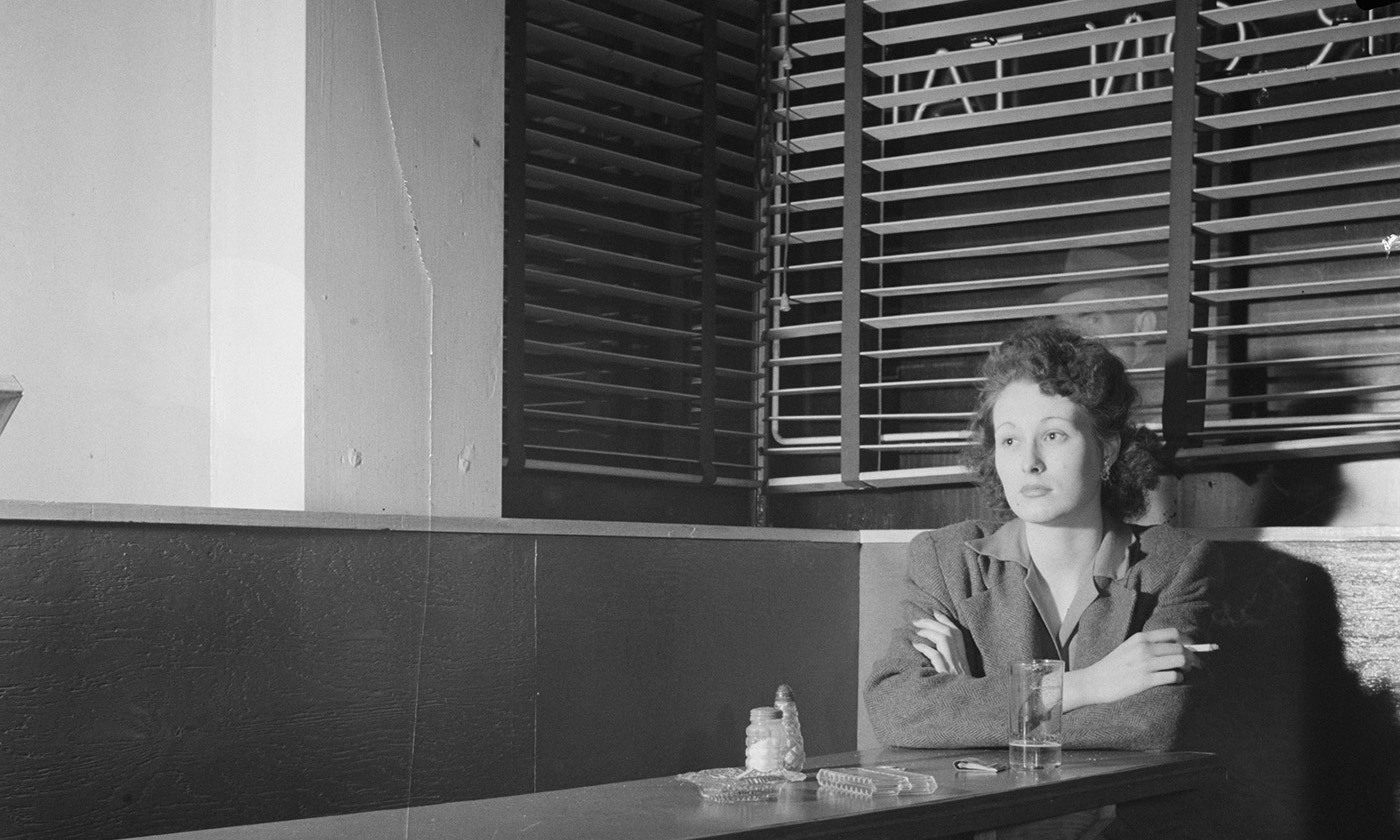
© Photo by Esther Bubley/Library of CongressGirl sitting alone in the Sea Grill, a bar and restaurant in Washington, DC, 1943.
'God, but life is loneliness,' declared the writer Sylvia Plath in her private journals. Despite all the grins and smiles we exchange, she says, despite all the opiates we take:
when at last you find someone to whom you feel you can pour out your soul, you stop in shock at the words you utter - they are so rusty, so ugly, so meaningless and feeble from being kept in the small cramped dark inside you so long.
By the 21st century, loneliness has become ubiquitous. Commentators call it 'an epidemic', a condition akin to 'leprosy', and a 'silent plague' of civilisation. In 2018, the United Kingdom went so far as to appoint a Minister for Loneliness. Yet loneliness is not a universal condition; nor is it a purely visceral, internal experience. It is less a single emotion and more a complex cluster of feelings, composed of anger, grief, fear, anxiety, sadness and shame. It also has social and political dimensions, shifting through time according ideas about the self, God and the natural world. Loneliness, in other words, has a history.

SOTT Logo Radio

SOTT Focus: The Truth Perspective: The Strange Contagion: How Viral Thoughts and Emotions Secretly Control Us

Lee Kravetz Strange Contagion
Today on the Truth Perspective we discuss Lee Daniel Kravetz's latest book Strange Contagion: Inside the Surprising Science of Infectious Behaviors and Viral Emotions and What They Tell Us About Ourselves.

When Lee and his wife moved to Palo Alto, California in 2009 they hoped for a bright future for their baby boy. Unbeknownst to them a tragic string of suicides was threatening to rock the entire county. What began with one tragic event in 2008 morphed into entire suicide clusters that claimed the lives of several hundred children. Shocked, Kravitz and others set out to investigate why so many of the youth - strangers to one another - would take their lives in affluent Silicon Valley.

What Lee discovered was a veritable contagion of ideas, emotions and behaviors that, like others in history, swept across their society. This social contagion, when at its most malevolent, threatens the vulnerable and shakes communities to their core. But at its most positive it can inspire courage, bravery, and point our way to a brighter future.

Are our goals, emotions and ideas really ours, or are we each at the mercy of this strange contagion'? And, if we are at the mercy of these forces, is it possible to turn their tide to our benefit? We'll be discussing these questions and more today, on the Truth Perspective.

Running Time: 01:22:32

Download: MP3


Chess

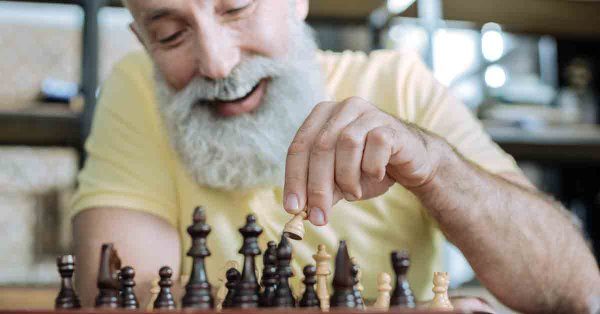
Chess grandmasters enjoy same longevity advantage as elite athletes

chess master
Discovering a fountain of youth has been part of human history dating back centuries. The name most closely linked to the search is that of 16th century Spanish explorer Juan Ponce de Leon, who reportedly thought it would be found in Florida, where St. Augustine, the oldest city in the U.S., was founded.1 Although the story makes for good a legend, scholars now believe Ponce de Leon was interested in political gain and not longevity.2

The search for antiaging elixirs and remedies has not abated. Science got closer in the 1930s when telomeres were first discovered.3 In 1973, Alexey Olovnikov discovered telomeres shorten with time as they fail to replicate completely with each cell division.4 This means, as you get older, your telomeres get shorter. In 1984, Elizabeth Blackburn, Ph.D., from the University of California San Francisco, discovered how chromosomes are protected by telomeres and the enzyme telomerase.5

But the scientific explanation for longevity in individual populations continue to remain elusive. In studying different groups of individuals who live to 100, researchers agree there's no specific pattern. That said, scientists have identified several factors that improve your chances for living longer. A recent study has now demonstrated chess grandmasters enjoy the same longevity advantages as elite athletes.6

Comment: The only real idea explored here is that chess grandmasters live as long as Olympic athletes because they take care to exercise and eat right. That's certainly possible, but one possibility that isn't explored in the above article is that the relationship between healthy mind and healthy body goes both ways. There is more and more evidence coming to light that physical strength and fitness has a beneficial effect on the brain. Perhaps the relationship is mutual - a physically fit mind leads to a physically fit body.

Light Saber

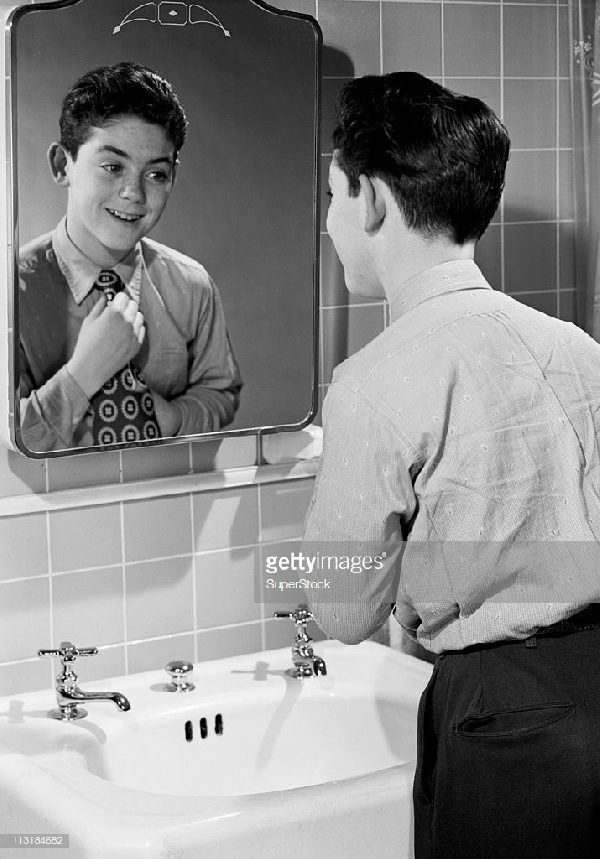
The Child is the Father to the Man: 9 Foundational habits young men should start now to raise themselves right

Young Man
A while back I was driving through the place where I grew up - Edmond, Oklahoma - and happened to pass by my old high school. This wasn't an unusual event; I now live just an hour and a half from Edmond and my parents still reside there, so I'm back fairly frequently and sometimes pass the school. But this time something was different. On past occasions, I would be hit with a rush of nostalgia and memories of my days there would vividly come back to me. This time, however, I felt...nothing. Cognitively I thought, "There's my old high school," but no emotional wires were tripped. It seemed like just another building - my feeling of strong personal connection to it had disappeared.

As I drove on and contemplated this change and the distance I realized I now felt towards my youth in general, a quote from Theodore Roosevelt I had read years earlier came back to me: "The child is father to the man." When I first came across the quote, it had puzzled me. I couldn't really grasp what it meant. But as I drove past the home of the Edmond North Huskies, I began to understand it.

Question

Expectations: Exploring the invisible forces that shape human behavior

expectations
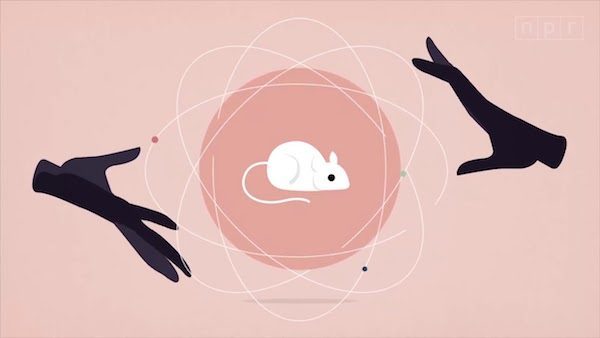
Do you think that the private thoughts in your head could influence how other people - or creatures - act? The answer is "Of course not," right? Because to say yes would be to admit you believe in mind control or telekinesis or some other phenomenon usually reserved for superhero comic books.

But early in his career, a research psychologist named Bob Rosenthal wasn't so sure. So to test his hypothesis, he designed a devious experiment.

Late one night he crept into his research lab and hung signs on all the rat cages. Some signs said that the rat inside the cage was incredibly smart, while others said that the rat inside was incredibly dumb (even though neither of these things was true). "They were very average rats that you would buy from a research institute that sells rats for a living," says Rosenthal.

Comment: How other people's unspoken expectations control us


Red Pill

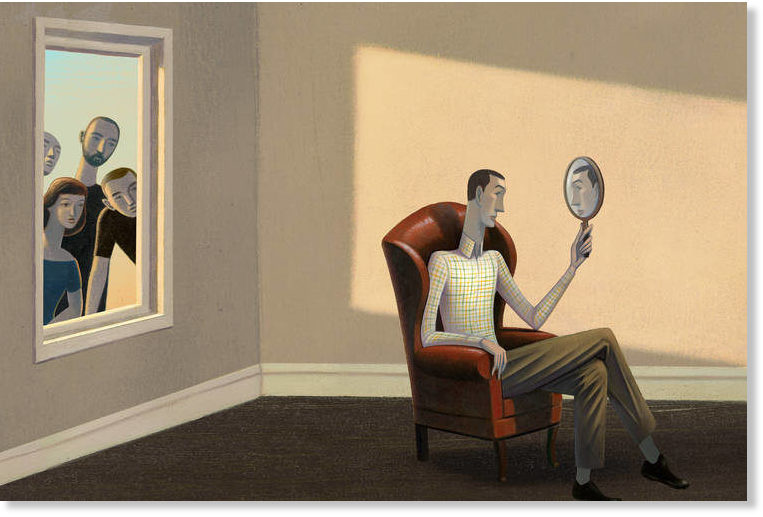
Getting to know how others see you can help you see yourself

self reflection
© llustration: Jon Krause
We don't always correctly read how the outside world reads us; new research shows what we can do to improve our perception and the benefits we'll see

Most of us are not as self-aware as we think we are.

Research shows that people who have a high level of self-awareness - who see themselves, how they fit into the world and how others see them clearly - make smarter decisions, raise more mature children and are more successful in school and work. They're less likely to lie, cheat and steal. And they have healthier relationships.

Tasha Eurich, an organizational psychologist from Denver, spent three years conducting a study on self-awareness and has a new book on it titled "Insight." When it comes to self-knowledge, she says there are three types of people: those who have it, those who underestimate how much they have (she calls them "underraters") and those who overestimate how much they have ("overraters"). Underraters beat themselves up unnecessarily. Overraters believe they do everything well. She found no gender differences in her research.

People

The liking gap: Do people enjoy your company more than you think?

friends
In our social lives, we're constantly engaged in what researchers call "meta-perception," or trying to figure out how other people see us. Do people think we're boring or interesting, selfish or altruistic, attractive or not?

After we have conversations with new people, our conversation partners like us and enjoy our company more than we think, according to findings published in Psychological Science, a journal of the Association for Psychological Science.

"Our research suggests that accurately estimating how much a new conversation partner likes us-even though this a fundamental part of social life and something we have ample practice with-is a much more difficult task than we imagine," explain first authors Erica Boothby, a postdoctoral researcher at Cornell University, and Gus Cooney, a postdoctoral researcher at Harvard University.

"We call this a 'liking gap,' and it can hinder our ability to develop new relationships," study coauthor Margaret S. Clark, the John M. Musser Professor of Psychology at Yale University, told Yale News.