

© S. Curtis/ShutterstockIt's fun, but it's not all fun and games. A child's cognitive development can improve from playing with and talking to pets.
Even better news is that unlike IQ, which is thought by most experts to be unchangeable (you can't really change your IQ by studying), EQ can improve over time with practice. Animal friends can help kids do that by cultivating the very skills that lead to better Emotional Intelligence. (And pooches and kitties aren't even trying; it just comes naturally.)
The following EQ skills are developed by children with pets:
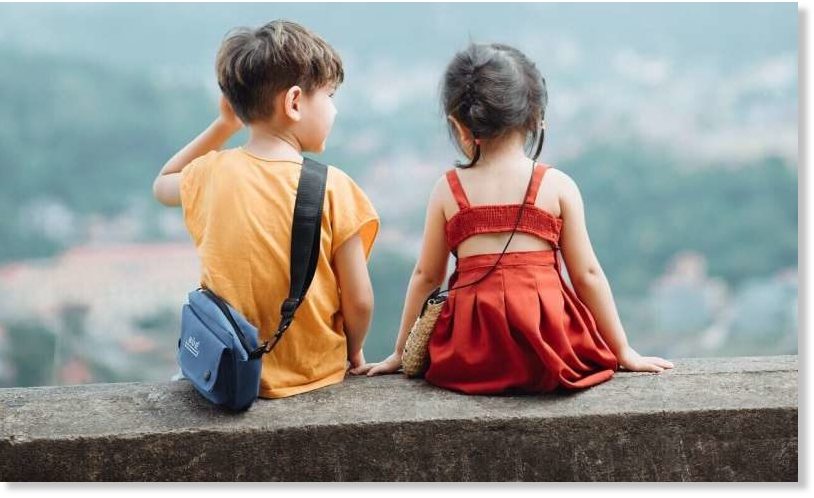
1. Compassion: Researchers Nienke Endenburg and Ben Baarda did an overview of the scientific literature in The Waltham Book of Human-Animal Interaction. "If there are pets in the house, parents and children frequently share in taking care of the pet, which suggests that youngsters learn at an early age how to care for and nurture a dependent animal," they wrote. Even very young children can contribute to the care and feeding of a pet — a 3-year-old can take a bowl of food and set it on the floor for a cat, and at the same age, a child can be taught to stroke an animal nicely, maybe using the back of the hand so they don't grab the animal. Supervising kids during the first few interactions is a teaching moment. Later, once they have learned the ropes, their memory and understanding of a life outside themselves will be stimulated each time they interact with the animals. Older kids can be responsible for walking a dog or playing with it in the yard, cleaning out a cat's litter box, or taking veggie scraps from dinner to a rabbit or hamster. A study of 3- to 6-year-olds found that kids with pets had more empathy towards other animals and human beings, while another study found that even having an animal in a classroom made fourth-graders more compassionate.














Comment: Also, we invite you to try out Éiriú Eolas, the stress-reducing breathing and meditation program that is easy to apply in your daily life, and works wonders for your mental, emotional and physical problems.