Secret HistoryS


X

This man lobbied the US to invade Iraq over 'WMDs', but had the courage to admit his mistake

D.Kay
© Alex Wong/Getty Images/AFPDavid Kay
Known for his aggressive inspection style and strong views regarding Iraqi compliance with their disarmament obligations, at the end of the day, David Kay showed his true grit by standing up to the world and confronting them with the fact that they all got it wrong on Iraq.

By the time I arrived in New York, in mid-September 1991, weapons inspectors from the United Nations Special Commission, or UNSCOM, had been on the ground in Iraq on 16 separate occasions, starting in May. Most of the inspections had been conducted in accordance with the on-site inspection template born of the American experience in implementing the intermediate nuclear forces (INF) treaty, which had entered into force in July 1988 and represented the world's first foray into on-site inspection as a means of arms control compliance verification.

Comment: Kay was a tool. The Bush gang provided the setup and demanded the 'right' answers. 'Wrong' never mattered. Not much since then has changed.


Blue Planet

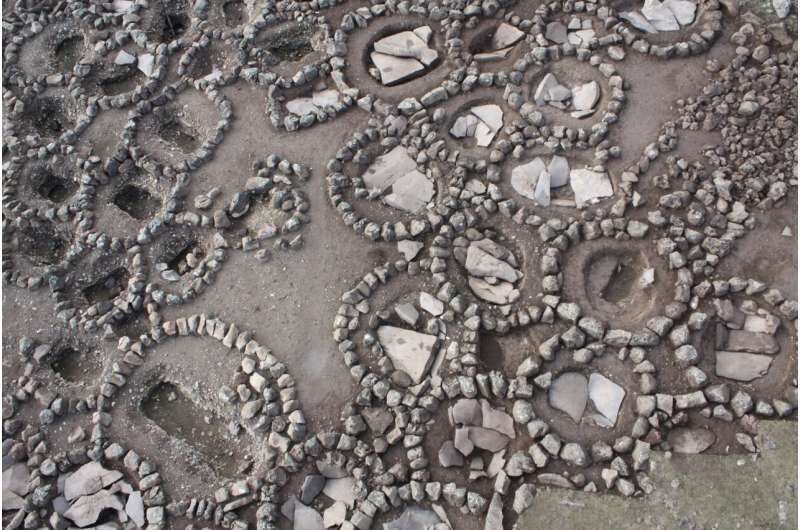
11,000 year old mounds identified as oldest man-made structures in North America

louisiana mounds
© LSU
Mounds located on the Louisiana State University (LSU) campus have been identified as the oldest known man-made structures in North America.

The two mounds stand 20 feet tall and are coordinated in an alignment toward one of the brightest stars in the night sky. They are among more than 800 man-made structures built by indigenous people across Louisiana.

Many of these mounds have been destroyed over the centuries, while the LSU campus mounds have remained preserved, listed on the National Register for Historic Places.

Researchers from the University collected sediment core samples, revealing layers of ash from burned reed and cane plants, as well as remains of burned osteons that indicates that the mounds were likely used for ceremonial purposes.


Comment: Wikipedia: 'osteon (plural osteons or ostea) 1. (anatomy) Any of the central canals, and surrounding bony layers, found in compact bone.'


Comment: A recent study of mammoth bones revealed that humans were likely inhabiting New Mexico 37,000 years ago; another recent chromosomal study identified inhabitants in South America 18,000 years ago; taken together, along with numerous other evidence, human activity in the Americas clearly goes much further back than was commonly thought: America Before by Graham Hancock - Book review

And check out SOTT radio's: MindMatters: America Before: Comets, Catastrophes, Mounds and Mythology


Blue Planet

3 ancient burials hint at multiple migrations of humans through Southeast Asia

ancient human burial
© Samper-Carro et al., PLOS One, 2022Cranial remains (left) and skeletal remains found at the excavation site.
Three skeletons uncovered in a rock shelter adorned with red pigment rock art reveal burial rituals of early humans who followed well-trodden paths through Indonesia's Lesser Sunda Islands, albeit thousands of years apart.

Aside from deepening our understanding of the evolution and diversification of burial practices, the finds - from Alor Island in southeast Indonesia - enrich past discoveries that previously provided some clues about patterns of migration of early humans making their way southward.

"Burials are a unique cultural manifestation to investigate waves of migration through the terminal Pleistocene to the Holocene period in Southeast Asia," says archaeologist Sofia Samper-Carro of the Australian National University.

From the positioning and treatment of bodies to the presence or absence of ornamental grave goods, Southeast Asian burial sites "offer a panoply of social expressions related to the deposition of the deceased," Samper-Carro and colleagues write in their paper.

Archaeology

From 'Spanish Stonehenge' to Nero Bridge: World artifacts that reemerged due to heatwave

Dolmen of Guadalperal Spain
© CC BY-SA 4.0 / PleonrDolmen of Guadalperal, Spain
With temperatures regularly exceeding 40C (104F) in a number of cities across the globe, the current heatwave is described as the most extreme in six decades.

Scorching heat, which has already hit almost half of our planet, led to the lowering of river levels and the draining of reservoirs, which in turn resulted in an array of curious artifacts reemerging from the water. Here's a look into some of them.

Blue Planet

Migration, farming and language development across the Southern Arc revealed in vast paleogenetic study

agriculture farming archeology
© University of Vienna
In a trio of papers, published simultaneously in the journal Science, Ron Pinhasi from the Department of Evolutionary Anthropology and Human Evolution and Archaeological Sciences (HEAS) at the University of Vienna and Songül Alpaslan-Roodenberg from the University of Vienna and Harvard University, Iosif Lazaridis and David Reich at Harvard University — together with 202 co-authors — report a massive effort of genome-wide sequencing from 727 distinct ancient individuals with which it was possible to test longstanding archaeological, genetic and linguistic hypotheses. They present a systematic picture of the interlinked histories of peoples across the Southern Arc Region from the origins of agriculture, to late medieval times.

In the first paper the international team investigated the homeland and the spread of Anatolian and Indo-European languages. The genetic results suggest that the homeland of the Indo-Anatolian language family was in West Asia, with only secondary dispersals of non-Anatolian Indo-Europeans from the Eurasian steppe. At the first stage, around 7,000-5,000 years ago, people with ancestry from the Caucasus moved west into Anatolia and north into the steppe. Some of these people may have spoken ancestral forms of Anatolian and Indo-European Languages.

Comment: Also check out SOTT rado's: MindMatters: Meaning All the Way Down: The Wonders and Mysteries of Language with Juliana Barembuem


Colosseum

Rare colorful ruins at the Temple of Cupra in Italy illuminate 2000 years of Roman History

roman temple
© Marco Giglio/Università di Napoli L'OrientaleA fragment found with sky-blue paint.
Located in the Marche region of Italy, Cupra Marittima was a powerful outpost of the Roman Empire in the past, unlike today. The remains of the ancient temple of Cupra have been unearthed on the Adriatic coast.

In the study carried out by archaeologists, they found the frescoed walls and ceiling of the 2000-year-old temple painted in yellow, blue, red, black and green tones. Also found in the temple of Cupra, walls decorated with floral wreaths, tiny palm paintings, and candlesticks.

Archaeologist Marco Giglio (research project coordinator of the field and Professor at the University of Naples L'Orientale) said, "It is extremely rare to find ancient Roman temples whose interiors are covered with paintings."

Comment: See also: Bronze Age settlement found under Roman bath complex at Corinth reveals spectacular finds


Info

Whence Phaethon?

Phaethon, by Gustav Moreau.
© Prehistory DecodedPhaethon, by Gustav Moreau.
Where and how did the well-known Phaethon myth originate? This paper ...

The Fall of Phaethon in Context: A New Synthesis of Mythological, Archaeological and Geological Evidence in: Journal of Ancient Near Eastern Religions Volume 16 Issue 1 (2016)

argues that the myth known by the early classical Greek playwrights and philosophers undoubtedly originated with a cosmic impact. The parallels are very clear. In my book, I also argue this, since the description by Plato in his Timaeus is such an accurate description of the drawn-out process of near-Earth comet disintegration.
There have been, and will be again, many destructions of mankind arising out of many causes; the greatest have been brought about by the agencies of fire and water, and other lesser ones by innumerable other causes. There is a story, which even you have preserved, that once upon a time Phaethon, the son of Helios, having yoked the steeds in his father's chariot, because he was not able to drive them in the path of his father, burnt up all that was upon the earth, and was himself destroyed by a thunderbolt. Now this has the form of a myth, but really signifies a declination of the bodies moving in the heavens around the earth, and a great conflagration of things upon the earth, which recurs after long intervals...

Whereas just when you and other nations are beginning to be provided with letters and the other requisites of civilized life, after the usual interval, the stream from heaven, like a pestilence, comes pouring down, and leaves only those of you who are destitute of letters and education; and so you have to begin all over again like children, and know nothing of what happened in ancient times,
Of course, Wikipedia aligns with the uniformitarian viewpoint,
Phaethon's tale was commonly used to explain why inhabitable lands on both sides of extremity (such as hot deserts and frozen wastelands) exist, and why certain peoples have darker complexions, while his sisters' amber tears accounted for the river's rich deposits of amber.
as it does on almost every subject. Not biased at all. 😕

Compass

Medieval map shows 'lost' islands of Cardigan Bay

Gough Map lost islands britain
Gough Map
A map found in the Bodleian Library shows two 'lost' islands in Cardigan Bay, possibly indicating the legendary sunken kingdom from Welsh mythology, Cantre'r Gwaelod.

Cantre'r Gwaelod was a land said to be west of present-day Wales. Accounts on the legend of Cantre'r Gwaelod vary, but the earliest depiction appears during the 13th century in the Black Book of Carmarthen, describing the land as Maes Gwyddno. In this version, the land was lost to floods when a well-maiden named Mererid allowed the well to overflow.

The more widely known variation is from the 17th century, where Cantre'r Gwaelod is described as being a low-lying land, protected from the sea by a dyke and a series of sluice gates.

Better Earth

People were living in South America as far back as 18,000 years ago, chromosomal study suggests

south america inhabitation
© PLOS ONE (2022). DOI: 10.1371/journal.pone.0271971Schematic representation of the geographic distribution of Q-Z780 and sub-lineages. Colored circles represent geographic distribution and sub-lineage membership as shown in the inset tree. Divergence times estimated in this study are represented in italics, in kya, and with a 95% confidence interval between parentheses (for more details see Methods). The size of the circles is related to the number of subjects and is specified with the "n" in the box to the right. Individuals with Mexican ancestry from Los Angeles have been arbitrarily represented in City of Mexico (for more information about samples, see S1 Table). Layer map downloaded from [100].
A team of researchers affiliated with several institutions in Argentina has found chromosomal evidence of people living in South America as far back as 18,000 years ago. The group has published a paper describing their work and findings on the open access site PLOS ONE.

Over the past several years, scientists have found evidence of people first traveling to North America from Siberia approximately 14,000 to 17,000 years ago, using what was then a land bridge to Alaska. In this new effort, the researchers have found evidence suggesting that the timeline may have to be pushed back a bit.

Comment: See also:


Russian Flag

Jesus, Byzantium and the Slavic legacy: The meaning behind the Russian flag

russia flag silhouette figures
© Sputnik / Petr Chernov
The white, blue, and red banner and the double-headed eagle on the coat of arms are recognized all over the world. Where did they come from?

Every national flag distills the history and values of the people it represents. America's star-spangled banner is a great example of this. The Russian flag and its coat of arms, which predate it by a hundred years, are equally steeped in history. They have undergone changes in the last couple of centuries, but these symbols have retained the link between Moscow and the Byzantine Empire, the idea of Slavic brotherhood, and references to the country's naval history. As Russia celebrates National Flag Day, RT sheds some light on its origins.