Secret HistoryS


Question

How old is Gobekli Tepe?

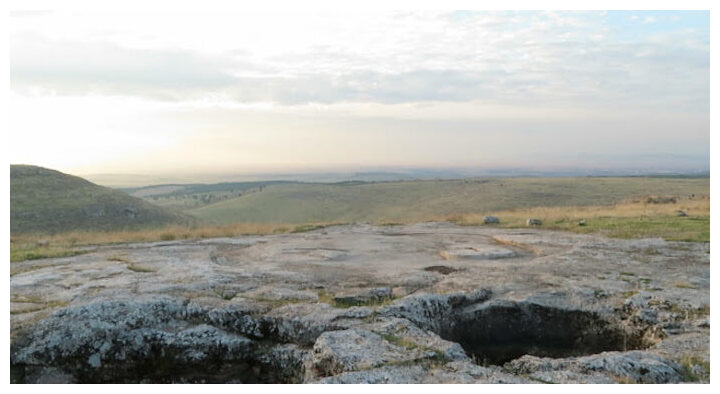
Enclosure E, minus pillars, currently undated
© PreHistory DecodedEnclosure E, minus pillars, currently undated.
The oldest radiocarbon date yet reported from Gobekli Tepe corresponds to the mortar of the wall of Enclosure D, at around 9600 BCE, to within a few hundred years. That corresponds to the end of the Younger Dryas mini ice age. That correlation might not be a coincidence.

However, Enclosure D is so grand, so well designed and so perfect, that it cannot be the first enclosure of its type built by these people. Almost certainly, there must have been several prior stages of development, precursor or trial stages, that preceded it. Indeed, Enclosures D and C are so impressive that they led Prof. Dendrinos [1], an architect, to propose that Gobekli Tepe had been mis-dated, and that, instead, it was a 6th millennium BCE construction. That's how impressive and anomalous GT is.

But radiocarbon dates don't lie (although they can be misunderstood). And the archaeological evidence, in the form of stone tools and other cultural artefacts, clearly point to an early pre-pottery origin, in accordance with the radiocarbon dates. So we can be confident in accepting the radiocarbon dates.

But, clearly, given its anomalous appearance, sufficient to deceive experienced architects, only something extraordinarily dramatic can explain such a grand construction. This is another reason why a Younger Dryas impact origin is a good theory - it helps to explain GT's anomalous construction, in the way that a fairly ordinary 'skull cult', which the site's archaeologists propose [2], cannot.


Eye 1

Gina Haspel observed waterboarding at C.I.A. black site, psychologist testifies

Haspel
© Erin Schaff/The New York TimesGina Haspel oversaw a black site in Thailand prior to becoming CIA Director in 2018
The testimony emerged in pretrial hearings in the Cole bombing case at Guantánamo Bay, where the war court is wrestling with the legacy of torture after 9/11.

During Gina Haspel's confirmation hearing to become director of the C.I.A. in 2018, Senator Dianne Feinstein asked her if she had overseen the interrogations of a Saudi prisoner, Abd al-Rahim al-Nashiri, which included the use of a waterboard.

Ms. Haspel declined to answer, saying it was part of her classified career.

While there has been reporting about her oversight of a C.I.A. black site in Thailand where Mr. Nashiri was waterboarded, and where Ms. Haspel wrote or authorized memos about his torture, the precise details of her work as the chief of base, the C.I.A. officer who oversaw the prison, have been shrouded in official secrecy.

But testimony at a hearing last month in Guantánamo Bay, Cuba, included a revelation about the former C.I.A. director's long and secretive career. James E. Mitchell, a psychologist who helped develop the agency's interrogation program, testified that the chief of base at the time, whom he referred to as Z9A in accordance with court rules, watched while he and a teammate subjected Mr. Nashiri to "enhanced interrogation" that included waterboarding at the black site.

Z9A is the code name used in court for Ms. Haspel.

Info

The meaning of H-symbols at Gobekli Tepe

The H and I-symbols at Gobekli Tepe are some of the hardest to decipher, and their precise meaning remains obscure. But there are some good clues, which allow a preliminary interpretation.

Let's have a look at all the instances where H and I-symbols occur.

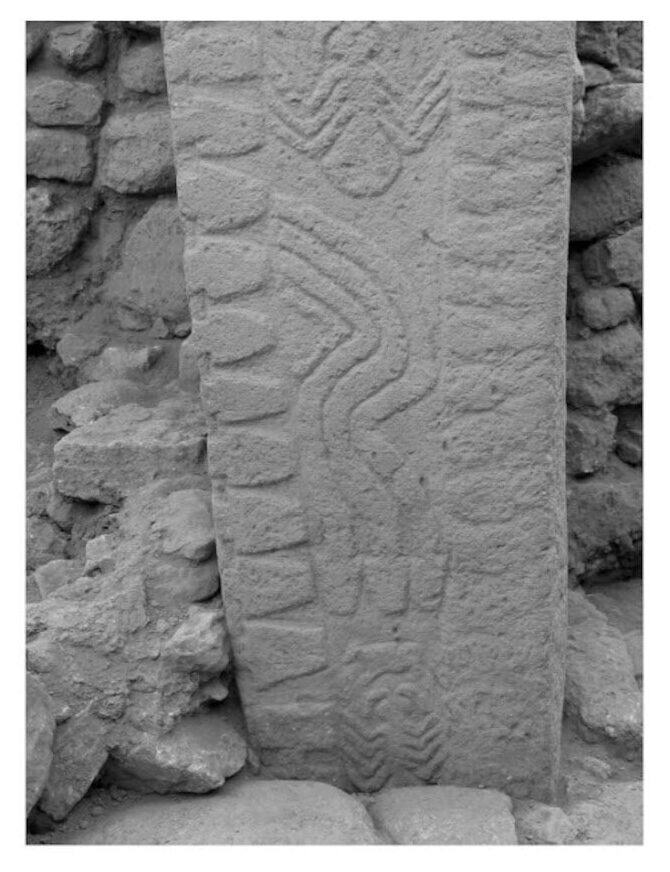
Pillar 33: I-symbols can just be seen at the bottom of the inner face, next to the lower spider. There is also a faint one higher up above the top spider.
Pillar 33
© PreHistory Decoded
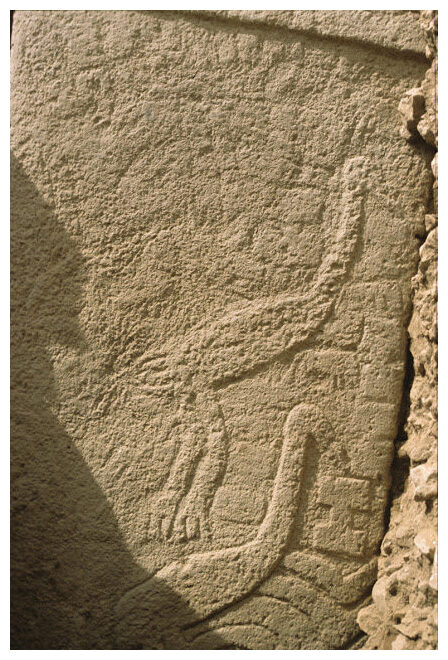
Also, there are more I-symbols on the side with the tall bending birds.

Pillar Gobekli
© PreHistory Decoded

Star of David

Best of the Web: Jewish cosmic monotheism drew on Plato's writings, new book claims

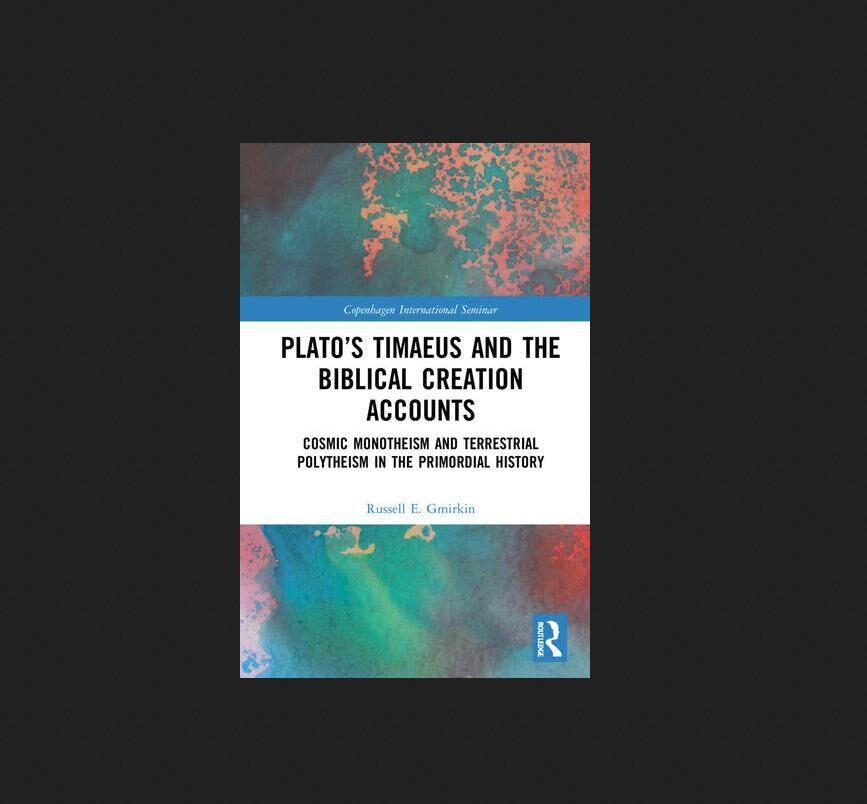
Plato’s Timaeus and the Biblical Creation Accounts gmirkin
Russell Gmirkin: Plato’s Timaeus and the Biblical Creation Accounts. 'And that Yahweh was originally one of many lesser "Sons of God"'
A groundbreaking new book from Routledge by noted biblical scholar Russell Gmirkin proposes that the Jewish notion of a cosmic, eternal God of Creation first appeared in Genesis 1 around 270 BCE, drawing on the account of the creation of the kosmos in Plato's Timaeus. This new book builds on earlier research by Gmirkin, who has argued that the five books of Moses were written around 270 BCE at Alexandria, Egypt, utilizing various Greek sources found at the Great Library, including the writings of Plato. In Plato's Timaeus and the Biblical Creation Accounts: Cosmic Monotheism and Terrestrial Polytheism in the Primordial History, Gmirkin argues:

Comment: See also: Judaism and Christianity - Two Thousand Years of Lies - 60 Years of State Terrorism:
Judaism supposedly created Israel, and Judaism also is the parent of Christianity and Islam, so the issue of Judaism and Ancient Israel, from which it supposedly emerged, are not trifling topics. The fact is, as a growing body of scholarship demonstrates, there was no "ancient Israel" as depicted in the Bible. The Hebrew Bible is not, by any stretch of the imagination, a historical document, and trying to understand the history of Palestine by reading the Bible is like trying to understand Medieval history by reading Ivanhoe.
And check out SOTT radio's:


People 2

Women, child soldiers sent to save Hitler: Nazi 'People's Storm' militia's last-ditch Battle of Berlin captured by US forces footage

Boys walking
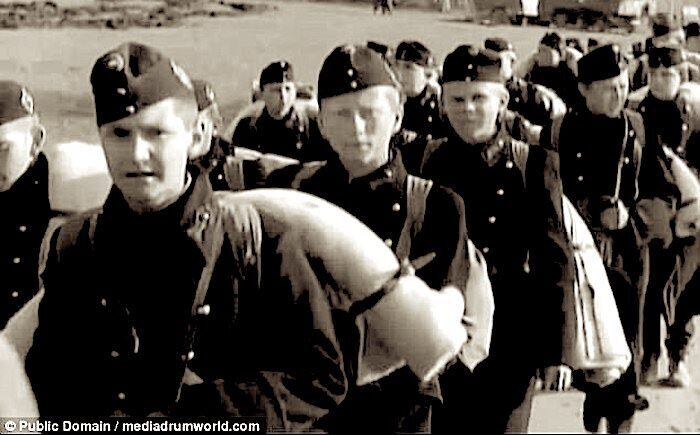
Walking to their deaths/ Young boys part of Volkssturm to fight on the front lines at end of WWII
This recently unearthed footage shot during World War II shows the smooth faces of Hitler's boy soldiers and female forces during the final days of Nazi Germany.

The boys of the Volkssturm, or 'People's Storm' - a German civil militia - march in full uniforms towards the front, as members of Bund Deutscher Madel - or League of German Girls - can be seen standing on the side of the road.

Despite that fact that many of them had barely entered puberty before being handed a gun to defend The Fatherland, these boys and young women were later deployed to defend Berlin - where most of them would die.


Info

Famous rock art cave in Spain was used by ancient humans for more than 50,000 years

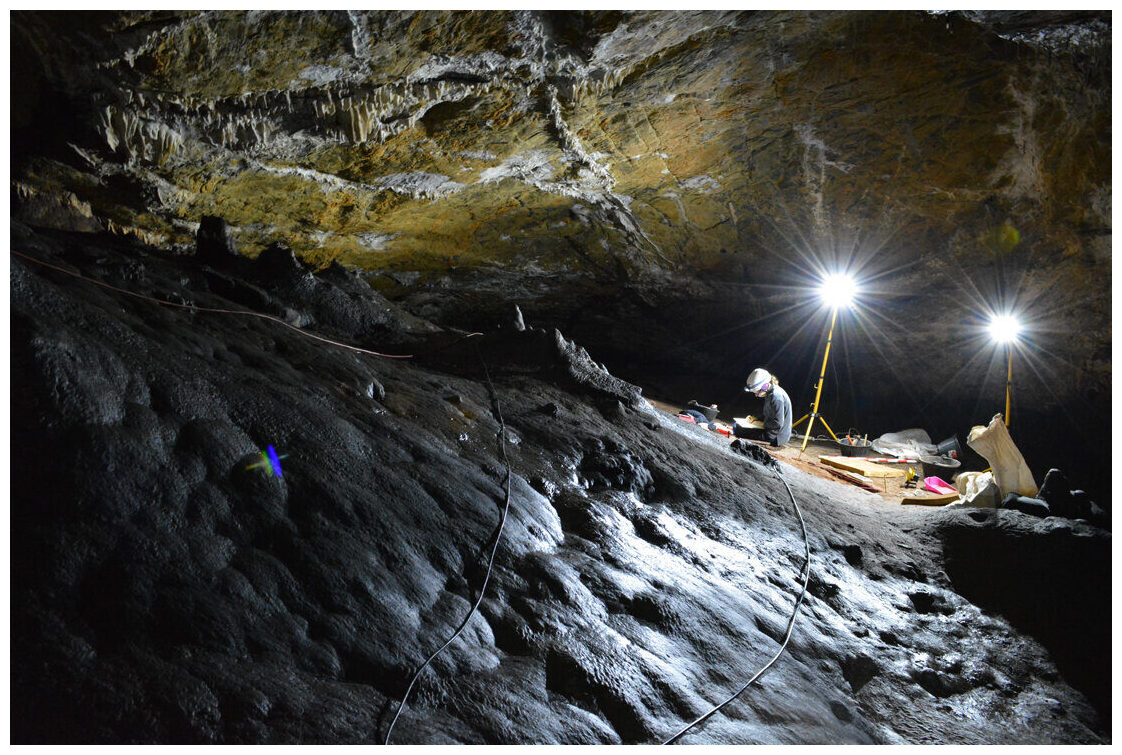
Cave Excavation
© Ramos-Muñoz et al., CC-BY 4.0 (creativecommons.org/licenses/by/4.0/)Excavation area in Cueva de Ardales with evidence from the Middle Palaeolithic period.
A cave in southern Spain was used by ancient humans as a canvas for artwork and as a burial place for over 50,000 years, according to a study published June 1, 2022, in the open-access journal PLOS ONE by José Ramos-Muñoz of the University of Cadiz, Spain, and colleagues.

Cueva de Ardales, a cave in Málaga, Spain, is famous for containing more than 1,000 paintings and engravings made by prehistoric people, as well as artifacts and human remains. However, the nature of human usage of this cave has not been well-understood. In this study, the authors present the results of the first excavations in this cave, which shed light on the history of human culture in the Iberian Peninsula.

A combination of radiometric dating and analysis of remains and artifacts within the cave provide evidence that the site's first occupants were likely Neanderthals more than 65,000 years ago. Modern humans arrived later, around 35,000 years ago, and used the cave sporadically until as recently as the beginning of the Copper Age. The oldest rock art in the cave consists of abstract signs such as dots, finger tips, and hand-stencils created with red pigment, while later artwork depicts figurative paintings such as animals. Human remains indicate the use of the cave as a burial place in the Holocene, but evidence of domestic activities is extremely poor, suggesting humans were not living in the cave.

People

Modern Ukraine was built on an anti-Russia foundation, but a large part of the country refused to play along

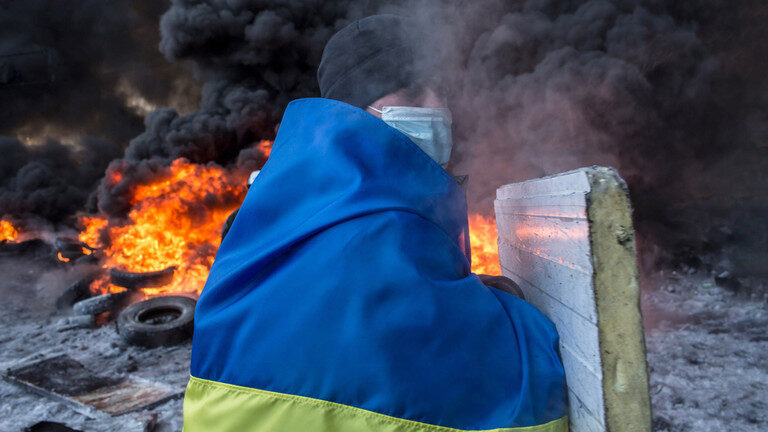
Ukraine 1
© Getty Images / Brendan Hoffman
The conflict in Ukraine has many frontlines. The world is mostly focusing on the hostilities, but an even more serious conflict is unfolding inside the Ukrainian camp. This standoff between Ukrainians and Russians as two political nations has been developing since 2014, but it entered a new, decisive phase after Russia began its military offensive, three months ago.

Since the fall of the Soviet Union in 1991, three groups with strong identities have co-existed in Ukraine. A state which first came into being as recently as 1917, and had its current borders set by Joseph Stalin, the Georgian dictator who led the USSR until his death in 1953.

The first one, Ukrainian-speaking Ukrainians (or Galicians, named after the historical region of Galicia), mostly live in Ukraine's western and central territories. Their ethnic narrative is very clear, they consider Russians to be their enemy, and their main icon is the World War Two Nazi-collaborator Stepan Bandera.

The Galician motto is something along the lines of "if you disagree with us, there is still time - pack your suitcase and catch the next train to Russia." They are pushing the narrative that Ukraine as a nation doesn't depend on Russia and the Russians. This is supported by their choice of national heroes. Hetman Ivan Mazepa sided with King of Sweden Charles XII during the Great Northern War between Russia and Sweden. Symon Petliura was the president of the Ukrainian People's Republic during Ukraine's sovereignty in 1918-1921. The aforementioned Bandera founded and led the Organization of Ukrainian Nationalists from the 1920s to the 1950s.

Black Magic

Rudolph II: The alchemist Emperor of Prague

Michael Sendivogius  alchemy prage middle ages prague
Polish alchemist Michael Sendivogius (1566-1636), painted in 1867 by Jan Matejko. Sendivogius was one of many alchemists who practiced in Prague with the encouragement and support of Rudolf II.
As the Holy Roman Empire descended into religious conflicts, its Habsburg ruler surrounded himself with magicians, astrologers, and scryers.

From the 15th to the 17th centuries, most European rulers dabbled in alchemy and magic. These were not seen, however, as diversions from rulership. They were central to it, for the realms of magic and of hidden truth were thought to hold the solution to how the world might be brought into conformity with the cosmic order.

The content of the occult world, as it was imagined in early modern Europe, is best broached through The Emerald Tablet (Tabula Smaragdina), a cryptic text believed to have been originally carved on a slab of jade that Alexander the Great found in the crypt of the magician Hermes Trismegistus (the Thrice Great). In fact, it was probably first composed in the Syriac language in the eighth century before being translated into Arabic and then into Latin.

Colosseum

Ruins of hidden 3,400-year-old-city emerge as giant dam dries up

Mosul
© Universities of Freiburg and Tübingen, KAOThe archaeological site of Kemune in the Mosul Dam.
The tightening grip of climate change on our planet is revealing secrets buried for millennia.


Comment: Note that a great many archeological sites were buried by climate change, which only further supports the fact that a shifting climate and weather extremes are cyclical, rather than being due to 'human emissions'.


As waters and ice recede under warming conditions, the traces of people and civilizations long gone from the mortal realm emerge. In recent months, Iraq has been hit particularly hard, battered by extreme drought, with the Mosul reservoir shrinking as water is extracted to keep crops from drying.

Amid this crisis, the ruins of an ancient city, submerged for decades, are once again on dry land. Since the dam was created in the 1980s before the settlement was archaeologically studied and cataloged, its re-emergence represents a rare opportunity for scientists to explore it. The archaeological site has been named Kemune.


Comment: It's a bit of an ideological stretch to call this an issue of 'climate change' if the dam has only been in use for 40 years, and they knew about the archeological site prior to its submersion.


The ruins consist of a palace and several other large structures, dating back to the Bronze Age in the region, around 3,400 years ago. Scientists think the ruins might be the ancient city of Zakhiku, a bustling center for the Mittani Empire, which thrived on the banks of the Tigris River between 1550 and 1350 BCE.

Comment: See also: Skeleton of young man killed by tsunami caused by eruption of Thera 3,600 years ago found on Turkish coast


Info

First Pompeiian human genome sequenced

Pompeii site
© SINAnet ISPRA – Dem75 (QGIS 3.22 ‘Biatowieza’)Geographic location of the Pompeii site, Campania (Italy).
The first successfully sequenced human genome from an individual who died in Pompeii, Italy, after the eruption of Mount Vesuvius in 79 CE is presented this week in a study published in Scientific Reports. Prior to this, only short stretches of mitochondrial DNA from Pompeiian human and animal remains had been sequenced.

Gabriele Scorrano and colleagues examined the remains of two individuals who were found in the House of the Craftsman in Pompeii and extracted their DNA. The shape, structure, and length of the skeletons indicated that one set of remains belonged to a male who was aged between 35 and 40 years at the time of his death, while the other set of remains belonged to a female aged over 50 years old. Although the authors were able to extract and sequence ancient DNA from both individuals, they were only able to sequence the entire genome from the male's remains due to gaps in the sequences obtained from the female's remains.

Comparisons of the male individual's DNA with DNA obtained from 1,030 other ancient and 471 modern western Eurasian individuals suggested that his DNA shared the most similarities with modern central Italians and other individuals who lived in Italy during the Roman Imperial age. However, analyses of the male individual's mitochondrial and Y chromosome DNA also identified groups of genes that are commonly found in those from the island of Sardinia, but not among other individuals who lived in Italy during the Roman Imperial age. This suggests that there may have been high levels of genetic diversity across the Italian Peninsula during this time.