Secret HistoryS


Blue Planet

Britain's earliest humans made Canterbury home, 600,000-year-old finds reveal

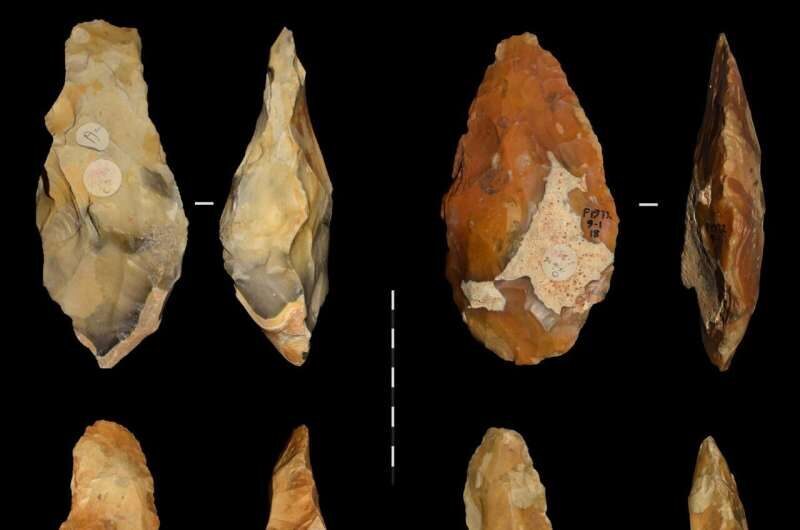
handaxes
© University of CambridgeA selection of handaxes discovered in the 1920s. Image: authors of the research.
Archaeological discoveries made on the outskirts of Canterbury, Kent (England) confirm the presence of early humans in southern Britain between 560,000 and 620,000 years ago, making it one of the earliest known Paleolithic sites in northern Europe.

The breakthrough, involving controlled excavations and radiometric dating, comes a century after stone tool artifacts were first uncovered at the site.

The research, led by archaeologists at the University of Cambridge, confirms that Homo heidelbergensis, an ancestor of Neanderthals, occupied southern Britain in this period (when it was still attached to Europe) and gives tantalizing evidence hinting at some of the earliest animal hide processing in European prehistory.

Located in an ancient riverbed, the Canterbury site was originally discovered in the 1920s when local laborers unearthed artifacts known as handaxes (most now in the British Museum), but by applying modern dating techniques to new excavations their age has finally been determined.


Comment: See also:


Rocket

New book offers a vivid insider account of how Cold War Soviet and American efforts to ditch their nukes played out

Book cover
© Scott Ritter
Former US Marine Corps intelligence officer, and RT columnist, Scott Ritter has produced an engaging and timely book that gives an eyewitness account of those Cold War days when ideological foes managed to put the brakes on an out-of-control arms race.

Many people, when confronted with bland Soviet-era terms such as 'arms control' and 'disarmament,' may be tempted to stifle a yawn and move on. However, that would be a mistake.

Here is a real page-turner - part history lesson, part Clancy thriller, with just the right touch of comic relief - that examines a critical period during the Cold War when the Americans and Russians were working to eliminate their missile stockpiles amid a climate of full-blown distrust.

The story begins in 1979 when the Soviets achieved a strategic edge against NATO forces with the introduction of the SS-20 nuclear-tipped missile. As if on cue, the Americans responded with the Pershing II, a projectile that could hit Moscow from Western Europe in eight minutes or less. And just like that, the arms race was on. Recognizing the futility of this tit-for-tat stockpiling, however, diplomats from the United States and Soviet Union, in a moment of rare consensus, understood the need to ban these weapons altogether.

Boat

World's deepest shipwreck found in the Philippines

USS Samuel B. Roberts (DE-413) deepest shipwreck
The USS Samuel B. Roberts (DE-413)
The destroyer Sammy B has been discovered almost seven kilometers below the ocean surface

The US Navy destroyer Samuel B. Roberts was discovered earlier this week at a depth of almost seven kilometers (4.3 miles) below the surface of the Pacific Ocean, which makes it the deepest shipwreck ever found, billionaire ocean explorer Victor Vescovo announced on Twitter.

"With sonar specialist Jeremie Morizet, I piloted the submersible Limiting Factor to the wreck of the Samuel B. Roberts (DE 413). Resting at 6,895 meters, it is now the deepest shipwreck ever located and surveyed. It was indeed the 'destroyer escort that fought like a battleship,'" he wrote on Friday.

Info

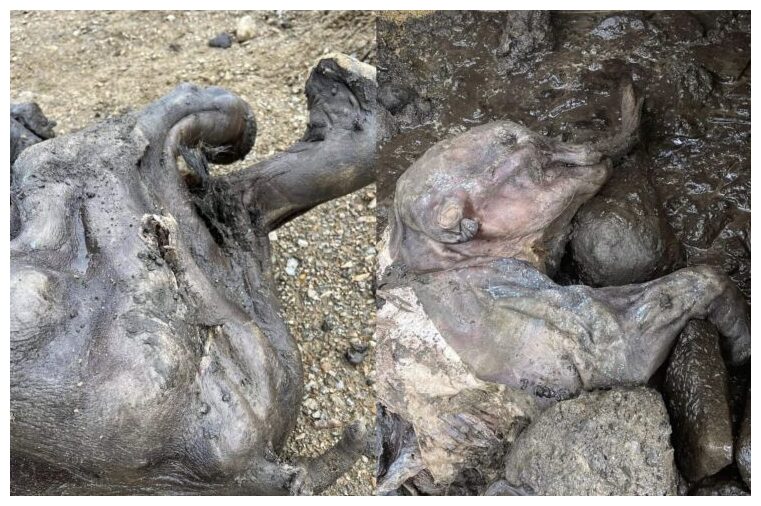
Mummified baby woolly mammoth found in Yukon

Mummified mammoth
© Willem Middelkoop

This is a joint news release with Trʼondëk Hwëchʼin.


On June 21, 2022, a near complete, mummified baby woolly mammoth was found in the Klondike gold fields within Trʼondëk Hwëchʼin Traditional Territory. Miners working on Eureka Creek uncovered the frozen woolly mammoth while excavating through the permafrost. This is a significant discovery for Trʼondëk Hwëchʼin and the Government of Yukon. Trʼondëk Hwëchʼin Elders named the mammoth calf Nun cho ga, meaning "big baby animal" in the Hän language.

The Yukon has a world-renowned fossil record of ice age animals, but mummified remains with skin and hair are rarely unearthed. Nun cho ga is the most complete mummified mammoth found in North America.

This recovery could not have happened without the collaboration between Brian McCaughan of Treadstone Mining, Trʼondëk Hwëchʼin and the Government of Yukon. In the months to come, Trʼondëk Hwëchʼin and the Government of Yukon will work together to respectfully preserve and learn more about Nun cho ga and share these stories and information with the community of Dawson City, residents of the Yukon and the global scientific community.
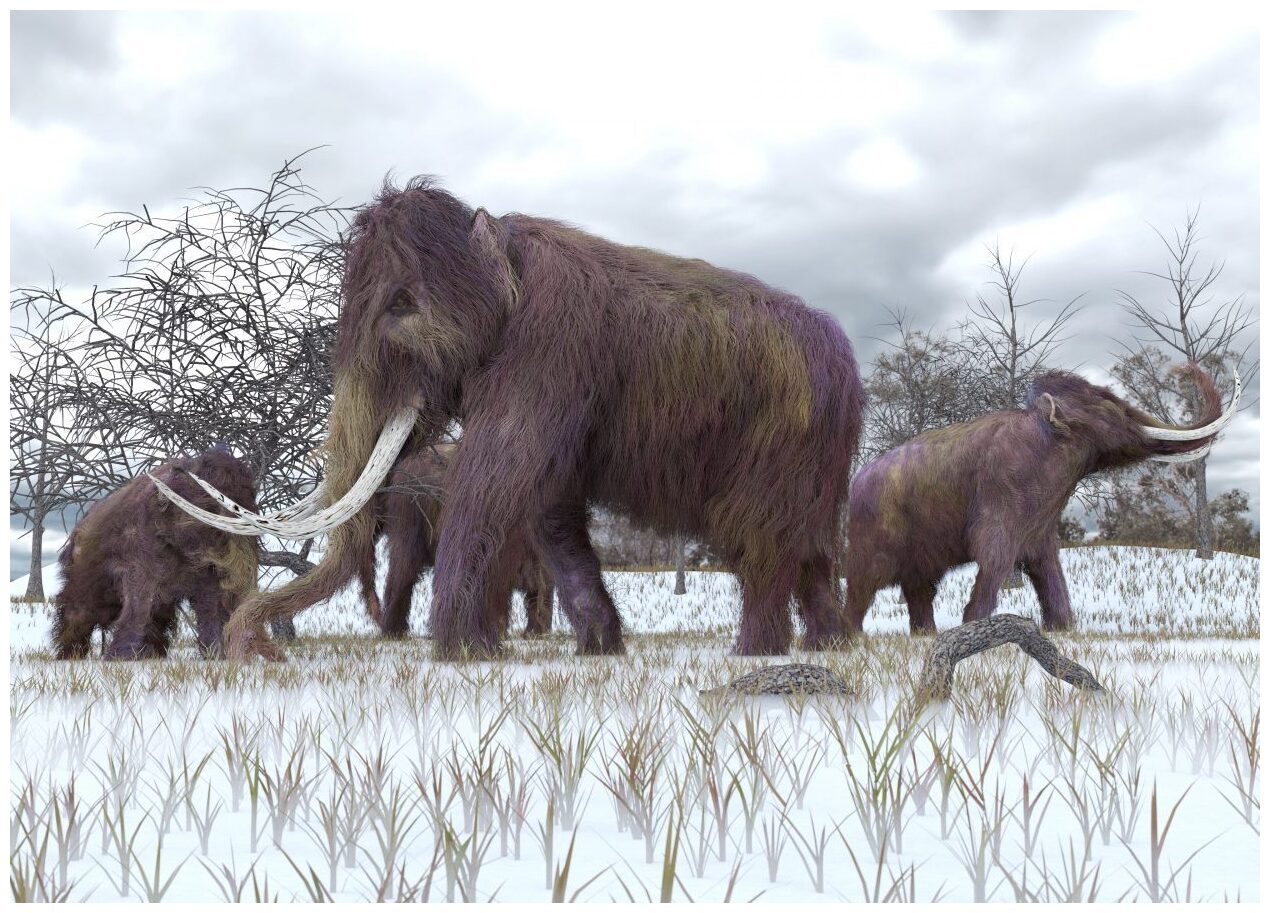
A herd of Woolly Mammoths grazing
© Aunt Spray – ShutterstockA herd of Woolly Mammoths grazing.

Comment: See also: Of Flash Frozen Mammoths and Cosmic Catastrophes


Cult

Not worth your sympathy: The story of Ukraine's neo-Nazi Azov battalion

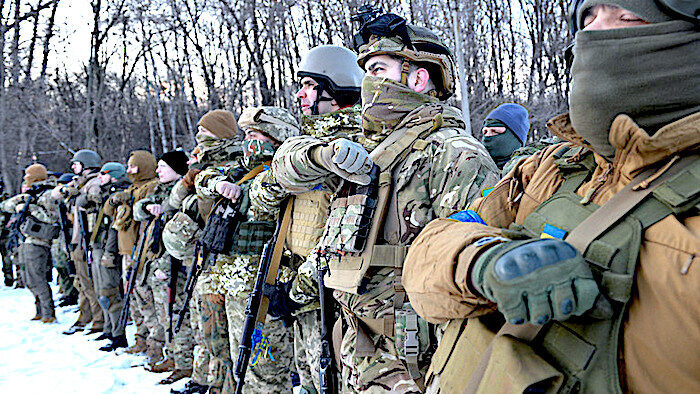
Azovservers
© Sergey Bobok/AFPServicemen of Ukraine's Azov Battalion
Ukrainian propaganda has elevated the Azov Battalion's protracted but ultimately doomed final stand, in Mariupol, to heroic proportions. Adding further pathos to this sentimental story were the desperate calls for help from the commanders of the units entrapped in the bowels of the Azovstal factory and the photogenic young wives of the besieged fighters pleading with Pope Francis at the Vatican.

Yet, an observant eye could also wonder about the abundance of Nazi tattoos adorning the battalion's POWs. The fighters of the Donetsk militia even came up with a joke about capturing "large numbers of pirates and electricians" in reference to the numerous individuals with the skull and crossbones and SS bolts - the widely recognizable Totenkopf and Schutzstaffel symbols - emblazoned on their skin.

Western media has been bending over backwards trying to explain how people covered in Nazi tattoos are not neo-Nazis. However, it turns out that sporting symbols related to Adolf Hitler's odious Third Reich is not even close to being the worst of the crimes committed by the Azov.

Comment: Worthy of Western support? Ukraine thinks so.


Book 2

Nazi collaborator monuments in Lithuania

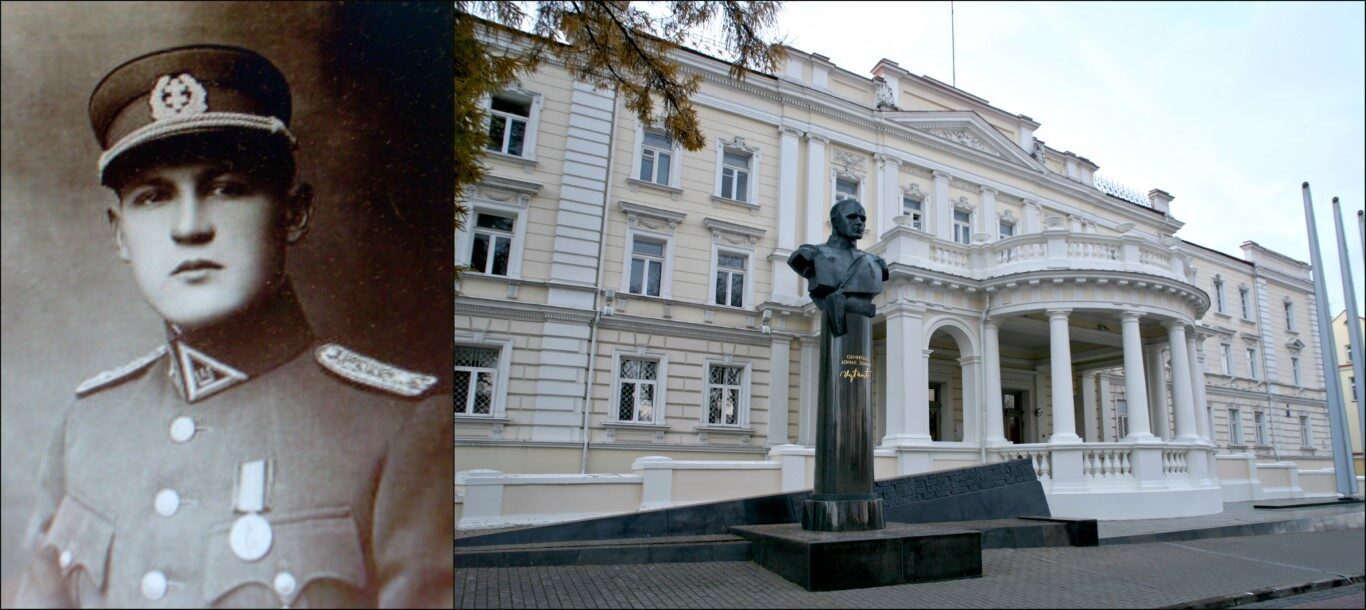
Jonas Žemaitis-Vytautas
© Wikimedia Commons/ForwardLeft: Jonas Žemaitis-Vytautas. Right: Žemaitis-Vytautas bust outside the Ministry of National Defense of Lithuania, Vilnius.
There are hundreds of statues and monuments in the United States and around the world to people who abetted or took part in the murder of Jews and other minorities during the Holocaust. As part of an ongoing investigation, the Forward has, for the first time, documented them in this collection of articles. For an initial guide to each country's memorials click here. For a 2022 update to the investigation, click here.

Vilvius — In many ways, Lithuania pioneered the glorification of Nazi collaborators on a state level. It has perverted museums and tourist sites; celebrated perpetrators as national heroes; persecuted Holocaust survivors who defended themselves with pre-trial investigations for "war crimes;" destroyed a prominent author's livelihood for the crime of admitting Lithuanians participated in the Holocaust; and is debating denialist legislation similar to Poland's.

Colosseum

Important Gallo-Roman worship complex discovered near Rennes, France

Gallo-Roman temple
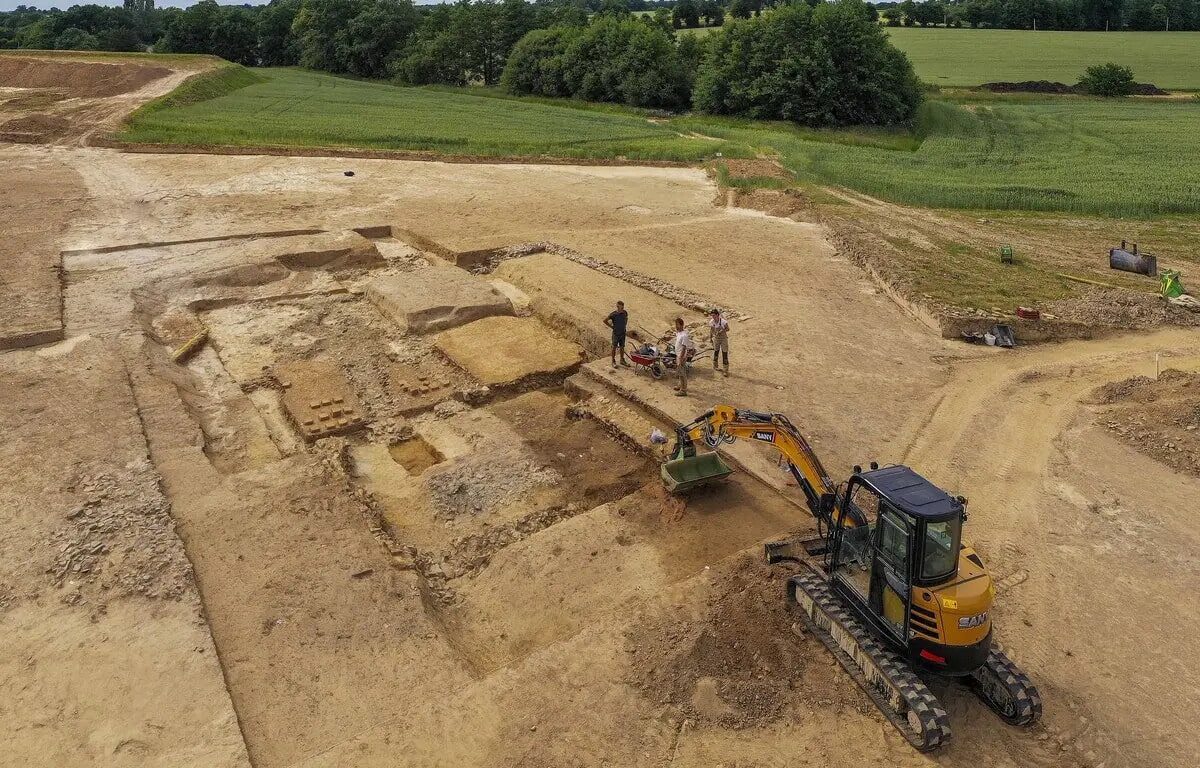
An essential Gallo-Roman worship complex was unearthed by Inrap (National Institute for Preventive Archaeological Research) archaeologists at Chapelle-des-Fougeretz (Ille-et-Vilaine), near the city of Rennes in northwest France.

The site in the village of Chapelle-des-Fougeretz has been slated for development, triggering a comprehensive preventative archaeology excavation of more than seven hectares of the site.

Excavations began in March, and archaeologists have unearthed the remains of a Gallo-Roman worship complex built just after the Roman conquest in the 1st century BC. The sanctuary was originally established in the period following the Roman conquest in the 1st century BC and operated for at least five centuries until the 4th century AD.

Comment: Footage of the complex in Dutch:


See also: Secrets of the exceptional diatretic vase revealed, recently discovered at 4th century Paleo-Christian necropolis in Autun, France


Sun

Rise of Islam followed extreme drought of sixth century

Stalagmite
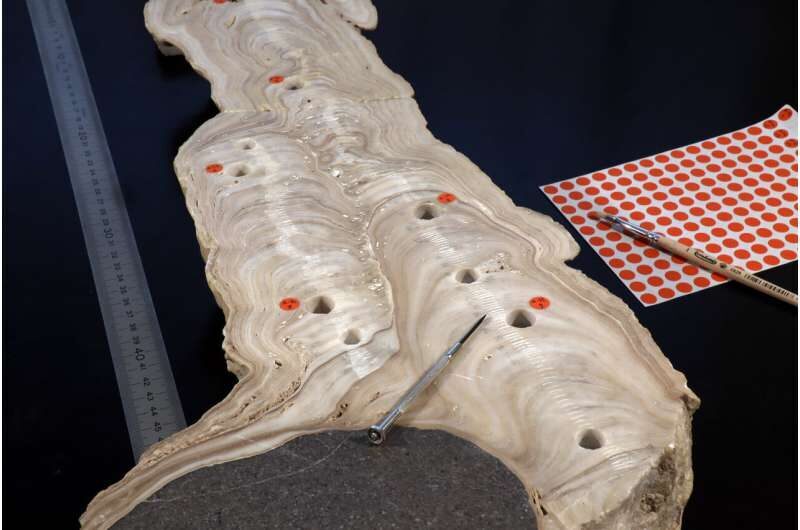
© Timon Kipfer, University of BaselStalagmite from the Hoti Cave. Holes are created by sampling for radioactive dating, and scratch marks by sampling for isotope analysis.
Extreme dry conditions contributed to the decline of the ancient South Arabian kingdom of Himyar. Researchers from the University of Basel have reported these findings in the journal Science. Combined with political unrest and war, the droughts left behind a region in disarray, thereby creating the conditions on the Arabian peninsula that made possible the spread of the newly emerging religion of Islam.

On the plateaus of Yemen, traces of the Himyarite Kingdom can still be found today: terraced fields and dams formed part of a particularly sophisticated irrigation system, transforming the semi-desert into fertile fields. Himyar was an established part of South Arabia for several centuries.

However, despite its former strength, during the sixth century CE the kingdom entered into a period of crisis, which culminated in its conquest by the neighboring kingdom of Aksum (now Ethiopia). A previously overlooked factor, namely extreme drought, may have been decisive in contributing to the upheavals in ancient Arabia from which Islam emerged during the seventh century.

Comment: See also: And check out SOTT radio's:


Colosseum

New excavations of China's mysterious Sanxingdui culture reveal more exquisite & bizarre objects that hint at exchange and integration

Sanxingdui
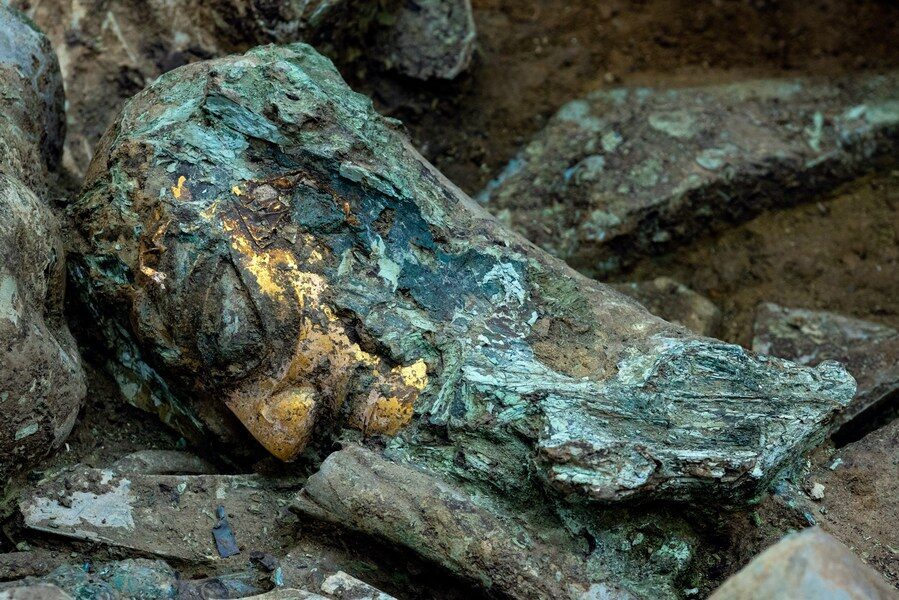
© Xinhua/Shen BohanPhoto taken on June 1, 2022 shows artifacts including a bronze head with gold mask excavated from the No.8 sacrificial pit at Sanxingdui Ruins site in southwest China's Sichuan Province. Archaeologists have recently made some stunning discoveries at the famed Sanxingdui Ruins site in southwest China's Sichuan Province.
Archaeologists have recently made some stunning discoveries at the famed Sanxingdui Ruins site in southwest China's Sichuan Province.

A treasure trove of exquisite bronze, gold and jade wares, including at least 10 bronzewares unearthed for the first time in the history of human civilization, have been excavated at the site.

A joint team of archaeologists from Sichuan Provincial Cultural Relics and Archaeology Research Institute, Peking University, Sichuan University and other research institutions and universities have carried out the excavation of six sacrificial pits at this site since 2020.

Comment:

See also: China's mysterious Sanxingdui ruins reveal more stunning relics


Bizarro Earth

Ancient women's teeth may reveal origins of 14-century Black Death

mass grave bones
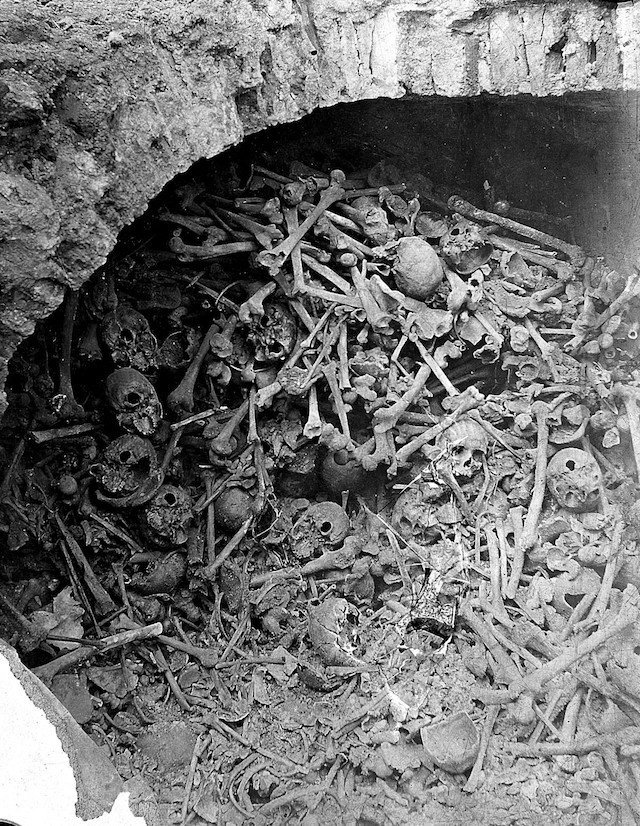
© unknownFILE PHOTO: Black Death burial pit.
In 1338 or 1339 "Bačaq, a faithful woman" in her 40s who stood just four feet, eight inches, died and was buried in the Kara-Djigach cemetery, about seven miles outside Bishkek, the capital of what is now Kyrgyzstan. Her tombstone was inscribed in Syriac, an Aramaic dialect. She was one of 114 people buried there during those two years — who accounted for one quarter of all the cemetery's burials while it was in operation from 1245 to 1345. Bačaq's tombstone does not mention a cause of death, but other 1338-1339 tombstones do: mawtānā, or pestilence. Today it is called plague.

Bačaq's teeth, as well as those of another woman buried nearby, have now yielded genomic evidence of what researchers suggest is the ancestral strain of the Yersiniapestis bacterium responsible for the 14th-century Black Death pandemic, according to a study published on Wednesday in Nature. The paper also points to this region as the source of that notorious plague, which killed at least an estimated 30 to 60 percent of Europe's population in a handful of years.

Comment: There are a number of unanswered questions over the origin, transmission, and even the pathogen, that caused the Black Death; with the last point being perhaps key to unraveling the mystery. Because other researchers conclude that it was not Yersinia Pestis that was the cause of the plague, but instead a primitive form of hemorrhagic small pox; and for more on that, see: Bill Gates renews warnings over 'small pox terror' threat, FDA approved drug in May for disease that was 'eradicated' in 1980