Secret HistoryS


Archaeology

Sunken 19th century quarantine hospital and cemetery found off Florida Keys

hospital ocean floor florida
© C. Sproul/National Park ServiceA diver examines one of the submerged gravestones off the coast of Dry Tortugas National Park.
The hospital had been used to house yellow fever patients before falling into disuse in 1900, then gradually slipping below the waterline in Dry Tortugas National Park off the coast of Florida.

For more than 100 years, the sparkling turquoise waters of Dry Tortugas National Park in the Florida Keys have concealed a grim historical relic. Beneath the waves, archaeologists recently discovered the remains of a submerged 19th-century quarantine hospital and adjoining cemetery.

According to a statement from the National Park Service, park staff, alongside members of the National Park Service's Submerged Resources Center, the Southeast Archaeological Center, and a University of Miami graduate student, made the discovery while conducting a survey in August 2022.

Better Earth

DNA recovered from 20,000-year-old pendant found in Denisovan cave belonged to woman

Denisova Cave
© Max Planck Institute for Evolutionary AnthropologyThe pierced deer tooth discovered from Denisova Cave after DNA extraction.
Artifacts made of stone, bones or teeth provide important insights into the subsistence strategies of early humans, their behavior and culture. However, until now it has been difficult to attribute these artifacts to specific individuals, since burials and grave goods were very rare in the Paleolithic. This has limited the possibilities of drawing conclusions about, for example, division of labor or the social roles of individuals during this period.

In order to directly link cultural objects to specific individuals and thus gain deeper insights into Paleolithic societies, an international, interdisciplinary research team, led by the Max Planck Institute for Evolutionary Anthropology in Leipzig, has developed a novel, non-destructive method for DNA isolation from bones and teeth. Although they are generally rarer than stone tools, the scientists focused specifically on artifacts made from skeletal elements, because these are more porous and are therefore more likely to retain DNA present in skin cells, sweat and other body fluids.

Comment: See also:


Blue Planet

Periods of prolonged droughts caused downfall of Indus megacities

indus valley
© Shutterstock
A new study by the University of Cambridge has found new evidence locked away in stalagmite formations in a Himalayan cave, suggesting that the downfall of the Indus megacities was caused by periods of prolonged droughts.

The Indus Civilisation was a Bronze Age culture from 3300 BC to 1300 BC, that emerged in the alluvial plains of the Indus River system. At its peak, the civilisation covered an area that spanned much of Pakistan, northeast Afghanistan, and northwestern India.

The large megacities of the Indus are noted for their advanced urban planning, baked brick houses, elaborate drainage systems, water supply systems, clusters of large non-residential buildings, and techniques of handicraft and metallurgy.

Researchers examined growth layers in a stalagmites collected from a cave near Pithoragarh, India, which enabled them to chart historic rainfall by measuring a range of environmental tracers — including oxygen, carbon and calcium isotopes.

Comment: It wasn't only drought that they had to contend with, because as noted in How did the Harrappan civilization avoid war for 2,000 years?, the IVC was also struggling with:
Add to this drought the fact that the cities had already been over-farming, and it's likely that starvation began driving people away from Harappa. There is also ample evidence that people in the cities were suffering from tuberculosis and other infectious diseases. The one-two punch of famine and plague left the region depopulated.


Info

The 6,000-year-old settlement found on island of Corsica

Sotta Corsica
© Florian Soula, Inrap
Archaeologists in a French municipality recently excavated the slopes of Punta Campana (island of Corsica) in preparation for a construction project and found an expansive Neolithic site.

The site in Sotta (Sotta is a French municipality on the island of Corsica) contains two distinct settlements, according to a news release from the Institut National de Recherches Archéologiques Préventives (INRAP). The first settlement is partially preserved while the second is well preserved.

As part of this excavation, archaeologists have uncovered the existence of a recent Neolithic settlement (Basien) followed by a late Neolithic settlement.

Archaeologists said the first settlement, which dates back to the early fourth millennium B.C., held a stone structure containing the remains of an obsidian knapping workshop.

Within the workshop, there is evidence indicating that ancient people used a variety of methods to make obsidian tools.
obsidian workshop.
© Laura Manca INRAPArchaeologists uncovered remains of an obsidian workshop.
According to experts, the site likely experienced significant erosion until the second, more recent settlement was built on top of the workshop.

Pharoah

Egyptian child mummies reveal high prevalence of anemia

egyptian mummy child
© Panzer et al., International Journal of Osteoarchaeology, 20233D reconstruction of the skull of one of the children.
Anemia was common in mummified ancient Egyptian children, according to a new study that analyzed child mummies in European museums.

Researchers used computed tomography (CT) scans to peer non-invasively through the mummies' dressings and discovered that one-third of them had signs of anemia; they found evidence of thalassemia in one case, too.

"Our study appears to be the first to illustrate radiological findings not only of the cranial vault but also of the facial bones and postcranial skeleton that indicate thalassemia in an ancient Egyptian child mummy," the team writes in their published paper.

Comment: See also:


Chess

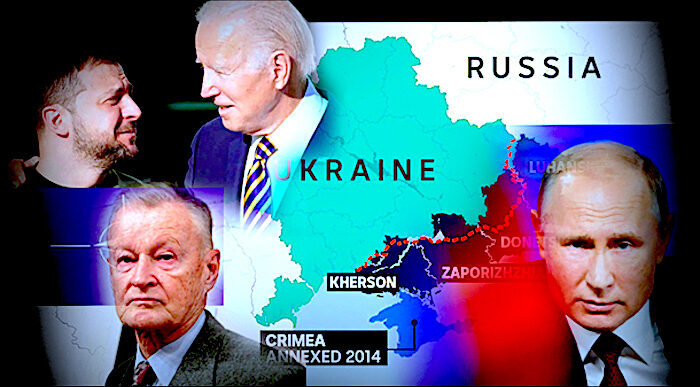
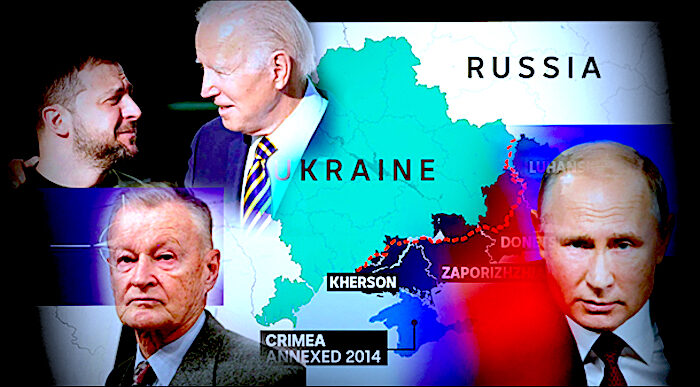
The Ukraine Crisis in context: Brzezinski's grand chessboard in the 21st Century

ZelBidBrzezPutin
© unknownUkraine • NATO • Zbigniew Brzezinski • Volodymyr Zelensky • Joe Biden • Vladimir Putin
We are now living in the Raging Twenties of the 21st century . . . but the past has a tendency of catching up with present before evolving into the future.

In the aftermath of Watergate affair and its political fallout, U.S. foreign policy was dominated by the figure of Zbigniew Brzezinsky (1928-2017) and his anti-Communist fervour and blatant Russophobia. An ideological circumstance that was to lead to the emergence of political Islam and Islamist terrorism worldwide. As Brzezinski had mobilized Islam as a weapon against global Communism in the seventies (and eighties), and the resultant blowback set the stage for the American-led Global War-on-Terror as a veiled 'Crusade against Islam,' spearheaded by George W. Bush and Barack Obama (2001-2017).

From War-on-Terror to New Cold War

In the wake of NATO secretary-general (1994-5) Willy Claes's February 1995 proclamation that "Islamic militancy has emerged as perhaps the single gravest threat to the NATO alliance and to Western security" and of course, "9/11," the Brzezinski template gave way to Bush, Jr.'s neoconservative doctrine of pre-emption and the global War-on-Terror. Far from being a resounding success, the Bush doctrine led to a new reality — a new reality that normalized living in a state of constant alarm while being under equally constant surveillance (i.e. the Patriot Act), on the one hand, and a very real Islamist extremist threat to the West (with Islamist terror attacks in such varied places like Madrid, London, Paris, Istanbul and Brussels), on the other.

In the same breath, Bush and Obama's 'successful' fight against Usamah (spelled as Osama, by the American establishment) bin Laden (or OBL, in American parlance) and his shadowy terror group Al Qaeda was followed by the emergence of Caliph Ibrahim (aka Abu Bakr al-Baghdadi) and his Islamic State (or IS, formerly known as ISIS or ISIL). In this century, Brzezinski himself recognized the folly of the American-led Crusade against Islam, writing in 2007 that "[t]he 'war on terror' has created a culture of fear in America." Going on to lay out his Russophobic argument in full in the next instance - as Russia and not Islam arguably represents "the real challenges" faced by the U.S.

Better Earth

Ancient DNA upends European prehistory: Genes reveal striking diversity within similar ice age cultures

Venus of Brassempouy
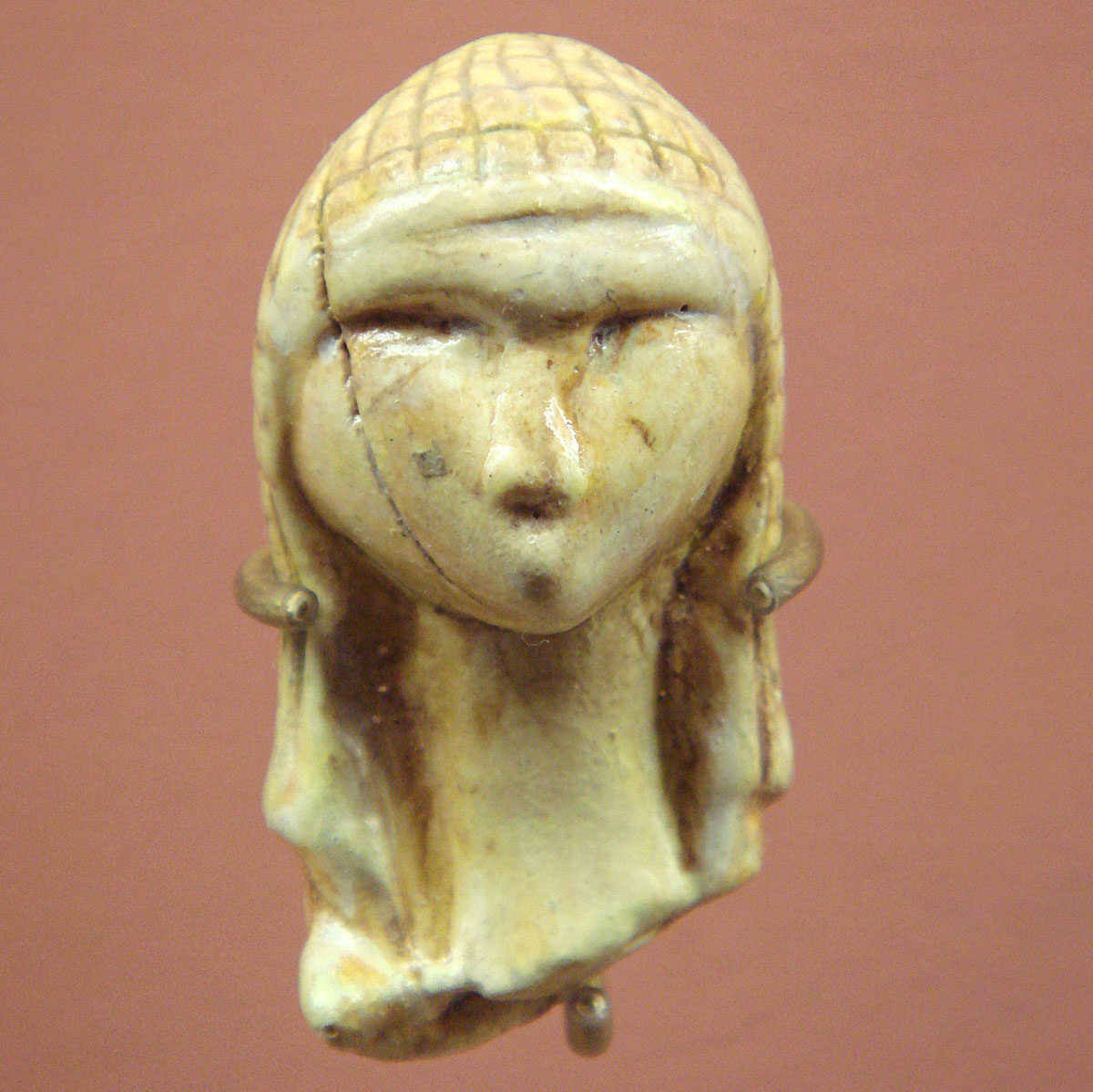
© WIKIMEDIA COMMONSPeople across Europe crafted figurines similar to the so-called Venus of Brassempouy.
Thirty thousand years ago, Europe was a land of open steppes with herds of grazing mammoth and other megafauna — and a strikingly uniform human culture. Its inhabitants, whom archaeologists call the Gravettians, dwelled in caves or in shelters built of mammoth bones. They carved palm-size sculptures from mammoth tusk, depicting mammoths, cave lions, and stylized female figurines with elaborate headdresses and exaggerated breasts and buttocks, and left their distinctive art and artifacts from Spain to western Russia. "You can make a case for saying the Gravettian is the first pan-European culture," says University of Tübingen archaeologist Nicholas Conard.

But despite appearances, the Gravettians were not a single people. New DNA evidence, published today in Nature, shows Gravettians in France and Spain were genetically distinct from groups living in what is now the Czech Republic and Italy. "What we thought was one homogenous thing in Europe 30,000 years ago is actually two distinct groups," says Mateja Hajdinjak, a molecular biologist at the Max Planck Institute for Evolutionary Anthropology who was not part of the new study.

Comment: See also:


Better Earth

'Deep and diversified history of humans on Tibetan Plateau' revealed by genomic study

skull
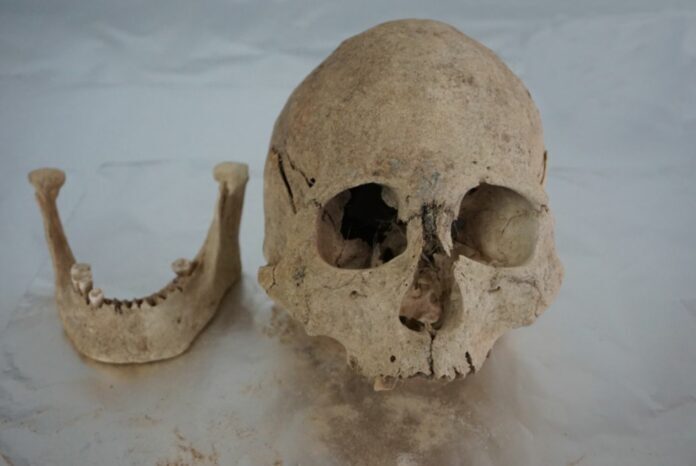
© FU Qiaomei
The Tibetan Plateau, hailed as the world's largest and highest plateau above sea level, is considered one of the most unforgiving environments to be inhabited by mankind. Its frigid and parched climate, coupled with an elevation that frequently exceeds 4000 meters above sea level (masl), presents an enormous challenge to its inhabitants.

Spanning across an immense area of Asia that measures approximately 2.5 million square kilometers, this formidable plateau is home to more than 7 million individuals, predominantly comprising the Tibetan and Sherpa ethnic communities.

Our understanding of the origins and history of ancient humans on the Tibetan Plateau has long been incomplete due to limited sampling of DNA from ancient human remains. However, a recent breakthrough study published in Science Advances today, led by Prof. FU Qiaomei from the Institute of Vertebrate Paleontology and Paleoanthropology (IVPP) of the Chinese Academy of Sciences, has provided new insights by sequencing the genomes of 89 ancient humans from 29 archaeological sites across the plateau, dating back to 5100 BP.

Comment: See also:


Better Earth

Frequent fires struck Antarctica during the age of dinosaurs, 75 million years ago

antarctica forest
© Frontiers in Earth Science (2023). DOI: 10.3389/feart.2023.1048754Paleoenvironmental reconstruction of austral areas under the influence of paleo-wildfires promoted by the Campanian active volcanism; artistic reconstruction by J. S. d’Oliveira: (A) original wet environments occupied by a forest of conifers, ferns, and mesophilic angiosperms growing near bodies of water and in surrounding high areas; (B) pyroclastic flows reaching the vegetation with hot ash, which burnt the vegetation either partially or totally; (C) the over-time cyclic restoration of the paleofloras and the variable conditions related to intervals between volcanic activities.
Paleontologists from Brazil and Chile reveal an important discovery about the past of the most inhospitable continent on Earth, Antarctica. Today covered in snow, in the past, however, the location was not like this. The research, led by Brazilian paleobotanist Dr. Joseline Manfroi, along with her collaborators, proves that Antarctica was disturbed by frequent forest fires that were directly associated with active volcanic episodes during the end of the age of dinosaurs, 75 million years ago.


The research was developed with paleontological samples collected on King George Island, in the Shetland Islands archipelago, on the Antarctic Peninsula, during scientific expeditions carried out by the Chilean Antarctic Institute (INACH) and the Brazilian Antarctic Program (Proantar).

The first evidence of forest fire occurrence in Antarctica had already been proven by the same researcher in 2015, in a paper published in the journal Palaeogeography, Palaeoclimatology, Paleoecology, entitled "The first report of a Campanian palaeo-wildfire in the West Antarctic Peninsula." In 2021, another study for Antarctica also presented more evidence on the issue.

Comment: Catastrophic, extinction-level events on earth appear to involve much of the same natural phenomenon: Two mass extinctions occurred alongside massive volcanic eruptions

See also:


Better Earth

Modern-day Scottish, Welsh and Northern Irish people have Pictish ancestry

picts
© Peace Palace Library - Public DomainDuring the Pre-Viking and Early Middle Ages around AD 300-900, the Picts inhabited the area north of the Forth-Clyde isthmus in Britain.
Most of what we know about the Picts can be deduced from Pictish stones and early medieval manuscripts. While very little Pictish writing has survived, much of its history is known from external sources, including Bede's Historia ecclesiastica gentis Anglorum, hagiography of saints' lives such as that of Columba by Adomnán, and the Irish annals.

Medieval traditions, including from the time of the Picts themselves, had ascribed exotic origins such as Thracians (north of the Aegean Sea), Scythians (eastern Europe), or people from the isles north of Britain.

In a new study published in the journal PLoS Genetics, researchers have extracted genomes sampled from Pictish burials to explore how they are related to other cultural groups in Britain.

Comment: For more on the mysterious Picts, see: