Secret HistoryS


Books

Against presentism

Monty Python Spanish Inquisition
© unknownNobody Expects the Spanish Inquisition
Who isn't, you say? Hardly any "ism" these days has much of a scholarly following. Yet presentism besets us in two different ways: (1) the tendency to interpret the past in presentist terms; and (2) the shift of general historical interest toward the contemporary period and away from the more distant past. Although the first propensity was implicit in Western historical writing from its beginnings, it took a more problematic turn when the notion of "the modern" began to take root in the 17th century. Over time, modernity became the standard of judgment against which most of the past, even the Western past, could be found wanting. The second trend, the shift of interest toward the contemporary period, clearly has a connection to the invention of modernity, but it did not follow as much in lockstep as might be expected. As late as the end of the 19th century, and in some places even after that, students in history expected to study mainly ancient history and to find therein exemplars for politics in the present. Ten or fifteen years ago, survey courses routinely stopped at World War II. French historians still refer to history in the 16th-18th centuries as histoire moderne; for them "contemporary history" began in 1789, and until recently, it stopped about the time of World War I, the rest of the 20th century being consigned to the province of journalism rather than historical scholarship. I believe that the 20th century should be part of historical scholarship and teaching, of course, but it should not crowd out everything else.

There is a certain irony in the presentism of our current historical understanding: it threatens to put us out of business as historians. If the undergraduates flock to 20th-century courses and even PhD students take degrees mostly in 20th-century topics, then history risks turning into a kind of general social studies subject (as it is in K-12). It becomes the short-term history of various kinds of identity politics defined by present concerns and might therefore be better approached via sociology, political science, or ethnic studies. I'm not arguing that identity politics have no place in historical study; women's history, African American history, Latino history, gay and lesbian history, and the like have all made fundamentally important contributions to our understanding of history. It is hard to imagine American history in this country without some element of national identity in it. And present-day concerns have helped revivify topics, such as imperialism, that needed reconsideration. But history should not just be the study of sameness, based on the search for our individual or collective roots of identity. It should also be about difference. World history, for example, should be significant not only because so many Americans have come from places other than European countries but also because as participants in the world we need to understand people who are hardly like us at all.

Comment: See also:


Info

Untangling the Legacy: The untold story of long hair in men's history

Throughout history, long hair has held significant cultural symbolism, particularly for ancient civilisations like the Greeks. From warriors to philosophers, the men of ancient Greece revered their long locks as a symbol of masculinity and freedom. Delving into the rich history of long hair, one uncovers its associations with strength, honour, and personal expression. Here we unravel the intriguing stories behind ancient Greek men and their luscious manes.
Achilles aka Brad Pitt in Troy
© Greek City TimesBrad Pitt as Achilles in Troy (2004).
A Testament to Masculinity and Freedom

Traditionally, long hair has always been a symbol of masculinity. All of history's great warriors had long hair, from the Greeks who wrote odes to their heroes' hair; to the Vikings who flaunted their braids; from the American Indians, famous for their long shiny hair; to the Japanese. And the longer and more beautiful the hair was, the more manly the warrior was considered to be.
Achilles' hair [komē] is thick [amphilaphē], lovelier than gold [khrusos], and becoming [euskhēmōn] no matter where and how either the wind or he himself may move it.

Philostratus
When a warrior was captured, his mane was cut to humiliate him and to take away his beauty. For example the Samurai wore their hair long as a symbol of their honour, cutting it if their honour was lost. Some may say that this custom is echoed in modern day military service when new soldiers are required to cut their hair short when they begin their training to undermine their self-esteem and make them submissive.

It was only between the 1st and 5th centuries AD that short hair was 'invented' so to speak, by the Romans. They believed that this shorter 'do' gave them defensive advantages since opponents couldn't grab them by the hair and it was also easier to recognise each other on the battle field.

So as you see, short hair on men emerges as a relatively recent phenomenon. Yet, in contemporary times, men sporting long hair often face unwarranted criticism from those unaware that short hair can be considered 'anti-masculine' and a repressive social imposition while, judging by the history books, long hair symbolises freedom.

USA

Recognizing hard truths about America's history with slavery

slave chains
© iStock
Slavery is always and everywhere an unconscionable stain, an egregious error, a monstrous outrage, a mortal sin. Every human possesses a natural right to be his own master, so long as he does not deny that same right to others.

Most people take that truism for granted today but it wasn't the governing rule of the past. Few people who have ever lived on this planet were truly free; most were either outright slaves or were serfs or subjects who lived in constant fear of tyrants. In world history, freedom is the exception, and mostly a recent one.

Writing in National Review, Rich Lowry points out,
Slavery knew no bounds of color or creed. During one period, from 1500 to 1700, there were more white European slaves held captive on the Barbary Coast than slaves sent from West Africa to the Atlantic world, according to Gordon [referring to Stewart Gordon and his book Shackles of Iron: Slavery Beyond the Atlantic].
Some people use Black History Month as an occasion to skewer America for slavery. The more extreme among them stoke racial divisions to score political points or line their pockets. To be sure, America is not a perfect country, nor is any one of the other 196.

Comment: See also:


Info

Study shows ancient Alaskans were freshwater fishers

Scientists work at the Upward Sun River site in Interior Alaska.
© Photo by Ben PotterScientists work at the Upward Sun River site in Interior Alaska.
A scientific team led by University of Alaska Fairbanks researchers has discovered the earliest-known evidence of freshwater fishing by ancient people in the Americas.

The research offers a glimpse at how early humans used a changing landscape and could offer insight for modern people facing similar changes.

"We are looking at humans as ecologists do, as biologists do," said Ben Potter, a UAF anthropology professor and co-lead author of the paper. "Even very early on, they are able to adapt to changing conditions."

The study, published recently in the journal Science Advances, shows that people living between 13,000 and 11,500 years ago in what is now Interior Alaska relied on freshwater fish like burbot, whitefish and pike for food. The study builds on earlier UAF findings that documented salmon fishing by the same population of ancient humans.

"That discovery was really surprising because it was far from the ocean, in an area near the edge of salmon habitat," said Potter. "That started us thinking: This could be a whole other angle on human ecology beyond large mammal hunting."

This new study began with a comprehensive review of all Interior Alaska archaeological sites 7,000 years old and older. The scientists found fish bones at seven sites. The team of archaeologists, anthropologists and fisheries biologists analyzed the bones to determine their age and species.

Book 2

Flashback 'Presentism' imperils our future by distorting our past

rosarote brille,rose-colored glasses
© ascrewsloose.com
New York City is famous for its fashion runways. Amid the oohs and ahhs and camera flashes, men and women sashay past the clothing cognoscenti hoping for approving reviews.

With a little help from Star Trek technology, the Big Apple was the site of a most extraordinary apparel show just last week. Several people from the past were teleported to a runway in Soho so they could strut their stuff: Cicero from ancient Rome was there. So was Joan of Arc from the 15th Century; medieval Russia's Ivan the Terrible; and Tastiguy, a cannibal from Papua New Guinea. Even Thag the Bohemian caveman showed up.

Judges in the audience represented some of the world's most famous fashion houses: Giorgio Armani, Fendi, Prada, Versace, Salvatore Ferragamo, Gucci, and Max Mara, among others. The show, unfortunately, was an unmitigated disaster from start to finish. The critics were merciless, their worst epithets so distasteful I cannot repeat them here. But here's a sample of the less offensive remarks:

"Hey Cicero, is that your mother's blanket you're wearing? And what's with the sandals? Can't you afford a decent pair of shoes?" cried the Gucci guy.

The judge from Giorgio Armani was especially offended by Joan of Arc's armor-plated bra. "Where did you get that tin can, Joan? From the dump?" he shouted.

"Ivan looks like an Eskimo in drag" chortled the Prada person. "Hey Ivan, who does your laundry? The sewer treatment plant?"

Poor Tastiguy really got slammed. "Your breath reeks from 40 feet away. Get your act together!" screamed the Ferragamo rep.

Info

86,000-year-old human bone found in Laos cave hints at 'failed population' from prehistory

The discovery of a skull and shin bone fragment in a cave in Laos pushes back the earliest known date of Homo sapiens in Southeast Asia.

Tam Pà Ling cave in Laos
© Fabrice DemeterResearchers at Tam Pà Ling cave in Laos have found a fragment of a human shinbone that is up to 86,000 years old.
Homo sapiens arrived in Southeast Asia as early as 86,000 years ago, a human shin bone fragment found deep within a cave in Laos reveals.

The finding comes from the cave of Tam Pà Ling, or Cave of the Monkeys, which sits at around 3,840 feet (1,170 meters) above sea level on a mountain in northern Laos. Human bone fragments previously found in the cave were 70,000 years old, making them some of the earliest evidence of humans in this area of the world. This discovery prompted archaeologists to dig deeper.

The team did just that, finding two new bones, they reported in a study published Tuesday (June 13) in the journal Nature Communications. The bones — fragments of the front of a skull and a shin bone — were likely washed into the Tam Pà Ling cave during a monsoon. Even though the bones were fractured and incomplete, the researchers were able to compare their dimensions and shape with other bones from early humans, finding that they most closely matched Homo sapiens rather than other archaic humans, such as Homo erectus, Neandertals or Denisovans.

Books

Flashback What future do we have if the woke warriors destroy our past?

Hiroshima and Nagasaki
© Universal History Archive/UIG via Getty Images
Are you pro or anti Hiroshima? Who would ask such a question? And who would dare to answer it? The answer to the last of those questions seems to be: "An awful lot of people."

This past week saw the 75th anniversary of the dropping of the Hiroshima bomb. Across the media it was widely referred to as an "atrocity". A granddaughter of one of the remarkable men who worked at the Manhattan Project even did one of those modern media tours of shame, expressing her remorse over the involvement of a grandfather who had died before she was born.

Of course, all such reflection is only possible because the Allies won the Second World War. Today, it is remarkably easy to condemn or otherwise feel discomfort about the bombing of Hiroshima and Nagasaki. Because we know how the war ended. The more interesting and important question is how we might have felt at the time, and some element of doubt about that ought to inform a more appropriate attitude and approach towards history.

Many historians today insist that Japan was essentially defeated by August 1945 and that the dropping of the bombs was therefore an unnecessary act - even a war crime. They may have felt differently if they had been an American serviceman 75 years ago, contemplating fighting the Japanese island-by-island. Or an American general or president considering the number of Allied troops likely to be lost in an invasion of the Japanese mainland.

Yet what is interesting about this anniversary is not the specifics of the Hiroshima debate - a debate that will (and perhaps should) never end. What is interesting about it is the ease with which we now presume to judge our forebears.

USA

Defending the Constitution: Why the Founders couldn't abolish slavery

US constitution
© iStockThis is a copy of the cover of the U.S. Constitution.
This is the third in a series of essays defending our Constitution against unfair accusations from so-called "progressives." The first essay rebutted the charge that the Constitution discriminated against women. The second corrected the claim that the three-fifths compromise was motivated by racism.

This essay responds to incessant efforts to link the Constitution with slavery.

Why a Key 'Progressive' Claim Is Deceptive

"Progressives" base some of their case on that fact that perhaps 25 of the Constitution's 55 Framers (drafters) were slaveholders.

But this statistic is deceptive. The constitutional convention also included influential opponents of slavery. John Dickinson had inherited bondsmen, but freed them all. Benjamin Franklin, James Wilson, and Gouverneur Morris, among others, were abolitionists. Even among the minority who held slaves, some, such as James Madison, favored gradual emancipation. There was much criticism of slavery at the constitutional convention, and only the South Carolina delegates offered even a tepid defense.

Another reason the statistic is deceptive is that the Framers composed only a tiny slice among the 2,000-or-so Founders. The Founders also included leading participants in the constitutional debates, such as Noah Webster of Connecticut and Tench Coxe of Pennsylvania, as well as the elected delegates to the state conventions that ratified the Constitution. Relatively few of these people owned slaves.

Pharoah

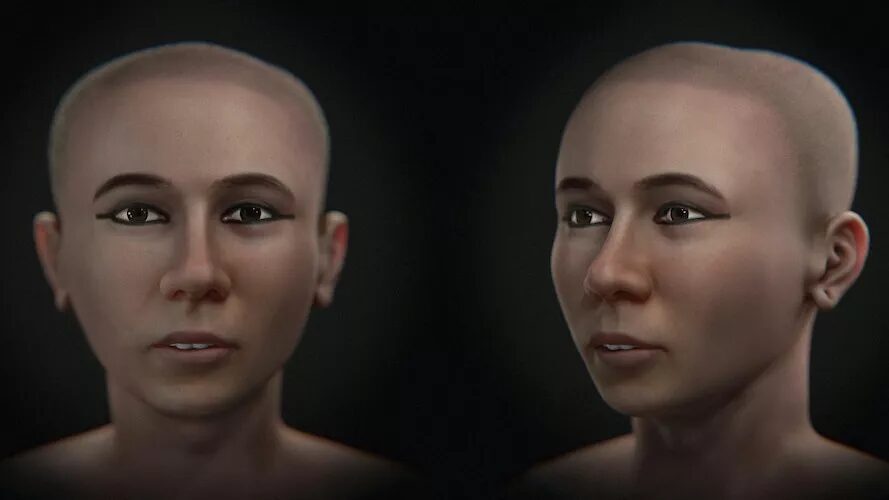
Best of the Web: King Tutankhamun's 'longer than normal skull, exceedingly large brain' revealed in vivid new facial approximation

Tutankhamun
© Cícero Moraes, et alAn artist's depiction of what the ancient Egyptian pharaoh King Tut may have looked like.
The pharaoh Tutankhamun, also known as King Tut, is arguably the best-known ruler in ancient Egyptian history. And while much has been written about the royal youth, who held the throne from about the age of 9 until his death a decade later around 1323 B.C., his actual appearance is still a matter of debate.

But now, a new facial approximation provides a glimpse of what the historical figure may have looked like, revealing new insight into some of the former king's more peculiar facial characteristics.

"Tutankhamun is of archaeological interest not only because of his world-famous burial treasure, but because he ruled for a decade at an important phase in Egyptian history," Michael Habicht, a senior research fellow at Flinders University in Australia and co-author of the new research, told Live Science in an email. Tut's father, the revolutionary pharaoh Akhenaten, had discouraged worship of all gods except Aten, the sun disc. But Tut did not follow his father's ways.

Comment: See also:


Info

Symbolic connections between the Pashupati Seal and the Lascaux Shaft Scene

The Pashupati Seal
© WikipediaThe Pashupati Seal.
The Pashupati Seal was recovered from Mohenjo-Daro, Indus Valley (now in Pakistan) and thought to date to around 2000 BCE, It shows a seated Master-of-Animals figure, surrounded by 4 opposing animals, which is consistent with Gurshtein's theory of an early system of zodiacal dating using precession of the equinoxes.

Many other Master-of-Animals figures are known; see here.

The problem with this Master-of-Animals is that the zodiac doesn't conform to one we know. At 2000 BCE the solsticial/equinoctial constellations are; Taurus (spring), Capricornus (winter), Libra (autumn) and Leo (summer). Thus, using the Greek zodiac we should have a bovine, sea-goat, scales and feline, respectively. Of course, the scales are not zoomorphic and the sea-goat is specific to lower Mesopotamia. So we shouldn't expect to see them anyway. So this leaves the bovine and feline symbols, which are consistent with the Greek zodiac. But we also have an elephant and rhino. Can these represent zodiacal constellations?

Well, let's consider the Lascaux Shaft Scene, which is exactly 13,000 years (0.5 great years) older, and therefore we can expect the summer/winter and spring/autumn symbols to have switched places.