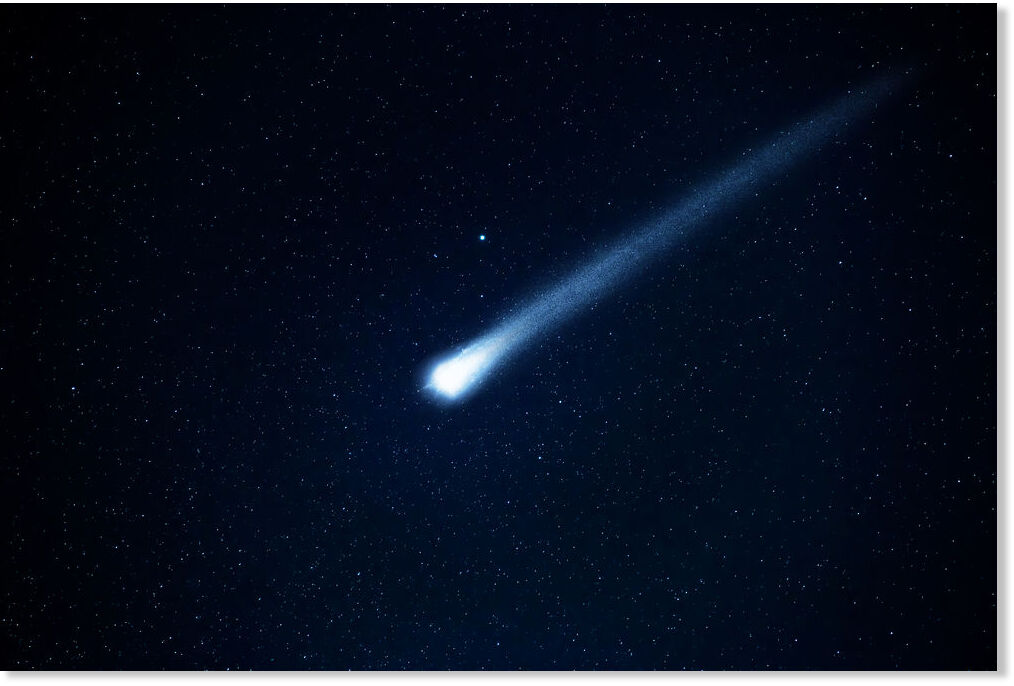
The superb fireball in this video was recorded on May 15, at 2:12 local time (equivalent to 0:12 universal time).
It was brighter than the full Moon. The fireball was observed by a wide number of casual eyewitnesses, who reported it on social networks.
The event was generated by a rock (a meteoroid) from an asteroid that hit the atmosphere at about 106,000 km/h. The fireball overflew Spain and the Mediterranean Sea. It began at an altitude of about 98 km over the Mediterranean Sea, moved northwest, and ended at a height of around 39 km over El Almendral (province of Granada).
This bright meteor was recorded in the framework of the SMART project, operated by the Southwestern Europe Meteor Network (SWEMN) from the meteor-observing stations located at Huelva, La Hita (Toledo), Calar Alto (Almería), Sierra Nevada, La Sagra (Granada), Sevilla, Otura (Granada), and Mazagón (Huelva). The event has been analyzed by the principal investigator of the SMART project: Dr. Jose M. Madiedo, from the Institute of Astrophysics of Andalusia (IAA-CSIC). Its code in the SWEMN database is: SWEMN20260515_001248.
The bright flash and trail of a meteor across the night sky was seen across Tasmania on Sunday.
A traffic camera from Launceston, in the state's north, captured the event just before 9:30pm. The bright light was also seen in southern parts of Tasmania.
"The object flashed a few times as it was coming down, almost certainly because it was breaking up and the light sort of came and went and left a bit of a trail," said Martin George, the principal astronomer of the Ulverstone Planetarium at Hive Tasmania.
"This is very typical of an object burning up in the atmosphere, a natural object."
Just as it faces an annual hurricane season and tornado season, North America is also experiencing an annual "fireball season," according to NASA.
"From February through April, the appearance rate of these very bright meteors can increase by as much as 10 percent to 30 percent, especially around the weeks of the March equinox," NASA explained in a statement in late March.
"Exactly why is not known. Some astronomers think the Earth passes through more large debris at this time of year, causing an uptick in fireball sightings."
But the relatively regular peak season appears to have been unusually active this year.
A fireball was seen streaking across the sky in Puerto Rico on Tuesday, May 5.
This footage captured by Frankie Lucena shows the bright meteor over Cabo Rojo.
Lucena said that the fireball was part of the Eta Aquarid meteor shower, which peaked on Tuesday and into Wednesday morning. Credit: Frankie Lucena via Storyful

