
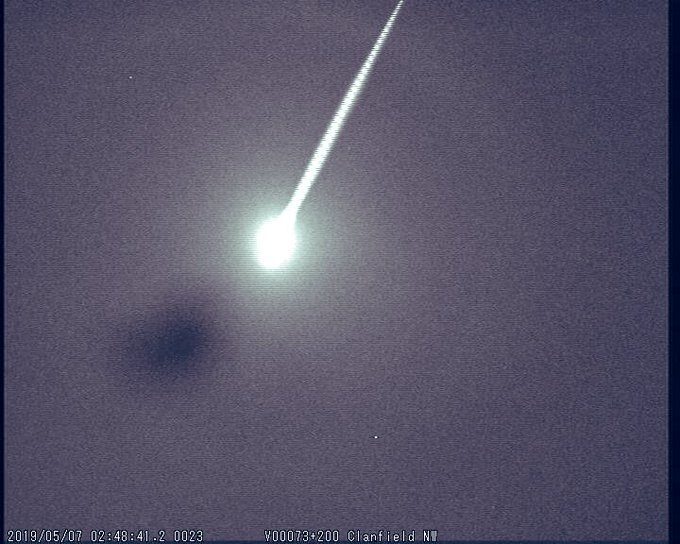
© UK Meteor Network/Clanfield Observatory
It's believed that this particular sighting could be part of the Eta Aquariids which were spawned by Halley's comet. EarthSky.com writes:
Because Comet Halley has circled the sun innumerable times over countless millennia, cometary fragments litter its orbit. That's why the comet doesn't need to be anywhere near the Earth or the sun in order to produce a meteor shower. Instead, whenever our Earth in its orbit intersects Comet Halley's orbit, cometary bits and pieces - oftentimes no larger than grains of sand or granules of gravel - smash into Earth's upper atmosphere, to vaporize as fiery streaks across our sky: meteors.While this brilliant sighting may be part of the Eta Aquariids, as SOTT's Fire In The Sky section has been documenting, fireball activity continues to increase with every passing year, and, throughout the year, at times when there isn't a known meteor shower occurring.
It so happens we intersect Comet Halley's orbit not once, but twice each year. In early May, we see bits of this comet as the annual Eta Aquariid meteor shower.


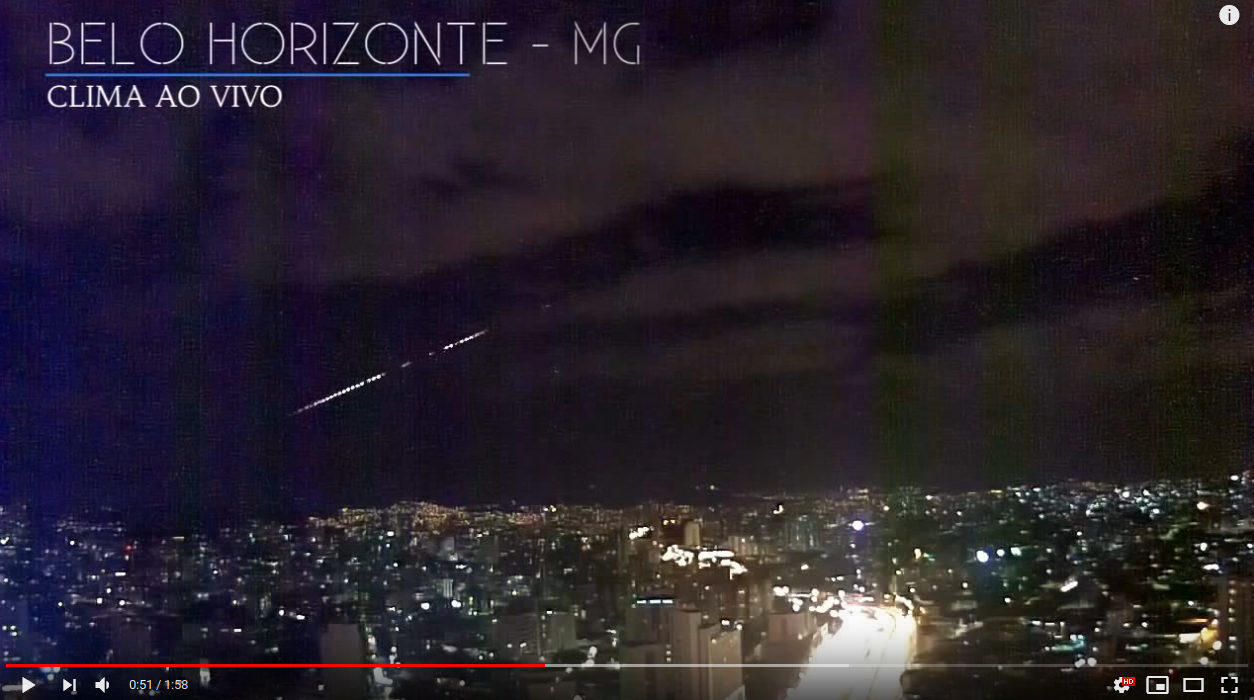




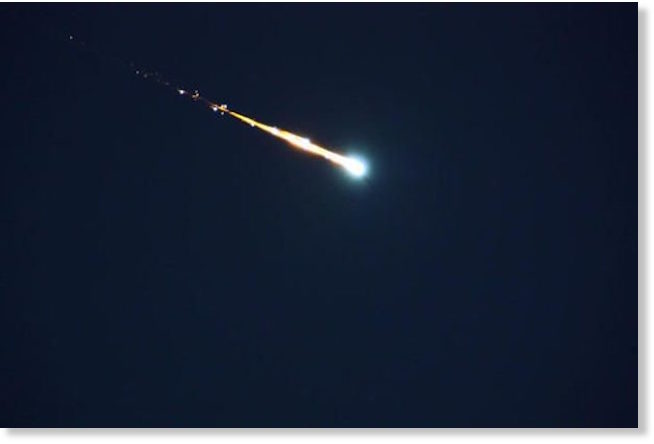




Comment: Activity in our skies is really heating up: