Science & TechnologyS


Pi

Team of physicists accidentally generate the shortest X-ray pulses ever observed

stanford linear accelerator physics xrays
© Steve Jurvetson/flickrThe Stanford linear accelerator creates super short X-ray pulses.
X-ray beams aren't used just by doctors to see inside your body and tell whether you have a broken bone. More powerful beams made up of very short flashes of X-rays can help scientists peer into the structure of individual atoms and molecules and differentiate types of elements.

But getting an X-ray laser beam that delivers super short flashes to capture the fastest processes in nature isn't easy - it's a whole science in itself.

Radio waves, microwaves, the visible light you can see, ultraviolet light and X-rays are all exactly the same phenomenon: electromagnetic waves of energy moving through space. What differentiates them is their wavelength. Waves in the X-ray range have short wavelengths, while radio waves and microwaves are much longer. Different wavelengths of light are useful for different things - X-rays help doctors take snapshots of your body, while microwaves can heat up your lunch.

Beaker

A missing molecule may explain Down Syndrome

down syndrome karyotype Autosomal abnormalities
© Rujirat Boonyong/Getty ImagesHuman karyotype of Down syndrome. Autosomal abnormalities. Trisomy 21
Faulty brain circuits seen in Down syndrome may be caused by the lack of a particular molecule essential for the development and function of the nervous system, according to a new study in lab mice. Restoring the molecule, called pleiotrophin, could improve brain function in Down syndrome and other neurological diseases, possibly even in adults, the researchers say.

The scientists conducted their work in mice, rather than in people, so the approach is far from being available as a treatment. But the researchers found that administering pleiotrophin improved brain function in adult mice long after the brain was fully formed. That suggests that the approach could offer major advantages over prior attempts to enhance Down syndrome brain circuits that would have required intervention at extremely precise, and brief, times during pregnancy.

Info

The strange science behind ghostly lights that have haunted us for centuries

An 1823 painting, Will-o-the-wisp and snake.
© Hermann Hendrich/Public DomainAn 1823 painting, Will-o-the-wisp and snake.
Ghostly lights dancing in midair in swamps, forests, and even graveyards have been reported by cultures all over the world, for centuries. According to a new study, there could be a logical explanation after all: a strange form of 'microlightning'.

Often called will-o'-the-wisps, jack-o'-lanterns, or ignis fatuus, these bizarre floating flames have understandably inspired many a colorful back story. They're sometimes explained as the spirits of the dead, or lanterns carried by lost souls doomed to roam the land forever after tricking the Devil.

But what is the science behind this fanciful folklore? More grounded explanations have included pockets of swamp gas that spontaneously ignite, but they shouldn't be able to spark up without a clear trigger.

Now, a study led by Stanford University chemists suggests that microlightning could be to blame. These tiny bolts of electrical energy could form in electric fields where gases meet liquids, then jump between bubbles of different charges and ignite methane gas.

Microscope 2

Scientists 'reawaken' ancient microbes from permafrost — and discover they start churning out CO2 soon after

permafrost
© Tristan CaroResearchers reawakened microbes from permafrost dating to the last ice age.
Microbes that have been suspended in permafrost for up to 40,000 years could "reawaken" and start churning out greenhouse gases if Arctic summers grow much longer, new research suggests.

Under future climate conditions, microbes that have been dormant since the last ice age (2.6 million to 11,700 years ago) may only need a few months to reactivate, according to a study published Sept. 23 in the Journal of Geophysical Research: Geosciences. If they do so for even a part of the year, scientists warn this could trigger a feedback loop that would accelerate permafrost thaw and global warming.

Cassiopaea

Arab scholars may have noted the supernovae of 1006 and 1181

nebula Pa 30
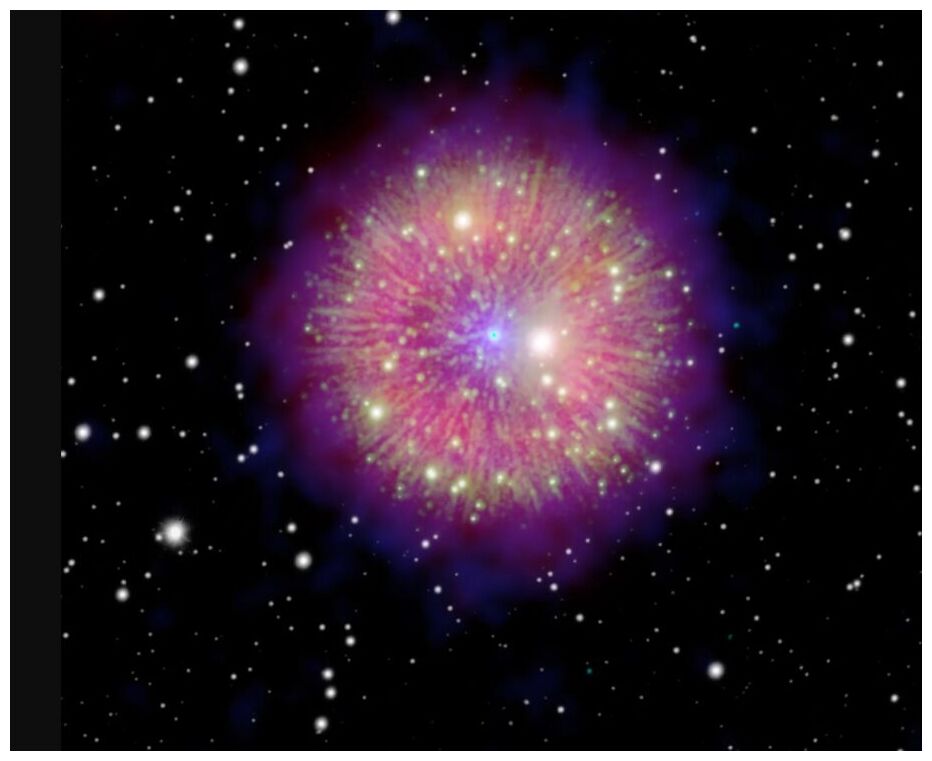
© NASA/ChandraThe Chandra X-Ray Observatory's view of planetary nebula Pa 30, one of the prime suspects for SN 1181.
A new study finds possible references to two classic supernovae in ancient texts.

It's great to see old astronomical observations come to light. Not only can these confirm or refute what's known about historic astronomical events, but they can describe what early observers actually saw.

A recent study cites two Arabic texts that may refer to accounts of two well-known supernovae seen in our galaxy: one in 1006 AD and another in 1181 AD.

Like Far Eastern observers, Arab astronomers were astute observers of the night sky, and patiently noted what they saw, including changes in the familiar constellation patterns such as novae and supernovae.

While we often see supernovae out across the Universe in distant galaxies, galactic supernovae are a rarity. The last prominent one, Kepler's Star in 1604 occurred just before the telescope came into general use. Here we are, over four centuries later, still waiting for the next one.
Arabic constellations
© Public DomainAn illustration of Arabic constellations, from Abd al-Rahman al-Sufi's Illustrated Book of the Fixed Stars.
The two historic supernovae in 1006 and 1181 were prominent in the sky, and noted by observers across the Near and Far East.

Galaxy

AAS meeting highlights several new Hubble science findings

Hubble 1 image
NASA's Hubble Space Telescope is providing a new perspective on the remote universe, including new views of young and distant galaxies bursting with stars. Scientists described the findings Tuesday in a news conference sponsored by the American Astronomical Society (AAS).

Highlighted in the briefing were three discoveries — four unusually bright galaxies as they appeared 13 billion years ago, the deepest image ever obtained of a galaxy cluster, and a sampling of galaxies thought to be responsible for most of the stars we see today.

The ultra-bright, young galaxies, discovered using data from NASA's Hubble and Spitzer space telescopes, are bursting with star formation activity, which accounts for their brilliance. The brightest one is forming stars approximately 50 times faster than our Milky Way galaxy does today. These fledgling galaxies are only one-twentieth the size of the Milky Way, but they probably contain about 1 billion stars crammed together.

Although Hubble has previously identified galaxies at this early epoch, astronomers were surprised to find objects that are about 10 to 20 times more luminous than anything seen previously.

Fireball 4

Interstellar Object 3I/ATLAS Is Spraying Something Weird, Scientists Find

Fire hose spraying Earth
© Illustration by Tag Hartman-Simkins / Futurism. Source: Getty Images
A new analysis of our solar system's interstellar interloper, 3I/ATLAS, reveals that it's spewing huge amounts of water — and astronomers can't immediately explain why.

The object, which is widely believed to be comet, showed strong ultraviolet emissions that are unmistakable telltales of hydroxyl gas (OH), a byproduct of water, when astronomers imaged it with NASA's Neil Gehrels Swift space telescope before it disappeared behind the Sun. The emissions could only be spotted from space because the ultraviolet light would get absorbed in the atmosphere.

Their findings, detailed in a new study published in The Astrophysical Journal Letters, argue that the presence of all this OH indicates the comet is ejecting water vapor at a torrential rate of about 88 pounds per second — around the same rate as a fire hose running at full blast, according to a press release about the findings.

Info

X-ray study reveals new details about Betelgeuse's elusive companion star

Betelgeuse Companion
© Carnegie Mellon University
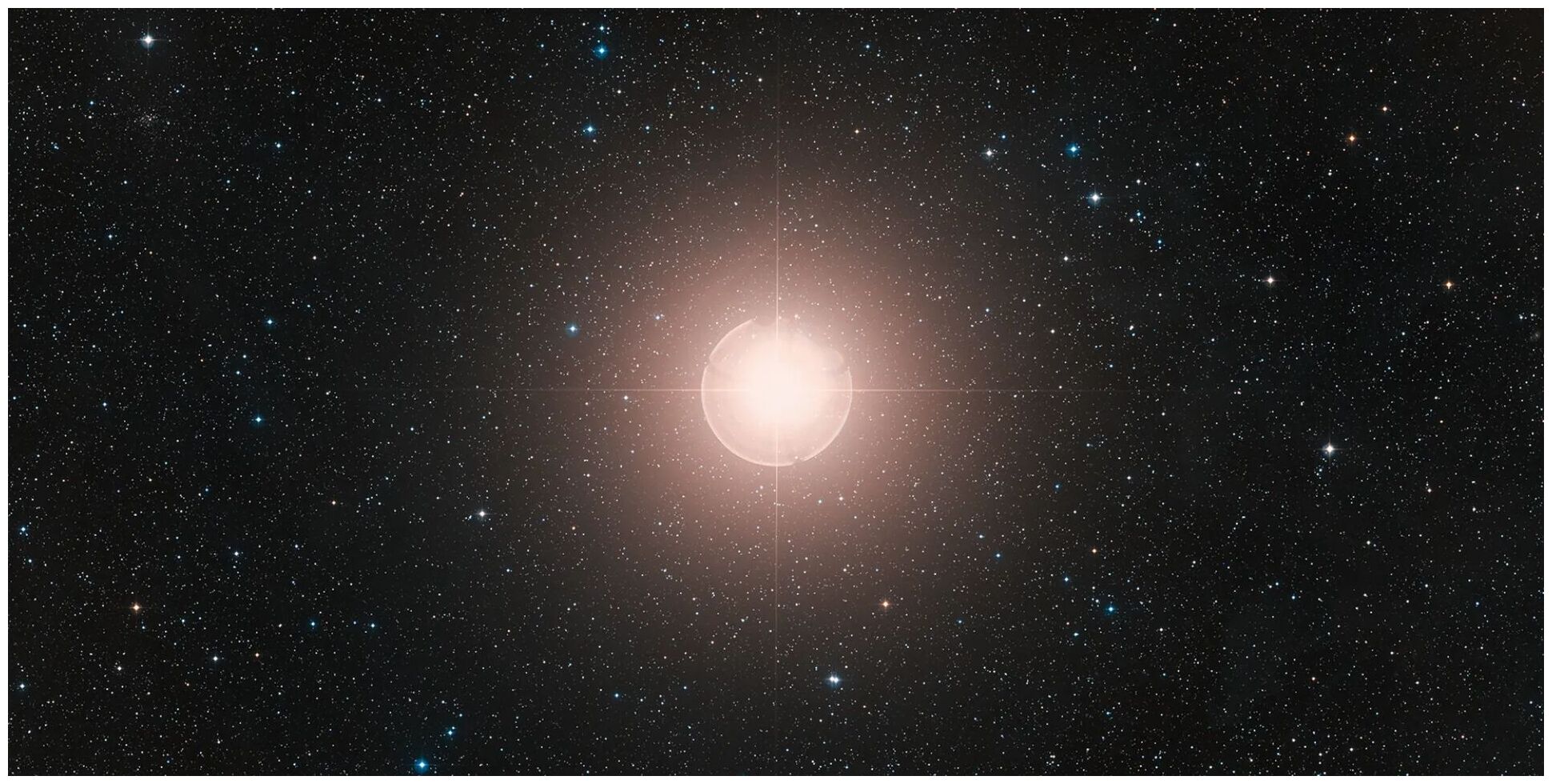
Astronomers have long suspected that Betelgeuse — the bright red star blazing in Orion's shoulder — wasn't alone. Now, thanks to a fleeting cosmic window and swift action by Carnegie Mellon University researchers, the true nature of its elusive companion has been illuminated.

In a race against time, the CMU researchers secured Director's Discretionary Time on both NASA's Chandra X-ray Observatory and the Hubble Space Telescope to investigate the long-predicted — but never detected — companion star to Betelgeuse. The timing was critical: around Dec. 6, the companion, nicknamed "Betelbuddy," reached its maximum separation from the massive red supergiant just before it would disappear behind it for two more years.

"It turns out that there had never been a good observation where Betelbuddy wasn't behind Betelgeuse," said Anna O'Grady, a McWilliams Postdoctoral Fellow at Carnegie Mellon's McWilliams Center for Cosmology and Astrophysics. "This represents the deepest X-ray observations of Betelgeuse to date."

During this ideal observational window, the Gemini North Telescope in Hawaii captured a faint image near Betelgeuse that could be its tiny companion. In a separate study, the Carnegie Mellon-led team used Chandra to collect X-ray data to determine the nature of the mysterious object.

"It could have been a white dwarf. It could have been a neutron star. And those are very, very different objects," O'Grady said. "If it was one of those objects, it would point to a very different evolutionary history for the system."


Comet 2

Brightening Comet Lemmon

With so much attention on interstellar Comet 3I/ATLAS, it is easy to forget a local comet brightening so rapidly that ordinary sky watchers will soon be able to see it with their own eyes: Comet Lemmon (C/2025 A6). It is falling toward the sun for a close encounter near the orbit of Mercury on Nov. 8th.

"This comet is developing very nicely and it is already an impressive object, well-placed for observation in the morning sky," says Nick James of the British Astronomical Association. "It is definitely worth getting up for!"

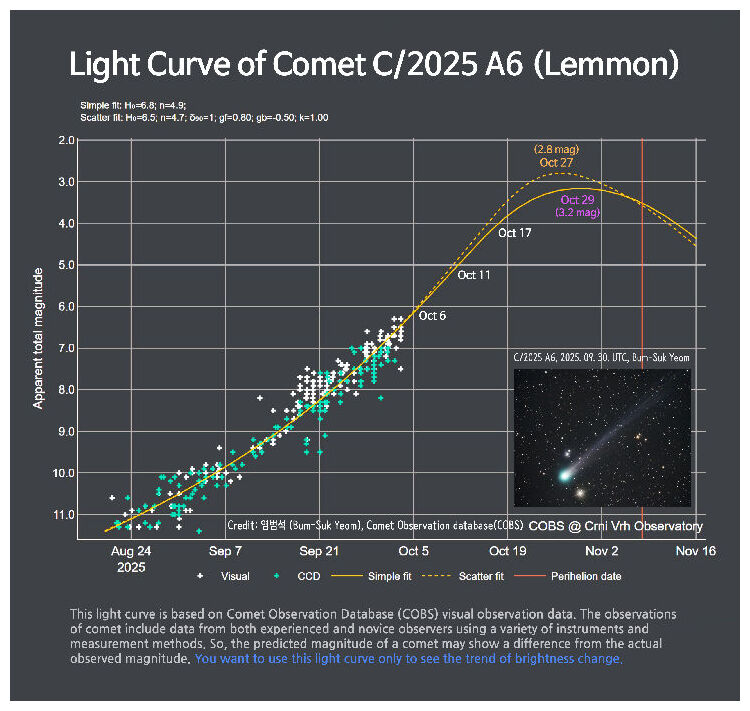
The light curve of Comet Lemmon shows that it is about to cross the threshold (m=+6) of naked-eye visibility:

Comet Lemmon C/2025 A6
© Bum-Suk YeomTaken by Bum-Suk Yeom on October 3, 2025 @ Iksan, South Korea.
"I think we can now be reasonably confident that this will be a very nice evening object when it is at its brightest around New Moon in late October," says James.

Beaker

The mystery of muscle memory

Exercise
© Pexels / Andrea Piacquadio
When the tobacco hornworm has nearly completed its 18-day metamorphosis, it uses a set of powerful abdominal muscles to escape from the confines of its old exoskeleton. In its new life as a tobacco hawkmoth, it doesn't need those oversized abs anymore — so they shrink. Over the course of just three days, the muscles get 40 percent smaller, a loss that's equivalent in human terms to an 80-year-old after three decades of the muscle-wasting condition sarcopenia. But there's something curious about this shrinkage: as the muscle cells die, all of the cell nuclei inside live on.

According to an article in Frontiers in Physiology by University of Massachusetts, Amherst biologist Lawrence Schwartz, the hawkmoth's metamorphosis tells us something important about the human phenomenon of muscle memory. If you achieve a certain level of fitness and then lose it, it's easier to regain that fitness than it was to get there for the first time. This is conventional wisdom in both strength and endurance training, and there are undoubtedly many factors — psychological and practical as well as physiological — that contribute to it. But in recent years, there has been growing evidence that your muscle cell nuclei play a key role.