Science & TechnologyS


Microchip

The Data Center Disaster

Data center
In the glorious new world of AI Everything™️, we need more processing power than ever.

That means more data centers, bigger data centers, and more electricity than you can imagine.

Naturally, this all costs money - but not to worry! We'll just invent new economics to fund it all.

We'll also just ignore the effects that giant data centers are having on the real people who live in real neighborhoods next door...

Sun

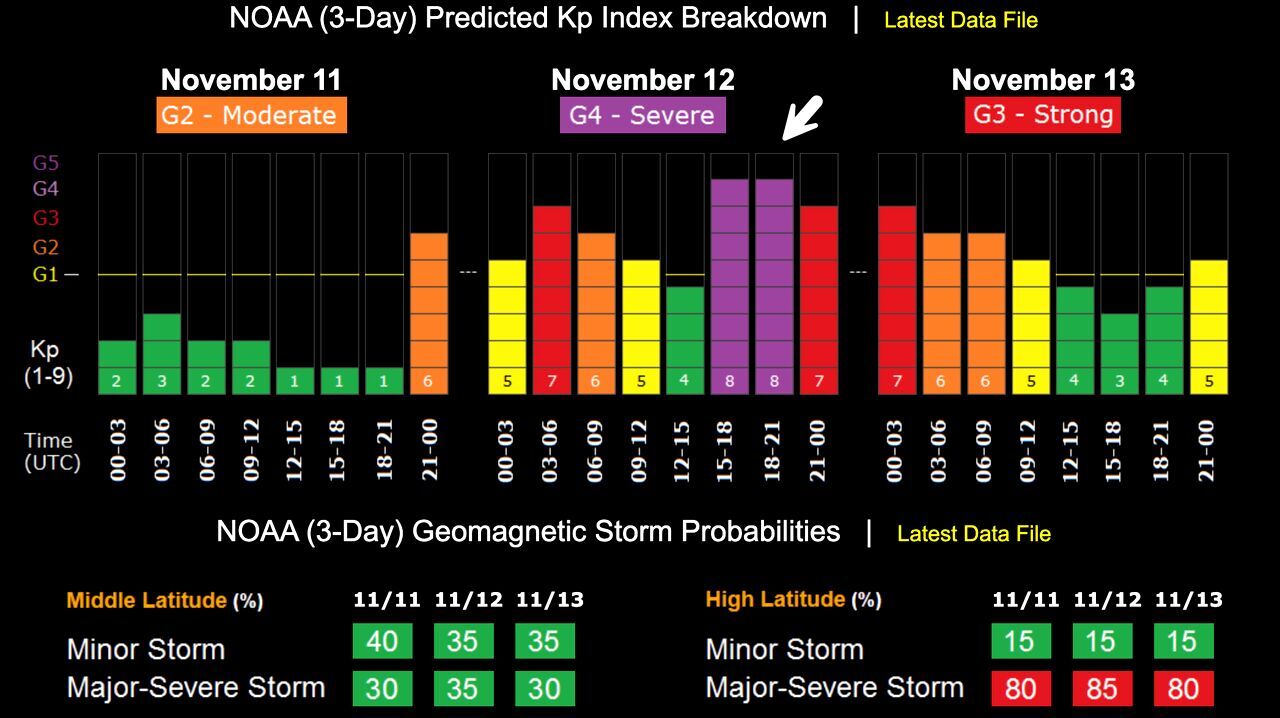
Rare 'cannibal CME' set to slam Earth, raises risk of ground-level radiation surge

solar flare cme forecast
Blast could pose threats to critical infrastructure

Three coronal mass ejections (CMEs) that erupted from the sun in recent days are expected to merge into a powerful "cannibal CME" and smash into the Earth's atmosphere on Wednesday, triggering intense geomagnetic activity that could make the northern lights visible across much of the United States.

"As many as three CMEs are approaching Earth, including today's fast-moving X5-class CME from sunspot 4274," SpaceWeatherNews wrote in a report on its website.

Archaeology

Study suggests mysterious holes in the Andes may have been an ancient marketplace

band of holes monte sierpe peru archaeology
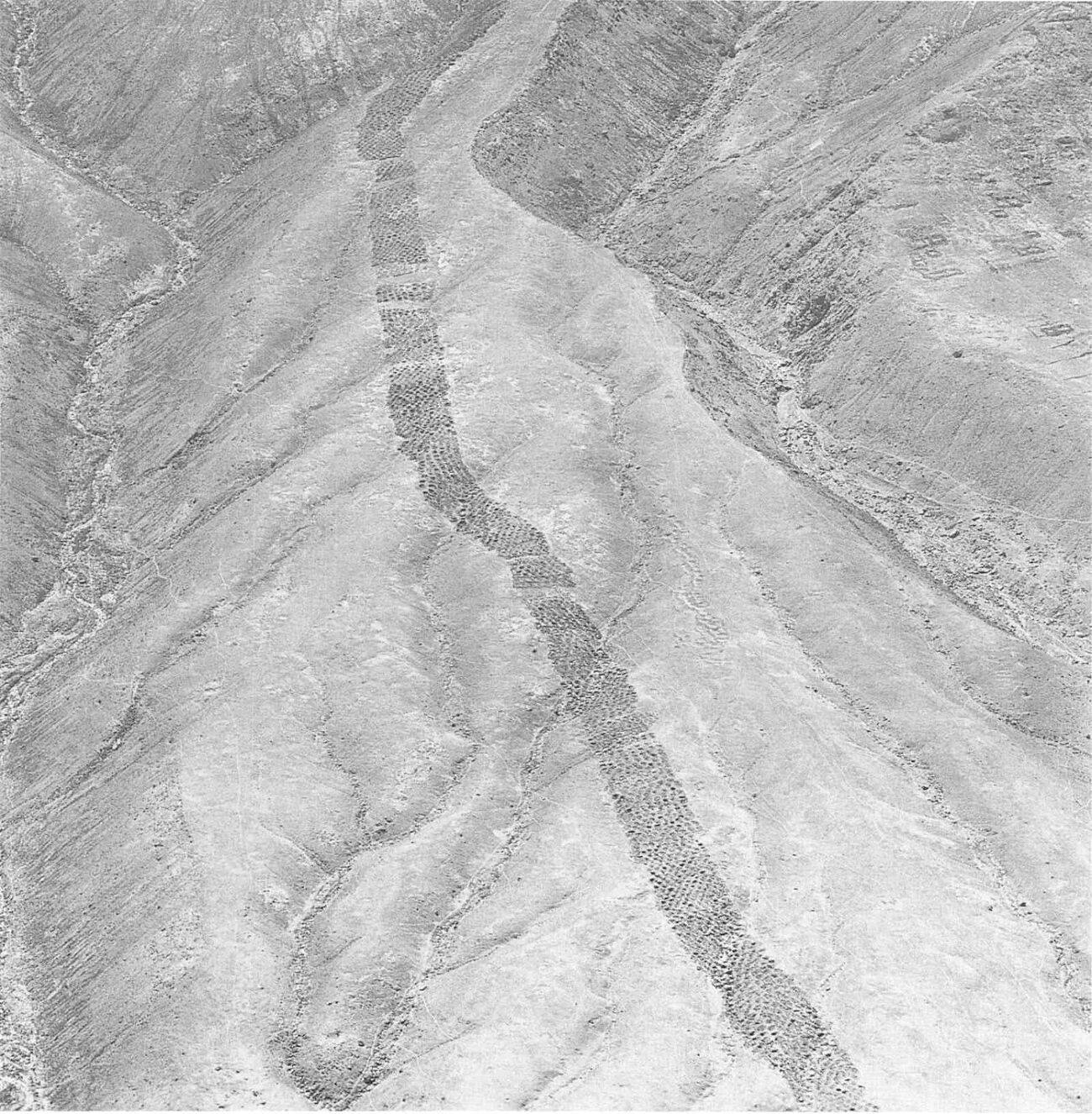
© courtesy of the American Natural History Museum; AMNH Library negative no. 334709An aerial photograph of Monte Sierpe taken by Robert Shippee and published by the National Geographic Society in 1933
Evidence supports a new theory for the purpose of Monte Sierpe in southern Peru, also known as the Band of Holes.

New research from the University of Sydney has uncovered compelling evidence that brings us closer to solving the mystery behind one of the most unique archaeological sites in the Andes. Monte Sierpe (translated as 'serpent mountain' and known colloquially as the 'Band of Holes') is located in the Pisco Valley of southern Peru and consists of over 5000 precisely aligned holes.

This striking, yet puzzling, site has baffled researchers and public audiences for decades.

"Why would ancient peoples make over 5000 holes in the foothills of southern Peru? Were they gardens? Did they capture water? Did they have an agricultural function? We don't know why they are here, but we have produced some promising new data that yield important clues and support novel theories about the site's use," said Dr Jacob Bongers, lead author and digital archaeologist at the University of Sydney, and a Visiting Research Fellow at the Australian Museum Research Institute.

Chalkboard

Russian mathematician quietly publishes paper — and solves one of the most famous unsolved conjectures in mathematics

Mathematician Grigori Perelman solved the Poincaré conjecture, and then rejected the $1 million prize that came with it.

A Torus
© Marilyn Perkins; Contains assets from Doni Purba and Pazhyna via Getty ImagesA torus is not equivalent to a sphere because the two blue loops drawn on its surface cannot be continuously tightened to a point.
On a cold day in November, a man living quietly in Russia posted a paper to a public server.

Published by "Grisha Perelman" and titled "The entropy formula for the Ricci flow and its geometric applications," it was the foundation for one of the most important math proofs.

The paper was the first of three published over the next year solving the long-standing Poincaré conjecture, a hypothesis posed nearly a century earlier by Henri Poincaré.

In simple terms, Poincaré hypothesized that if you were to take any kind of 3D space — from a cat to the Empire State Building — and draw a 2D loop on it, if you can shrink that loop down to a point without breaking either the loop or the shape, then the space is mathematically equivalent to a sphere.

Proving this conjecture was crucial to topology, the mathematical study of shapes. Mathematician Stephen Smale had solved the conjecture in five dimensions in 1961, earning math's prestigious Fields Medal in the process. But the 3D case proved the most intractable.

Info

Chandra spies a supernova shock front speeding along

supernova remnant N132D
© NASA, ESA, and the Hubble SM4 ERO TeamOptical image of supernova remnant N132D in the nearby Large Magellanic Cloud.
Beautiful bubbles of hot ionized gas, supernova remnants trace the dying days of massive stars. A recent study uses the Chandra X-ray Observatory to detail the motion and understand the origins of one supernova remnant.

Retracing Supernova Remnants

Massive stars, about 8 solar masses or larger, will end their short lives in violent core-collapse supernovae. These explosions barrel into any surrounding interstellar medium, carving out low-density cavities and blowing material outward. Appearing as a bubble or shell of hot gas, a supernova remnant carries the signatures of the type of star that produced it and the ways that star shaped its environment throughout its life.

Nearby, in the Large Magellanic Cloud, is the 2,500-year-old supernova remnant N132D — the most X-ray luminous supernova remnant within the Local Group. Though N132D's size, likely progenitor mass, and chemical composition are well constrained, astronomers have yet to nail down the velocity of the X-ray shock front — the outer edge of the supernova remnant that rams into the interstellar medium. This measurement is critical to understanding the local conditions the supernova first encountered and how its expansion will continue to impact the interstellar medium over time.


Comet 2

Comet 3I/ATLAS has sprouted an unusual tail

After passing behind the sun in October, interstellar Comet 3I/ATLAS is now visible from Earth again. Astronomers are photographing it in the pre-dawn sky.

Michael Jaeger of Austria has been tracking the comet since it re-appeared on Nov. 4th. "We have something unusual to report," he says. "3I/ATLAS showed a complex tail structure early this morning (Nov. 8th)."
Comet 3I/ATLAS unusual tail
© Taken by Michael Jaeger on November 8, 2025 @ AZM Martinsberg Austria
There is something unusual to report. 3I/ATLAS showed a complex tail structure early this morning. We observed it at 29 degrees elongation from the Sun.

The sum image from 24x35sec green and 2x35 red and 2x35 blue with 11" RASA shows a 5' coma and 4-5 tails or jets: 400“ pa 0, 500” pa 316, 900“ pa 295, 430” pa 278 and a counter-tail 200" pa 109 At the time of exposure, the comet was 7-10° above the horizon; at the end, twilight interfered with the observation, which took place under bright moonlight. We observed from a mountain location.

The comet was 9m1 bright (measured from 6x35 sec green).
"At the time of exposure, the comet was 7-10° above the horizon," he says. "At the end, twilight interfered with the observation, which took place under bright moonlight. We observed from a mountain location."

Satellite

NASA-ISRO Satellite sends first radar images of Earth's surface

Maine’s Mount Desert Island
© NASA/JPL-CaltechCaptured on Aug. 21, this image from NISAR’s L-band radar shows Maine’s Mount Desert Island. Green indicates forest; magenta represents hard or regular surfaces, like bare ground and buildings. The magenta area on the island’s northeast end is the town of Bar Harbor.
The NISAR (NASA-ISRO Synthetic Aperture Radar) Earth-observing radar satellite's first images of our planet's surface are in, and they offer a glimpse of things to come as the joint mission between NASA and ISRO (Indian Space Research Organisation) approaches full science operations later this year.

Acting NASA Administrator Sean Duffy:
"Launched under President Trump in conjunction with India, NISAR's first images are a testament to what can be achieved when we unite around a shared vision of innovation and discovery. This is only the beginning. NASA will continue to build upon the incredible scientific advancements of the past and present as we pursue our goal to maintain our nation's space dominance through Gold Standard Science."
Images from the spacecraft, which was launched by ISRO on July 30, display the level of detail with which NISAR scans Earth to provide unique, actionable information to decision-makers in a diverse range of areas, including disaster response, infrastructure monitoring, and agricultural management.

HAL9000

Chaos and lies: Why Sam Altman was booted from OpenAI, according to new testimony

sam altman OpenAI
Sam Altman
OpenAI cofounder Ilya Sutskever was deposed by Elon Musk's lawyers.

"What did Ilya see?" Two years ago, it was the meme seen 'round the world (or at least 'round the tech industry). OpenAI CEO Sam Altman had been briefly ousted in November 2023 by members of the company's board of directors, including his longtime collaborator and fellow cofounder Ilya Sutskever. The board claimed Altman "was not consistently candid in his communications with the board," undermining their confidence in him. He was out for less than a week before being reinstated after hundreds of employees threatened to resign. But observers wondered: What hadn't Altman been candid about? And what led Sutskever to turn against him?

Now, new details have come to light in a legal deposition involving Sutskever, part of Musk's ongoing lawsuit against Altman and OpenAI. For nearly 10 hours on October 1st, bookended by repeated sniping between Musk's and Sutsever's attorneys, Sutskever answered questions about the turmoil around Altman's ouster, from conflicts between executives to short-lived merger talks with Anthropic. He testified that from personal experience and documentation he'd viewed, he'd seen Altman pit high-ranking executives against each other and offer conflicting information about his plans for the company, telling people what they wanted to hear.

Comment: Sam Altman's involvement in the AI biz proven pretty shady. A small sample: From the last article:
Ahead of OpenAI CEO Sam Altman's four days in exile, several staff researchers wrote a letter to the board of directors warning of a powerful artificial intelligence discovery that they said could threaten humanity, two people familiar with the matter told Reuters.

The previously unreported letter and AI algorithm were key developments before the board's ouster of Altman, the poster child of generative AI, the two sources said. Prior to his triumphant return late Tuesday, more than 700 employees had threatened to quit and join backer Microsoft in solidarity with their fired leader.

The sources cited the letter as one factor among a longer list of grievances by the board leading to Altman's firing, among which were concerns over commercializing advances before understanding the consequences. Reuters was unable to review a copy of the letter. The staff who wrote the letter did not respond to requests for comment.


Telescope

Observatory spots biggest, most distant black hole flare ever recorded

illustration black hole eat star
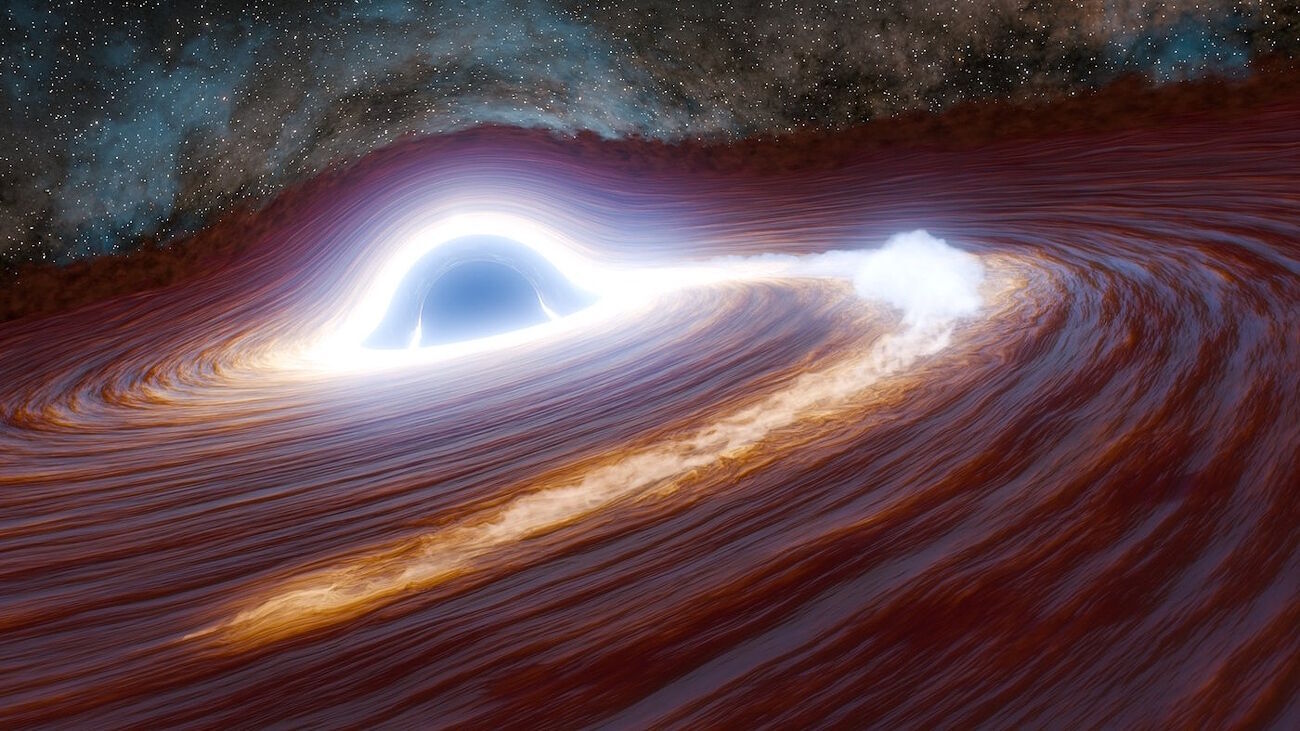
© Caltech/R. Hurt (IPAC)This artist's concept depicts a supermassive black hole in the process of shredding a massive star (formally called a tidal disruption event or TDE) —at least 30 times the mass of our Sun—to pieces.
The flare, co-discovered by the Zwicky Transient Facility, may be the result of a mega black-hole meal

The most massive stars in the universe are destined to explode as brilliant supernova before collapsing into black holes. Yet one huge star appears to have never fulfilled its destiny; in a twist of irony, the star wandered too close to a gargantuan black hole, which gobbled it up, shredding the star to bits and pieces.

That is the most likely explanation to come from authors of a new Nature Astronomy report describing the most powerful and most distant flare of energy ever recorded from a supermassive black hole. The cosmic object was first observed in 2018 by the US National Science Foundation (NSF)-funded Zwicky Transient Facility (ZTF), based at Caltech's Palomar Observatory, and the Caltech-led Catalina Real-Time Transient Survey, which is also funded by NSF. The flare rapidly brightened by a factor of 40 over a period of months, and, at its peak, was 30 times more luminous than any previous black hole flare seen to date. At its brightest, the flare shined with the light of 10 trillion suns.

Comment: More on the ZTF collaboration:


Blue Planet

Archaeologist believes new evidence of Atlantis to be found off coast of southern Spain

cadiz outpost of atlantis
© Shutterstock/Javier HermosoArchaeologist Michael Donnellan now believes the legendary city of Atlantis may have once stood along Spain's southern coast in the city of Cádiz, Spain (pictured)
A new wave of research has revived one of history's greatest mysteries: the story of Atlantis.
'
Filmmaker and archaeologist Michael Donnellan claims that evidence preserved by Egypt's ancient priests of Sais points to an advanced civilization that once thrived in Atlantis, before vanishing some 11,600 years ago.

Donnellan told the Daily Mail that the priests described Atlantis as the homeland of their ancestors, a civilization that existed outside the Mediterranean world and 'beyond the Pillars of Heracles.'

He said their account was passed down to the Greek lawmaker Solon, who visited Egypt around 600 BC and recorded the tale that would later inspire the philosopher Plato's dialogues Timaeus and Critias.

Comment: Dario AS adds:
The archaeologist states that, after eight years of work using sonar and LiDAR scanners, he has identified three submerged concentric walls carved into the seabed. According to Donnellan, the dimensions and layout match the city described by Plato in the dialogues Timaeus and Critias.

Donnellan also claims to have found a rectangular monument at the center, which he links to the Temple of Poseidon. The site includes sculpted canals, collapsed walls, and perfectly cut stone blocks, suggesting a large-scale artificial construction.

The images show his team exploring these underwater structures, where right angles, flat surfaces, and massive rectangular stones displaced from their original positions can be seen, as if a great catastrophe had thrown them.

The trailer for Donallan's series: