Science & TechnologyS


Telescope

Rare 'free floating' exoplanet 10,000 light-years from Earth detected through gravitational lensing

rogue planet microlens detection einstein ring
© J. Skowron, K. Ulaczyk / OGLEAn illustration of a free-floating planet gravitationally microlensing a distant star in the galactic center. Two magnified images of the source star surround the planet, a phenomenon known as an Einstein ring.
"Our discovery offers further evidence that the galaxy may be teeming with rogue planets."

Rogue planets — worlds that drift through space alone without a star — largely remain a mystery to scientists. Now, astronomers have for the first time confirmed the existence of one of these starless worlds by pinpointing its distance and mass — a rogue planet roughly the size of Saturn nearly 10,000 light-years from Earth.

Planets are typically found bound to one or more stars. However, in 2000, astronomers detected the first signs of a "rogue planet" — a free-floating world that orbited no star. Then, in 2024, researchers detected an object distorting the light from a distant star, simultaneously from both Earth and space using several ground-based observatories as well as the European Space Agency's now-retired Gaia space telescope. These observations helped scientists estimate that the object was a newfound world found about 9,950 light-years from Earth in the direction of the Milky Way's center, with a mass about 70 times larger than Earth. (Saturn, on the other hand, is about 95 Earth masses.)

Info

First ancient human Herpesvirus genomes document their deep history with humans

Genomic data confirm that certain human herpesviruses became part of the human genome thousands of years ago.
Herpesvirus
© pixel.com
For the first time, scientists have reconstructed ancient genomes of Human betaherpesvirus 6A and 6B (HHV-6A/B) from archaeological human remains more than two millennia old. The study, led by the University of Vienna and University of Tartu (Estonia) and published in Science Advances, confirms that these viruses have been evolving with and within humans since at least the Iron Age. The findings trace the long history of HHV-6 integration into human chromosomes and suggest that HHV-6A lost this ability early on.

HHV-6B infects about 90 percent of children by the age of two and is best known as the cause of roseola infantum - or "sixth disease" - the leading cause of febrile seizures in young children. Together with its close relative HHV-6A, it belongs to a group of widespread human herpesviruses that typically establish lifelong, latent infections after an initial mild illness in early childhood. What makes them exceptional is their ability to integrate into human chromosomes - a feature that allows the virus to remain dormant and, in rare cases, to be inherited as part of the host's own genome. Such inherited viral copies occur in roughly one percent of people today. While earlier studies had hypothesized that these integrations were ancient, the new data from this study provide the first direct genomic proof.

Bizarro Earth

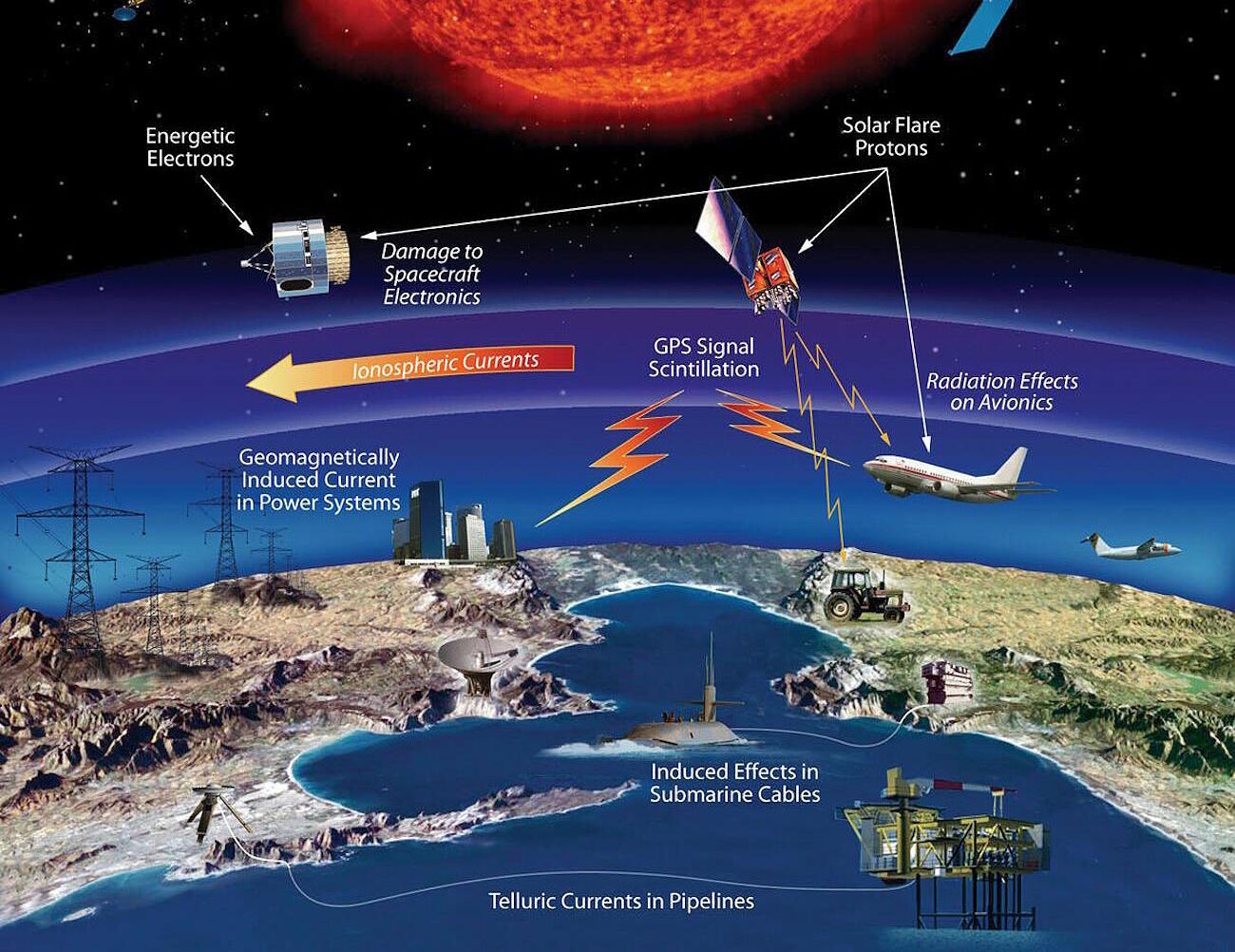
Earth's radiation belts "fully charged": Next solar storm could spark particle precipitation

solar storm effects flare carrington
© NASA's Goddard Space Flight CenterModern society depends on a variety of technologies that are susceptible to the extremes of space weather. This graphic shows some of the technology and infrastructure affected by space weather events.
The Van Allen radiation belts are massive, doughnut-shaped regions of charged particles trapped by Earth's magnetic field. When the Sun blasts Earth with strong solar wind or solar storms, energetic particles are injected into these belts, increasing their overall energy levels.

Now, the Van Allen radiation belts are "fully charged," according to space weather observer Stefan Burns. He warns that these belts of energetic particles have been building up due to repeated solar storms over the past few months.

"The next solar storm to hit could cause this plasma to precipitate downward toward the planet's upper atmosphere," Burns said.

Comment:


Brain

Electric 'ripples' in the resting brain believed to tag memories for storage

brain graphic analogy memory storage
© Myriam Wares for Quanta MagazineBursts of electrical activity, known as “sharp wave ripples,” occur when we’re awake and resting. A new study suggests that they flag experiences for the brain to store as long-term memories later when we’re asleep.
New experiments reveal how the brain chooses which memories to save and add credence to advice about the importance of rest.

Introduction

György Buzsáki first started tinkering with waves when he was in high school. In his childhood home in Hungary, he built a radio receiver, tuned it to various electromagnetic frequencies and used a radio transmitter to chat with strangers from the Faroe Islands to Jordan.

He remembers some of these conversations from his "ham radio" days better than others, just as you remember only some experiences from your past. Now, as a professor of neuroscience at New York University, Buzsáki has moved on from radio waves to brain waves to ask: How does the brain decide what to remember?

By studying electrical patterns in the brain, Buzsáki seeks to understand how our experiences are represented and saved as memories. New studies from his lab and others have suggested that the brain tags experiences worth remembering by repeatedly sending out sudden and powerful high-frequency brain waves. Known as "sharp wave ripples," these waves, kicked up by the firing of many thousands of neurons within milliseconds of each other, are "like a fireworks show in the brain," said Wannan Yang, a doctoral student in Buzsáki's lab who led the new work, which was published in March. They fire when the mammalian brain is at rest, whether during a break between tasks or during sleep.

Pi

Why 'nothing' matters

wind tunnel france
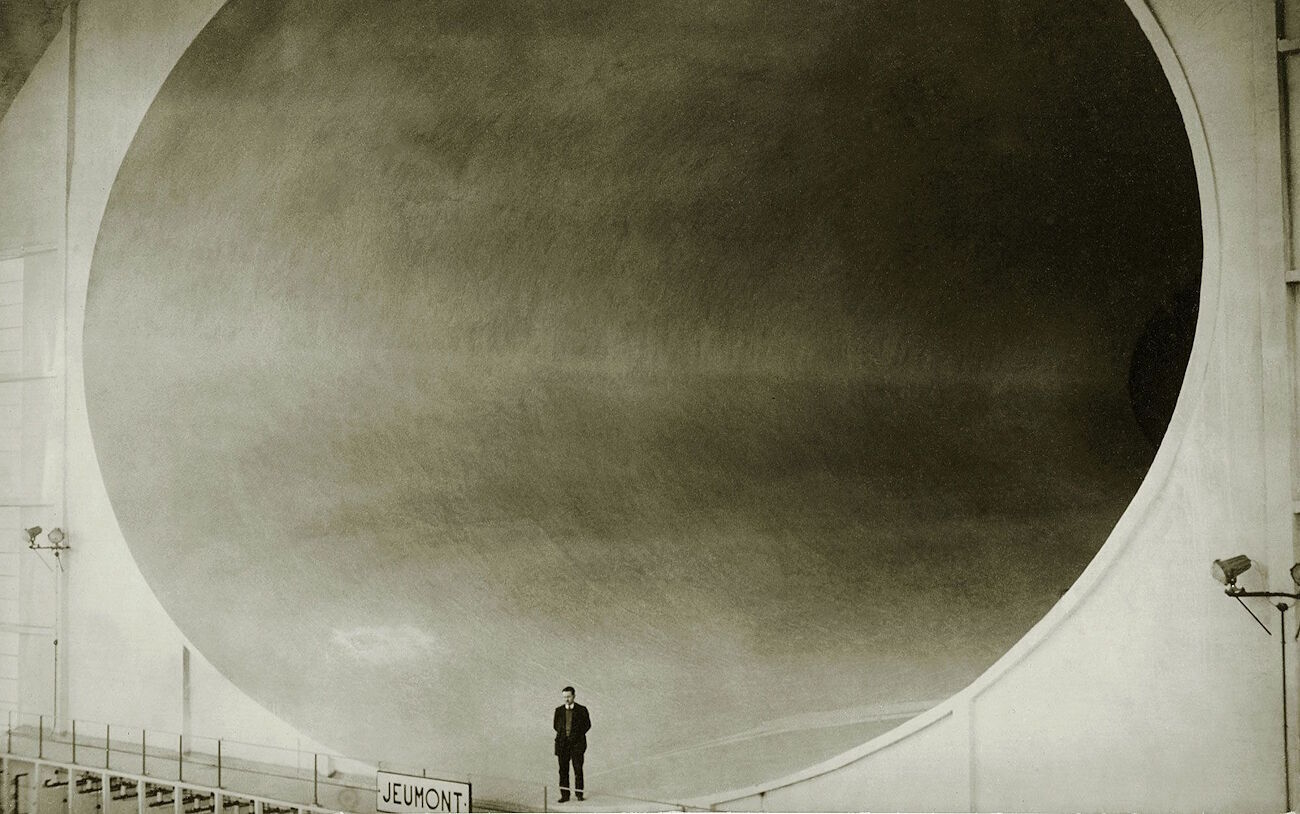
© Private collectionWind tunnel in Chalais-Meudon, France (1935) by an anonymous photographer, possibly from The New York Times.
It took centuries for people to embrace the zero. Now it's helping neuroscientists understand how the brain perceives absences

When I'm birdwatching, I have a particular experience all too frequently. Fellow birders will point to the tree canopy and ask if I can see a bird hidden among the leaves. I scan the treetops with binoculars but, to everyone's annoyance, I see only the absence of a bird.

Our mental worlds are lively with such experiences of absence, yet it's a mystery how the mind performs the trick of seeing nothing. How can the brain perceive something when there is no something to perceive?

For a neuroscientist interested in consciousness, this is an alluring question. Studying the neural basis of 'nothing' does, however, pose obvious challenges. Fortunately, there are other - more tangible - kinds of absences that help us get a handle on the hazy issue of nothingness in the brain. That's why I spent much of my PhD studying how we perceive the number zero.

Beaker

Electrochemical method developed with doubled efficiency for splitting water to produce hydrogen fuel

hyrogen fuel truck transport
© Panaya Chittaratlert/Getty ImagesA new method of splitting water molecules to produce hydrogen is highly efficient, and could offer a pathway to scalable hydrogen production.
Scientists have developed a new technique that doubles the amount of hydrogen produced when splitting water molecules with electricity. The method works by adding a simple organic molecule and a modified catalyst to the reactor.

The adapted method lowers energy costs by up to 40% and may offer a "promising pathway for efficient and scalable hydrogen production," the researchers said in a new study published Dec. 1 in the Chemical Engineering Journal.

Using electricity to split water into hydrogen and oxygen molecules — a method known as electrolysis — could potentially offer a way to create hydrogen with no direct carbon dioxide emissions.

Cruise Missle

How Israel's Iron Dome works (and why it doesn't intercept every missile)

Missile battery
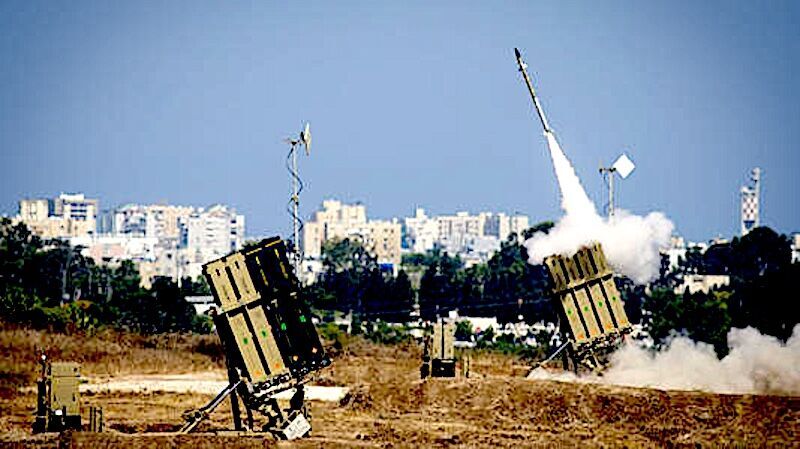
© Ilia Yefimovich/Getty ImagesIron Dome Missile Battery
If you have watched any news coverage of Israel's conflicts against Hamas, Hezbollah, or Iran, you have likely seen Israel's "Iron Dome" airborne threat defense system in action. Raytheon, one of the developers of the defense system, claims that it's the "world's most used system" of its kind. Rafael, an Italian defense company that also develops the Iron Dome, says that it has made more than 5,000 successful interceptions over 14 years since it was first deployed in Israel.

So what is the Iron Dome? How does it work? And what are its shortcomings? First, Iron Dome is the brand name given to its tailor-made missile defense system. It was developed jointly by both Raytheon and Rafael in 2011 and, in basic terms, uses missiles to intercept other missiles. Additionally, it can be used to intercept smaller targets like individual mortars, short range rockets, and artillery shells. It has also proved effective in the ever-changing battle against drones. For threats at a higher altitude, the David's Sling defense system takes over.

Moon

Russia sets timeline for power station on the Moon

moonearth
© RT composite/Thibault Renard/Wikipedia/Getty ImagesMoon • Earth
Roscosmos has signed a contract with major space and nuclear firms to build a facility tied to the China-led lunar base by 2036.

Russia plans to launch a power station on the Moon within a decade, space agency Roscosmos has announced, saying it has signed a contract with NPO Lavochkin, the country's lead developer of deep-space and planetary missions, to carry out work through 2036 on the project.

The purpose of the facility is to provide a long-term energy supply for lunar rovers and an observatory, as well as for the China-led International Lunar Research Station (ILRS), Roscosmos said in a statement on Wednesday.

NPO Lavochkin led landmark Soviet missions to the Moon and Venus and remains the lead developer for Russia's current lunar missions. State nuclear corporation Rosatom and the Kurchatov Institute, the country's leading national research center for nuclear science, will be involved in the project..

Cloud Lightning

YouTube experimenter captures 'lightning in a bottle' using particle accelerator

lighting bottle particle acelerator
© Electron Impressions/YTSpin acrylic fast enough, hit it with electrons, and nature draws its own artwork.
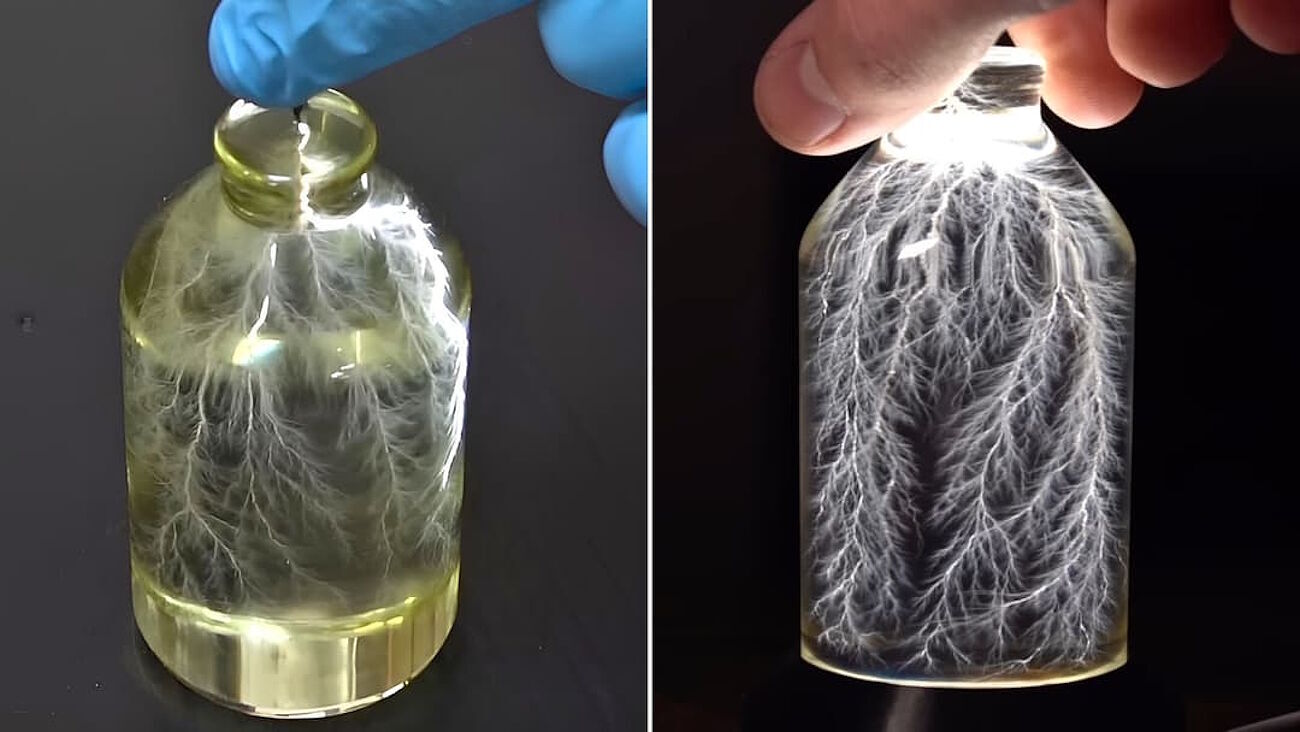
The phrase "lightning in a bottle" is usually used as a metaphor for something rare or impossible to reproduce. In a recent YouTube experiment, a creator known as Electron Impressions gave the phrase a literal interpretation, using a particle accelerator to generate permanent, lightning-like structures inside a clear acrylic cylinder.

The result is a three-dimensional Lichtenberg figure, branching electrical patterns frozen inside a tube that resembles captured lightning glowing within a bottle.

The creator specializes in producing Lichtenberg figures by firing high-energy electrons into insulating materials such as acrylic. These electrons penetrate the material and deposit electrical charge deep inside. When the charge is later released, it fractures the material internally, leaving behind tree-like patterns that trace the path of dielectric breakdown.

Until now, these designs were typically limited to flat blocks, sheets, or discs. The new experiment pushed the process into a fully cylindrical form.

Target

The science of the curling stone

finished curling stone
© AP Photo/Alastair GrantA finished curling stone sits in a store room at Kays Curling stone factory in Mauchline, Scotland, Tuesday, Nov. 11, 2025.
If you're looking to strike gold — silver or bronze, too — look to Ailsa Craig.

This uninhabited isle 10 miles (16 kilometers) off the coast of southwest Scotland is the source of the super-dense granite used to make curling stones for the Winter Olympics.

Jim English, co-owner of Kays Curling, took a few seconds to evaluate a boulder during a recent visit. He assessed it for big cracks and large specks on the surface.

"It's not just a case of landing a boat and then looking for granite. There's a particular type of granite we're looking for," he said in the shadow of a 19th century lighthouse that is no longer manned. "We look for ones that have got really tight surface pattern."

Comment: Business Insider featured the process: