
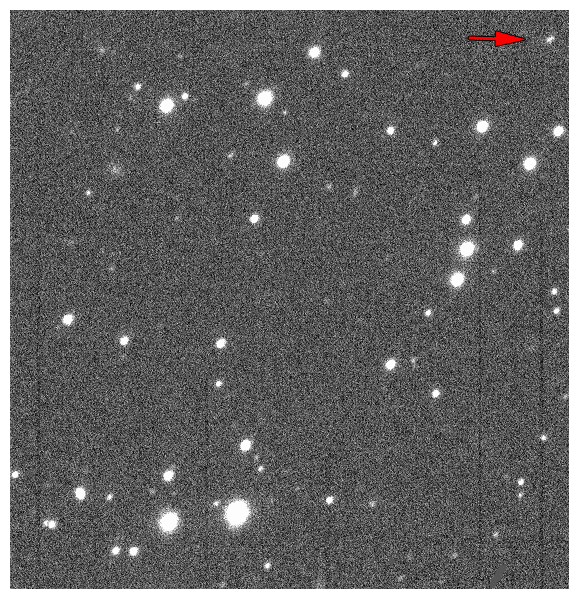
© PS-1/UHAsteroid 2013 MZ5 as seen by the University of Hawaii's PanSTARR-1 telescope. In this gif, the asteroid moves relative to a fixed background of stars. Asteroid 2013 MZ5 is in the right of the first image, towards the top, moving diagonally left/down.
Larger Animated Version
Larger Animated Version
Ninety-eight percent of all near-Earth objects discovered were first detected by NASA-supported surveys.
"Finding 10,000 near-Earth objects is a significant milestone," said Lindley Johnson, program executive for NASA's Near-Earth Object Observations Program at NASA Headquarters, Washington.
"But there are at least 10 times that many more to be found before we can be assured we will have found any and all that could impact and do significant harm to the citizens of Earth." During Johnson's decade-long tenure, 76 percent of the NEO discoveries have been made.
Near-Earth objects (NEOs) are asteroids and comets that can approach the Earth's orbital distance to within about 28 million miles (45 million kilometers). They range in size from as small as a few feet to as large as 25 miles (41 kilometers) for the largest near-Earth asteroid, 1036 Ganymed.
Asteroid 2013 MZ5 is approximately 1,000 feet (300 meters) across. Its orbit is well understood and will not approach close enough to Earth to be considered potentially hazardous.
















Comment: In fact, it can happen in a matter of months:
Last Ice Age took just SIX months to arrive