
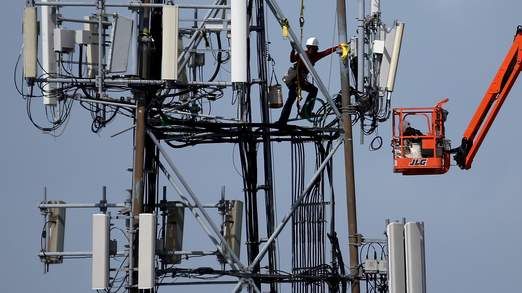
© sovereignfm.comFake towers...what do they do and why?
A report by Popular Science says the towers have been discovered across the country, and have the ability to attack mobile phones through eavesdropping and installing spyware.
They were discovered by people using a heavily customised Android device called the CryptoPhone 500. It uses a secure version of the software which can tell if the phone is being subjected to what is known as a baseband attack. It is then possible to trace the location of the offending tower.
The fake cell towers were detected in July, but the report states there could be more.
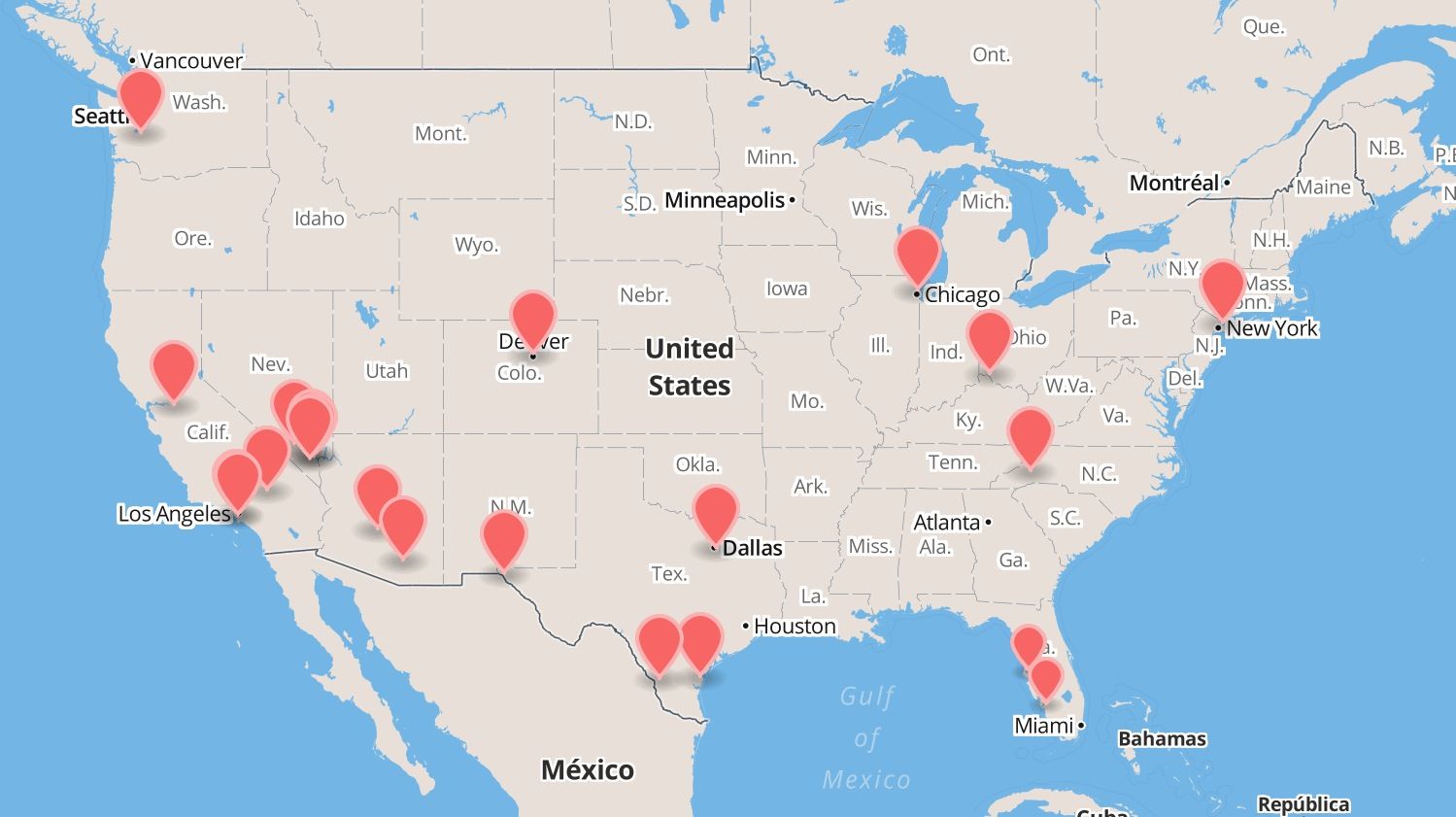
© nworeport.meRogue cell towers identified by the firewall on CryptoPhones in August.
He said several of the masts were situated near US military bases.
"What we find suspicious is that a lot of these interceptors are right on top of US military bases," he said. "So we begin to wonder - are some of them US government interceptors? Or are some of them Chinese interceptors?
"Whose interceptor is it? Who are they, that's listening to calls around military bases? Is it just the US military, or are they foreign governments doing it? The point is: we don't really know whose they are."


















Comment: The public has been put on the defensive. In order to avoid personal calls and the information stored in your phone being intercepted and manipulated, a custom firewall has to be installed to alert the user when activation occurs or when rogue cell towers force the use of a less secure network to make the intercept easier - and only if it is a CryptoPhone - and only for government customers with multiple installations. There is no installation or app for single customers (yet, if ever).
IMSI catchers, stingrays or GSM interceptors as they're also called, force a phone to connect to them by emitting a stronger signal than the legitimate towers around them. Once connected, pings from the phone can help the rogue tower identify a phone in the vicinity and track the phone's location and movement while passing the phone signals on to a legitimate tower so the user still receives service. Some of the IMSI software and devices also intercept and decrypt calls and can be used to push malware to vulnerable phones, and also be used to locate air cards used with computers. The systems are designed to be portable so they can be operated from a van or on foot to track a phone as it moves. But some can be stationary and operate from a military base or an embassy. The reach of a rogue tower can be up to a mile away, forcing thousands of phones in a region to connect to it without anyone knowing. It can remote-operate your phone camera and make undisclosed connections. You also might be one of 1,000 or 10,000 people having calls being listened to.
Comforting thoughts, eh? One more thing we are not supposed to know about.