Science & Technology
Yuri Zaitsev
RIA Novosti
Mon, 15 Oct 2007 13:09 CDT
October has brought welcome news. NASA administrator Michael Griffin, on a visit to Moscow, said he looked forward to Russians and Americans flying together to the Moon next decade. International projects, he said, were better paying than national ones. Meanwhile, Russian-American space cooperation has a history to celebrate. In May 1972, the two superpowers agreed to join forces for progress. Soviet Premier Alexei Kosygin and U.S. President Richard Nixon signed an agreement on cooperation in space exploration and utilization.
Space Daily
Mon, 15 Oct 2007 12:52 CDT
The team of mathematicians that first created the mathematics behind the "invisibility cloak" announced by physicists last October has now shown that the same technology could be used to generate an "electromagnetic wormhole." In the study, which is to appear in the Oct. 12 issue of
Physical Review Letters, Allan Greenleaf, professor of mathematics at the University of Rochester, and his coauthors lay out a variation on the theme of cloaking. Their results open the possibility of building a sort of invisible tunnel between two points in space.
|
| ©Unknown
|
| One of the views through the "wormhole." Different lengths result in different bending of light.
|
Xin Dingding
Xinhua News Agency
Mon, 15 Oct 2007 12:04 CDT
Major breakthroughs are expected by 2010 in the country's ambitious space programs - from manned flights to the lunar probe - a senior space administrator said Thursday. Scientists are working toward astronaut space walks, and spacecraft rendezvous and docking procedures by the end of the decade, said Sun Laiyan, chief of the China National Space Administration. The deep space exploration program aims to achieve the first phase goal of the lunar probe, which is to have the orbiter Chang'e I circle the moon, he said.
|
| ©Unknown
|
| The current indigenously-developed Long March series of rockets can carry 9 tons to an orbit 300 km from Earth, or send satellites of 5 tons to a geosynchronous orbit 36,000 km away.
|
Julie Steenhuysen
Reuters
Mon, 15 Oct 2007 01:03 CDT
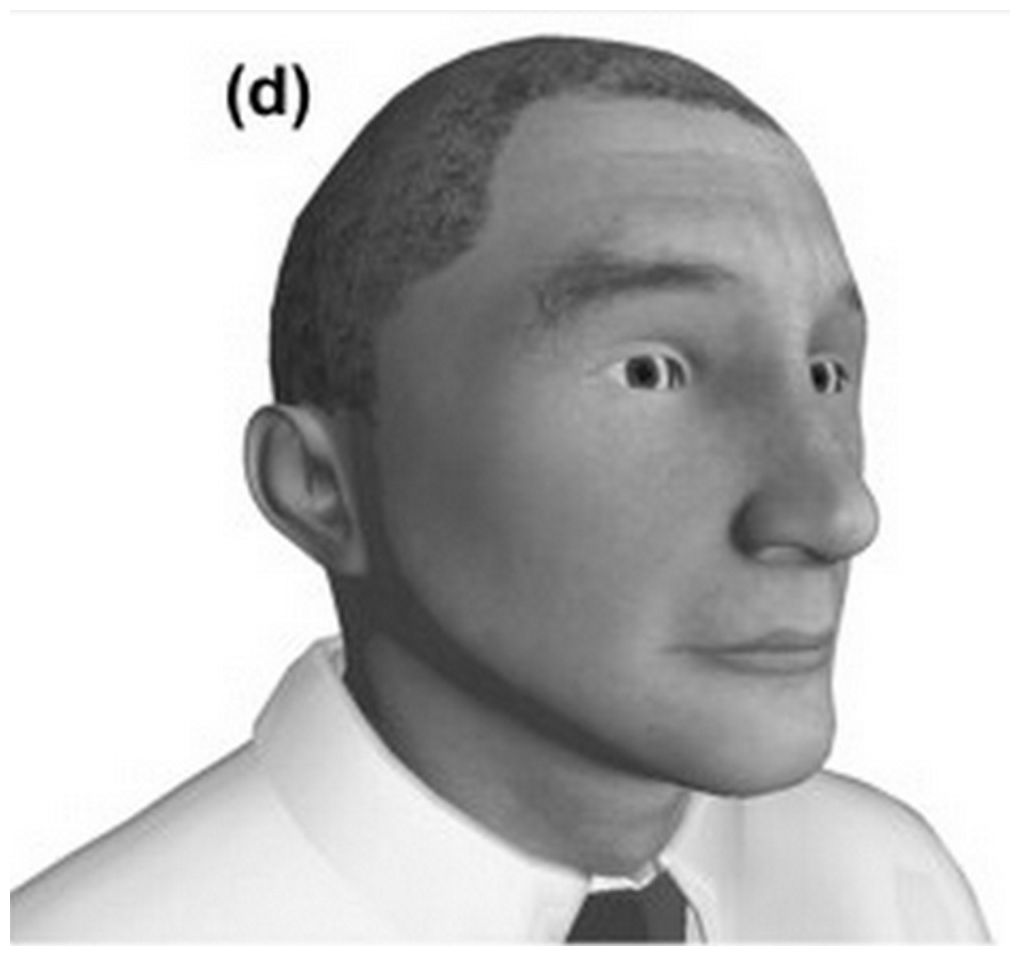
Smiles may take a while, but a horrified expression is a sure-fire attention getter, U.S. researchers said on Sunday, based on a study of how fast people process facial expressions.
|
| ©REUTERS/Vanderbilt University/Handout
|
| An undated handout photo shows a man looking fearful. New research has found that the brain processes images of fearful faces faster than images of neutral or happy faces.
|
Brad Kenney
IW
Mon, 01 Oct 2007 11:22 CDT
For a U.S. manufacturing community beset by energy, materials and labor costs and struggling to remain competitive in the global economy, nanotech may have a positive impact that rises far beyond its small scale.
Michael McCarthy
The Indipendent
Sun, 14 Oct 2007 07:26 CDT
Pipes hanging in the ocean might bring global warming under control, two of Britain's most distinguished scientists suggest today.
|
| ©Jurgen Brauer
|
Alisa Opar
Plenty Magazine
Sat, 13 Oct 2007 23:11 CDT
With the California Condor already saved, genetic samples from endangered species at the Frozen Zoo will prevent extinctions all over the planet.
On a sunny spring afternoon, the San Diego Zoo is teeming with shorts-clad tourists of all ages. While most visitors gravitate toward the pandas, giraffes, and gorillas, one little boy seems particularly taken with the Javan bantengs, a species of endangered Southeast Asian wild cattle that can grow to be seven feet long and weigh nearly a ton. Asked which one is his favorite, the child sizes up each of the animals before settling on a male with a dark blue-black coat grazing closest to him. It happens to be the spitting image of another banteng that died in 1980, and the resemblance is more than superficial: The four-year-old animal at the zoo is its clone.
Astronomia.pl
Fri, 12 Oct 2007 13:31 CDT
Polish secondary school students from Szczecin and Warsaw have discovered two new asteroids in images that were provided for them within the framework of the "International Asteroid Search Campaign." The discoveries follow a series of successes of young amateur astronomers conducting research in their schools under the supervision of their physics teachers.
Roger Highfield
The Telegraph
Sat, 13 Oct 2007 06:14 CDT
A scientist has put forward the bizarre suggestion that there are two dimensions of time, not the one that we are all familiar with, and even proposed a way to test his heretical idea next year.
physorg.com
Sat, 13 Oct 2007 02:36 CDT
A new volume published by the Geological Society of America sheds light on mysterious earthquakes in the interiors of continents. These earthquakes, like those that occur in the central U.S., are what the book's editors describe as "an embarrassing stepchild of modern earthquake seismology." Continental Intraplate Earthquakes: Science, Hazard, and Policy Issues provides a comprehensive overview of these rare but very real global hazards.
The plate tectonics revolution of the 20th century elegantly explained why most earthquakes occur where they do - at Earth's plate boundaries. It didn't explain, however, the occurrence of intraplate quakes and the deformation processes that give rise to them. As a result, geologists studying areas like the central U.S., western Europe, and Australia, don't know what causes these quakes, how often they will happen in the future, and how dangerous they are.
Comment: Interesting that more asteroids are being discovered and reported by students these days, don't you think?