
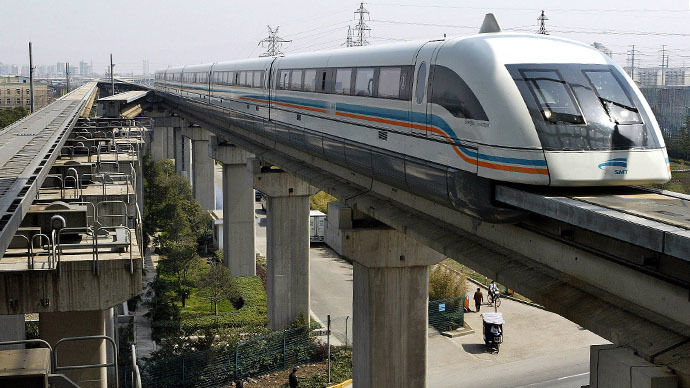
© Reuters / Ming MingMaglev train drives into terminal station in Shanghai
Maglev technology was first proposed in the mid-20th century. Nowadays, the Shanghai Maglev Train can reach speeds of over 430 kilometers (260 miles) per hour and is the world's fastest passenger-carrying train.
The "Super-Maglev" could, however, beat even that. Chinese researchers have been testing a concept train encapsulated in a vacuum tube, thus decreasing the speed limitations imposed by air resistance on regular Maglev trains.
Should the project be successful, the workable prototype will set the standard for the future evacuation tube transportation (ETT).

















Comment: Just what we need -- more electromagnetic frequencies and monitoring under the guise of keeping us "safe".