

© dreamatico.com
Dr. Gerald Pollack, University of Washington professor of bioengineering, has developed a theory of water that has been called revolutionary. He has spent the past decade convincing worldwide audiences that water is not actually a liquid.
Dr. Pollack received his PhD in biomedical engineering from the University of Pennsylvania in 1968. He then joined the University of Washington faculty and is now professor of bioengineering. For years, Dr. Pollack had researched muscles and how they contract. It struck him as odd that the most common ideas about muscle contraction did not involve water, despite the fact muscle tissue consists of 99 percent water molecules.
Water Research happens at Pollack Laboratories, which states, "Our orientation is rather fundamental -- we are oriented toward uncovering some of nature's most deeply held secrets, although applications interest us as well."
Uncovering nature's secrets involving water is what Dr. Pollack, his staff and students do best.
In his 2001 book, Cells, Gels and the Engines of Life, Dr. Pollack explains how the cell functions. Research suggests that much of the cell biology may be governed by a single unifying mechanism - the phase transition. Water is absolutely central to every function of the cell - whether it's muscle contraction, cells dividing, or nerves conducting, etc.
This extraordinary book challenges many of the concepts that have been accepted in contemporary cell biology. The underlying premise of this book is that a cell's cytoplasm is gel-like rather than an ordinary aqueous solution.



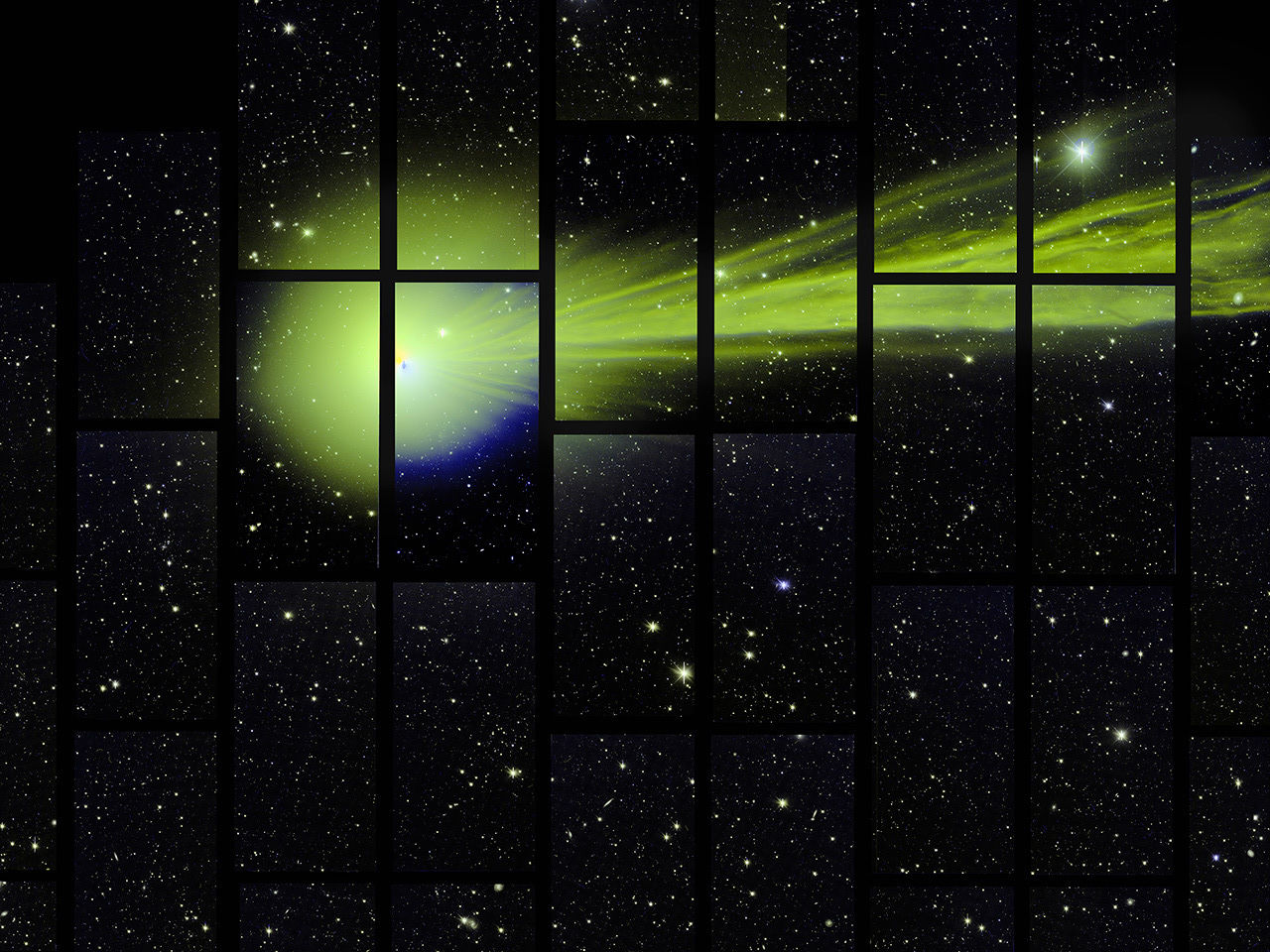











Comment: The icy snowball comet theory is really a hypothesis which is completely outdated: