
© Shutterstock
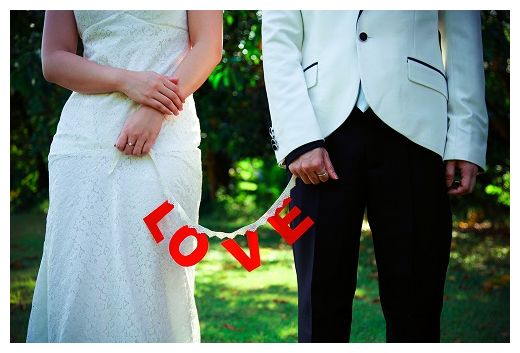
Going on a first date? The chance that it leads to wedding bells may depend, in part, on how similar his or her DNA is to yours.
New research finds that people tend to pick spouses whose genetic profile shares similarities with their own. The effect is subtle (other similarities, such as similarity in education, have a larger influence), but it's important to understand that mating isn't truly genetically random, researchers report today (May 19) in the journal
Proceedings of the National Academy of Sciences.The genetic effect might even signal or contribute to social inequality, they write. The current U.S. social system might inadvertently sort people by genetics, for example, or contribute to schisms seen at the level of our very
DNA.
Picking a partnerWhen it comes to marriage, the adage "birds of a feather flock together" is more on-point than the idea that opposites attract. Many studies have found that people tend to marry others who are similar to them in education, social class, race and
even body weight. The phenomenon is called assortative mating.
The question, according to study leader and University of Colorado research associate Benjamin Domingue, was whether these assortative mating differences are visible at the genetic level.
The researcher analyzed genetic data from 825 non-Hispanic white Americans who participated in the U.S. Health and Retirement Study. They compared the similarity of the DNA of married couples with the similarity of random, non-coupled individuals.
The results, mirrored in a follow-up study with data from the long-running Framingham Heart Study, revealed that married people have more similar DNA segments than random pairs of people.












Comment: Yeah, we are sure that Facebook will hold your privacy sacred and this will not be abused or hacked by the NSA... One wonders though, is there any way for non-Facebook users to know that they are being eavesdropped upon?