Science & TechnologyS


Attention

The bad science scandal: How fact-fabrication is damaging UK's global name for research

After a string of high-profile cases, a new agreement between scientists and the people who fund them aims to usher in a new era of 'research purity'

Image
Britain's leading science institutions will be told on Monday that they will be stripped of many millions of pounds in research grants if they employ rogue researchers who fake the results of experiments, The Independent has learnt.

The clampdown comes as retractions of scientific claims by medical journals are on course to top 500 for the first time in 2013 - having been just 20 a year in the late 1990s, when Andrew Wakefield notoriously claimed that the MMR vaccine caused autism in children. In April, the UK's first researcher was jailed for falsifying data over a prolonged period.

The Government is concerned that Britain's prized second place in global research behind the US will be at threatened if more fact-fabricators are exposed. It knows that hundreds of thousands of jobs could easily go to foreign rivals if British laboratories do not keep coming up with new product ideas, to be made by major multinational companies in UK factories.

All of the country's 133 universites and colleges of higher education are being forced to sign a new Concordat for Research Integrity - having been warned by major fund providers that those who do not will be refused access to more than £10 billion in research grants funded each year by British taxpayers - and as much again from the private sector.

A spokesman for Universities UK, which chaired negotations with the grant providers, said: "From next year, universities in the UK will have to prove compliance with the research integrity concordat in order to receive research grant. They are doing this to help demonstrate to government, business, international partners and the wider public that they can continue to have confidence in the research."

Retractions of medical claims alone in 2013 - logged by the Retraction Watch blog - are certain to be more than 400, and could easily top 500. Some result from genuine mistakes, several plagiarise other scientists' work, breakthroughs that haven't been checked. But as many as one in 10 of them contain lies.

Comment: In an ideal world, most of the above would sound all fine and dandy, but in realty research science today been mostly corrupted and is beholden to vast, vested commercial interests.

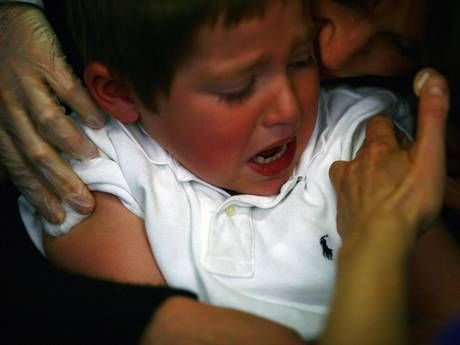
Turning reality on its head right from the outset ,this article mentions the now infamous Dr Andrew Wakefield affair, where he warned of the dangers of the MMR vaccine and the links to autism in the Lancet (which initially accepted his paper with no qualms). Due to commercial pressure, corrupted science then set out in an attempt to destroy him and his reputation rather than stand up for the truth and integrity.

Read about the despicable treatment he endured below -

http://www.sott.net/article/202336-Lancet-caves-in-retracts-study-tying-MMR-vaccine-to-Autism

http://www.sott.net/article/222197-Dr-Wakefield-demands-retraction-from-BMJ-after-documents-prove-innocence-from-allegations-of-vaccine-autism-data-fraud

http://www.sott.net/article/242656-British-Court-Throws-Out-Conviction-of-Autism-Vaccine-Doctor


Telescope

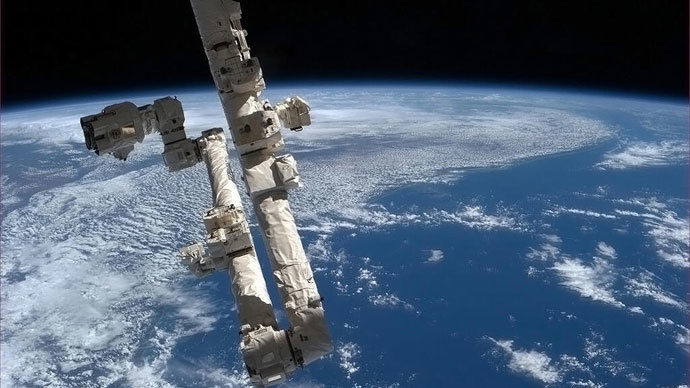
ISS threatened by possible 'mold and bacteria contamination' inside cargo spacecraft

 International Space Staion.
© International Space Staion.AFP Photo / NASA / Chris Hadfield
Mission control has instructed the crewmembers of the International Space Station (ISS) to open the hatches of the recently docked ATV-4 unmanned cargo spaceship and carry out disinfection procedures, over fears of mold and bacteria contamination.

The ATV-4 (the fourth Automated Transfer Vehicle) was launched from the Kourou space center in French Guyana on June 5, and docked with Russia's Zvezda ISS module on Saturday.

The hatch opening was initially planned for Monday, but was delayed. According to NASA TV, the delay was over a possible "mold and bacteria contamination" on three bags inside the cargo ship.

"The level of contamination poses no risk to the crew members, however, teams want to make sure the problem is taken care of in order to protect the atmosphere aboard the space station," website Spaceflight101 reported before the opening of the hatch.

Fireball 4

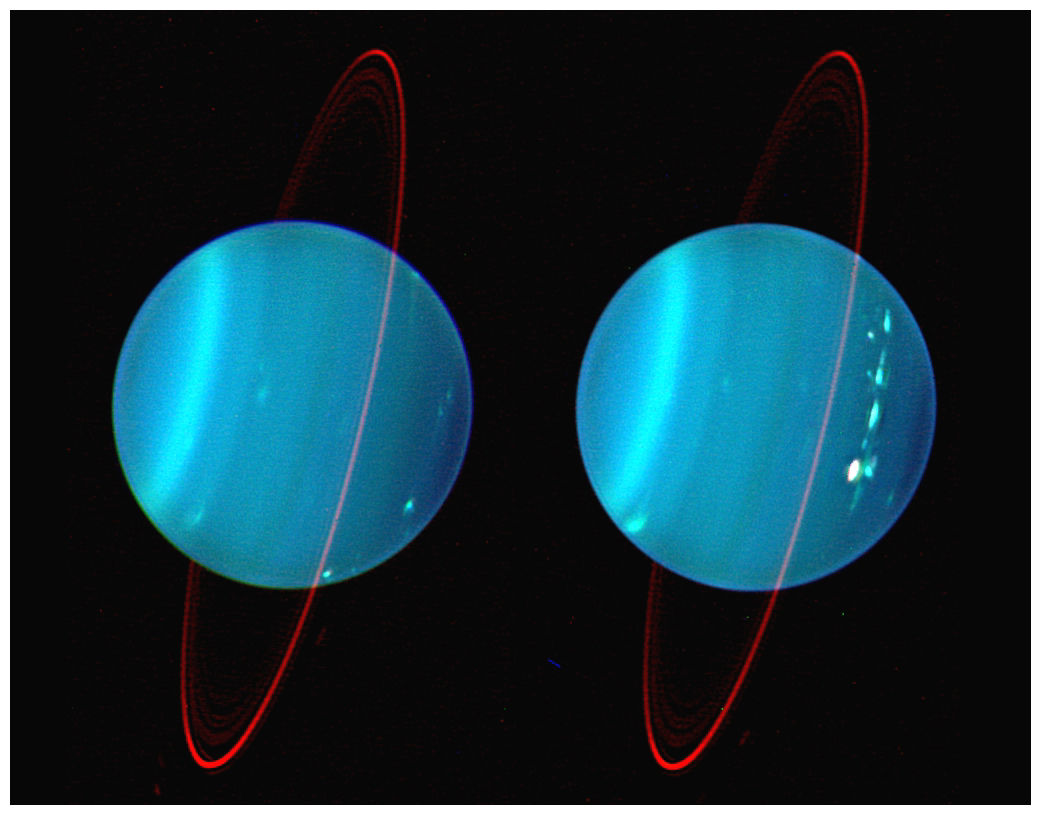
Uranus is being chased by asteroids!

Uranus
© Lawrence Sromovsky, (Univ. Wisconsin-Madison), Keck Observatory
As Uranus speeds in its orbit in the solar system, there are three large space rocks that are in lockstep with the gas giant, according to new simulations. Two of them are wobbling in unstable "horseshoe" orbits near Uranus, while the third is in a more reliable Trojan orbit that is always 60 degrees in front of the planet.

The largest of this small group is the asteroid Crantor, which is 44 miles (70 kilometers) wide. Its horseshoe orbit, and that of companion 2010 EU65, means the space rocks seesaw between being close to Uranus and further away. They should stay in that configuration for a few million years.

The last of the group is 2011 QF99, in a Trojan orbit near one of Uranus' Lagrangian points - sort of like a celestial parking spot where an object can hang out without undue influence from the balanced gravitational forces.

Question

Venus' winds are mysteriously speeding up

Winds on Venus
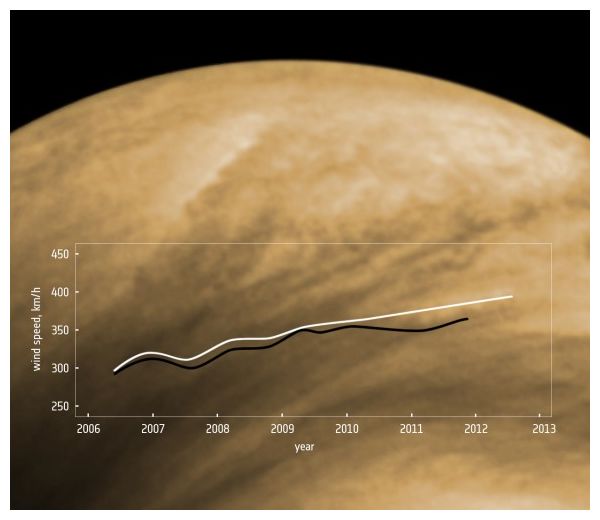
© ESAOver the past six years wind speeds in Venus’ southern atmosphere have been steadily rising.
High-altitude winds on neighboring Venus have long been known to be quite speedy, whipping sulfuric-acid-laden clouds around the superheated planet at speeds well over 300 km/h (180 mph). And after over six years collecting data from orbit, ESA's Venus Express has found that the winds there are steadily getting faster... and scientists really don't know why.

By tracking the movements of distinct features in Venus' cloud tops at an altitude of 70 km (43 miles) over a period of six years - which is 10 of Venus' years - scientists have been able to monitor patterns in long-term global wind speeds.

What two separate studies have found is a rising trend in high-altitude wind speeds in a broad swath south of Venus' equator, from around 300 km/h when Venus Express first entered orbit in 2006 to 400 km/h (250 mph) in 2012. That's nearly double the wind speeds found in a category 4 hurricane here on Earth!

Fireball 5

Laughable - NASA announces asteroid 'Grand Challenge'

Image
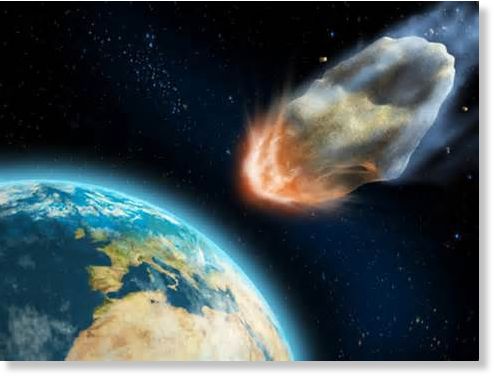
NASA announced Tuesday a Grand Challenge focused on finding all asteroid threats to human populations and knowing what to do about them. The challenge, which was announced at an asteroid initiative industry and partner day at NASA Headquarters in Washington, is a large-scale effort that will use multi-disciplinary collaborations and a variety of partnerships with other government agencies, international partners, industry, academia, and citizen scientists. It complements NASA's recently announced mission to redirect an asteroid and send humans to study it.

"NASA already is working to find asteroids that might be a threat to our planet, and while we have found 95 percent of the large asteroids near the Earth's orbit, we need to find all those that might be a threat to Earth," said NASA Deputy Administrator Lori Garver. "This Grand Challenge is focused on detecting and characterizing asteroids and learning how to deal with potential threats. We will also harness public engagement, open innovation and citizen science to help solve this global problem."

Grand Challenges are ambitious goals on a national or global scale that capture the imagination and demand advances in innovation and breakthroughs in science and technology. They are an important element of President Obama's Strategy for American Innovation.

Laptop

The singularity is near: Mind uploading by 2045?

Mind Uploading
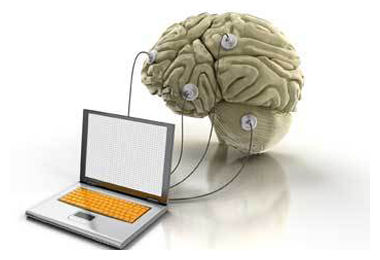
© BrainGate 2, www.braingate2.orgSome futurists predict humans will be able to upload their consciousness to computers in the near future.
New York - By 2045, humans will achieve digital immortality by uploading their minds to computers - or at least that's what some futurists believe. This notion formed the basis for the Global Futures 2045 International Congress, a futuristic conference held here June 14-15.

The conference, which is the brainchild of Russian multimillionaire Dmitry Itskov, fell somewhere between hardcore science and science fiction. It featured a diverse cast of speakers, from scientific luminaries like Ray Kurzweil, Peter Diamandis and Marvin Minsky, to Swamis and other spiritual leaders.

In the year 2045

Kurzweil - an inventor, futurist and now director of engineering at Google - predicts that by 2045, technology will have surpassed human brainpower to create a kind of superintelligence - an event known as the singularity. Other scientists have said that robots will overtake humans by 2100.

According to Moore's law, computing power doubles approximately every two years. Several technologies are undergoing similar exponential advances, from genetic sequencing to 3D printing, Kurzweil told conference attendees. He illustrated the point with a series of graphs showing the inexorable upward climb of various technologies.

By 2045, "based on conservative estimates of the amount of computation you need to functionally simulate a human brain, we'll be able to expand the scope of our intelligence a billion-fold," Kurzweil said.

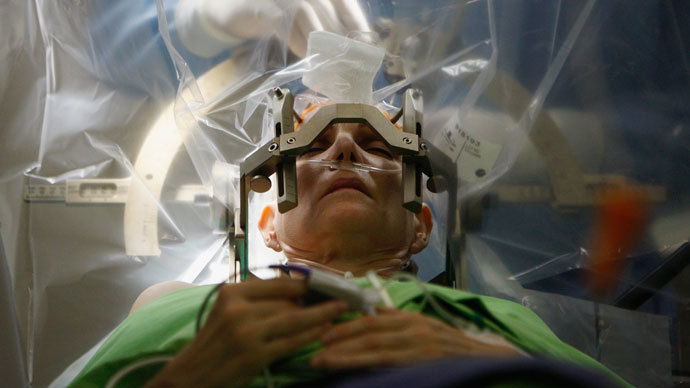
Itskov and other so-called "transhumanists" interpret this impending singularity as digital immortality. Specifically, they believe that in a few decades, humans will be able to upload their minds to a computer, transcending the need for a biological body. The idea sounds like sci-fi, and it is - at least for now. The reality, however, is that neural engineering is making significant strides toward modeling the brain and developing technologies to restore or replace some of its biological functions.

Comet 2

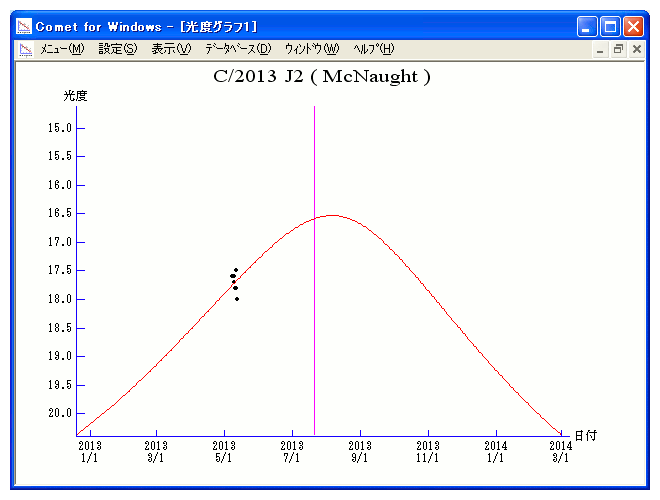
New Comet: C/2013 J2 (McNaught)

Discovery Date: May 8, 2013

Magnitude: 18.2 mag

Discoverer: Robert H. McNaught (Siding Spring)

C/2013 J2
© Aerith NetMagnitudes Graph
The orbital elements are published on M.P.E.C. 2013-K38.

Laptop

Google launches giant balloon powered internet in New Zealand


Google launches giant balloons over New Zealand's south Island, carrying computer equipment that can create a high-speed internet infrastructure. Codenamed 'project loon', the helium filled balloons carry antennae, computers, batteries and navigational equipment, collecting power from solar panels that dangle below. Each can provide internet coverage over an area of 1200 square kilometres. The project intends to help remote areas across the world access internet coverage

Fireball

Huge earth-passing asteroid an 'entirely new beast'

Image
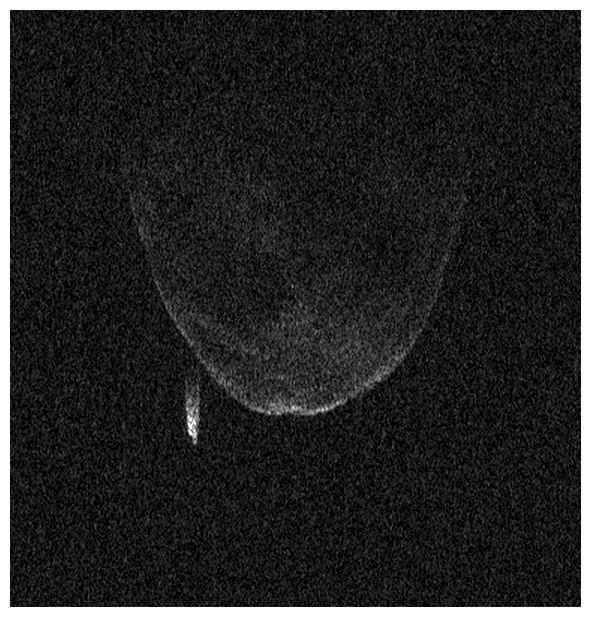
© Arecibo Observatory/NASA/Ellen HowellRadar image of asteroid 1998 QE2 and its moon taken on June 7, 2013, by the Arecibo Observatory. Several craters are visible on the asteroid, and the moon appears as a bright streak. Each pixel is 7.5 meters (25 feet).
A big asteroid that flew past Earth last month belongs to a new category of space rock, scientists say.

Asteroid 1998 QE2 and its moon sailed within 3.6 million miles (5.8 million kilometers) of Earth on May 31, making their closest approach to our planet for at least the next two centuries. New radar images captured by the Arecibo Observatory in Puerto Rico are revealing just how unique this binary asteroid is, researchers say.

"Asteroid QE2 is dark, red, and primitive - that is, it hasn't been heated or melted as much as other asteroids," Arecibo's Ellen Howell said in a statement. "QE2 is nothing like any asteroid we've visited with a spacecraft, or plan to, or that we have meteorites from. It's an entirely new beast in the menagerie of asteroids near Earth."

The 1000-foot-wide (305 meters) Arecibo dish and NASA's 230-foot (70 m) Deep Space Network antenna in Goldstone, Calif., tracked 1998 QE2 as it approached Earth last month, then kept following the near-Earth asteroid as it receded into the depths of space.

The resulting radar images have helped researchers take 1998 QE2's measure. The dark, cratered main asteroid is 1.9 miles (3 km) wide, and it has a 2,500-foot (750 m) moon that orbits it once every 32 hours.

Network

Ramping up the fear: FDA sends warning over potential for medical device hacking

Image
© Reuters / Bernadett Szabo

The FDA is warning that implanted medical devices, such as pacemakers and defibrillators, are often connected to networks that are vulnerable to cyber attacks that could shut down or manipulate the machinery.

Hackers with malicious intentions could introduce malware into the equipment, thereby gaining access to configure settings in medical devices or hospital networks, the Food and Drug Administration said in a warning sent to hospitals, medical device manufacturers, user facilities, and biomedical engineers.

"Over the past year, we've become increasingly aware of cyber security vulnerabilities in incidents that have been reported to us," William Maisel, deputy director for science at the FDA's Center for Devices and Radiological Health, told Reuters. "Hundreds of medical devices have been affected, involving dozens of manufacturers."