
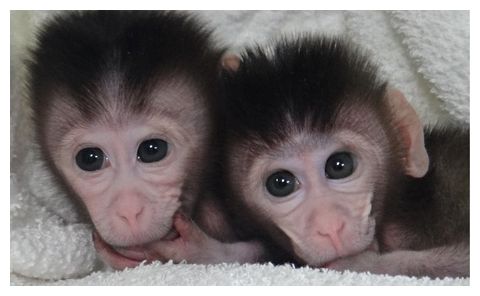
© Cell, Niu et alThe twin cynomolgus monkeys, Ningning and Mingming, born at Nanjing Medical University in China.
The macaques are the first primates to have their genetic makeup altered with the powerful technology which many scientists believe will lead to a new era of genetic medicine.
The feat was applauded by some researchers who said it would help them to recreate devastating human diseases in monkeys, such as Alzheimer's and Parkinson's. The ability to alter DNA with such precision is already being investigated as a way to make people resistant to HIV.
But the breakthrough is controversial, with groups opposed to animal testing warning that it could drive a rise in the use of monkeys in research. One critic said that genetic engineering gave researchers "almost limitless power to create sick animals".
The work was carried out in a lab in China, where scientists said they had used a genome editing procedure, called Crispr/Cas9, to manipulate two genes in fertilised monkey eggs before transferring them to surrogate mothers.
Writing in the journal, Cell, the team from Nanjing Medical University reported the delivery of twin female long-tailed macaques, called Ningning and Mingming. Five surrogates miscarried and four more pregnancies are ongoing.
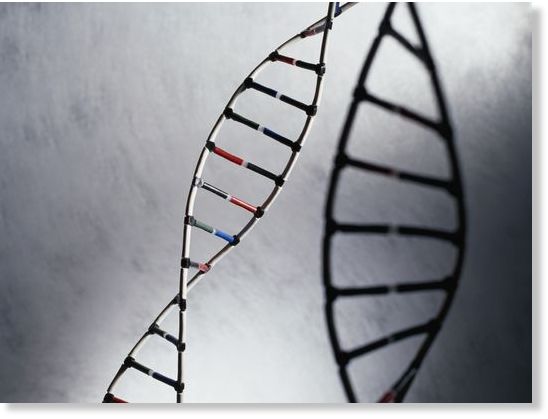
The Crispr procedure has been welcomed by geneticists in labs around the world because of its enormous potential. Unlike standard gene therapy, Crispr allows scientists to remove faulty genes from cells, or replace them with healthy ones. It can even correct single letter spelling mistakes in the DNA code.














Comment: Update 30/01/2014
With all these 'winter wildfires' breaking out in the US, Norway and Tibet, we wonder if increased methane levels play a role.
More on methane:
Melting permafrost methane emissions: The other threat to climate change
Study says methane a new climate threat
Scientists Find Frozen Methane Gas Deposit