Science & TechnologyS


Bug

Harvard built It. DARPA paid for it. Nobody governs it.

xenobots
Scientists at Harvard's Wyss Institute for Biologically Inspired Engineering have created something that did not exist six weeks ago: a tiny living robot with a functional nervous system that it built itself. No plug. No battery. No remote control. The little creature swims, explores its environment, and responds to drugs the way a nervous system is supposed to respond — because it has one. They call it a neurobot. To understand what that means, a bit of context is necessary, because this creature has been decades in the making.

It started in 2020, when the same Wyss Institute team created xenobots — tiny spherical structures assembled from the embryonic skin cells of Xenopus laevis, the African clawed frog, a species that has been a laboratory workhorse for decades. Cut a small piece of tissue from a frog embryo, drop it in a dish, and something strange happens. The cells don't die. They heal themselves into a sphere, sprout hair-like projections called cilia across their surface, and start moving through water — with no scaffold, no genetic manipulation, and no instructions from anyone. Just cells doing what cells apparently do when removed from the body they were meant to build and then are left alone.

Mars

Curiosity's curious find: NASA rover photographs surprising number of giant 'dragon scales' littered across Mars

mars curiosity rover dragon scale rock formations
© NASA/JPL-Caltech/MSSS/Kevin M. GillDozens of polygon-covered rocks, which look suspiciously like clumps of fossilized "scales" from a monstrously large reptile, surround the surface of Mars near Antofagasta in the Gale crater.
A section of Mars is covered in a surprising number of features that look like clumps of giant, fossilized reptile scales, new photos reveal. But don't be alarmed ‪ — ‬ the strange structures did not originate from monstrous aliens. Instead, they may have ties to ancient water.

NASA's Curiosity rover snapped the photos of the peculiar rocks as it was driving toward Antofagasta — a relatively young, 33-foot-wide (10 meters) impact crater located on the slopes of Mount Sharp (also called Aeolis Mons), which stands in the larger Gale crater, near Mars' equator.

A pair of black-and-white photos of the "scales" was released by NASA April 14, while a close-up color image of the rocks was shared online the next day by Kevin M. Gill, a software and spaceflight engineer at NASA's Jet Propulsion Laboratory (JPL) who specializes in image processing. (The pics were captured April 7 and April 13, respectively — also called Sol 4859 and Sol 4865 in Martian time.)

Marijuana

Largest ever US study finds teen cannabis use linked to slower cognitive development

marijuana pot roll joint brain study cognition
Across a range of skills — including memory, attention, language and processing speed — teens who used cannabis showed restricted growth over time compared to those who did not.
Study of more than 11,000 teens finds cannabis use tied to slower gains in memory, focus and thinking speed as well as worse memory over time during key years of brain development

Researchers from University of California San Diego School of Medicine have found that teenagers who begin using cannabis show slower gains in thinking and memory skills as they grow. The study, published on April 20, 2026 in Neuropsychopharmacology, analyzed data from more than 11,000 participants in the Adolescent Brain Cognitive Development (ABCD) Study, the largest long-term study of brain development in U.S. youth.

"Adolescence is a critical time for brain development, and what we're seeing is that teens who start using cannabis aren't improving at the same rate as their peers," said Natasha Wade, PhD, assistant professor of psychiatry at UC San Diego School of Medicine and lead author of the study. "These differences may seem small at first, but they can add up in ways that affect learning, memory and everyday functioning."

Comment: What's available today is far stronger than your grandpa's pot. Cannabis affects more than just brain function:


Mars

A giant 'shadow' has been creeping across Mars for 50 years — and scientists aren't sure why

Mars' Utopia Planitia
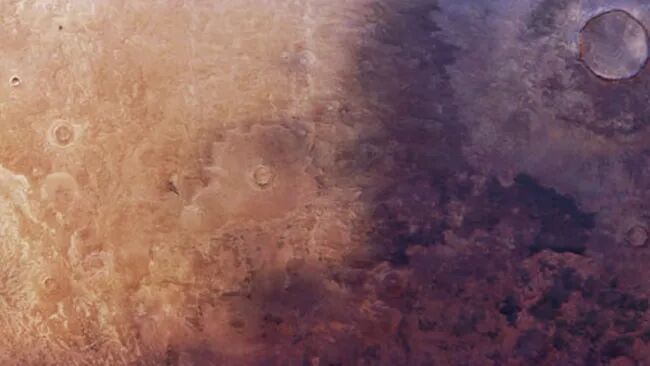
© ESA/DLR/FU BerlinA section of Mars' Utopia Planitia covered with dark volcanic materials is slowly expanding across the Red Planet's surface. And experts are not sure why.
A massive dark patch lurking within a giant Martian crater has been creeping across the Red Planet's surface since the feature was first spotted 50 years ago, new photos reveal — and scientists are unsure exactly why this is happening.

The shadowy structure is a patch of ground covered with ash and volcanic rocks, such as olivine and pyroxene, from ancient eruptions that occurred millions of years ago, before Mars was considered geologically dead. It is located in Utopia Planitia, a roughly 2,000-mile-wide (3,300 kilometers) plain in Mars' northern hemisphere.

NASA's Viking probes first photographed the blackened ground in 1976, shortly after arriving at the Red Planet. Since then, several photos have shown that this feature is expanding across the surrounding landscape; these include new images from the European Space Agency's (ESA) Mars Express orbiter, which were captured in 2024 and released April 15.

Rose

New study reveals plants can detect the sound of rain

rain fall seedlings
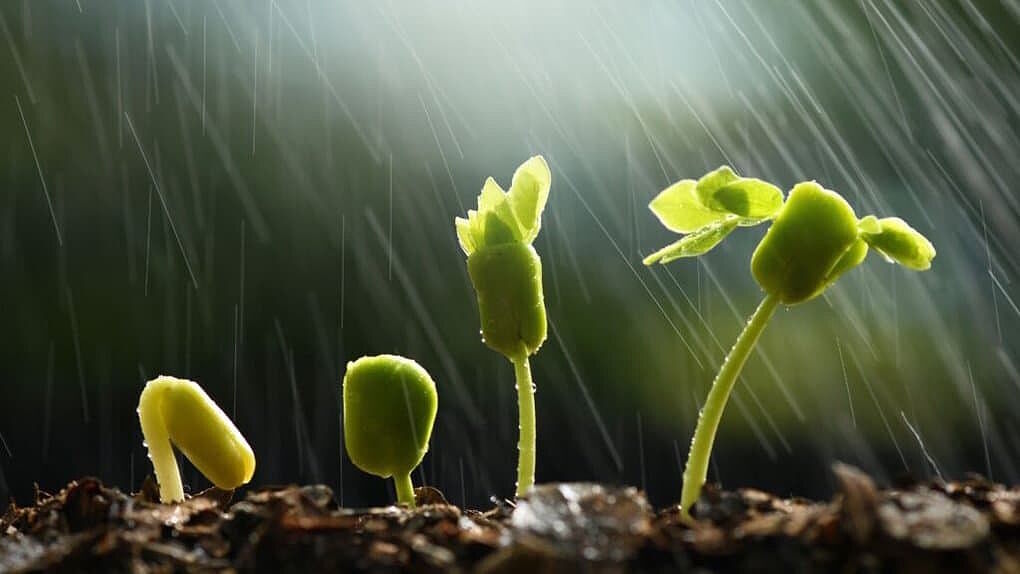
The gentle patter of rain cascading against a window often brings a sense of calm and tranquility. Yet, for a seed nestled just beneath a falling raindrop, this soothing soundtrack takes on a very different significance. According to groundbreaking research conducted by engineers at MIT, the sound of rain may actually awaken dormant seeds, stimulating them to germinate more rapidly. This revelation challenges our previous notions about how seeds interact with their environment, uncovering an acoustic dimension to plant biology previously overlooked.

In a series of meticulously controlled laboratory experiments, the MIT team observed rice seeds submerged in shallow water — an environment that closely mimics their natural aquatic or waterlogged field conditions. They found that when exposed to the sounds generated by falling water droplets, these seeds transitioned from dormancy to active germination faster than their silent, unexposed counterparts. This acceleration in germination suggests that seeds are capable of sensing and responding to the acoustic vibrations produced by rain.

HAL9000

Anthropic's 'Too Dangerous To Release' AI Model Was Accessed By Discord Group On Day One

Anthropic logo
Anthropic's 'Mythos' model is extraordinarily dangerous. The company itself warned that it could autonomously identify and exploit zero-day vulnerabilities in every major operating system, every major web browser, and every critical software library on Earth. And because of this offensive cybersecurity power, Anthropic refused to release Mythos publicly - and instead tightly restricted access through 'Project Glasswing' to roughly 50 carefully vetted organizations - 12 named launch partners plus more than 40 additional critical software and government entities, including the U.S. National Security Agency (NSA).

Yet within hours of the limited rollout announcement on April 7, 2026, a small group of unauthorized users in a private Discord server had already broken in.

The breach, reported by Bloomberg on Tuesday, reveals how fragile the safeguards around frontier AI models can be. According to the report, the group gained access using a surprisingly low-tech combination: legitimate credentials from a third-party contractor involved in Anthropic's evaluations, plus clever internet sleuthing to guess the hidden API endpoint by reverse-engineering Anthropic's internal naming conventions (patterns inferred from an earlier Mercor data leak).

Brain

Researchers probe how melatonin promotes sleep

zebrafish sleep research melatonin
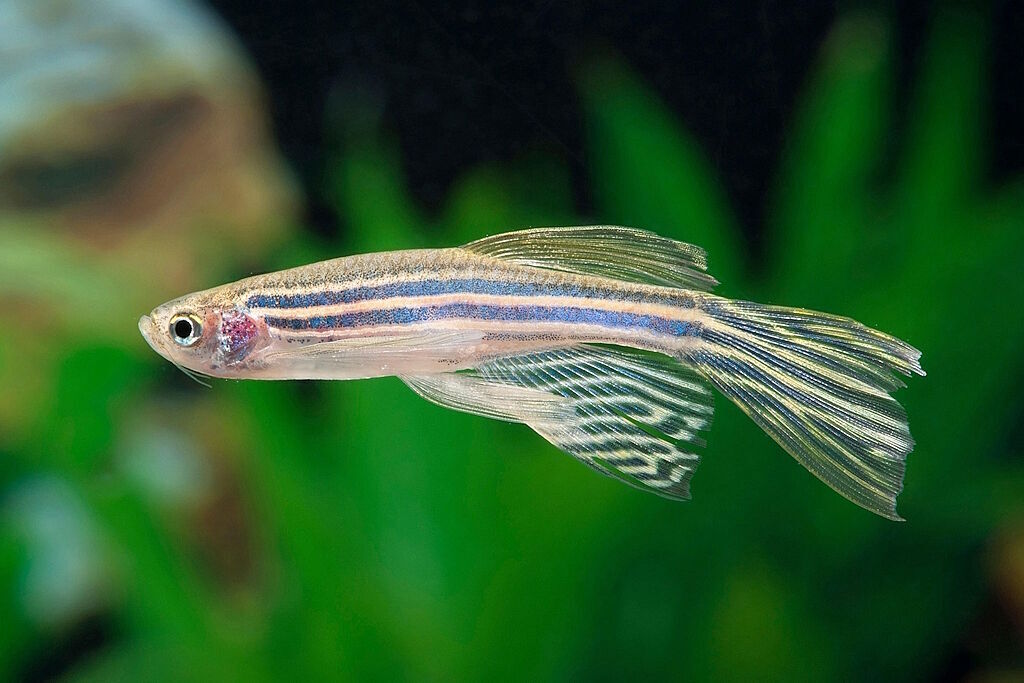
© Blinkwinkel/AlamyZebrafish, like the adult seen here, seem to experience sleep cycles that are similar to REM sleep in humans
Melatonin is a naturally produced molecule that has long been suspected to play a role in healthy sleep, but it has been unclear how it does so. Now, Caltech researchers have discovered a mechanism through which melatonin promotes sleep, using zebrafish models in the laboratory.

The research was conducted in the lab of Professor of Biology David Prober and is described in a paper appearing in Current Biology on April 20.

Sleep is a vital and evolutionarily ancient behavioral state, yet there are still many open scientific questions about how sleep is regulated by the body, and there are few effective therapies for sleep disorders.

To understand the mechanisms by which sleep is regulated, the Prober lab is using an unusual lab animal: zebrafish. There are several advantages for using zebrafish as a sleep model, including that their brains are simpler than ours but still similar. They also follow a diurnal pattern of sleep — meaning, they sleep at night and are awake during the day, similar to humans, as opposed to nocturnal lab animals like mice.

Galaxy

The universe is expanding 'too fast', nothing we know can explain it

man and sky light
New ultra-precise measurements have confirmed the cosmos is expanding faster than models based on the early universe predict, while a separate study has dramatically shortened estimates of how long the universe itself will last.

Astronomers have long observed a mismatch in the universe's expansion rate depending on how it is measured. Local observations of nearby galaxies point to a faster rate, while data from the early universe, such as the cosmic microwave background, suggest a slower pace. This longstanding puzzle is known as the Hubble tension.

A major international collaboration, the H0 Distance Network (H0DN), has now produced one of the most accurate local measurements yet. The team combined decades of independent distance measurements — including observations of red giant stars, Type Ia supernovae, and different galaxy types — into a unified "Local Distance Network."

Their result: the Hubble constant stands at 73.50 ± 0.81 kilometers per second per megaparsec, with precision just over 1 percent.

Info

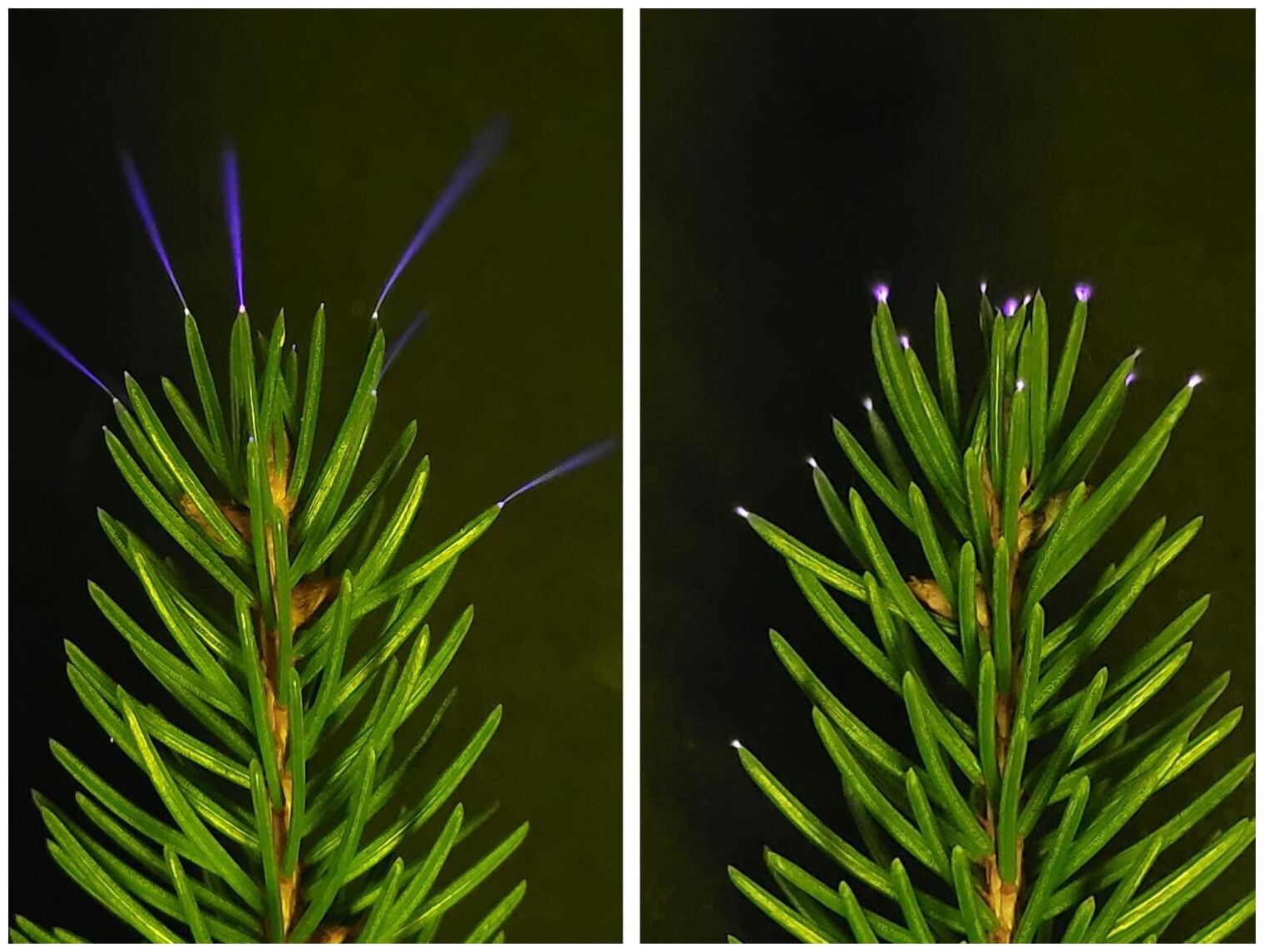
Treetops glowing during storms captured on film for first time

Weather phenomenon that eluded scientists for decades captured in nature as corona discharges glow on tips of leaves.
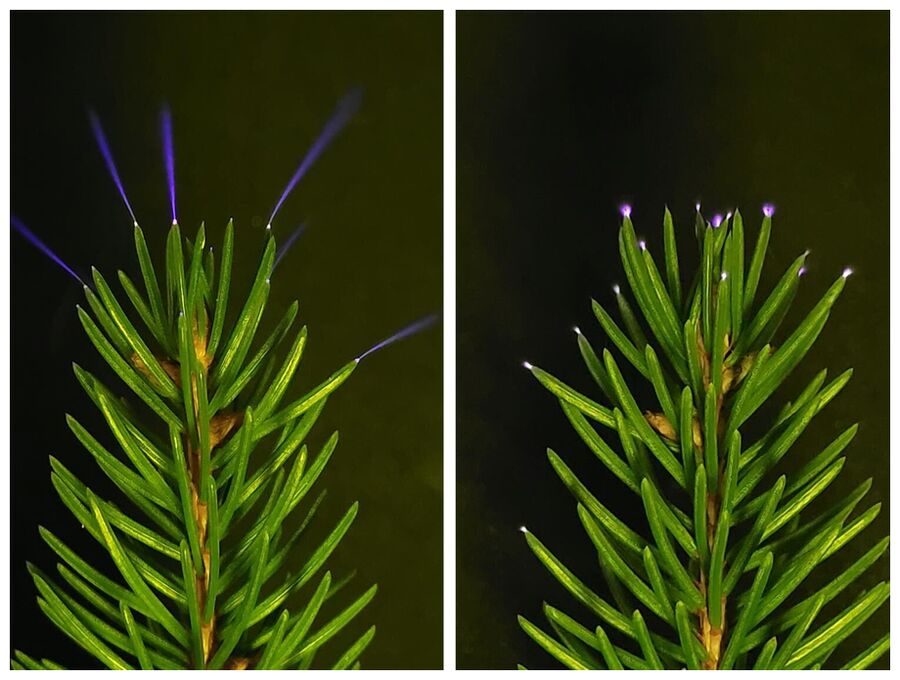
The positive, left, and negative corona discharges
© William Brune / Penn State. Creative CommonsThe positive, left, and negative corona discharges are shown on a spruce branch in a nearly pitch-black environment of a meteorology and atmospheric sciences lab at Penn State.
UNIVERSITY PARK — In a converted 2013 Toyota Sienna affixed with a hand-built telescopic weather device protruding from the roof, Penn State experts in meteorology and atmospheric science made their way down the nation's eastern coast in June 2024 in search of Florida's famed near-daily summer thunderstorms.

They were hoping to catch corona discharges, a long-hypothesized atmospheric weather phenomenon where miniscule pulses of electricity dance at the tips of tree leaves, causing the canopy to glow in the ultraviolet (UV). For more than 70 years, scientists have suspected treetops might emit these corona electrical discharges because of odd electric field activity in and over forests during storms, yet they have never been documented outside the lab.

The team, consisting of William Brune, distinguished professor of meteorology and atmospheric science; Patrick McFarland, a doctoral candidate in meteorology and atmospheric science; Jena Jenkins, assistant research professor; and David Miller, a former associate research professor who is now at the Penn State Applied Research Lab; worked to be the first to document this effect.

They chose the Sunshine State because of its propensity to produce frequent thunderstorms. However, as is often the case during research endeavors, the typical weather proved atypical.

For three weeks in Florida, McFarland and Brune chased pop-up storms that left as quickly as they formed.

The researchers had little to show for their efforts until, as they made their way back to Penn State, massive and sustained storms began cropping up just west of Interstate 95. The team caught an exit, nestled in a parking lot at the University of North Carolina at Pembroke, and trained their instruments to the top branches of a sweetgum tree that the rangefinder logged as 100 feet from their van.

The thunderstorm flashed lightning and poured rain for nearly two hours, giving them time to also observe corona on a nearby long needle loblolly pine tree as the storm waned. The results, which were the first directly-observed corona discharges occurring in nature, were recently published in Geophysical Research Letters.

"This just goes to show that there's still discovery science being done," said McFarland, lead author on the paper. "For more than half a century, scientists have theorized that corona exists, but this proves it."

Mars

NASA pulls plug on Mars Mission, leaving China to chase signs of life

Perseverance Rover
© CanvaPerseverance Rover on Mars
NASA's Mars Sample Return program has been canceled, leaving China poised to become the first to retrieve material and possibly signs of life from Mars.

NASA's ambitious plan to bring Martian soil and rock samples back to Earth has been officially scrapped. The decision marks a major turning point in interplanetary exploration, signaling that the United States might be stepping back from one of the most technically demanding space missions ever conceived. With NASA's Mars Sample Return (MSR) project effectively dead, attention now shifts toward China, which could become the first nation to retrieve physical evidence of life or its traces from the Red Planet.

A Dream Deferred: NASA's Mars Sample Return Canceled

For decades, NASA scientists envisioned the Mars Sample Return (MSR) mission as the next leap in planetary exploration. The plan was to retrieve geological samples collected by the Perseverance rover and bring them back to Earth for detailed analysis, a task that would confirm once and for all whether life ever existed on Mars. Yet, the mission has now been declared unviable after years of technical, logistical, and financial challenges.

Lawmakers made their position clear in a report released on January 6: "The agreement does not support the existing Mars Sample Return (MSR) program," lawmakers wrote in an accompanying report published on Jan. 6.