

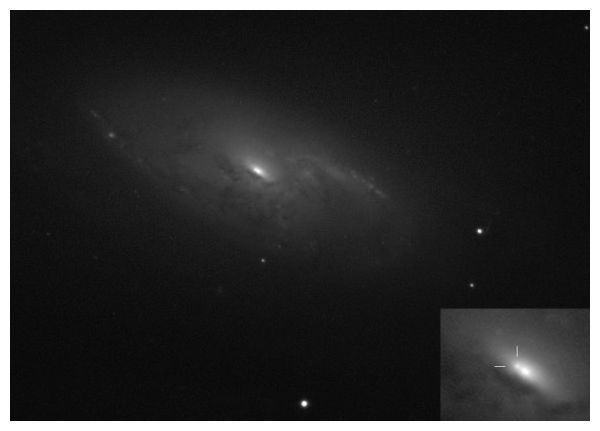
© Avishay Gal-Yam, Weizmann Institute of ScienceFor the first time, astronomers have direct confirmation that a Wolf-Rayet star -- sitting 360 million light years away -- died in a violent explosion known as a Type IIb supernova.
The real cosmic behemoths are Wolf-Rayet stars, which are more than 20 times as massive as the Sun and at least five times as hot. Because these stars are relatively rare and often obscured, scientists don't know much about how they form, live and die. But this is changing, thanks to an innovative sky survey called the intermediate Palomar Transient Factory (iPTF), which uses resources at the National Energy Research Scientific Computing Center (NERSC) and Energy Sciences Network (ESnet), both located at the U.S. Department of Energy's Lawrence Berkeley National Laboratory (Berkeley Lab), to expose fleeting cosmic events such as supernovae.
For the first time ever, scientists have direct confirmation that a Wolf-Rayet star -- sitting 360 million light years away in the Bootes constellation -- died in a violent explosion known as a Type IIb supernova. Using the iPTF pipeline, researchers at Israel's Weizmann Institute of Science led by Avishay Gal-Yam caught supernova SN 2013cu within hours of its explosion. They then triggered ground- and space-based telescopes to observe the event approximately 5.7 hours and 15 hours after it self-destructed. These observations are providing valuable insights into the life and death of the progenitor Wolf-Rayet.














Comment: Yeah, we are sure that Facebook will hold your privacy sacred and this will not be abused or hacked by the NSA... One wonders though, is there any way for non-Facebook users to know that they are being eavesdropped upon?