Science & TechnologyS


Blue Planet

Earth's largest water reservoir is found trapped in rock 400 miles under the surface

Image
The presence of liquid water on the surface is what makes our 'blue planet' habitable, and scientists have long been trying to figure out just how much water may be cycling between Earth's surface and interior reservoirs through plate tectonics. They now believe reservoirs 400 miles under the surface hold the key.
* Ingredients for water are bound up in rock deep in the Earth's mantle

* Scientists claim the find may represent the planet's largest water reservoir

* It is believed to cover most of the U.S - 400 miles below the surface

* Researchers will now carry out further tests to discover if the water wraps around the entire planet

The Earth's largest expanse of water isn't on the surface of the planet, but instead is buried deep within its mantle, researchers have found.

They claim the ingredients for water are bound up in deep rocks, and scientists believe the discovery may represent the planet's largest water reservoir.

Deep pockets of magma were found using seismic waves beneath North America, and this magma is said to be a clear sign of water.

Question

Were dinosaurs hot or cold blooded? Scientists say somewhere in between

Image
Researchers say dinosaurs had growth and metabolic rates that were actually not characteristic of warm-blooded or even cold-blooded organisms, but somewhere inbetween - and this helped them grow large.
* Researchers say finding explains how T-Rex got so big

* Scientists evaluated the metabolism of dinosaurs using a formula based on their body mass

The hot question of whether dinosaurs were warm-blooded like birds and mammals or cold blooded like reptiles, fish and amphibians finally has a good answer.

Dinosaurs, for eons Earth's dominant land animals until being wiped out by an asteroid 65 million years ago, were in fact somewhere in between.

Scientists evaluated the metabolism of numerous dinosaurs using a formula based on their body mass as revealed by the bulk of their thigh bones and their growth rates as shown by growth rings in fossil bones akin to those in trees.

Satellite

Google's new Skynet satellites

Image
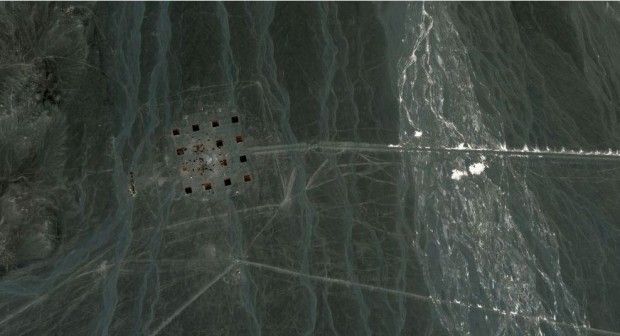
© Google earthGoogle earth image of unidentified Chinese structures
The reach of Google's online empire is hard to overstate. In a sense, the Google search engine is the loom through which the entirety of the public internet is woven. With tools like Gmail, Google Calendar, and Google Docs, the company also handles many of our private online tasks. Using the data generated by these services to target online ads, Google has built a business that generates tens of billions of dollars a year.

Now, with the $500 million purchase of Skybox, a startup that shoots high-res photos and video with low-cost satellites, Google can extend its reach far across the offline world. Thanks to its knack for transforming mass quantities of unstructured data into revenue-generating insights, the unprecedented stream of aerial imagery to which the company is gaining access could spark a whole new category of high-altitude insights into the workings of economies, nations, and nature itself.

But this acquisition will also demand assurances from Google that it will incorporate privacy safeguards into its vast new view of the world. Already Google gets a lot of flack for tracking user behavior online. With Skybox's satellites, Google may gain a window into your everyday life even if you don't use Google at all.

Moon

How superstitious are you? June full moon rises on Friday the 13th, just before summer solstice

Image
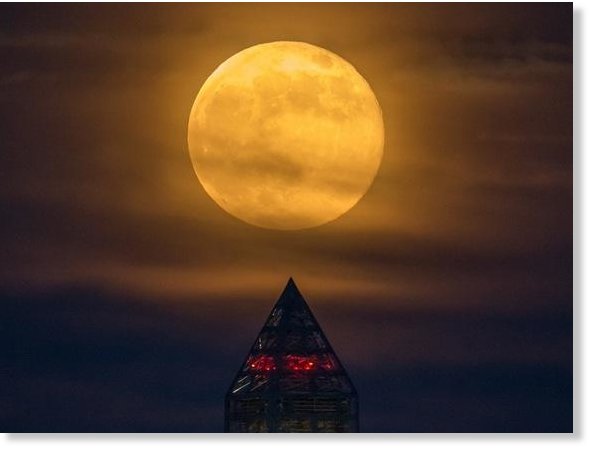
© NASA/Bill IngallsThe June full moon, called the Strawberry Moon, occurs on Friday the 13th. Here a full moon climbs its way to the top of the Washington Monument, Sunday, June 23, 2013.
This month, the full moon falls on Friday the 13th.

Freaky? Nah, probably not.

Despite many myths, the full moon does not actually embolden criminals, bring about births or make people mad, studies show. And while Friday the 13th superstitions may be well entrenched, there's nothing particularly special about a full moon falling on this date.

This Friday's full moon will be the lowest in the sky this year, however, since it will occur so close to the summer solstice. You can watch this freaky full moon rising in a live webcast on Live Science, beginning at 9:30 p.m. EDT tonight (June 12).

Chalkboard

Big Bang blunder bursts the multiverse bubble

Fig. 1
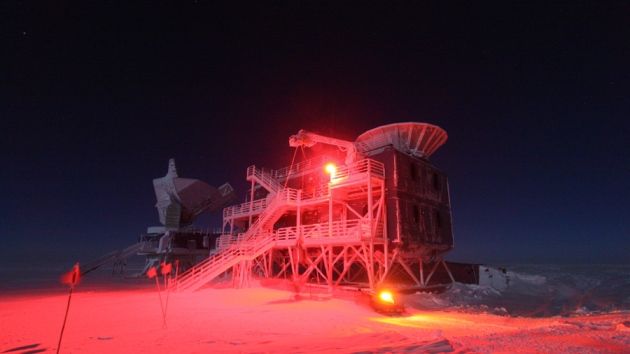
© Robert Schwarz/University of MinnesotaThe Amundsen-Scott South Pole Station, with the BICEP2 telescope on the right.
Premature hype over gravitational waves highlights gaping holes in models for the origins and evolution of the Universe, argues Paul Steinhardt.


Comment: Paul Steinhardt is professor of physics at Princeton University.


Rocket

Whodunnit? Lie detector exposes sabotage of Proton-M booster

proton
© AFPProton rocket booster.
Intentional damage to a Proton rocket booster was reportedly established by a polygraph and a criminal case has been initiated, Izvestia daily quotes the Ministry of Interior. Previously sabotage was considered an unlikely option.

An investigation into the Proton-M rocket crash in April 2013 conducted by the Federal Security Service (FSB) has resulted in establishing general proof that foreign matter could have been deliberately placed into crucial components of the booster in order to provoke malfunction - at the factory where the boosters are assembled.

As Izvestia found out, the Ministry of Interior launched a criminal case of "Intentional destruction or waste of property which caused human death through negligence or other grave consequences."

It has now been leaked that the cause for a special investigation occurred back in April 2013, when X-raying at an incoming control checkpoint detected several unused aluminum tube seals inside the air duct supply of the second stage engine RD-0210. If the fault had not been noticed, it would have resulted in yet another crash of the booster.

Emergency malfunction repairs cost about $6,000, and the $83 million launch of a booster (excluding the vehicle it was launching) was saved.

Comment: Worker discontent? Or political sabotage? See also:


Cassiopaea

'We do not seem to have the correct theory of gravity' says professor

Galaxy
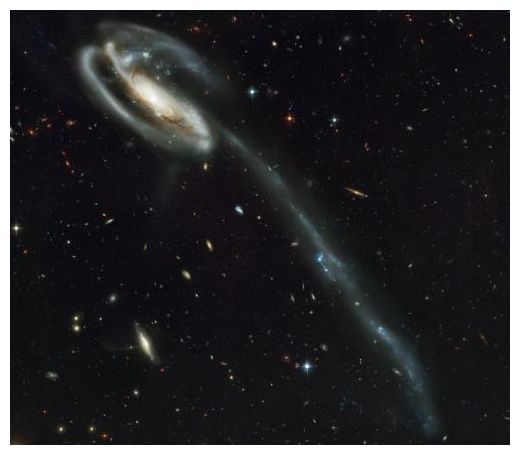
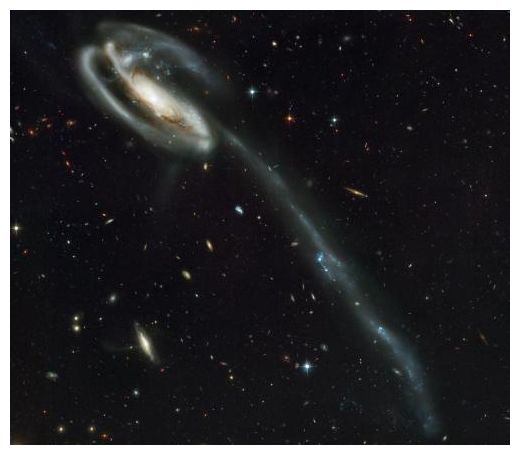
© NASA, Holland Ford (JHU), the ACS Science Team and ESAMaterial stripped from the galaxy during its collision with a smaller galaxy (seen in the upper left corner of the larger interaction partner) forms a long tidal tail. Young blue stars, star clusters and tidal dwarf galaxies are born in these tidal debris. These objects move in a common direction within a plane defined by the orientation and motion of their tidal tail. A similar galaxy interaction might have occurred in the Local Group in the past, which could explain the distribution of dwarf galaxies in co-rotating planes.
Satellite dwarf galaxies at the edges of the Milky Way and neighboring Andromeda defy the accepted model of galaxy formation, and recent attempts to pigeon-hole them into the model are flawed, an international team of scientists reports.

The mismatch raises questions about the accuracy of the standard model of cosmology, which is the widely accepted paradigm for the origin and evolution of the universe, the astrophysicists say.

A preprint of the research paper, accepted for publication by the Monthly Notices of the Royal Astronomical Society, is online here.

The standard model, also called the "lambda cold dark matter model," says that satellite dwarf galaxies in the Milky Way and Andromeda are expected to behave a certain way: The galaxies would form in halos of dark matter, be widely distributed and would have to move in random directions, said Marcel Pawlowski, a postdoctoral researcher in the astronomy department at Case Western Reserve University and lead author of the new study.

"But what astronomers see is different," Pawlowski said. "We see the satellite galaxies are in a huge disk and moving in the same direction within this disk, like the planets in our solar system moving in a thin plane in one direction around the sun. That's unexpected and could be a real problem."

In the Milky Way, the dwarf galaxies and accompanying star clusters and streams of stars are in what's called the Magellanic plane, or what the authors call the Vast Polar Structure; and in Andromeda, half of the satellites are in the Great Plane of Andromeda.

Pawlowski and 13 co-authors from six different countries examined three recent papers by different international teams that concluded the planar distributions of galaxies fit the standard model.

"When we compared simulations using their data to what is observed by astronomers, we found a very substantial mismatch," Pawlowski said.

Info

People from Mexico show stunning amount of genetic diversity

Imagine if people from Kansas and California were as genetically distinct from each other as someone from Germany is from someone from Japan. That's the kind of remarkable genetic variation that scientists have now found within Mexico, thanks to the first fine-scale study of human genetic variation in that country. This local diversity could help researchers trace the history of the country's different indigenous populations and help them develop better diagnostic tools and medical treatments for people of Mexican descent living all over the world.
Mexico Genetic Diversity
© A. Moreno-Estrada et al., Science (2014)Think local. Scientists have mapped the genetic relationships between Mexico’s indigenous groups and discovered a stunning amount of diversity.
The team has done a "tremendous job" of creating a "blueprint of all the genetic diversity in Mexico," says Bogdan Pasaniuc, a population geneticist at the University of California (UC), Los Angeles, who was not involved in the research.

Mexico contains 55 different indigenous ethnic groups, 20 of which are represented in the study, says Andrés Moreno-Estrada, a population geneticist at Stanford University in Palo Alto, California, and the study's lead author. Working with Carlos Bustamante, another Stanford population geneticist, the team sampled the genomes of indigenous populations all over Mexico, from the northern desert of Sonora to the jungles of Chiapas in the south. Over centuries of living so far apart - and often in isolation because of mountain ranges, vast deserts, or other geographic barriers - these populations developed genetic differences from one another, Bustamante explains.

Many of these variants are what he calls "globally rare but locally common." That is, a genetic variant that's widespread in one ethnic group, like the Maya, may hardly ever show up in people of different ancestry, like people of European descent. If you study the genomes of only the Europeans, you'd never catch the Maya variant. And that's a big problem for people with Maya ancestry if that variant increases their risk of disease or changes the way they react to different kinds of medication. "All politics is local, right? What we're starting to find is that lots of genetics is local, too," Bustamante says.

Nuke

Ninth graders' science experiment stirs up scientific community when it finds plants won't grow near Wi-Fi router

Image
Ninth-graders design science experiment to test the effect of cellphone radiation on plants. The results may surprise you.

Five ninth-grade young women from Denmark recently created a science experiment that is causing a stir in the scientific community.

It started with an observation and a question. The girls noticed that if they slept with their mobile phones near their heads at night, they often had difficulty concentrating at school the next day. They wanted to test the effect of a cellphone's radiation on humans, but their school, Hjallerup School in Denmark, did not have the equipment to handle such an experiment. So the girls designed an experiment that would test the effect of cellphone radiation on a plant instead.

The students placed six trays filled with Lepidium sativum, a type of garden cress, into a room without radiation, and six trays of the seeds into another room next to two routers that according to the girls' calculations, emitted about the same type of radiation as an ordinary cellphone.
Image
© Kim Horsevad, teacher at Hjallerup Skole in Denmark.

Comment: See also:


Music

How the origins of human language builds on birdsong and speech forms of other primates

Image
© Christine Daniloff/MIT
On the island of Java, in Indonesia, the silvery gibbon, an endangered primate, lives in the rainforests. In a behavior that's unusual for a primate, the silvery gibbon sings: It can vocalize long, complicated songs, using 14 different note types, that signal territory and send messages to potential mates and family.

Far from being a mere curiosity, the silvery gibbon may hold clues to the development of language in humans. In a newly published paper, two MIT professors assert that by re-examining contemporary human language, we can see indications of how human communication could have evolved from the systems underlying the older communication modes of birds and other primates.

From birds, the researchers say, we derived the melodic part of our language, and from other primates, the pragmatic, content-carrying parts of speech. Sometime within the last 100,000 years, those capacities fused into roughly the form of human language that we know today.

But how? Other animals, it appears, have finite sets of things they can express; human language is unique in allowing for an infinite set of new meanings. What allowed unbounded human language to evolve from bounded language systems?

"How did human language arise? It's far enough in the past that we can't just go back and figure it out directly," says linguist Shigeru Miyagawa, the Kochi-Manjiro Professor of Japanese Language and Culture at MIT. "The best we can do is come up with a theory that is broadly compatible with what we know about human language and other similar systems in nature."