Science & TechnologyS


Magic Wand

'Cascade of events' caused sudden explosion of animal life

The explosion of animal life on Earth around 520 million years ago was the result of a combination of interlinked factors rather than a single underlying cause, according to a new study.

Dozens of individual theories have been put forward over the past few decades for this rapid diversification of animal species in the early Cambrian period of geological time.

But a paper by Professor Paul Smith of Oxford University and Professor David Harper of Durham University suggests a more holistic approach is required to discover the reasons behind what has become known as the Cambrian Explosion.

Theories for the Cambrian Explosion fall into three main categories - geological, geochemical and biological - and most have been claimed as standalone processes that were the main cause of the explosion.

Whatever the cause, this major evolutionary event led to a wide range of biological innovation, including the origin of modern ecosystems, a rapid increase in animal diversity, the origin of skeletons and the first appearance of specialist modes of life such as burrowing and swimming.

Telescope

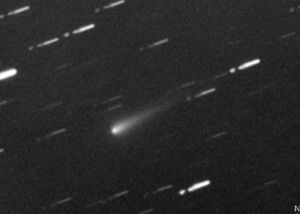
Everything you need to know about Comet ISON in 2013

ISON
© Alfons DiepvensISON on Sept. 17, 2013
Comet C/2012 S1 (ISON) has been the most talked-about comet of 2013. When discovered in late 2012, it was said to have the potential to become a striking object visible to the eye alone around the time of its perihelion - or closest point to the sun - on November 28, 2013. People started saying Comet ISON and comet of the century in the same sentence. In June and July 2013, Comet ISON was behind the sun as seen from Earth, but when it was recovered in early August, it wasn't as bright as hoped. What will happen with Comet ISON in the remaining months of 2013? Comets are notoriously unpredictable, but it's safe to say that many are waiting to see if Comet ISON will sizzle ... or fizzle.

Sun

Sun's super-fast plasma 'conveyor belt' surprises scientists

Sun's Meridional Circulation
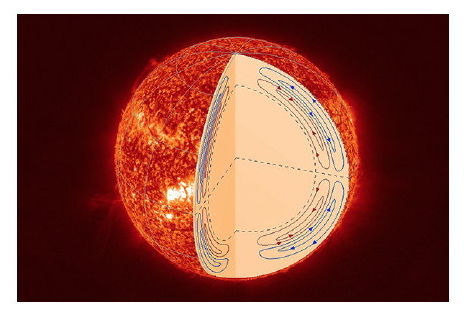
© NASA SDO/HMIThe sun's meridional circulation is shown in this artist's conception based on research at Stanford's Hansen Experimental Physics Laboratory.
The sun's insides churn much more quickly than previously thought, a new study shows, a finding expected to improve predictions of solar storms that hurl charged particles at Earth.

The flow of plasma - superheated, electrically charged gas - within the sun is more complex than scientists had believed, the study found. Further, this flow extends only half as deep as predicted, to roughly 62,000 miles (100,000 kilometres) beneath the solar surface.

"Our previously held beliefs about the solar cycle are not totally accurate, and ... we may need to make accommodations," lead author Junwei Zhao, a senior research scientist at the Hansen Experimental Physics Laboratory at Stanford University, said in a statement.

Bug

'Alien bugs' discovered in atmosphere

Nitzschia
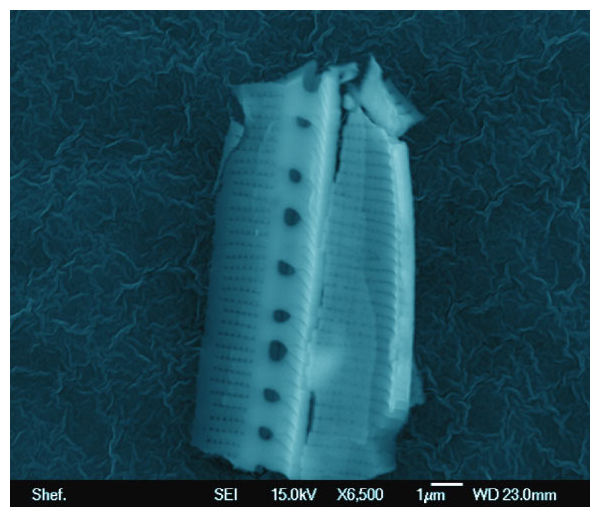
© Milton Wainwright et al.This image shows a diatom frustule, possibly a Nitzschia species, captured on a stud from a height of 25 km in the stratosphere. Image
British scientists believe they have found small bugs from outer space in the Earth's atmosphere.

Tiny organisms were discovered by University of Sheffield experts on a research balloon they had sent 27 kilometres into the atmosphere during last month's Perseids meteor shower. The microscopic bugs were detected when the balloon landed back on the ground in Wakefield, West Yorkshire in England.

But the scientists insist the samples could not have been carried from the Earth's surface into the stratosphere - the second layer of our atmosphere, which stretches up to 50 kilometres from the ground. Strict tests were taken to avoid any contamination, they said.

Professor Milton Wainwright, who led the team, said: 'Most people will assume that these biological particles must have just drifted up to the stratosphere from Earth, but it is generally accepted that a particle of the size found cannot be lifted from Earth to heights of, for example, 27 kilometres.

'The only known exception is by a violent volcanic eruption, none of which occurred within three years of the sampling trip.' He went on: 'We can only conclude that the biological entities originated from space.

'Our conclusion then is that life is continually arriving to Earth from space, life is not restricted to this planet and it almost certainly did not originate here.' The findings are to be published in the Journal of Cosmology.

'If life does continue to arrive from space then we have to completely change our view of biology and evolution,' Prof Wainwright added. 'New textbooks will have to be written.'

He said further 'crucial' tests on the samples are planned and researchers will carry out further experiments during a meteor shower in October.

Comet 2

Comet ISON still on track for fall spectacle

Comet ISON
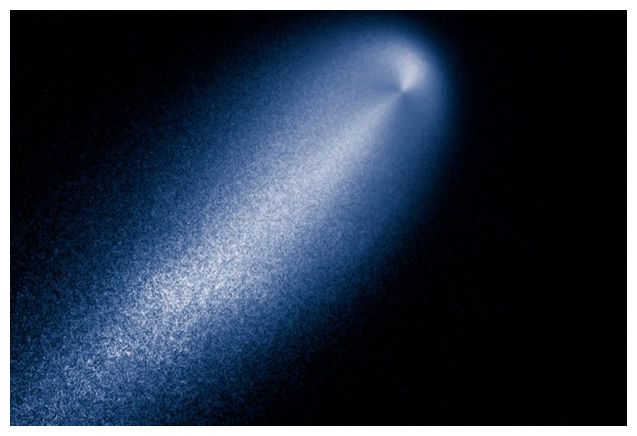
© NASA, ESA, J.-Y. Li (Planetary Science Institute), and the Hubble Comet ISON Imaging Science TeamThis is a contrast-enhanced image produced from the Hubble images of Comet C/2012 S1 (ISON) to reveal the subtle structure in the inner coma of the comet. In this computer-processed view, the Hubble image has been divided by a computer model coma that decreases in brightness proportionally to the distance from the nucleus, as expected for a comet that is producing dust uniformly over its surface. ISON's coma shows enhanced dust particle release on the sunward-facing side of the comet's nucleus, the small, solid body at the core of the comet. This information is invaluable for determining the comet's shape, evolution, and spin of the solid nucleus.
Remember when we, and everyone else in the media circuit, reported about how Comet ISON was fizzling out? Well, forget about it, because a very reliable source tells redOrbit that the comet is still on track to potentially provide a spectacular show in the night sky.

Comet ISON has been closely watched by several astronomers over the past year with great anticipation, but also with a little hesitation. It is a tricky balance, because comets have been notorious for disappointment in the past, particularly when media grabs hold of the subject and helps hype up events like this.

In August, Comet ISON emerged from behind the sun and was first picked up by amateur astronomer Bruce Gary. Reports said that according to Gary's observations, this comet was headed for disappointment, rather than the fall spectacle that news sources hyped it up to be. Since then, not a lot of new information has emerged about the comet from the media outlets, so redOrbit reached out to Karl Battams, an astrophysicist and computational scientist at the US Naval Research Laboratory, to get an update about Comet ISON.

Question

Do animals cry?

Image
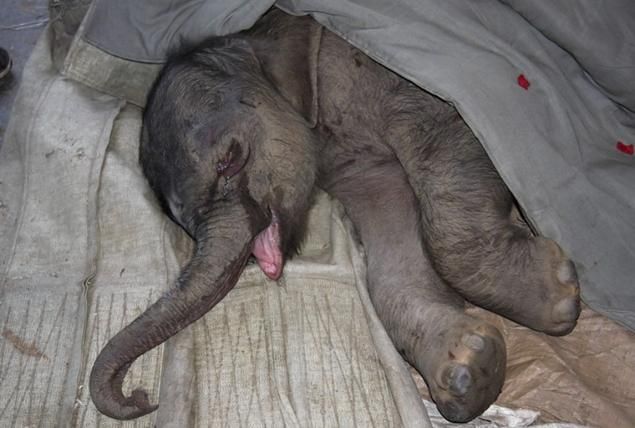
Despondent baby elephant weeps for hours after mom gives birth, then attacks him at game preserve in China.
Certain animals may weep out of sorrow, similar to human baby cries, say animal behavior experts.

Many may have wondered if this was true after news reports last week described a newborn elephant calf at Shendiaoshan Wild Animal Nature Reserve in eastern China. The calf reportedly cried inconsolably for five hours after being stomped on by his mother that then rejected the little elephant. The calf, named Zhuang-zhuang, has since been "adopted" by a keeper and is doing well, according to the news site Metro.

"Some mammals may cry due to loss of contact comfort," animal behaviorist Marc Bekoff explained to Discovery News. (Bekoff wrote about the topic, himself, in this blog.)

"It could be a hard-wired response to not feeling touch," added Bekoff, former professor of ecology and evolutionary biology at the University of Colorado, Boulder, who, with primatologist Jane Goodall, co-founded the organization Ethologists for the Ethical Treatment of Animals: Citizens for Responsible Animal Behavior Studies.mmary

Comment: Comment: Baby elephant in China can't stop crying after being stomped by mom


Jupiter

New molecules detected in Io's atmosphere

Io
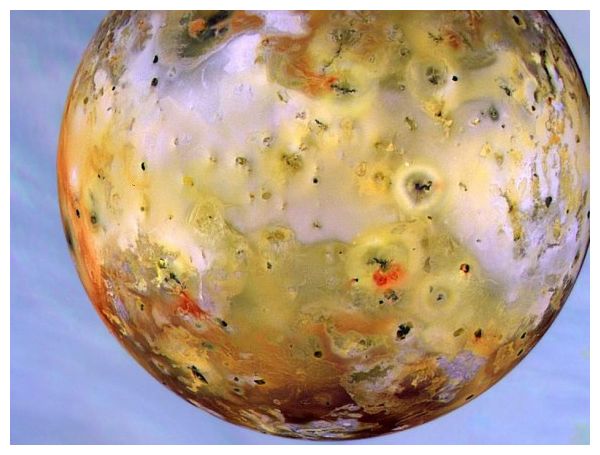
© NASAAn image of Io taken by the automated spacecraft Galileo.
Io - Jupiter's innermost Galilean moon - is the most geologically active body in the Solar System. With over 400 active volcanic regions, plumes of sulfur can climb as high as 300 miles above the surface.

It is dotted with more than 100 mountains, some of which are taller than Mount Everest. In between the volcanoes and mountains there are extensive lava flows and floodplains of liquid rock.

Intense volcanic activity leads to a thin atmosphere consisting mainly of sulfur dioxide (SO2), with minor species including sulfur monoxide (SO), sodium chloride (NaCl), and atomic sulfur and oxygen.

Despite Io's close proximity to the Earth the composition of its atmosphere remains poorly constrained. Models predict a variety of other molecules that should be present but have not been observed yet.

Recently a team of astronomers from institutions across the United States, France, and Sweden, set out to better constrain Io's atmosphere. They detected the second-most abundant isotope of sulfur (34-S) and tentatively detected potassium chloride (KCl). The latter is produced in volcanic plumes - suggesting that these plumes continuously contribute to Io's atmosphere.

Comet 2

U.S., Canada and Mexico to hold major drill in November to 'simulate knockout blow from EMP pulse'

Image
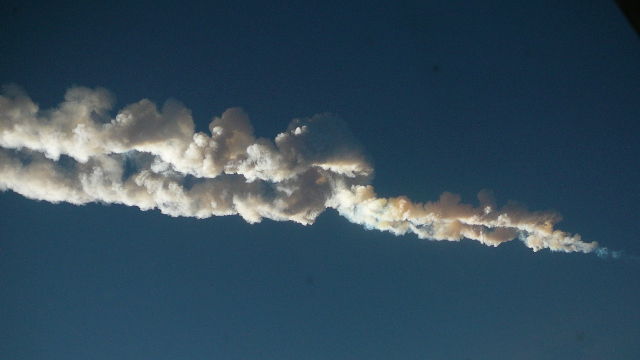
Nevermind 'Iranian-Korean terrorists' and solar flares, overhead explosions like that produced by the Chelyabinsk meteor could certainly knock out power grids.
The electric grid, as government and private experts describe it, is the glass jaw of American industry. If an adversary lands a knockout blow, they fear, it could black out vast areas of the continent for weeks; interrupt supplies of water, gasoline, diesel fuel and fresh food; shut down communications; and create disruptions of a scale that was only hinted at by Hurricane Sandy and the attacks of Sept. 11.

This is why thousands of utility workers, business executives, National Guard officers, F.B.I. antiterrorism experts and officials from government agencies in the United States, Canada and Mexico are preparing for an emergency drill in November that will simulate physical attacks and cyberattacks that could take down large sections of the power grid.

They will practice for a crisis unlike anything the real grid has ever seen, and more than 150 companies and organizations have signed up to participate.

"This is different from a hurricane that hits X, Y and Z counties in the Southeast and they have a loss of power for three or four days," said the official in charge of the drill, Brian M. Harrell of the North American Electric Reliability Corporation, known as NERC. "We really want to go beyond that."

Comment: Now consider that this 'EMP awareness-raising' has absolutely nothing to do with protecting the power grid from nukes or solar flares, but rather is about providing pseudo-plausible cover for the only "adversary" out there that could possibly "land a knockout blow" - the high risk of things being knocked offline by space rocks exploding in the atmosphere...

Nevermind 'Iranian-Korean terrorists' and solar flares (the sun is deadly quiet these days anyway; what's up with that?), overhead explosions like that produced by the Chelyabinsk meteor could certainly knock out power grids.

Disguising celestial intentions with the 'War on Terror': Meet the powerful lobby warning of 'imminent Muslim terrorist EMP attack' that would 'leave 90% of Americans dead'

Cosmic propaganda alert! 'Massive solar flare narrowly misses Earth, EMP catastrophe barely avoided', says Washington lobby group


Sun

Hype? Reversal of Sun's magnetic field 'will affect power, telecommunications on Earth'

Earth and Sun
© Inconnu
Be prepared for some major power failure, degradation of oil pipelines and disrupted telecommunication in next three to four months due to the reversing of the polarity of Sun's magnetic field, said Dr BN Dwivedi, professor, Indian Institute of Technology (IIT), Banaras Hindu University (BHU).

Dr Dwivedi is also an associate scientist of Solar Ultraviolet Measurements of Emitted Radiation (SUMER). He is the only scientist from non-European countries on the Solar and Heliospheric Observatory (SOHO) spacecraft (a major ESA/NASA project of international cooperation). According to Dwivedi, when the Sun's polarity will change, which has been predicted to occur in next three to four months, the entire solar system will experience its effect. However, the magnitude of these changes might not be very high as the strength of this change is very weak.

Comment: Once again, we see that the sun is being set up to obscure the fact that it's COMETS and their debris streams we need to be worried about, NOT solar flares from a deadly quiet sun!

U.S., Canada and Mexico to hold major drill in November to 'simulate knockout blow from EMP pulse'


Coffee

The corruption of science: If you still believe in 'climate change' read this...

Obama
© UnknownPut him in the Special Punishment wing. He's earned it
If any business were to submit a prospectus as patently false and deliberately dishonest as the ones used to advance the cause of the global warming industry, its directors would all be in prison by now. (C Jeff Randall)
Does that mean Ed Davey should have followed Chris Huhne into the slammer for his claim to Andrew Neil on BBC Daily Politics the other day that in "a recent analysis of 12,000 climate papers...of the scientists who expressed a view 97 per cent said that climate change was happening and that it was human-made activity."?

Not quite, unfortunately, because nothing Davey has said there is technically untrue. A better candidate for prison, actually, would be whoever tweets under the name @BarackObama. When he Tweeted: "Ninety-seven percent of scientists agree: #climate change is real, man-made and dangerous" he was promulgating a demonstrable untruth.