Science & TechnologyS


Info

Were earliest humans all one species? Oddball skull sparks debate

Skull
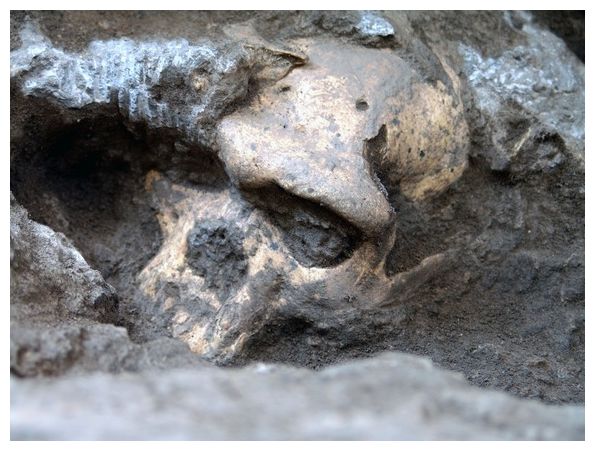
© Georgian National MuseumThe 1.8-million-year-old skull unearthed in Dmanisi, Georgia, suggests the earliest members of the Homo genus belonged to the same species, say scientists in a paper published Oct. 18, 2013 in the journal Science.
The earliest, now-extinct human lineages, once thought to be multiple species, may actually have been one species, researchers now controversially suggest.

Modern humans, Homo sapiens, are the only living member of the human lineage, Homo, which is thought to have arisen in Africa about 2 million years ago at the beginning of the ice age, also referred to as the Pleistocene Epoch. Many extinct human species were thought to once roam the Earth, such as Homo habilis, suspected to be among the first stone-tool makers; the relatively larger-brained Homo rudolfensis; the relatively slender Homo ergaster; and Homo erectus, the first to regularly keep tools it made.

To learn more about the roots of the human family tree, scientists investigated a completely intact, approximately 1.8-million-year-old skull excavated from the medieval hilltop town of Dmanisi in the Republic of Georgia. Archaeological excavations there about 30 years ago unexpectedly revealed that Dmanisi is one of the oldest-known sites for ancient human species out of Africa and the most complete collection of Homo erectus skulls and jaws found so far. The world's largest, extinct cheetah species once lived in the area, and scientists cannot rule out whether it fed on these early humans.

This fossil, the most massively built skull ever found at Dmanisi, is the best-preserved fossil of an early human species discovered yet. It probably belonged to a male, and its right cheekbone has signs that it healed from a fracture.

"We can only guess how the fracture was inflicted on the individual - it could be that it had an argument with another member of the group it lived in, or it could be that it fell down," study co-author Christoph Zollikofer, a neurobiologist at the Anthropological Institute and Museum in Zurich, Switzerland, told LiveScience.

Heart

Chimpanzees 'catch' yawns from humans

Chimpanzees "catch" yawns from humans, scientists have discovered in one of the first examples of cross-species "yawn contagion".


Chimpanzees can "catch" yawns from humans as they grow older, according to scientists who say the behaviour is most likely an attempt to bond with their keepers.

'Contagious' yawning, which happens when one person's yawn sets off the same reaction in others, is thought to be a measure of empathy, or sharing others' emotions.

Humans are more likely to catch yawns from people they are close to, and the only previously documented example of contagion between humans and animals has been between dogs and their owners.

Now researchers from Lund University in Sweden have found that chimpanzees exhibit the same behaviour, according to a study in the PLOS ONE journal.

Like young human children, infant chimpanzees are unaffected by the yawning of others but pick up the habit at about the age of five, they concluded.

Saturn

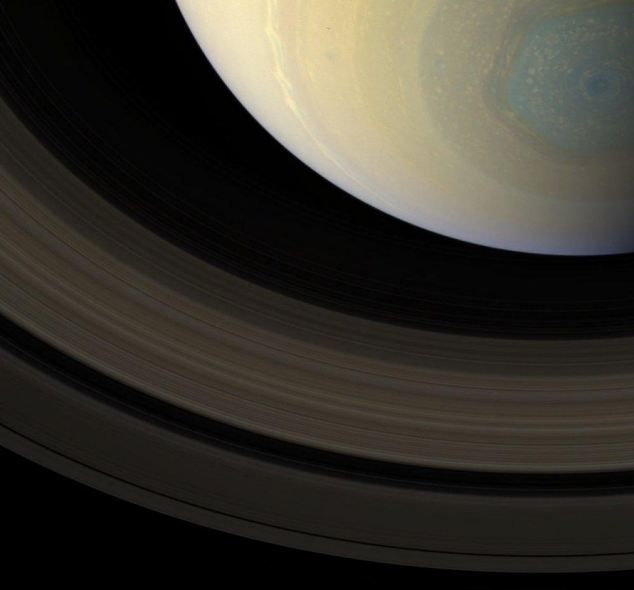
Saturn's bizarre HEXAGONAL storm system is revealed in true colour for the first time

  • Hexagon shape is created by a band of upper-atmospheric winds on Saturn
  • Images, up until now, have shown it in false-colour infrared wavelengths
  • In April, the Cassini spacecraft provided scientists with the first close-up views of a behemoth hurricane swirling within it
Image
Nasa's Cassini spacecraft, which has been orbiting Saturn for over nine years, has captured the northern hexagon in true colour
The mysterious six-sided storm on Saturn's North Pole has long captivated astronomers.

But up until now, images taken of it have been in infrared wavelengths, showing false-colour shades of red, orange and green.

Now Nasa's Cassini spacecraft, which has been orbiting the planet for over nine years, has captured the northern hexagon in its true, incredible colours.


Igloo

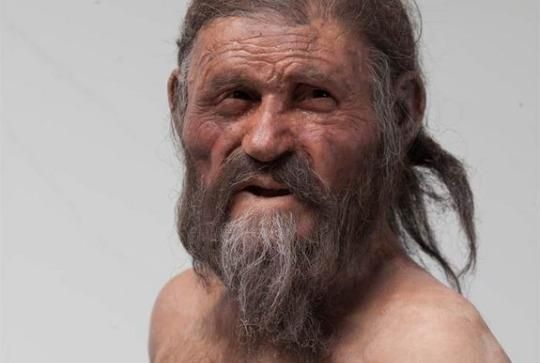
Are you part iceman? Famous Ötzi has 19 living relatives

otzi
A new genetic analysis reveals that Otzi the Iceman is most closely related to modern-day Sardinians
Ötzi the Iceman, a stunningly preserved mummy found in the Italian Alps in 1991, has living relatives in the region, new genetic analysis shows.

The study, published in the journal Forensic Science International: Genetics, found that the 5,300-year-old mummy has at least 19 male relatives on his paternal side.

"We can say that the Iceman and those 19 must share a common ancestor, who may have lived 10,000 to 12,000 years ago," study co-author Walther Parson, a forensic scientist at the Institute of Legal Medicine in Innsbruck, Austria, wrote in an email. "In that sense, those 19 are closer related to the Iceman than other individuals. We usually think about our families when we talk about relatives. However, these data demonstrate that DNA can also be used to trace relatives much further back in time."

Laptop

Online system may ID mental health disorders

An Internet-based system could be a useful tool for screening adults for mental health disorders and giving preliminary diagnoses, according to a new Dutch study.

This eDiagnostics system is already used in primary care practices in The Netherlands, the researchers say, but nowhere else, and more study is needed to determine if it is reliable, valid and cost-effective.

"Using the Internet to diagnose mental health problems in primary care seems very promising," writes lead author Ies Dijksman and colleagues from Maastricht University.

"The great advantage of an electronic system is that patients can complete diagnostic tests at home," Dijksman told Reuters Health in an email, adding that people may be quicker to reveal themselves over the Internet and provide genuine responses to questions because of their perceived anonymity.

Info

Life after Death? New techniques halt dying process

Life after Death
© Shutterstock
New York - The line between life and death is not as clear as once thought, now that developments in the science of resuscitation have made it possible to revive people even hours after their heart has stopped beating and they are declared dead, medical experts say.

"Historically, when a person's heart stopped and they stopped breathing, for all intents and purposes, they were dead," said Dr. Sam Parnia, an assistant professor of critical care medicine at State University of New York at Stony Brook. "There was nothing you could do to change that," Parnia told an audience at the New York Academy of Sciences last week.

However, in the process of unraveling mysteries of death at the cellular level, scientists have learned that death does not occur in a single moment, but instead is a process. It is actually after a person has died -- by our current definition of death -- that the cells of the body start their own process of dying.

This process "could take hours of time, and we could potentially reverse that," Parnia said.

Blackbox

U.S. Government shutdown prompts 'Accuracy' warning on USGS earthquake site

Any drop in USGS activity would impact lesser developed nations such as the Philippines, which run smaller-scale monitoring and rely on the USGS for global earthquake data, Robert Geller, a professor of seismology at Tokyo University, said by phone. It would also affect ordinary citizens in the U.S, he said.

"If a big quake occurred now, hypothetically, inside the U.S., disaster relief work might be slowed down if USGS data wasn't available to the government," Geller said. The effect of the shutdown depends on whether the agency has curtailed the monitoring itself or stopped putting the data online, he said.

Earthquake Risk

Despite the warning, the National Earthquake Information Center of the USGS at Golden, Colorado, does not expect delays in earthquake monitoring and said data is being gathered at the same rate as before the shutdown. "At this point we are getting earthquakes posted on our website on time, within 20 minutes for magnitude 5 and larger worldwide, and earlier for a national event," Jana Pursley, a geophysicist at the center, said today in a phone interview.

Eye 1

Grocery store 'smart shelves' will target consumers in real-time based on their facial features

shelves
© Reuters/Brendan McDermid
Going to the grocery store is about to get a lot more personal: one of the biggest names in food is preparing to launch "smart shelves" to gather intelligence on consumers and customize their shopping experience.

Mondelēz International, the parent company of Kraft Foods, plans on having their space-age smart shelves rolled out on supermarket floors sometime in 2015. And if all goes as planned, soon after the multi-national corporation behind products such as Chips Ahoy, Oreo, Wheat Thins and Ritz will begin collecting analytics about impulse buys and learn new ways to bring customers the products they crave.

Cloud Lightning

New evidence on lightning strikes

Image
© flagstaffotos.com.au
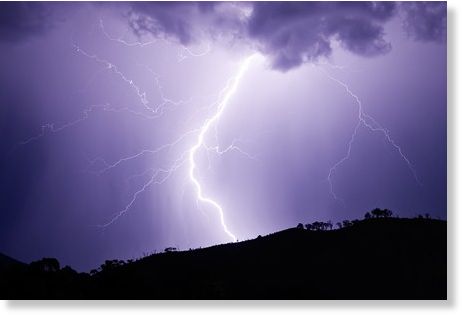
Lightning strikes causing rocks to explode have for the first time been shown to play a huge role in shaping mountain landscapes in southern Africa, debunking previous assumptions that angular rock formations were necessarily caused by cold temperatures, and proving that mountains are a lot less stable than we think.

In a world where mountains are crucial to food security and water supply, this has vast implications, especially in the context of climate change.

Professors Jasper Knight and Stefan Grab from the School of Geography, Archaeology and Environmental Studies at Wits University used a compass to prove - for the first time ever - that lightning is responsible for some of the angular rock formations in the Drakensburg.

Comet

How many mega impacts have whacked Earth?

Impact Event
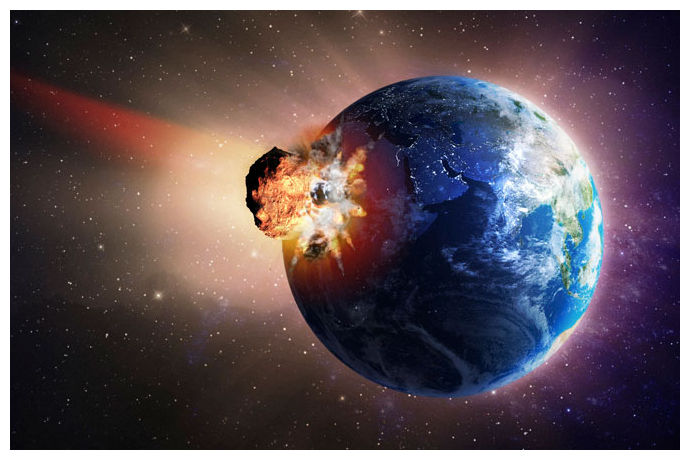
© Andrzej Wojcicki/CorbisAn artist’s illustration of an asteroid impacting Earth.
If you enjoy leaves turning, pumpkin patches and other rites of autumn, thank the giant impact event early in Earth's history which knocked our planet's axis off kilter, creating the seasons that we know and love today. But was there just one planet-tilting impact?

University of Western Ontario geologist Grant Young thinks there were two, separated by billions of years. He has been studying rocks from the Ediacaran Period, 540 to 635 million years ago and says he sees signs of massive changes to Earth's seasons and climate that can best be explained by a axis-shifting collision of a small planetary body into the ocean about 570 million years ago.

That's long after the famous smash up with a Mars-sized body that is credited with creating the Moon around 4 billion years ago and giving Earth its mild tilt and modern seasons. It was also at the time Earth was seeing the earliest animals, or metazoans, come into being.

"I think this might have stimulated the evolution of metazoans," Young told Discovery News.

The scenario he has presented in the October issue of GSA Today is that there was first the collision that created the Moon. But instead of that giving Earth its current tilt (which wobbles a bit, and is currently at 23.5 degrees), that first event knocked the planet over almost on its side. That orientation would give the poles a temperate climate without nights for half the year and the equator much less sunshine all year round.