Science & TechnologyS


Rose

The secret intelligence of plants

Image
"Plants have electrical and chemical signaling systems, may possess memory, and exhibit brainy behavior in the absence of brains."

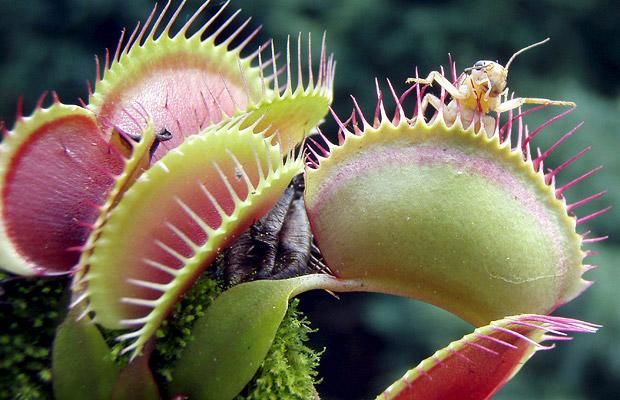
The idea that plants possess intelligence worthy of in depth exploration is an idea still largely scoffed at, despite the emergence of research suggesting otherwise. In large part, this is due to the widespread belief that "intelligence" and "brains" are inextricably connected, that the two must coexist to exist at all. The problem with this is our perception of what a "brain" is.

When defining the brain, we fixate too much on the physicals, like that it exists within a skull, and not enough on the invisibles, such as how it functions. Due to this, we believe brains can only exist in lifeforms that have skulls, like humans and animals, to rest in. However, when looking deeper into the characteristics of plants, we begin to find they have impressively elegant mechanisms, ones typically reserved only for those with brains. This, of course, brings us to the regrettably too often overlooked intelligence of plants.

Comment: More articles on the intelligence of plants The Botany of Desire, a free PBS documentary on the evolutionary relationship between humans and plants, based on the book by author Michael Pollen: The Botany of Desire: A Plant's-Eye View of the World.


Meteor

Large asteroids to flyby Earth in January through March. Should we worry?

Image
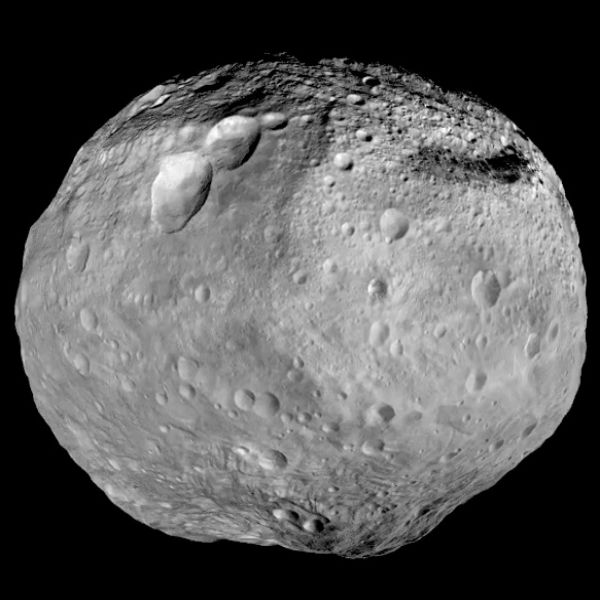
© NASA/JPL-Caltech/UCAL/MPS/DLR/IDAMassive rocks hurtling in space at speeds of thousands of miles per hour? They definitely sound dangerous, but they’re only really threatening if they hit you.
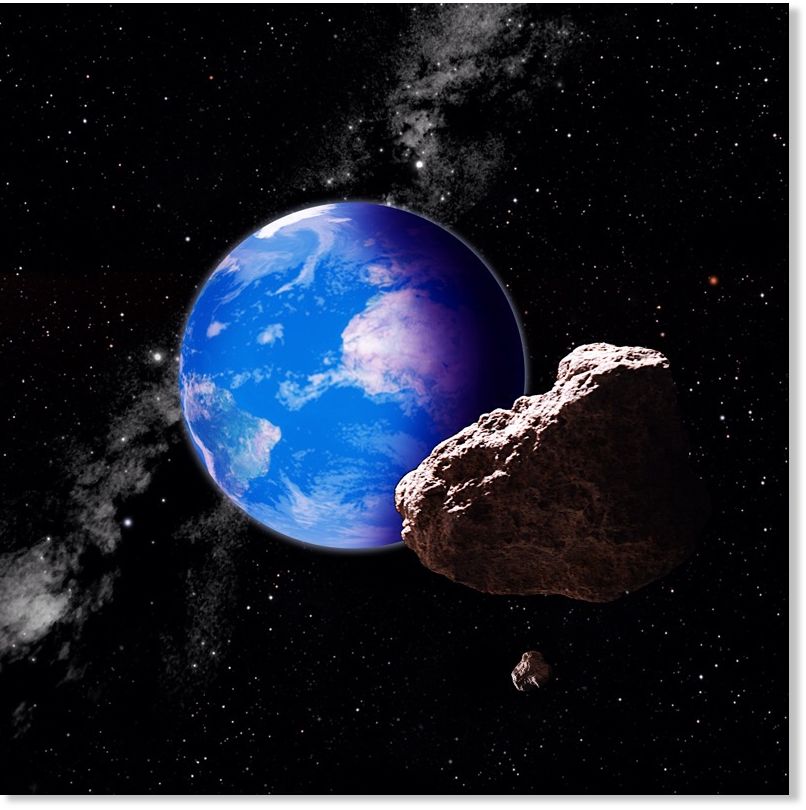
Asteroids are headed in Earth's direction and with most of them about as wide as a double-decker bus, a collision would most likely result in significant damage. However, while experts warn against the potential dangers of these asteroids, they also say that it is unlikely that these will veer off course and hit the planet.

According to NASA's Near Earth Object Program, there will be 43 asteroids flying close to Earth in January and 25 in February. In March, the number further drops to 15. The biggest threat for January is the asteroid 2007 EJ slated to closely approach the planet on Jan. 12. With a maximum diameter of nearly 1 mile, the asteroid is traveling at around 34,500 miles per hour.

The next-biggest asteroid threat for the first month of the year is the 1991 VE. It features a diameter of 0.87 miles and is expected to skim past the planet on Jan. 17. On Jan. 15 and 23, 0.68-mile wide asteroids will be flying by, the 2014 UF206 and the 2062 Aten, respectively.

Comment: Definitely a heads-up situation. If any of these break up as they approach Earth, it could cause multiple Chelyabinsk type damage.


Green Light

Innate behaviour of reaching determines how we steer a vehicle

Image
A 70 year old mystery in traffic research has been solved: an until now inexplicable jerkiness when we steer a vehicle. The discovery may lead to safety systems in cars that can correct dangerous steering movements before they occur. "With the driver model I have developed, it is possible to predict what drivers are going to do with the steering wheel before they do it. It is possible to predict how far the driver is going to turn the wheel, right when the person starts a wheel-turning movement. It's like looking into the future," says a researcher.

Magnify

Killing for DNA: A predatory device in the bacterium's environment

bacteria
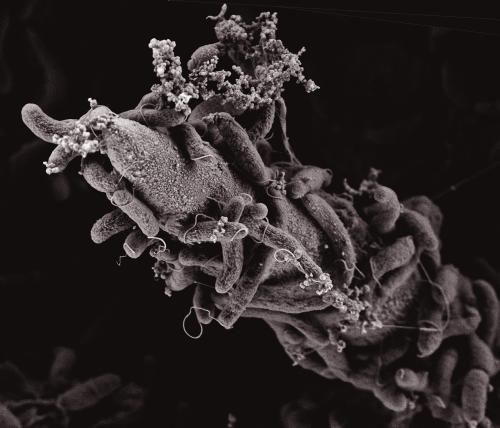
© Graham Knott & Melanie Blokesch/EPFLElectron scanning microscopy image showing Vibrio cholerae bacteria attached to a chitin surface.
Cholera is caused when the bacterium Vibrio cholerae infects the small intestine. The disease is characterized by acute watery diarrhea resulting in severe dehydration. EPFL scientists have now demonstrated that V. cholerae uses a tiny spear to stab and kill neighboring bacteria - even of its own kind - and then steal their DNA. This mechanism, known as "horizontal gene transfer", allows the cholera bacterium to become more virulent by absorbing the traits of its prey. The study is published in Science.

The lab of Melanie Blokesch at EPFL has uncovered how V. cholerae uses a predatory killing device to compete with surrounding bacteria and steal their DNA. This molecular killing device a spring-loaded spear that is constantly shooting out. This weapon is called the "type VI secretion system" (T6SS) and is known to exist in many types of bacteria. When V. cholerae comes close to other bacteria, the spear punches a hole into them, leaving them to die and release their genetic material, which the predator pulls into itself.

Comment: To use the hermetic maxim, 'As above, so below' - what about our societal environment. Do we have an inter-species predator amongst us?

Yes, we do - Psychopaths in power: The Parasite on the Human Super-organism.

How much energy or information do they "absorb" from us?

Well, as Andrew Lobaczewski, author of Political Ponerology states:
The biological, psychological, moral, and economic destruction of this majority is thus a "biological" necessity. Many means serve this end, starting with concentration camps and including warfare with an obstinate, well-armed foe who will devastate and debilitate the human power thrown at him, namely the very power jeopardizing pathocrats rule. Once safely dead, the soldiers will then be decreed heroes to be revered in paeans, useful for raising a new generation faithful to the pathocracy.

Pathocracy is a disease of great social movements followed by entire societies, nations, and empires.

Germs are not aware that they will be burned alive or buried deep in the ground along with the human body whose death they are causing.
For more information on how pathology is reflected on our societal level, read:

Global Pathocracy, Authoritarian Followers and the Hope of the World
"Humanity is a Cosmic body and each individual is a cell in that body. But the humanity we see today is a disease-ridden idiot - a shambling, ragged beast covered with oozing pustules of corruption representing science, religions and government - stumbling from one self-inflicted disaster to another. There can be only one outcome and this is documented in ancient literature describing how other 'mighty' cultures have ended."


Fireball 2

Near-Earth objects - Asteroid close approaches for January 2015

Image
There are currently 5 known NEO Asteroids discovered that will pass within approximately 10LD or less, LD stands for "Lunar Distance", in the month of January; expect that 10 or more NEOs will be discovered before month end. Be ready for some bolide, fireball, and meteor activity!

Unfortunately we will be Moonblind for ground-based detection from 02DEC until about the 11JAN and from 28JAN-12FEB2015 so expect several asteroids that will go undetected.

There are four small mountan-sized asteroids that will safely pass this month.

Comet 2

Green comet 'Lovejoy' lights up the New Year sky

Comet Lovejoy
© The Independent, UK
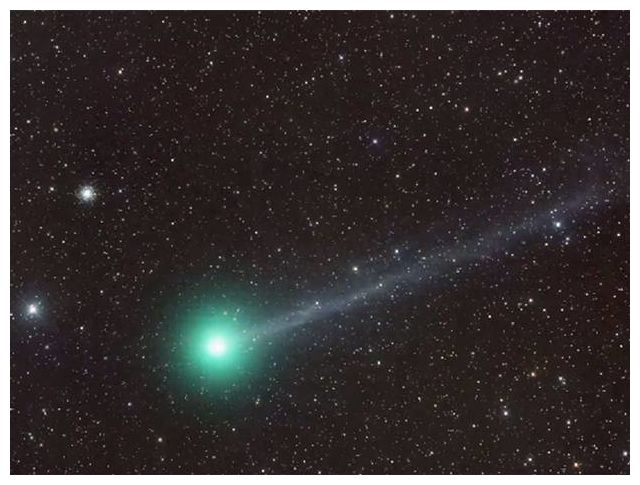
The comet Lovejoy is set to light up the skies and excite many a stargazer over the first week of the New Year as it reaches its closest point to Earth.

The comet, formerly known as C/2014 Q2, is named after amateur Australian astronomer Terry Lovejoy and was discovered in August.

The comet has been growing more visible in recent weeks to those living in the Southern Hempishere and Nasa's Jet Propulsion Laboratory says the comet will reach its nearest position to Earth on January 7, a distance of about 70.2 million kilometres away. Thus, the green-glowing comet will be visible to those in the Northern Hemisphere.

Bulb

Optogenetics captures neuronal transmission in live mammalian brain

neurons
© Aurélie Pala/EPFLThis is a reconstruction of a pair of synaptically connected neurons.
Neurons, the cells of the nervous system, communicate by transmitting chemical signals to each other through junctions called synapses. This "synaptic transmission" is critical for the brain and the spinal cord to quickly process the huge amount of incoming stimuli and generate outgoing signals. However, studying synaptic transmission in living animals is very difficult, and researchers have to use artificial conditions that don't capture the real-life environment of neurons. Now, EPFL scientists have observed and measured synaptic transmission in a live animal for the first time, using a new approach that combines genetics with the physics of light. Their breakthrough work is published in Neuron.

Aurélie Pala and Carl Petersen at EPFL's Brain Mind Institute used a novel technique, "optogenetics," that has been making significant inroads in the field of neuroscience in the past ten years. This method uses light to precisely control the activity of specific neurons in living, even moving, animals in real time. Such precision is critical in being able to study the hundreds of different neuron types, and understand higher brain functions such as thought, behavior, language, memory -- or even mental disorders.

Question

Mystery object appears near Milky Way's monster black hole

G2 gas cloud
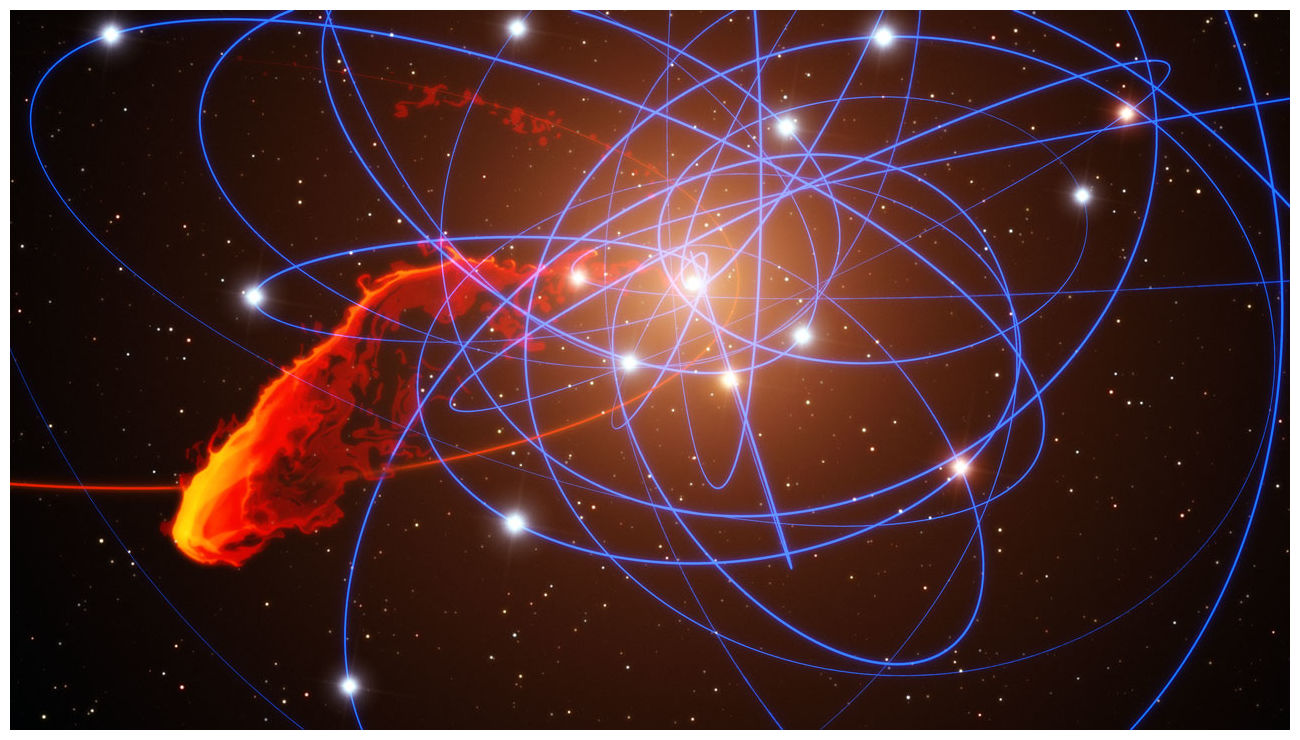
© SO/MPE/Marc Schartmann 3A computer simulation shows the G2 gas cloud's encounter with the supermassive black hole Sagittarius A* at the center of the Milky Way, as well as the paths of the many other objects that orbit the black hole.
A mystery object at the center of the galaxy has astronomers scratching their heads, and a new piece of information won't be solving the case before the New Year.

In yet another twist to a saga of astronomical proportions, astronomers have identified what they say is a gas cloud that made a tight orbit around the supermassive black hole at the center of the Milky Way galaxy 13 years ago. The object could be one in a series of gas clouds, the second of which may soon become a snack for the black hole.

The newly discovered object has been dubbed G1. An object known as G2 has been in the news for more than a year, ever since astronomers at the Max Planck Institute for Extraterrestrial Physics in Germany hypothesized that it was a gas cloud. If that is true, it should lose some of its material to the supermassive black hole at the center of the Milky Way (known as Sagittarius A* or Sgr A*). This giant black hole - its name is pronounced Sagittarius A(star) - doesn't dine on material often, so the event would be a rare chance for astronomers to watch a black hole eat.

Pumpkin 2

Neuroscientists reveal the anatomy of the undead's brain, propose survival techniques

zombie brain anatomy
  • Neuroscientists from Carnegie Mellon University, Pennsylvania, and the University of California, San Diego, analysed zombie behaviour in films
  • They worked out which sections of the brain would be damaged to trigger zombie behaviours, such as a lack of coordination and thirst for blood
  • Scientists came up with a hypothetical condition, dubbed CDHD
  • Lumbering zombies, as seen in The Walking Dead are diagnosed with CDHD-1, while faster ones, as seen in World War Z would have CDHD-2
  • Damage to fusifrom gyrus explains zombies' inability to recognise faces
  • Inability to suppress inappropriate responses, such as the desire to eat people would be due to damage in the orbitofrontal cortex, they said
Their lumbering, menacing gait and insatiable hunger for flesh strikes fear into even the most seasoned horror film fan.

Now, two neuroscientists have analysed the behaviour of the walking dead to reveal the inner workings of their minds and defined a comprehensive diagnosis of 'zombiism'.

And with this knowledge they have even hatched a plan for how to survive a zombie apocalypse.

Cassiopaea

Supernova in Virgo brightens

 ASASSN-14lp_1
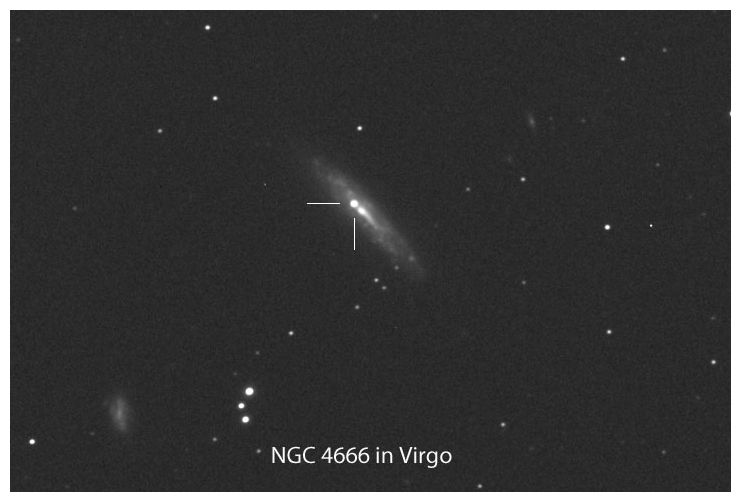
© Gregor KrannichThe bright supernova (at tick marks) in the galaxy NGC 4666 photographed on December 24, 2014. The galaxy shines at magnitude 11.8 and looks like a sliver of milky light in a telescope.
A 14th magnitude supernova discovered in the spiral galaxy NGC 4666 earlier this month has recently brightened to 11th magnitude, making it not only the second brightest supernova of the year, but an easy find in an 8-inch or larger telescope. I made a special trip into the cold this morning for a look and saw it with ease in my 10-inch (25-cm) scope at low power at magnitude 11.9.

Before the Moon taints the dawn sky, you may want to bundle up and have a look, too. The charts below will help you get there.