Science & Technology
Michael Reilly
New Scientist
Mon, 10 Dec 2007 14:33 CST
Why do some asteroid impacts and mega-eruptions wipe out most life on Earth while others leave barely a trace in the fossil record?
CNN
Sun, 09 Dec 2007 14:46 CST
KENNEDY SPACE CENTER, Florida (CNN) -- NASA scrubbed space shuttle Atlantis' planned Sunday launch after a cut-off sensor designed to gauge the fuel level of the external liquid hydrogen tank failed another test, a space agency spokesman said.
Warren E. Leary
The New York Times
Sun, 09 Dec 2007 07:08 CST
Cape Canaveral, Florida - NASA will try to launch the space shuttle Atlantis on Sunday under restrictive rules to deal with problem fuel sensors and an unusually tight liftoff schedule.
SpaceWeather.com
Sat, 08 Dec 2007 06:16 CST
Sunspot 978 popped over the sun's eastern limb on Dec. 6th and it has quickly become one of the largest sunspots of the year. Pete Lawrence of Selsey UK photographed the active region yesterday:
|
| ©Pete Lawrence
|
John Kappelman
University of Texas at Austin
Fri, 07 Dec 2007 01:54 CST
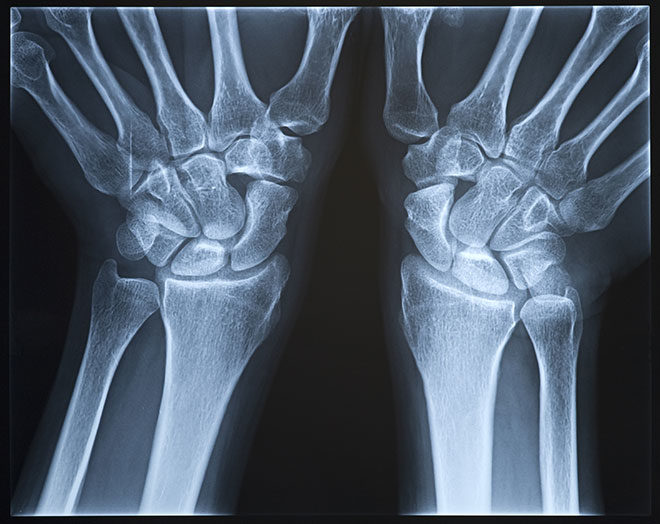
Although most scientists believe tuberculosis emerged only several thousand years ago, new research from The University of Texas at Austin reveals the most ancient evidence of the disease has been found in a 500,000-year-old human fossil from Turkey.
The discovery of the new specimen of the human species, Homo erectus, suggests support for the theory that dark-skinned people who migrate northward from low, tropical latitudes produce less vitamin D, which can adversely affect the immune system as well as the skeleton.
Steve Connor
AlterNet
Sat, 08 Dec 2007 23:29 CST
The chimp who outwits humans; the dolphin who says it with seaweed; the existential dog
An elephant that never forgets its extended family, a chimp that can outperform humans in a sophisticated test of visual memory and an amorous male dolphin that likes to say it with flowers -- well, a clump of river weeds to be more precise. These are just some of the recent observations from the field of animal behaviour. They appear to show that there is no limit to the intelligence of animals, but what do we really know about the true cognitive powers of the non-human brain?
Michael Reilly
New Scientist
Sat, 08 Dec 2007 05:56 CST
It's such a simple idea that it's surprising no one seems to have thought of it before. Did a massive asteroid or comet impact kick-start plate tectonics on Earth?
For much of our planet's history, rocky plates have been sliding over a viscous, molten mantle, colliding to build mountain ranges or spreading apart to make way for oceans. In a neat piece of recycling, an oceanic plate dives, or "subducts", underneath a less dense continental plate, and eventually melts into the hot mantle.
Geologists estimate that plate tectonics began during the Archean period, between 2.5 and 3.8 billion years ago - but they don't know what triggered it. Ancient Earth was too hot for the crust to solidify completely, and the lightest minerals would have floated to the surface over the entire planet, making the subduction of denser plate material unlikely.
Malcolm Moore
Telegraph
Sat, 08 Dec 2007 16:56 CST
An ancient Middle-Eastern empire had already mastered the art of biological warfare almost 3,500 years ago, according to an Italian scientist.
NASA/Goddard Space Flight Center
Tue, 07 Jun 2005 08:49 CDT
Sprites are likely generated by major lightning strikes.
Giant red blobs, picket fences, upward branching carrots, and tentacled octopi - these are just a few of the phrases used to describe sprites - spectacular, eerie flashes of colored light high above the tops of powerful thunderstorms that can travel up to 50 miles high in the atmosphere.
Sprites, so-named by a University of Alaska scientist inspired by the creatures in Shakespeare's "The Tempest," have been observed since the 1800s, though rarely visible from the ground. Aircraft pilots began reporting sightings of sprites in the 1950s and '60s, but they were not formally identified until 1989 when the Space Shuttle (STS-34) recorded the flashes as it passed over a thunderstorm in northern Australia. While many theories have been offered on the cause of this rare phenomenon, new NASA-funded research is settling the mystery and helping to determine the driving force behind these marvel displays of light.
|
| ©ISUAL Project, NCKU/NSPO, Taiwan
|
| This dramatic, garishly colored image was captured with a low-light level camera on June 7, 2001. It shows what appears to be a "burning tree", or red sprite, above the National Cheng Kung University campus in Tainan City, Taiwan.
|
Carnegie Institution
Thu, 27 Apr 2006 08:33 CDT
To truly understand some of the movement we see at the Earth's surface, scientists have to probe deep into the interior. A region near the planet's core, about 1,800 miles down called the core-mantle boundary, is particularly intriguing.
Through novel experiments mimicking high-pressures and temperatures there, scientists at Los Alamos National Laboratory (LANL) and the Carnegie Institution's Geophysical Laboratory* may have solved a longstanding mystery about why certain seismic waves called shear waves move so sluggishly through clumpy patches (ultralow velocity zones) at these incredible depths. The team found that when lots of iron is added to the most prevalent mineral in that region, (post-perovskite) shear waves put on the breaks and move in slow motion. Their discovery offers an alternative to the prevailing idea that these regions are partially melted, and it has important implications for understanding how volcanoes, located in places such as Hawaii and Iceland, may originate. The research is published in the April 28, 2006, Science,
Seismologists learn about the deep Earth, in part, by observing different seismic waves from earthquakes as they travel through the planet. Shear waves wiggle at right angles to the direction of their movement, but they don't move through liquid at all and are thus useful for understanding aspects of the Earth's composition. The team, including the daughter/father duo Wendy Mao (LANL) and Carnegie's Ho-kwang (Dave) Mao, used a novel technique to measure the velocity of shear waves in the lab, through the most abundant mineral in that region called post-perosvkite.
Comment: Recent indications are that you won't have to wait that long.