Science & TechnologyS


Rocket

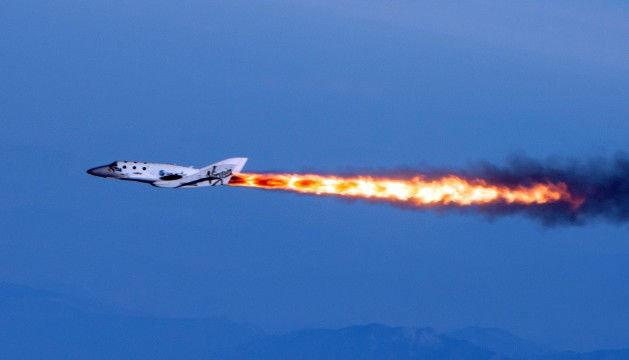
Virgin Galactic SpaceShipTwo destroyed after 'in-flight anomaly'

virgin galactic spaceshiptwo
Virgin Galactic's SpaceShipTwo fired its engine for the first time over the Mojave Desert in California
Virgin Galactic's SpaceShipTwo has been destroyed after "an in-flight anomaly" during a rocket powered test flight over the Mojave Desert, Calif. Friday morning.

"#SpaceShipTwo has experienced an in-flight anomaly. Additional info and statement forthcoming," the official Virgin Galactic feed tweeted at 10:13 a.m. PDT (1:13 p.m. EDT). This announcement came 6 minutes after the space tourism company announced the sub-orbital spacecraft's engines had ignited.

The anomaly appears to have occurred after the spacecraft, which is designed to carry 6 passengers and two pilots on a trip to the edge of space, was released from its mothership, WhiteKnightTwo, and under powered flight.

Comment: This has been a bad week for space flight:

Antares rocket explosion: A "vehicle anomaly", a deliberate destruction, or something else?

NASA rocket bound for International Space Station explodes just seconds after takeoff


Rocket

Antares rocket explosion: A "vehicle anomaly", a deliberate destruction, or something else?

Image
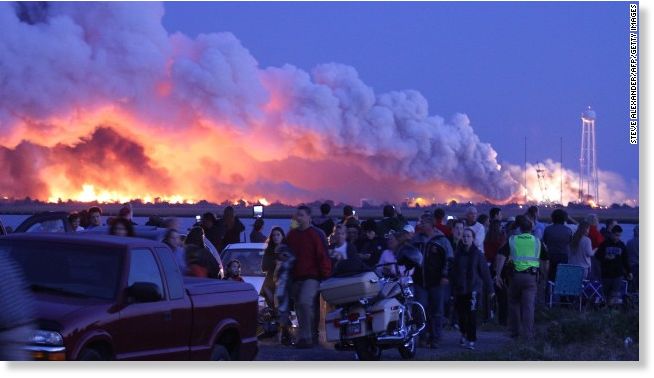
An unmanned rocket exploded shortly after takeoff Tuesday evening (28th of October) on Virginia's eastern shore. It was carrying a capsule loaded with experiments and much needed equipment. There were no injuries, but because of "classified crypto equipment" onboard, NASA made sure to secure the area.


Although there is much to say about the symbology of the event (starting with it being US's another flop and Russia saving the day, or the fact that Antares was being partly developed in Ukraine), there are plenty of other no less curious details.

Sun

Cassini observes a sunny day on Titan's seas

titan lakes
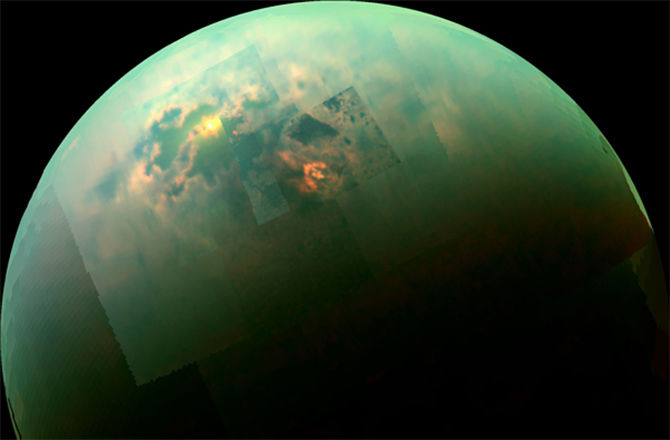
© NASA/JPL-CALTECH/UNIV. ARIZONA/UNIV. IDAHONear-infrared view from Cassini of Titan's north polar seas.
During a recent flyby of Saturn's moon Titan, NASA's Cassini mission captured some breathtaking infrared views of the small world, photographing sunlight glinting off its hydrocarbon seas.

Cassini has spotted sun glint before on Titan's surface, but this is the first set of observations (stitched together as a mosaic) where the boundaries of the seas and the sunlight glint are visible in the same view.

As Titan's surface is so cold, water cannot exist in a liquid state. Instead, the world cycles liquid methane (a substance that has a lower freezing point than water) from Titan's "great lakes", into the atmosphere as vapor, which condenses as clouds, raining methane back down onto the hydrocarbon surface. Much like Earth's water cycle, Titan's methane cycle creates rivers, deltas, valleys and large masses of liquid methane as observed here.

The sea glinting in sunlight is Kraken Mare, Titan's largest body of liquid. Surrounding Kraken Mare is a 'bathtub ring' - an old coastline that suggests the sea was at a higher level than it is now.

This observation was captured by Cassini's Visible and Infrared Mapping Spectrometer (VIMS) on Aug. 21.


Comment: The colorized mosaic from the visual and infrared mapping spectrometer, which maps infrared colors onto the visible-color spectrum, reveals differences in the composition of material around the lakes. The data suggest parts of Titan's lakes and seas may have evaporated and left behind the Titan equivalent of Earth's salt flats. The evaporated material is thought to be organic chemicals originally from Titan's haze particles that once dissolved in liquid methane. They appear orange in this image against the greenish backdrop of Titan's typical bedrock of water ice.

The bright area suggests that the surface here is unique from the rest of Titan, which might explain why almost all of the lakes are found in this region. Titan's lakes have very distinctive shapes -- rounded cookie-cutter silhouettes and steep sides -- and a variety of formation mechanisms have been proposed. The explanations range from the collapse of land after a volcanic eruption to karst terrain, where liquids dissolve soluble bedrock. Karst terrains on Earth can create spectacular topography such as the Carlsbad Caverns in New Mexico. -JPL

Launched in 1997, Cassini has been exploring the Saturn system since 2004. A full Saturn year is 30 years, and Cassini has been able to observe nearly a third of a Saturn year. In that time, Saturn and its moons have seen the seasons change from northern winter to northern summer.


Galaxy

Hubble sees the eerie ghosts of long-dead galaxies

Image
© NASA, et al.
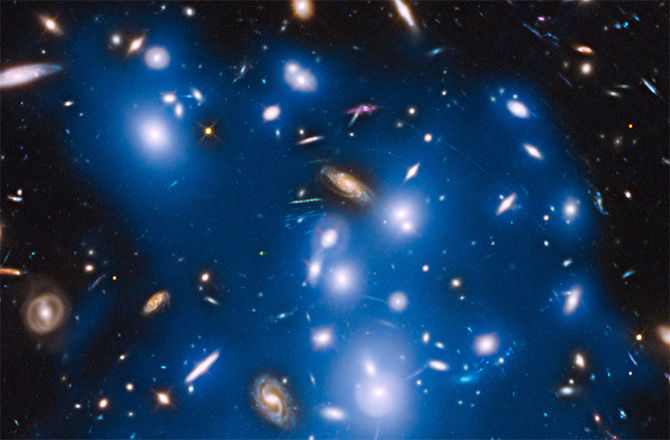
See that blue glow? That's the ghostly remains of once-dazzling galaxies that have since been blended in a Cosmic grinder. It may sound like a gruesome Hallowe'en space slasher movie, but this is actually a stunning portrait of galactic evolution as captured by the Hubble Space Telescope.

Abell 2744, or "Pandora's Cluster," consists of 500 galaxies over 4 billion light-years away from Earth. The stunning array of galaxies of all shapes and sizes are a sight to behold. But in this case, scientists studying this Hubble observation aren't admiring the beautiful elegance of the spiral galaxies or arcs of light bent by gravitational lensing, they're focused on the long-lost stars cast adrift in intergalactic space, released like tiny sparkles after an immense galactic smashup that occurred billions of years ago.

The blue glow has been detected by Hubble's sensitive optics and represent cosmic forensic evidence of the galactic violence - it is caused by countless billions of stars that are no longer gravitationally bound to their galaxies, forever drifting alone.

Galaxy

Universe may face a darker future: Is dark matter swallowing up dark energy?

New research offers a novel insight into the nature of dark matter and dark energy and what the future of our Universe might be.

Image
© Sloan Digital Sky SurveyCosmologists use galaxies observed by the Sloan Digital Sky Survey to study the nature of dark energy.
Researchers in Portsmouth and Rome have found hints that dark matter, the cosmic scaffolding on which our Universe is built, is being slowly erased, swallowed up by dark energy.

The findings appear in the journal Physical Review Letters, published by the American Physical Society. In the journal cosmologists at the Universities of Portsmouth and Rome, argue that the latest astronomical data favours a dark energy that grows as it interacts with dark matter, and this appears to be slowing the growth of structure in the cosmos.

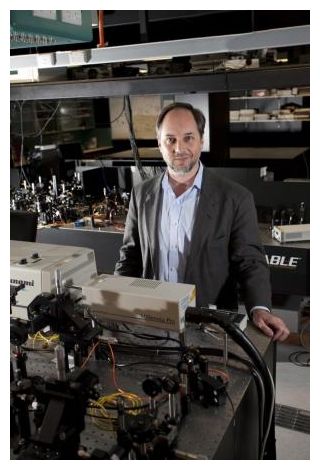
Professor David Wands, Director of Portsmouth's Institute of Cosmology and Gravitation, is one of the research team.

Magnify

Oceans arrived early to Earth; Primitive meteorites were a likely source of water, study finds

Earth is known as the Blue Planet because of its oceans, which cover more than 70 percent of the planet's surface and are home to the world's greatest diversity of life. While water is essential for life on the planet, the answers to two key questions have eluded us: where did Earth's water come from and when?

early solar system
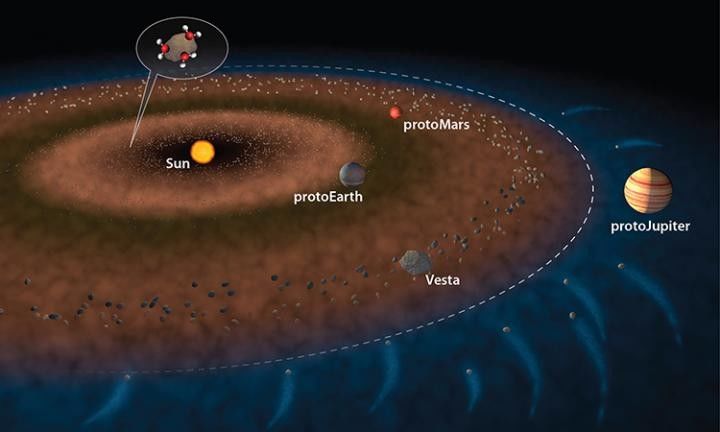
© Jack Cook, Woods Hole Oceanographic InstitutionIn this illustration of the early solar system, the dashed white line represents the snow line -- the transition from the hotter inner solar system, where water ice is not stable (brown) to the outer Solar system, where water ice is stable (blue). Two possible ways that the inner solar system received water are: water molecules sticking to dust grains inside the "snow line" (as shown in the inset) and carbonaceous chondrite material flung into the inner solar system by the effect of gravity from protoJupiter. With either scenario, water must accrete to the inner planets within the first ca. 10 million years of solar system formation.
While some hypothesize that water came late to Earth, well after the planet had formed, findings from a new study led by scientists at the Woods Hole Oceanographic Institution (WHOI) significantly move back the clock for the first evidence of water on Earth and in the inner solar system.

"The answer to one of the basic questions is that our oceans were always here. We didn't get them from a late process, as was previously thought," said Adam Sarafian, the lead author of the paper published Oct. 31, 2014, in the journal Science and a MIT/WHOI Joint Program student in the Geology and Geophysics Department.

One school of thought was that planets originally formed dry, due to the high-energy, high-impact process of planet formation, and that the water came later from sources such as comets or "wet" asteroids, which are largely composed of ices and gases.

Info

Many Interacting Worlds theory: Scientists propose existence and interaction of parallel worlds

Howard Wiseman
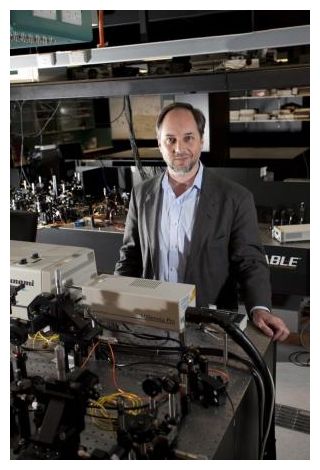
© Griffith University Professor Howard Wiseman, Director of Griffith University's Centre for Quantum Dynamics.
Griffith University academics are challenging the foundations of quantum science with a radical new theory based on the existence of, and interactions between, parallel universes.

In a paper published in the prestigious journal Physical Review X, Professor Howard Wiseman and Dr Michael Hall from Griffith's Centre for Quantum Dynamics, and Dr Dirk-Andre Deckert from the University of California, take interacting parallel worlds out of the realm of science fiction and into that of hard science.

The team proposes that parallel universes really exist, and that they interact. That is, rather than evolving independently, nearby worlds influence one another by a subtle force of repulsion. They show that such an interaction could explain everything that is bizarre about quantum mechanics

Quantum theory is needed to explain how the universe works at the microscopic scale, and is believed to apply to all matter. But it is notoriously difficult to fathom, exhibiting weird phenomena which seem to violate the laws of cause and effect.

As the eminent American theoretical physicist Richard Feynman once noted: "I think I can safely say that nobody understands quantum mechanics."

However, the "Many-Interacting Worlds" approach developed at Griffith University provides a new and daring perspective on this baffling field.

"The idea of parallel universes in quantum mechanics has been around since 1957," says Professor Wiseman.

"In the well-known "Many-Worlds Interpretation", each universe branches into a bunch of new universes every time a quantum measurement is made. All possibilities are therefore realised - in some universes the dinosaur-killing asteroid missed Earth. In others, Australia was colonised by the Portuguese.

"But critics question the reality of these other universes, since they do not influence our universe at all. On this score, our "Many Interacting Worlds" approach is completely different, as its name implies."

Robot

Good luck with that $15 minimum wage

Have you interacted with retail store clerks?

Over the next ten years robots will replace many of them.

Good luck doubling the minimum wage while this is happening.
Autonomous Retail Service Robot
© The Burning Platform

Cassiopaea

Possible supernova in M61 (NGC 4303)

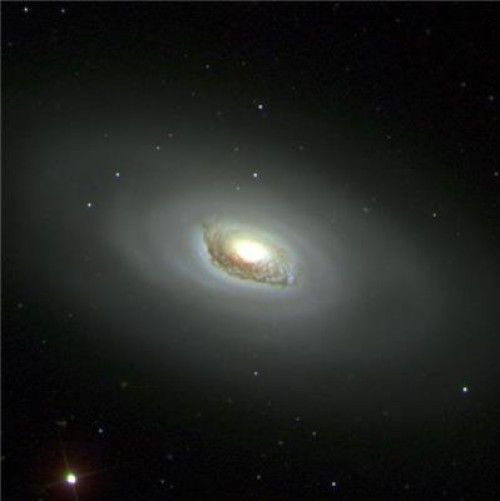
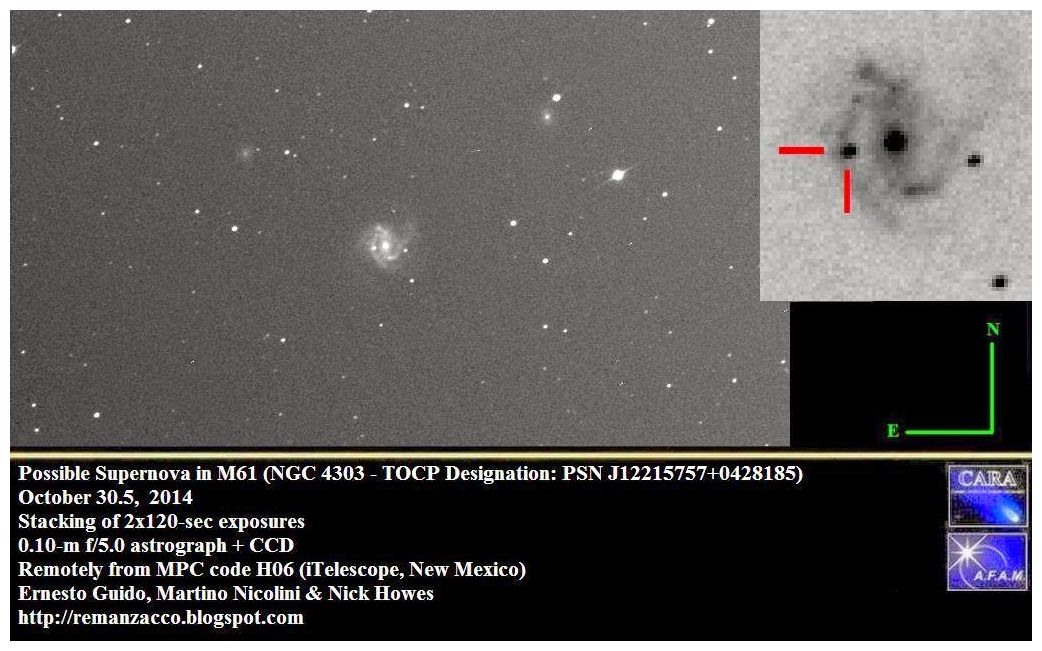
Following the posting on the Central Bureau's Transient Object Confirmation Page about a possible Supernova in the barred spiral galaxy Messier 61 (or NGC 4303 - TOCP Designation: PSN J12215757+0428185) we performed some follow-up of this object through a 0.10-m f/5.0 astrograph + CCD from MPC Code H06 (iTelescope, New Mexico).

On our images taken on October 30.5, 2014 we can confirm the presence of an optical counterpart with unfiltered CCD magnitude 13.2 and at coordinates:

R.A. = 12 21 57.61, Decl.= +04 28 17.8 (equinox 2000.0; UCAC-3 catalogue reference stars).

Our confirmation image (click on it for a bigger version)
Supernova in M61
© Remanzacco Observatory
An animation showing a comparison between our confirmation image and the archive POSS2/UKSTU plate (IR Filter - 1991).

Magnify

Seeing dinosaur feathers in a new light

Image
© thawats / FotoliaFeathers close up. The researchers' hypothesis: The evolution of feathers made dinosaurs more colorful, which in turn had a profoundly positive impact on communication, the selection of mates and on dinosaurs' procreation.
Why were dinosaurs covered in a cloak of feathers long before the early bird species Archaeopteryx first attempted flight? Researchers from the University of Bonn and the University of Göttingen attempt to answer precisely that question in their article "Beyond the Rainbow" in the latest issue of the journal Science.

The research team postulates that these ancient reptiles had a highly developed ability to discern color. Their hypothesis: The evolution of feathers made dinosaurs more colorful, which in turn had a profoundly positive impact on communication, the selection of mates and on dinosaurs' procreation.

The suggestion that birds and dinosaurs are close relatives dates back to the 19th century, the time when the father of evolutionary theory, Charles Darwin, was hard at work. But it took over 130 years for the first real proof to come to light with numerous discoveries of the remains of feathered dinosaurs, primarily in fossil sites in China. Thanks to these fossil finds, we now know that birds descend from a branch of medium-sized predatory dinosaurs, the so-called theropods. Tyrannosaurus rex and also velociraptors, made famous by the film Jurassic Park, are representative of these two-legged meat eaters. Just like later birds, these predatory dinosaurs had feathers -- long before Archaeopteryx lifted itself off the ground. But why was this, particularly when dinosaurs could not fly?