© Daily Examiner
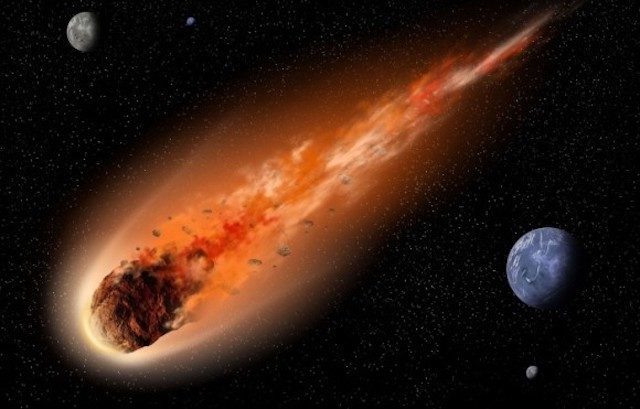
An asteroid is going to whiz by Earth on Monday evening, but don't worry, it's not going to hit us. Astronomers say it's somewhere in the ballpark of 50 to 100 feet wide, according to its reflective properties, and it's poised to pass within 56,000 miles of our planet (around a quarter of the distance to the moon).
Dubbed 2026 JH2 in the Minor Planet Center database, the near-Earth object was first spotted on May 10, and it's been tracked by a slew of skywatchers ever since. As an Apollo-class asteroid, 2026 JH2 has an orbit that's larger than Earth's but also passes closer to the sun, meaning it overlaps with Earth's orbit like a Venn diagram. Calculations are still ongoing, but none of the data suggest a likely impact event.