
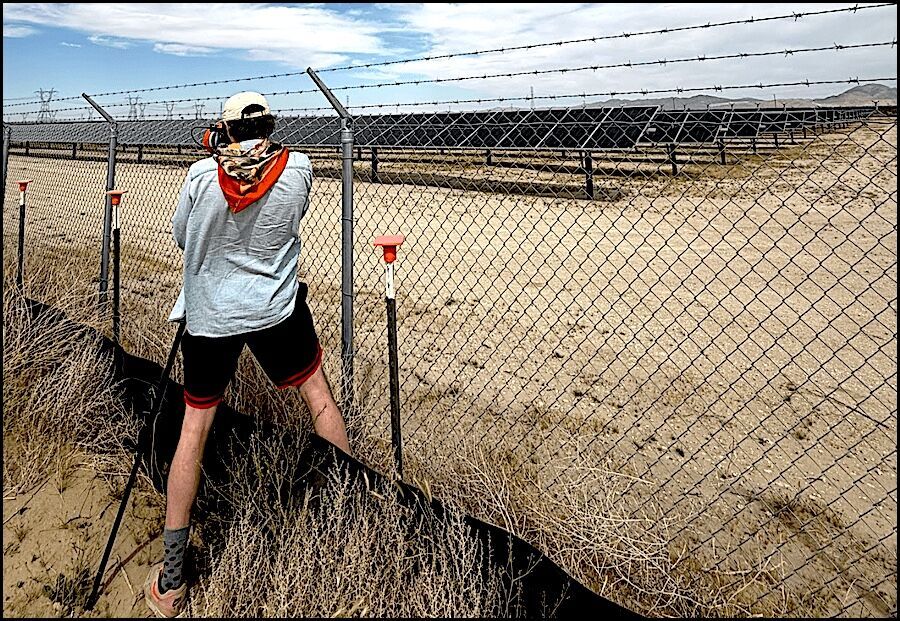
© Screen Shot 6/3/2026 8 11.49.36-AMColby Goves documenting Amazon's Baldy Mesa solar project • 6/3/2026 8 11.49.36-AM
The road is dusty and trash-strewn. My friend and collaborator Colby Groves is hanging out the car window as I drive, gazing at a patchwork of solar panels lined up behind a chain-link fence.
"This has to be it," declares Colby, balancing a large camera on his lap, hoping it doesn't bounce off as we traverse a series of bumps and divots.
We are in this land of scorching sun and heat, searching for a large Amazon solar installation in rural San Bernardino County, California. This is the home of the endangered desert tortoise and Joshua trees, but more recently, it's become a plaything for greedy Silicon Valley entrepreneurs.
In 2024, Jeff Bezos' Amazon connected its Baldy Mesa solar-and-storage project, which helps to power the company's nearby data centers, to the electrical grid, earning accolades for its use of renewable energy. It's the first of its kind in California. Despite its gargantuan size, the project faced very little opposition, as is often the case with such "green" projects.





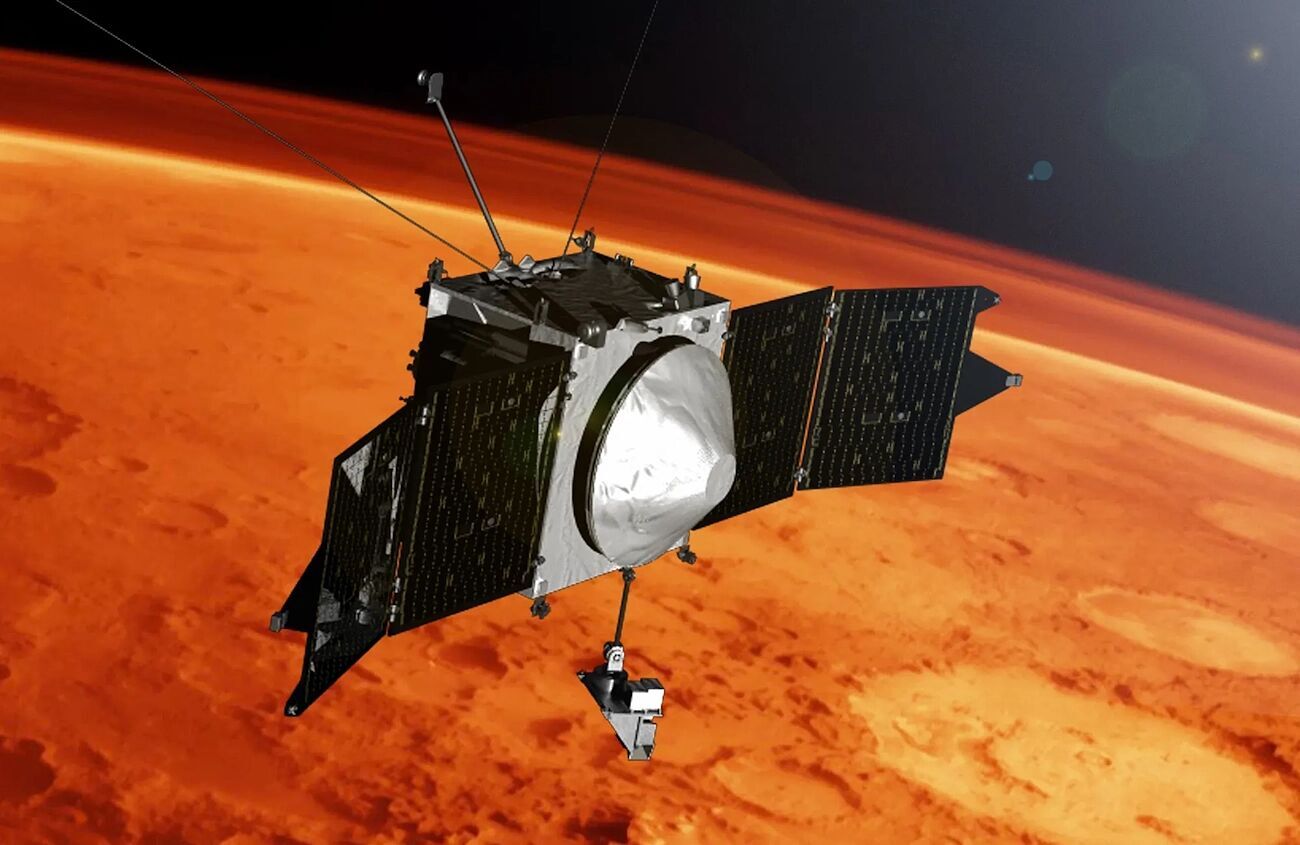










Comment: MAVEN's findings over the years: