
© Image from dukemedicine.org
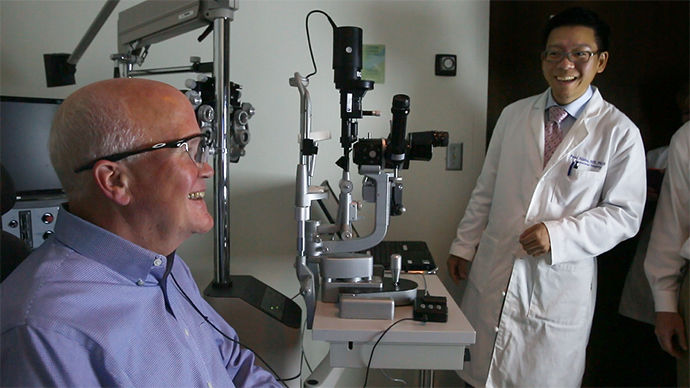
Larry Hester, 66, was blind for 33 years before scientists at Duke University, in North Carolina, switched on the device.
As the "eye" was switched on, Hester jumped from the shock initially, before his face broke into a persistent smile and his wife, Jerry, rushed over to him to share his joy. "Can you really see?" she said, adding: "Can I give him a kiss?"
Hester became only the seventh person in the US to have the eye - and he expressed his good fortune to his doctors.
"I just wonder how I have been so lucky," he said. "Why me? But if I can use what I learn from this to help others with RP, it will not just be for my benefit."
Both Larry and Jerry Hester had lost hope of any improvements in Larry's eyesight until Jerry found an article in a magazine last year.









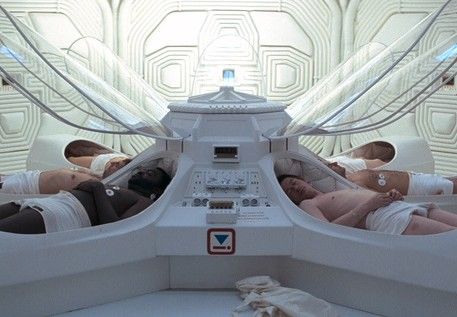





Comment: Torpor is a condition that can happen naturally from hypothermia. It shuts down most non-vital body processes and dramatically slows down the metabolism. The torpor state would be achieved by lowering body temperatures to somewhere between 89 and 93 degrees Fahrenheit. For every single degree the body temperature drops, its metabolic rate drops 5 to 7 percent. Researchers hope to get a 10 degree drop which would mean a 50 to 70 percent reduction in metabolic rate. The coma would be induced by letting the spaceship cool down in the freezing cold of space bringing the astronauts' body temperatures down, too. During interplanetary transit, the crew would receive low-level electrical impulses to key muscle groups to prevent muscles wasting away while in hibernation.