LAURA KNIGHT-JADCZYK AND JOE QUINN
Since the 9/11 attacks, no book has provided a satisfactory answer as to WHY the attacks occurred and who was ultimately responsible for carrying them out - until now.
As I pointed out for a friend over on Facebook, a land impact of a stony object as small as 20 feet would produce energies comparable to the Tunguska blast of 1908, which itself was more powerful than the largest nuclear explosion ever detonated. Such a blast in a densely populated area today would completely destroy a large city, and kill millions. Objects that size are extremely numerous, and small enough to be undetectable with today’s technologies. So we'd never even see it comming. But since it would only destroy a single city sized area, and the targets are widely separated, that’s not the scariest scenario.
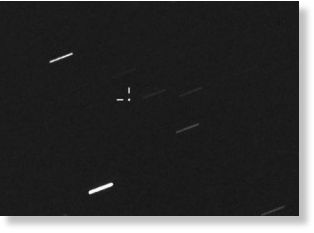
Near Earth Objects as wide the one mentioned in this article are also very numerous. And like this one, they too are almost completely undetectable until they are too close to do anything about them. Most of this planet is covered by oceans. And most of human civilization is in low lying areas surrounded those oceans. So the most frightening cosmic impact scenario we face isn’t a land impact at all. It's an ocean impact of a hard stony, or iron, object of that size.
An ocean impact equal to 1000 megatons of TNT would produce a tsunami wave that’s about 4.5 meters high at 1000 kilometers from the point of impact. But that’s just the wave height in deep water. When you factor in a run-up height of about 35 to 1 when it makes landfall on a continental shelf, you get waves coming ashore of as much as 157.5 meters in height. That’s more than 500 feet tall; tall enough to swamp a large skyscraper. And since most of our largest cities are close to sea level, the potential loss of life is in the hundreds of millions.
There probably would be no crater from a deep ocean impact of that size, and very little dust. So aside from torrential rains fro a while, it’s anybody’s guess what the long term climate effects would be. But crop failures due to sudden temporary climate change and resulting famines, especially in third world countries have the potential to kill billions over the next couple of years after the impact.
Bottom line: The next major impact event will most likely be in an ocean somewhere. And there is an awful lot of ocean target area that’s surrounded by large coastal cities. As a result, human civilization is more vulnerable than ever before to an ocean impact. And there isn’t a damn thing we can do about it.
Good information Dragon, thank you for sharing it.
There's another very significant reason to prefer land-fall impacts, over those occurring in water - of equal initial momentum / energy. This is somewhat non-intuitive, considering that 3/4s of the surface is water, and unoccupied by humans.
It's simple physics that much of the initial fireball's energy ( KE = 1/2 mv^2 ), is radiated out into space in the 1st case ( the solid Earth acts somewhat like a mirror ) -- but when an impact is enveloped with deep enough water, almost all of the available energy is captured here on Earth, as heat, vaporized materials, shock waves and in forming the crater.
Thereby, a smaller object hitting water can cause more energetic and climate impacting damage, than a larger one hitting land.
The Tunguska event was over land, but having almost completely disintegrated during its descent, there was little or no debris ever found on the ground. In this case, I believe that the majority of the energy was captured by the atmosphere, in forming the superheated shock waves - but some energy was radiated into space during the descent and explosive disintegration.
You are forgetting a little detail concerning the conservation of the downwards momentum. Your formula above may work for a point-source detonation, but not for a falling hypervelocity bolide. Supercomputer simulations of airbursts at Sandia Labs have shown that the airburst of a falling hypervelocity object retains almost all of its downwards momentum. The speed of expansion of the fireball is roughly equal to, or slightly less than the speed of the falling object. So you can think of it as a kind of downwards moving explosion like something between a giant supersonic blowtorch hotter than the surface of the sun that's directed downwards at the ground, and an an upside-down nuclear mushroom cloud. [Link] So you get a hell of a lot more energy delivered to the surface than you might expect from the high altitude point-source detonation of a nuclear device of the same yield.
See: The Naure of Airbursts and Their Contribution to the Impact Threat by Mark Boslough https://dl.dropbox.com/u/2268163/boslough_April_16_2009.pdf
So a land impact would be no less violent than somewhere in an ocean. It's just that the resulting impact Mega-Tsunami from an ocean impact would greatly increase the death toll.
Reflected energy, means exactly what it sounds like, and regardless of what you believe is called "the conservation of the downwards momentum," the absolute truth is that the initial kinetic energy ( of motion ) all goes someplace. The real conservation of energy, means that everything has to add up, as energy can neither be created nor destroyed, only transformed.
The usually efficient heat of vaporization of ocean water insures that most of the radiated energy is absorbed and not just re-radiated as heat and light through the atmosphere and ultimately back into space.
For you to imagine that a land and deep sea impact ( of equal mass ) carry the exact same quantity of energy absorbed into the Earth system, denies the obvious amount of electromagnetically radiated wavelengths ( broadband, including both IR heat and light ) that clearly does leave the Earth system.
You describe the relative explosive energies as "no less violent," while ignoring the energy lost to re-radiation into space, which clearly leaves less impact related effects of a violent nature on Earth.
The formula I expressed is for calculating the kinetic energy of a moving mass ( which is derived from Newton's F=ma ), not "for a point-source detonation."
I have argument to contradict this: " Supercomputer simulations of airbursts at Sandia Labs have shown that the airburst of a falling hypervelocity object retains almost all of its downwards momentum. The speed of expansion of the fireball is roughly equal to, or slightly less than the speed of the falling object. So you can think of it as a kind of downwards moving explosion like something between a giant supersonic blowtorch hotter than the surface of the sun that's directed downwards at the ground, and an an upside-down nuclear mushroom cloud."
What you appear to be incapable of adding to this, is that that initial downward momentum, is only continuing to be directed primarily downward, until it impacts a solid or liquid surface. At that moment, the vectors still add together and energy is still conserved, even when it turns around and goes back skyward.
Yes, an object will continue to move in the same direction unless acted upon by another force. From your level of analysis, basketballs would be unable to be dribbled, as all of that downward momentum could only continue into the floor, and not bounce the ball back upwards.
Any kid with a ball knows the truth of expecting a ball to bounce upwards after hitting the floor -- why do you so vehemently disbelieve this ?
In an impact event, the "goes back skyward" component you speak of so authoritatively is called an impact plume. But why not cite some real peer reviewed science to illustrate what you are trying to say instead of your silly and mindless self assured and assumptive scientism? What you appear to be incapable of getting through your thick head is that that short poster, and simulation was done by one of the top impact physicists alive today. If you can cite real data that contradicts the work of an honest to PhD scientist, you should do so. Regarding impact physics I'm thinkin' you're manifesting a bad case of the Dunning Kruger Effect.
I'm sorry if anything that I wrote made you feel like I was attacking you, as from my point of view, hurting another is the same as hurting myself.
I am sorry that you feel so strongly in needing to defend your mistaken understanding, as there is much more that you can learn with an open mind. I didn't set out to ridicule, invalidate, or undermine your belief system or you personally, just to provide you and this forum with the benefit of a broader insight, based solidly on both physics and common sense.
You appear to have forgotten, that I started out complementing you on providing useful information.
I have no desire to make you appear any worse than you already have made yourself out to be. I have no need to substantiate what is known fact -- as I have only a desire to inform people of the truth of things
You continue to attempt to deflect the core meaning of what you cannot yet understand.
For example, a "plume" is nominally understood as a wispy updraft of heated smoke and some wind-born debris. This is quite far from what I was explaining is an explosive impact event that ( luckily for Earth-dwellers ) channels much of the collision's available kinetic energy out into space -- and that that is made up primarily of radiated energy, not slowly moving heated air.
I suspect you would agree that smoke rises relatively slowly, compared to the speed of light ?
You act as if what I say requires the proof of peer reviewed science ( which it does have ), as if it were outside of any plausible way of thinking, and as if it were outside of the what the scientists that you have read do believe.
I didn't attack or contradict any "top impact physicists alive today," and only added information that you have yet to learn and integrate with what you do know. I encourage you to find out for yourself, and continue a life-long pursuit of knowledge.
I have no need to defend the truth of things.
Your use of ad hominem personal attacks is sadly more destructive of your own credibility, than my own -- and an indication of your mistaken urge to defend yourself, when having little else constructive to say. I used to be quite volatile and a very angry reactive and combative person, so my own experience and point of view might someday be beneficial to you.
I hope you can find the time to take a breath and consider that I'm not your enemy.
ERRATA
I meant to write "I have NO argument to contradict this: " Supercomputer simulations of airbursts at Sandia Labs … "
Have liked the discussion between you two on this topic, and have always enjoyed your commentary about cometary impacts of the past, Dragon (funny lil juxtaposition there :p) It seems like some confusion took place in the comparison btw land and ocean impacts, while incorporating the the airburst element. In all 4 events, it would seem the blast gets radiated in all directions, but with the greatest amounts being directed along its impact/air explosion path towards the earth. It makes sense that more energy will be absorbed in the water impacts. Both will have climate altering changes. I think the difference is the water impact will create a massive evaporation which will in turn generate storms/hurricanes ect, while the land impact will throw up a huge amount of debris, dust into the atmosphere to reflect sunlight and bring down global temperature. All will expel some debris into the atmosphere, but the direct land impact would cause the most (having more of that basket ball bouncing reflective force). As for the most damaging, i agree with Dragon that the direct water would be the case due to the tsunami wave resulting. I am curious about the result from an airburst over water though. I would expect a huge about of water vaporization like a direct impact, but not sure about tsunami aspect, although i would expect it to be to a lesser degree. any thoughts on this last point?
Unless evacuations combined with some way neutralize the wave with an opposing one were used to minimize the effect, the amount of area affected would be far greater due to coastal impacts. (This last sentence was added due to discussion with my partner. I added it as consideration, although his suggestion was nuclear detonation to create a counter wave, but i am doubtful of its effectiveness due to awareness of the event and application of such a method. I am mainly addressing the different impacts)
Prysm
I like your reply, and will hazard to question one part of it.
With severe ocean impacts, there still is land underneath -- once the water is vaporized ( a process that is occurring in advance of the hyper-moving object, via the projected shockwave ).
With all that energy, steam, and debris -- it forms an umbrella-like ejecta field that can potentially blanket the entire planet, going many miles into the air.
Yes, there is the added problems of tsunami ( heat etc ) with ocean impacts -- but why do you believe this mutual exclusiveness:
"while the land impact will throw up a huge amount of debris, dust into the atmosphere to reflect sunlight and bring down global temperature," and "the direct land impact would cause the most [debris into the atmosphere]" ?
It's not so easily visualized, but the water covered basketball court, still has a floor under it -- for stuff to bounce off of.
What I didn't mention earlier, is that some of even an ocean impact's energy is directly radiated back into space.
What the water essentially does, is to temporarily absorb huge amounts of energy ( along the way, so to say ) -- that otherwise would have to immediately be radiated back into space. Otherwise, the very large impacts are pretty much the same, the exception of the tsunami effects.
As to your question, about "an airburst over water" -- the shockwave would necessarily cause a tsunami via the degree of water vaporized, as that is similar to how an earthquakes' ( or landslide's ) sudden movement of land underneath water, displaces huge volumes of water ( like making a hole that the water rushes back into ).
As to your comment about "some way [to] neutralize the wave with an opposing one," that would be next to impossible to implement.
What ever wave-shape was initially created would be propagating ( in an outwardly expanding circle ), as people reacted and attempted to compensate for it -- moving at many hundreds of miles an hour. Things in the real world get very complex, like during the Indonesian event, the suite of initial waves were reflecting off various land masses, that then still had energy to come back again and again. Even conceptually, like supposedly done in the movie "The Core," by timing and spacing a set of explosions to superimpose destructively ( to cancel the energy out flowing ) is unbelievably complicated.
Imagine a huge ocean with a symmetrical wavefront radiating in all directions at exactly the same height. Yes, a ring of directed explosions pointed back toward the center, could conceivably cancel out ( much of ) the on-coming one. But instead of hitting one bullet with another, one would be attempting to simultaneously hit say dozens of bullets with thousands of other bullets ( shooting while balancing on the back on a moving horse ; - ).
In fact, engineering the explosion of an atomic bomb is somewhat similar in using shaped charges to drive the symmetric wavefronts towards the center of a sphere, in a very carefully orchestrated and precisely timed event. Even the delays in the speed of light simultaneously propagating down the wires is crucial.
As to the military's expertise in very large "directed explosions," I would guess that much like neutron bombs and DIME -- that the cure might be far worse than the disease. That the attempt to counter a huge destructive force, with other huge destructive forces would more likely make for greater devastation.
Much like shooting from the hip in blowing to pieces an onrushing asteroid, that only apparently was going to kill us all, only to discover that a previous bullet like strike ( that was going to miss us ), is now a shotgun blast aimed at out heart. Ooopppss
BTW, mining explosive experts do make very constructive use of timed superpositions of destructive wavefronts, as that saves lots of money in otherwise wasted explosives.
inpire,
It saddens me to reaize that after studying, writing, and blogging about impact science, and the geomorphology of impacts, and airburst phenomena full time for five years now, (I've authered a few articles here on SOTT as well) and having identified hundreds of new, and previously unstudied impact structures, and in spite of having numerous well known, world class impact physycists, and scientists as mentors I apparently haven't learned anything useful. It would be nice if you could cite some peer reviewed science to support your hypothetical views; maybe even let the rest of us in on the nature of your own expert qualifications, or field of study. Or at least acknowledge that your personal assumptions regarding the physics, and effects of impact events are only a nebulous, and poorly defined hypothesis. Until you do, it's clear you know all there is to know, and I won't waste anymore time with you.
On the contrary I've actually stated the opposite and I've clearly never judged you so harshly as stating anything like this:
"I apparently haven't learned anything useful"
We all make mistakes and either learn from that, or sometimes when my ego triumphs I have attempted to project and blame others.
Go ahead and ask any or all of your "world class impact physycists, and scientists as mentors" about what I've said.
I never stated that what I said was the definitive and absolute truth, but challenged you to consider it and then go and discover what is true for yourself.
I'm absolutely assured what I think that know is a limited perspective, which certainly contains some errors as it come out of the human condition, but it also is the best that I can provide.
REFERENCES
As far as my expertise -- that hardly matters -- as what is true is so regardless of any piece of paper or authority that condones it. My 3 decades working productively, and my degrees in engineering and physics don't necessarily make anything true, just because I say so.
Here's a discussion that I just found that reinforces what I've said -- and although not a peer-reviewed proof, it certainly lends credence to what I've stated:
[Link]
Where Der Trihs, at 07-13-2009, 06:21 PM, says:
"I agree with those who say land is best. The white hot crater will radiate heat to space, while an ocean landing will turn that heat into steam and keep it in the atmosphere.This. A water landing means more energy stays here on Earth, instead of getting blasted/radiated into space. And as I understand it, that hot spot in theory could generate super-hurricanes, more powerful than anything normal climate can produce."
Another article ([Link]a condensation of an excellent article by Sydney van den Bergh called "Life and Death in the Inner Solar System" in the May 1989 issue of the Publications of the Astronomical Society of the Pacific) states part of what I did :
"If the asteroid hits the ocean, the surrounding water returning over the the hot crater floor is vaporized"
Because a land impact has little water to enable the capturing of instantaneous blast energy, where do you think that the equivalent energy to vaporize the water will go ?
A peer reviewed article from Harvard and NASA, states on page 801A that up to 14% of initial blast's the kinetic energy ( in their model of an extinction level event, and a particular impactor composition ), would be captured in the vaporized water ejecta.
This is less than I had thought ( remembered ), so the relative advantage of hitting land or water may be more an issue of the devastating differences of subsequent environmental effects, than purely that of energy absorbed in the first few minutes. Of course if one is already dead or soon to die, having an extra 14% energy in the Earth's system is a negligible difference.
[Link]
Title: Impact of an Asteroid or Comet in the Ocean and Extinction of Terrestrial Life
Authors: Ahrens, T. J. & O'Keefe, J. D.
Journal: PROCEEDINGS OF THE THIRTEENTH LUNAR AND PLANETARY SCIENCE CONFERENCE, PART 2, JOURNAL OF GEOPHYSICAL RESEARCH vol. 88, SUPPLEMENT, A799-A806 FEBRUARY 15, 1983. Proceedings Paper.
Bibliographic Code: 1983LPSC...13..799A
The authors also found in their comparison of various impact events, that land-based impacts lofted a relatively greater amount of projectile and shocked material into higher altitudes, in part because only during the initial explosive energy release, is there the possibility for such high altitude effects to occur.
This appears to support my memory that water-based impacts partly smother the explosive power of the blast, even though they capture more of it's energy.
Obviously, the number of variables involved and the unimaginable scope of so many interdependent and devastating consequences, make the simplistic issue of land vs. water impacts, a rather moot issue.
Even with a tenth the energy, for the same mass impactor, the extremity of threats to Earth of either and/or both cooling and winter effects over many decades, would more likely be determined more so, by other variables, like the composition of the impact site's rocks -- and certainly the composition of the meteor / comet.
Therefor it hardly matters if it hits on land or sea, if it's big enough to kill-off half or more of Earth's life.
If an object only kills a billion people, it still hardly matters -- where it hits, or what people die of.
Would would matter more, is how soon the Earth might recover and how best to alleviate the survivor's suffering. Even if someone could nudge the final impact site, to either be sea or land -- it appears to be nearly impossible to determine in advance -- which would be "better."
Is there any way of attracting some space rocks? I have a feeling I could use a few good meteorites through the roof. Still burning preferably, how about lightning? Can I attract lightning and space rocks? The basement is only 6feet deep, if that helps with anyone's impact math. Oh and I'd like to be home when it happens. Where do I get the math for that?
Cheers
Exactly as NASA does to ensure mission success, deep space navigation mandates as accurate as early as possible details, whilst similarly requiring constant monitoring and comparison with desired destination(s).
Small changes made early enough, propagate over long periods of time to huge effective distances. Because fuel is so scarce, every wisp is used as effectively as possible.
When the outcome otherwise is likely mission failure, huge resources are applied and invested to ensure success.
When millions ( or more ) lives on Earth are in the balance, from 5 mile/s collisions of indeterminable megatons of explosive devastation -- one would expect and hope that very careful observations and categorizations of such risks -- are perennially made and updated, worldwide and as a shared global responsibility.
Perhaps the corporations are more inclined to wait for more optimum
"profit centers" to form, in the ashes of a major city near you ?
That we know of some of these near misses is actually great news, as that proves that many of the risks are being monitored and correlated with the vast numbers of negative possibilities.
The absolute worse case, is those huge iron-loaded rocks that literally 'come from directly behind the sun,' where most of our instrumentation is insensitive and woefully likely to be too late to make much of a difference.
Orbital perturbations occur continuously, as unknown ( or poorly characterized ) objects revolve about the sun amongst thousands of other ( mostly ) known massive objects. The tracking of Extinction Level Impactors ( ELI ) is not so easy, nor would be sending out the space marines to intercept and attempt to modify it's orbit.
In the larger context of corporate profits, many millions dying from Chernobyl / Fukushima ( etc ) radioactivity or Near Earth Objects colliding -- is just collateral damage.
We either invest ( better ) in having our future, or risk having ( much ) less of one.
CHOSE LIFE